
Land invertebrates
Centipedes
Centipedes are carnivorous predators. Along with millipedes, they belong to the group of arthropods called myriapods ("many legs"). Centipedes scuttle along quickly on long, outward-stretching legs, with their bodies waving from side to side as they move. They have long bodies made up of segments, with one pair of legs per body segment. They may have between 15 and 354 legs (millipedes have two pairs of legs per segment). Large “poison-claws” on their heads are used to capture and paralyse prey before eating it. Some kinds of centipedes have spiny rear legs for defence, while other, slower-moving kinds may be poisonous to eat. These kinds are often brightly coloured.


Defence and attack
The centipede's flat body allows it to hide underneath stones and logs during the day, helping it both to dodge its predators, such as birds and toads, and to keep it cool and moist (lacking waterproofing on their exoskeletons, centipedes quickly dry out). It may also burrow into the soil to hide and keep cool.
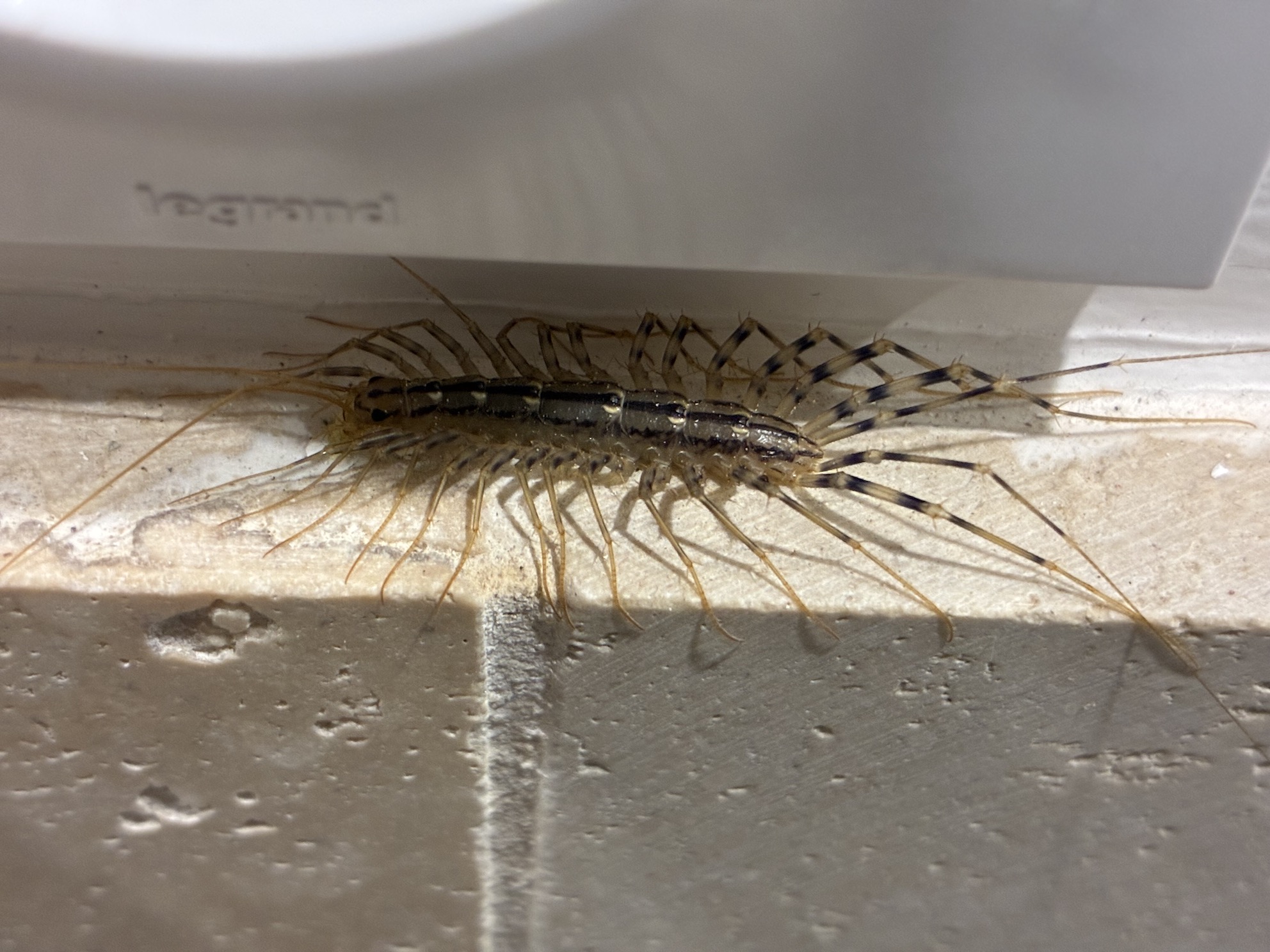
Spending so much time in the dark, centipedes have no need for a good eyesight. When they come out at night to hunt, they rely on their antennae to sense their prey and to get around. They move in for the kill very quickly when they detect their victim—usually an insect, spider or other small invertebrate. Using their poison-claws on their heads, called forcipules, as fangs, they inject venom to overcome it.

Savage jaws

The largest species of centipede, the giant centipede of South America, can grow up to 30 centimetres (1 foot) in length. It can run quickly, and has massive jaws with a venomous bite. It attacks large prey such as snakes, frogs and small rodents. It even hunts bats by hanging over the entrances to their caves and seizing them in mid-air.
Consultant: Chris Jarvis