
Age of Dinosaurs
Jurassic Asia
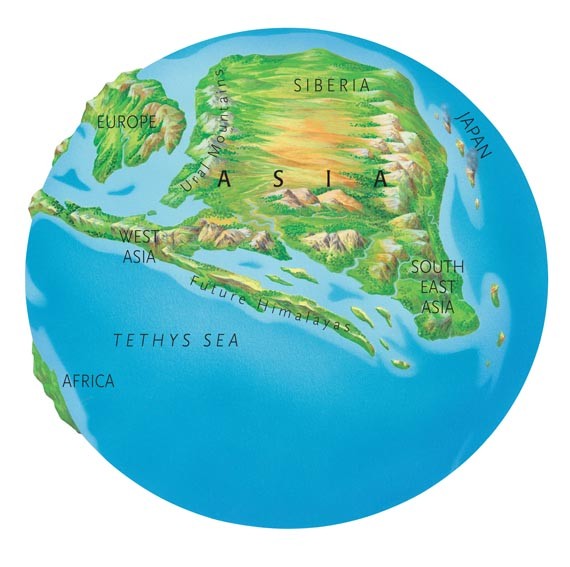
The great continent of Asia teemed with dinosaurs during the Jurassic Period. Asia was at that time not quite as vast as it is today. The high sea levels of the time flooded some regions. The Indian subcontinent was completely missing, still thousands of kilometres away, close to Africa. It would take millions of years to drift slowly north and join with Asia, throwing up the Himalayas as the two landmasses crumpled together. Europe and Asia meet at the Ural Mountains today, but in Jurassic times they were separated by a narrow strait.
China
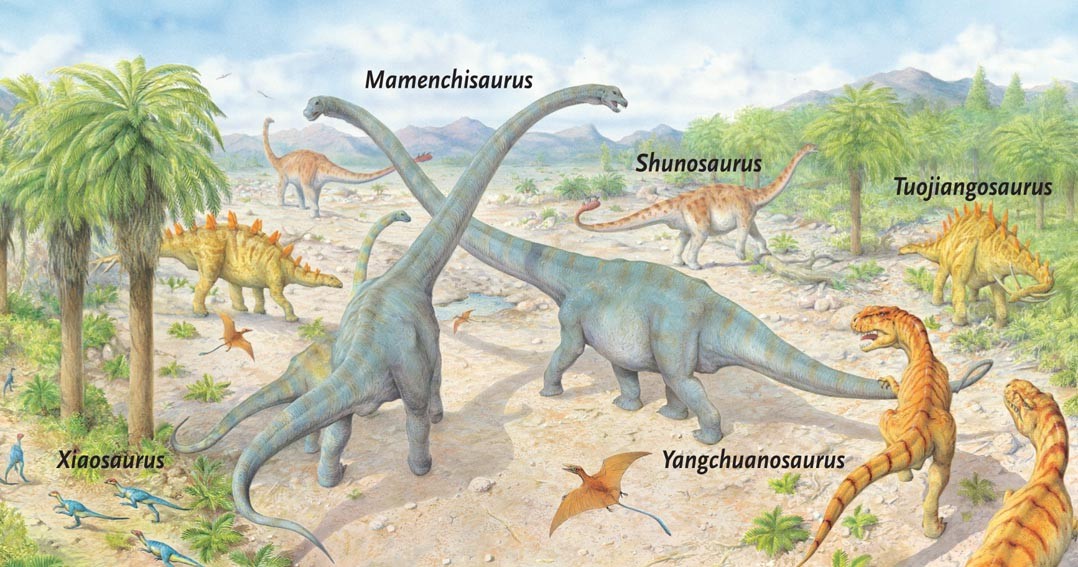
Jurassic Asian giants included Mamenchisaurus and another sauropod, Shunosaurus, which had a spiky tail club to swing at its enemies. Tuojiangosaurus was a type of stegosaur about 7 metres (23 feet) long. The spikes on its back and tail were useful defence against the deadly meat-eater, Yangchuanosaurus. Huayangosaurus, 4 metres (13 feet) long, lived in Middle Jurassic times in China. It was an early type of stegosaur, with plates and spikes of bone running along its back and tail. Later the stegosaurs spread to other continents, especially North America.
Living alongside these bulky giants were tiny dinosaurs, some less than a metre long. Xiaosaurus ran about in the undergrowth looking for ferns and other plants to eat.
Yangchuanosaurus
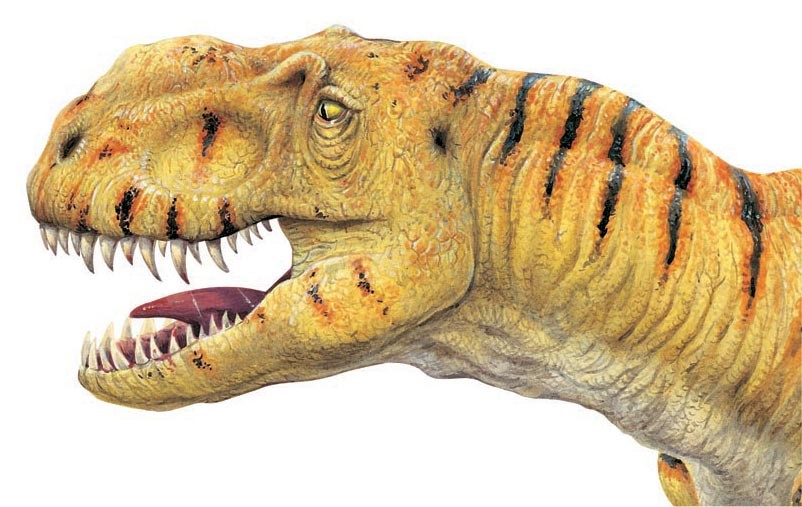
A massive, powerful predator from China, Yangchuanosaurus was 9 metres (30 feet) long. Yangchuanosaurus may have hunted herds of Mamenchisaurus, seeking out young or feeble individuals from the group to attack. It could also have hunted the huge, 15-metre (50-foot) sauropod, Euhelopus.
Bird-like dinosaurs
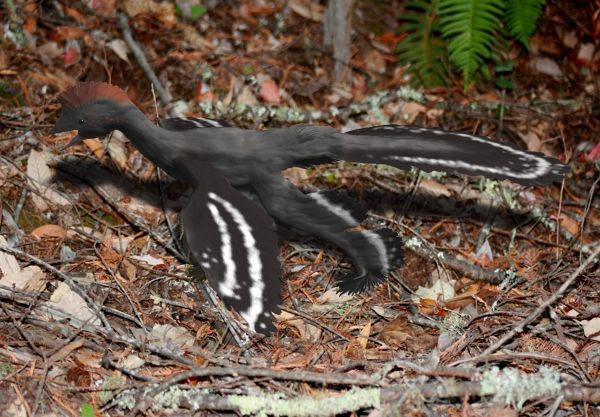
In the early 2000s, palaeontologists working in northeastern China, discovered fossils of dinosaurs, pterosaurs and other prehistoric animals and plants. These fossils were found in rocks that were older than those from the Early Cretaceous Period found in the 1990s, and which included a wide range of feathered dinosaurs. The later discoveries belonged to the Jurassic Period, around 160 million years ago. Like the Cretaceous finds, they were beautifully preserved in ash from volcanic eruptions, which later turned to rock.
Among the fossils of feathered dinosaurs were those of bird-like creatures named Yi qi, Anchiornis, Aurornis, Caihong, Epidexipteryx and Pedopenna, all of which had wings and may have been able to glide or even fly. Scientists have found that some of these feathered dinosaurs had the same black iridescent colours (a tendency to change to other colours when seen at different angles) as certain types of modern birds, such as starlings, grackles and crows.
Consultant: Chris Jarvis