
Age of Dinosaurs

CITE
We have made every effort to follow citation style rules, but there may be some minor differences. If in doubt, please refer to the appropriate citation style manual.
Jurassic North America. (2026). In Q-files Encyclopedia, Prehistoric, Age of Dinosaurs. Retrieved from
https://www.q-files.com/prehistoric/age-of-dinosaurs/jurassic-north-america
"Jurassic North America." Prehistoric, Age of Dinosaurs, Q-files Encyclopedia, 10 Mar. 2026.
https://www.q-files.com/prehistoric/age-of-dinosaurs/jurassic-north-america.
Accessed 6 Aug. 2026.
Jurassic North America 2026. Prehistoric, Age of Dinosaurs. Retrieved 6 August 2026, from
https://www.q-files.com/prehistoric/age-of-dinosaurs/jurassic-north-america
Prehistoric, Age of Dinosaurs, s.v. "Jurassic North America," accessed August 6, 2026.
https://www.q-files.com/prehistoric/age-of-dinosaurs/jurassic-north-america


Jurassic North America
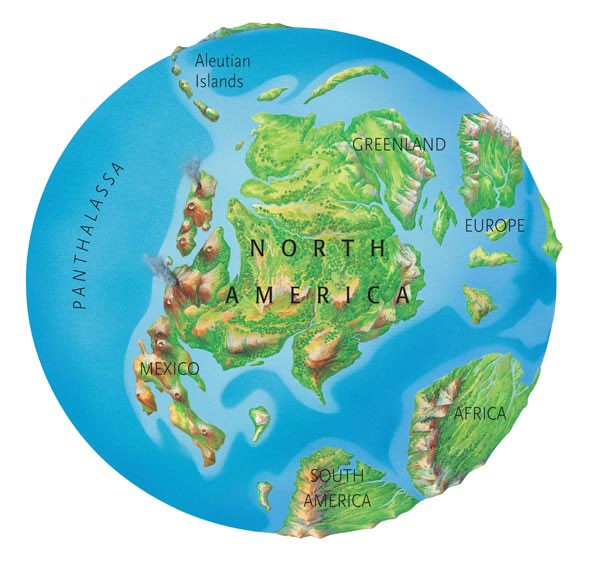
During the Jurassic Period, North America lay close to Europe. The Atlantic Ocean, which now separates the two continents, had not yet opened up and there was no land link between North and South America across Central America as there is today. The polar regions—what is now Alaska and Canada—had no ice or snow, even in winter; the climate was far too warm. Forests of conifers such as redwoods and Chile pine (“monkey-puzzle”), along with ginkgos, cycads, tree ferns and horsetails, covered vast areas of North America, providing a great deal of food for the huge Jurassic plant-eating dinosaurs.
Life in the swamps
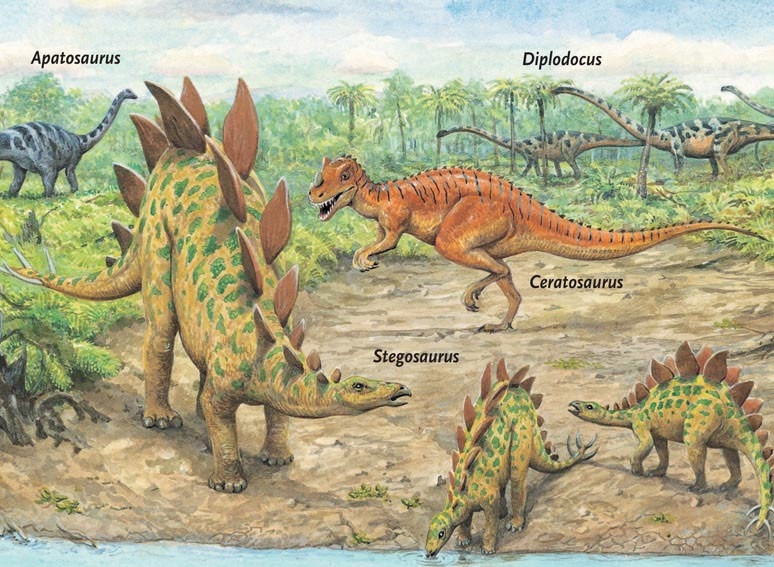
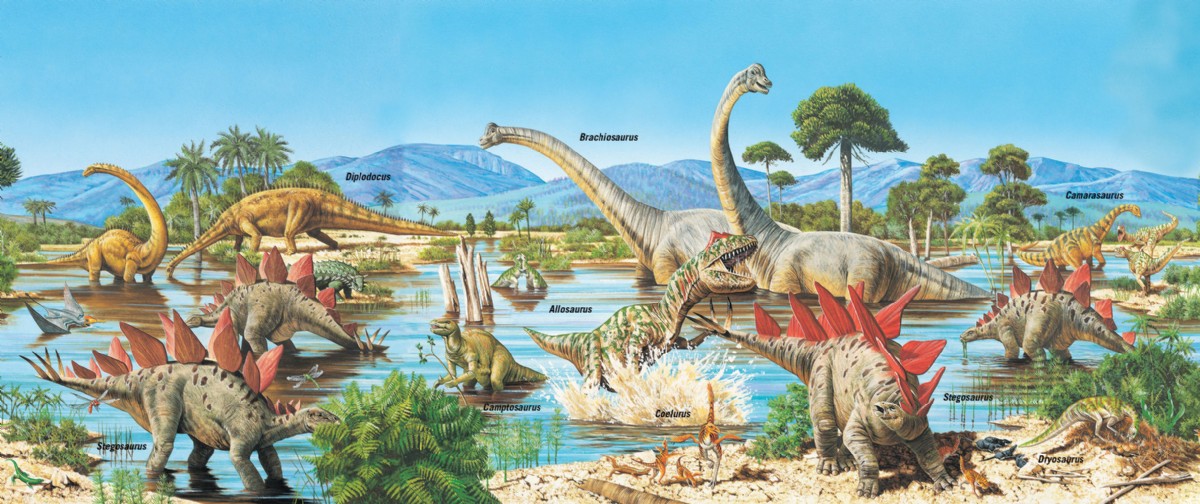
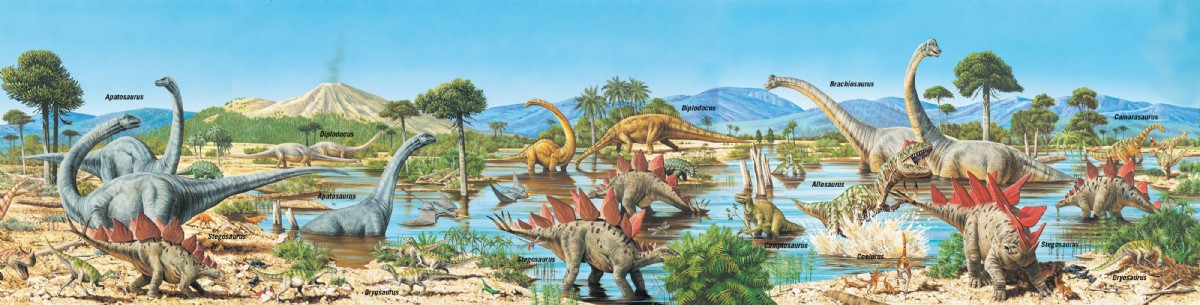
With so much warmth and rain, many parts of Jurassic North America were covered in muddy swamps and marshes. The giant sauropod Diplodocus, along with the shorter but heavier Apatosaurus, stripped leaves from tall trees. Stegosaurus had tall plates of bone on its humped back. Perhaps these soaked up the sun’s heat, so that Stegosaurus could be warmer and more active. It swished its spiky tail to defend its young against the fierce, twin-horned predator Ceratosaurus.
Allosaurus
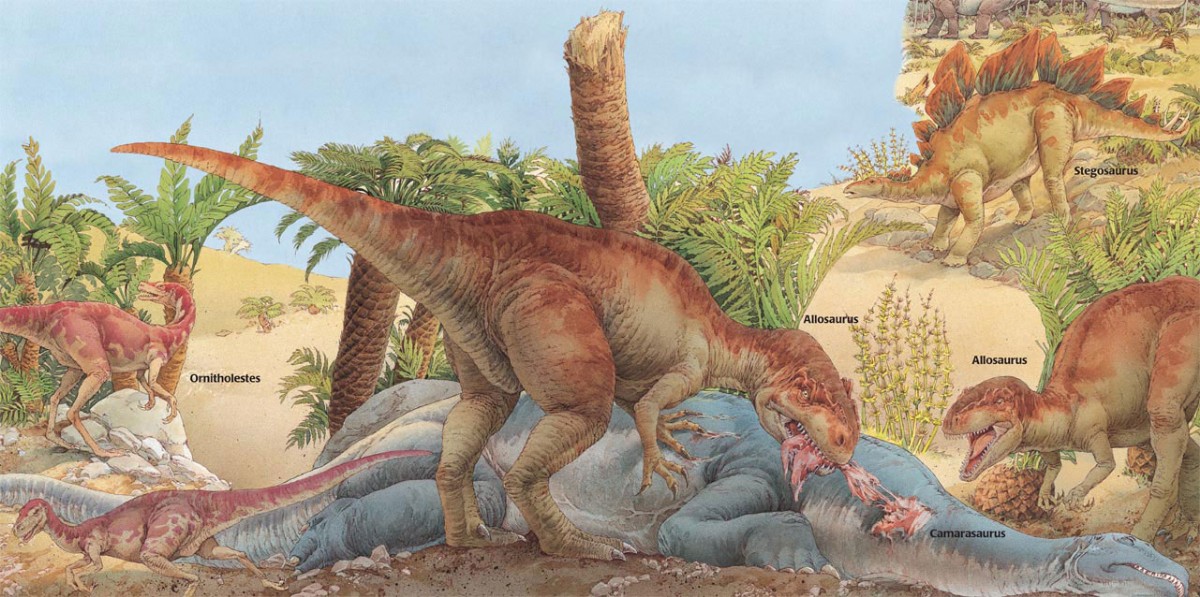
Terror of the late Jurassic was Allosaurus. This massive meat-eater was 11 metres (36 feet) long and weighed about 2 tonnes. Its teeth were bigger than your hands, and it could run faster than a champion human sprinter. Allosaurus may have chased after big prey, such as the 20-tonne sauropod dinosaur, Camarasaurus. Smaller meat-eaters like Ornitholestes may have scavenged on carcasses or hunted for live prey such as lizards, frogs and insects, along with other, smaller dinosaurs.
Morrison Formation
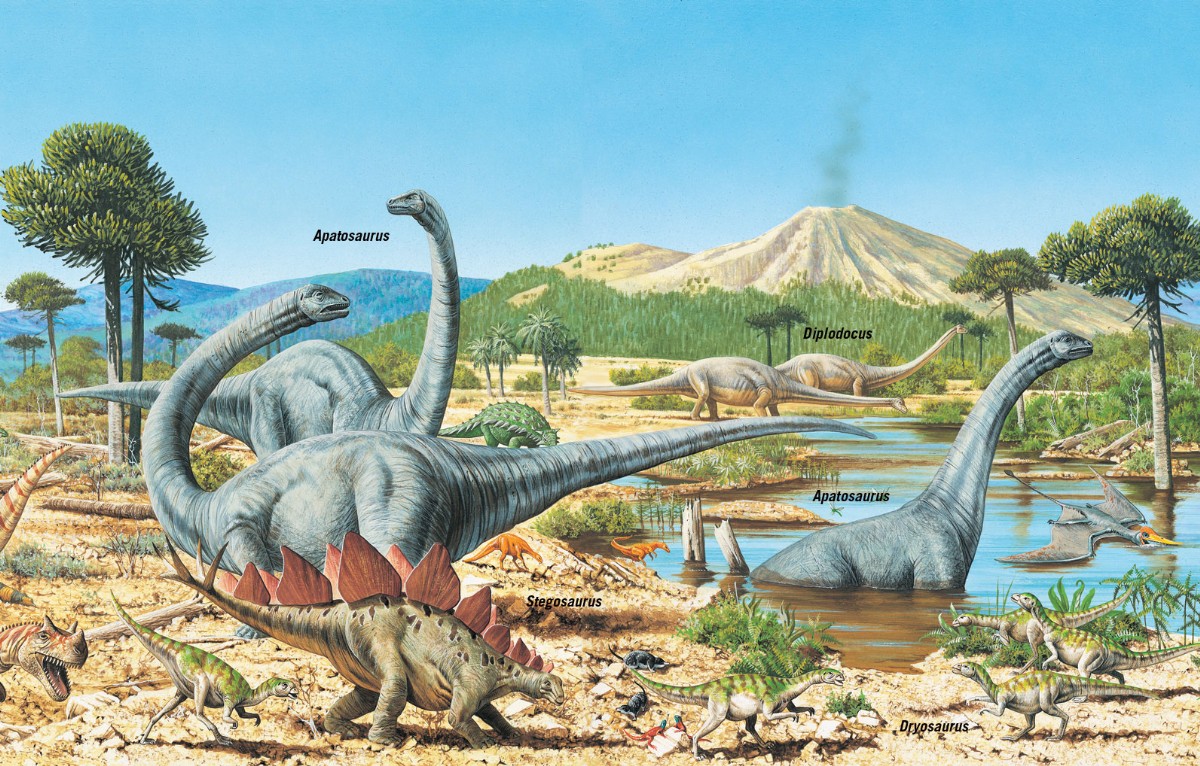
The Morrison Formation is an area of Late Jurassic sedimentary surface rocks in the western United States. Dating from 156 to 147 million years ago, it is the richest source of dinosaur fossils in North America. Much of the vegetation in Jurassic times grew on river floodplains, so most of the dinosaurs lived there too. Hundreds of dinosaur fossils have been discovered in the area, including Allosaurus, Camptosaurus, Ceratosaurus, Ornitholestes, Stegosaurus, the early ankylosaurs Mymoorapelta and Gargoyleosaurus, the ornithopods Camptosaurus and Dryosaurus, and a large number of sauropods, including Diplodocus, Camarasaurus, Brachiosaurus, Apatosaurus and Barosaurus.
Consultant: Chris Jarvis
pics
Without in any way limiting Q-files Ltd’s exclusive rights under copyright, any use of this publication to “train” generative artificial intelligence (AI) technologies to generate text is expressly prohibited. Q-files Ltd reserves all rights to license use of this work for generative AI training and development of machine learning language models.