
Electrical power
Space-based solar power
Space-based solar power (SBSP) technology involves collecting energy from the Sun in space by satellites and transferring it down to Earth using microwave beams. The technology makes use of the fact that sunlight is brighter outside Earth's atmosphere and that, in space, the Sun, unlike on Earth, shines all the time. SBSP is still only at the planning stage, but some scientists think it could be a way of harnessing solar energy on a large scale and help the world achieve net zero by 2050—by which time global energy demand is expected to have doubled.
How it works
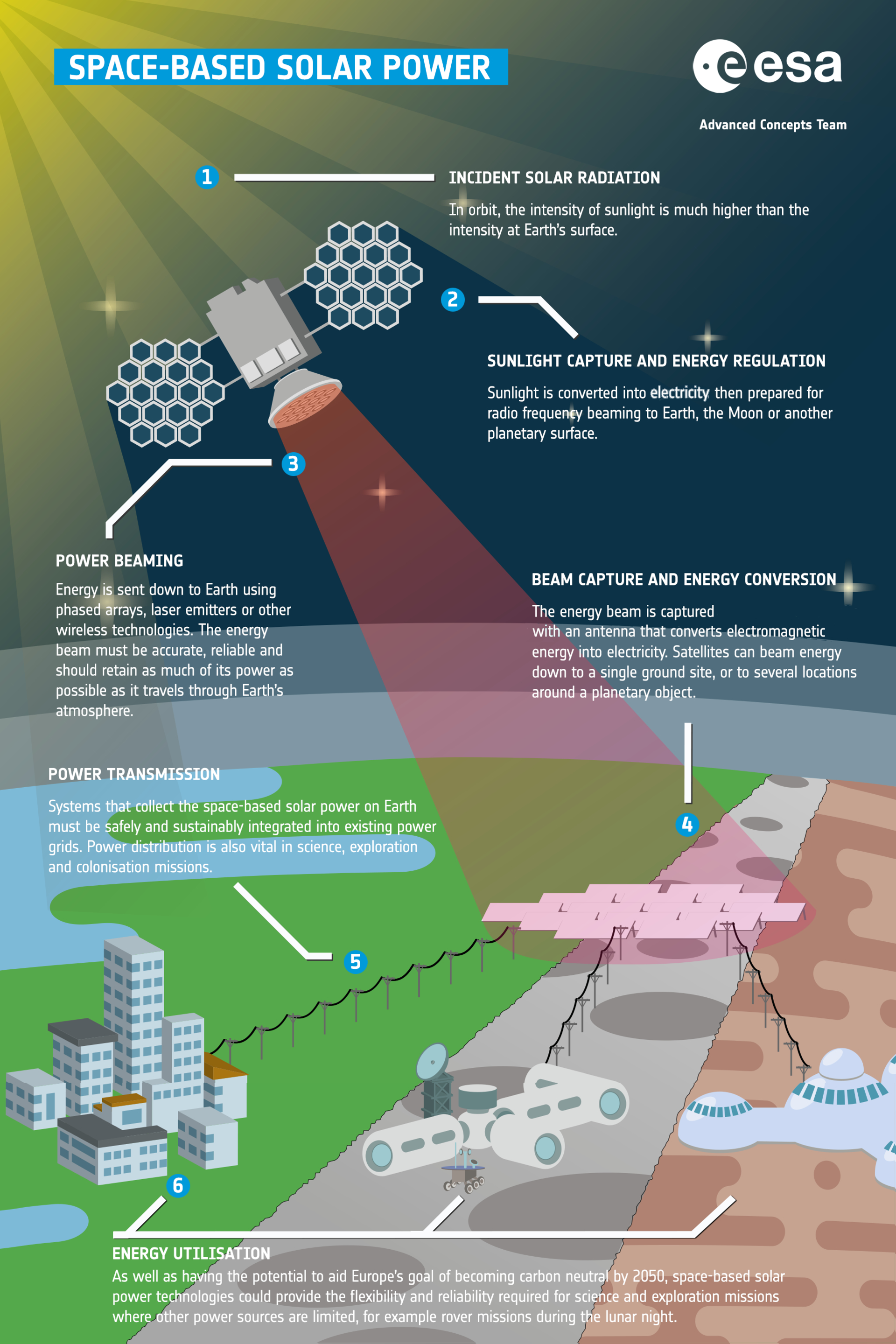
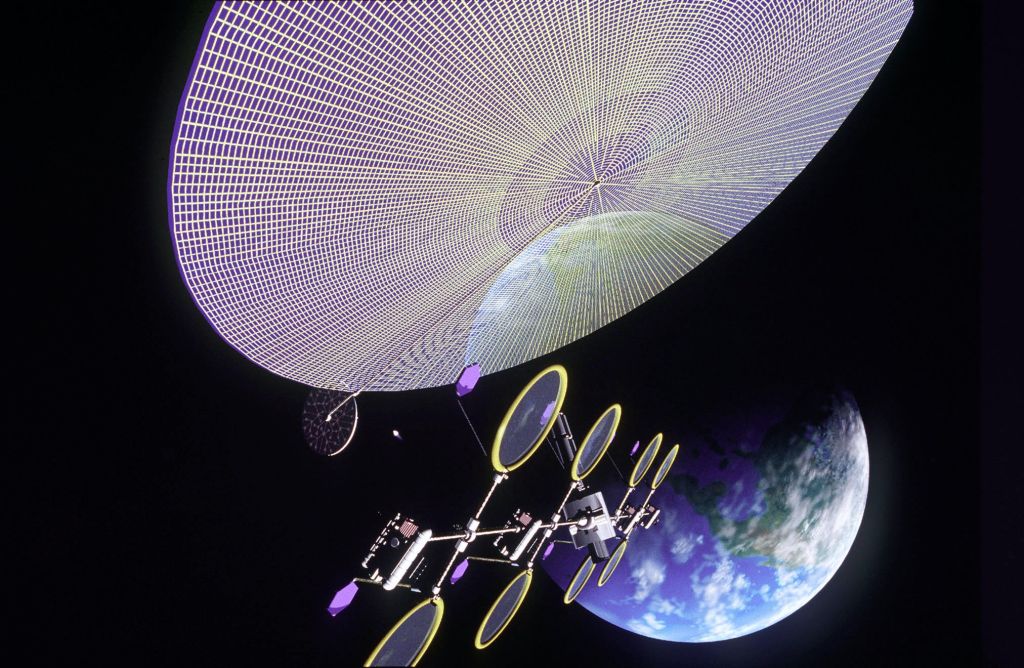
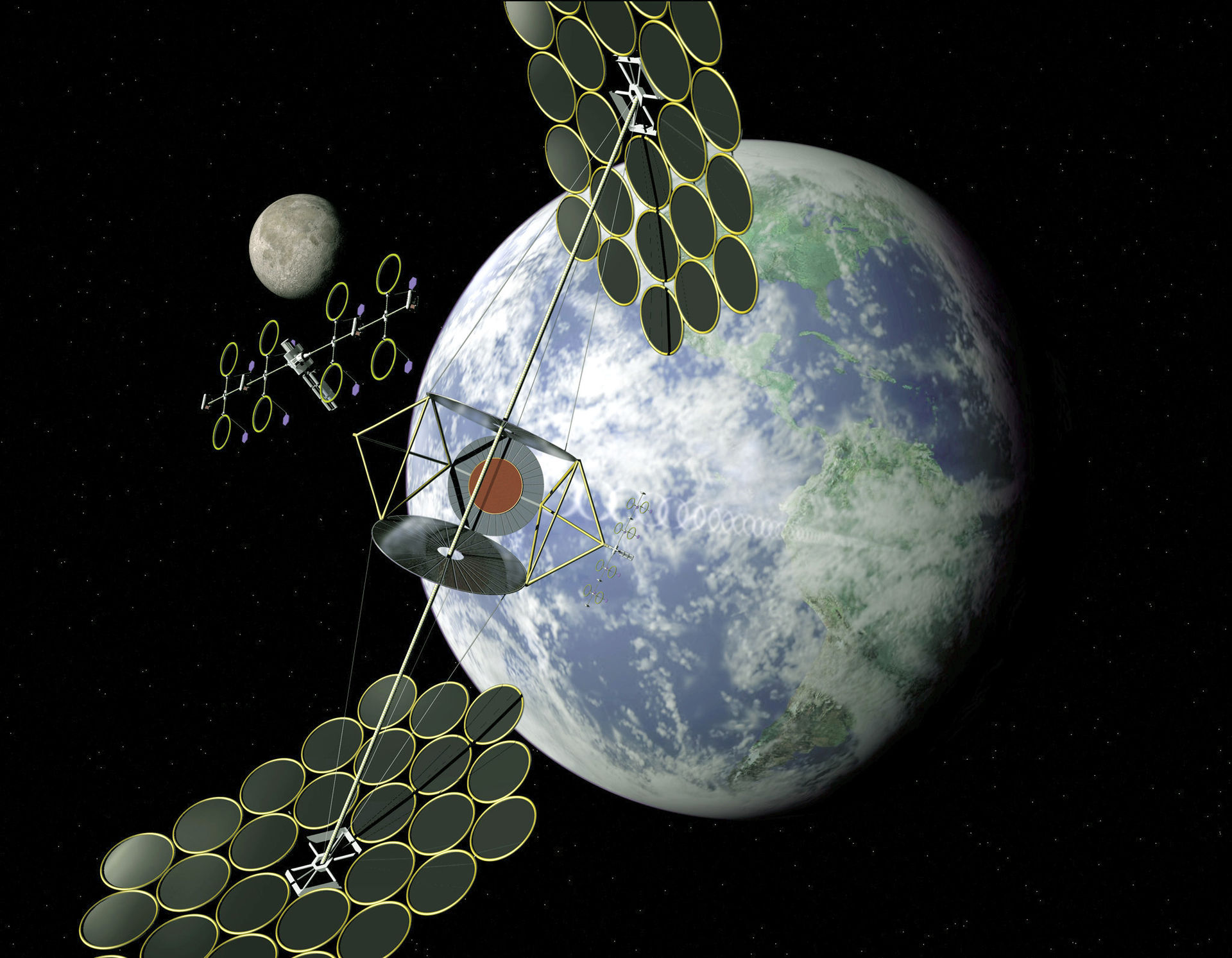
Huge satellites, kilometres wide, would generate electricity via giant solar panels containing many thousands of photovoltaic cells. This would then be converted to a beam of microwaves, high-frequency radio waves, which is transmitted to Earth. On the ground, the beam would be picked up by an array of ground antennae (satellite dishes) specially designed to convert microwaves into electricity (this type of antenna is called a rectenna), which is then fed into the electric grid.
The satellites would be in geostationary orbit—that is, remaining in a fixed position relative to Earth. This would keep the line of transmission between the satellite and ground antennae constant and enable the satellite to deliver a beam of solar energy almost continuously to the rectenna array.
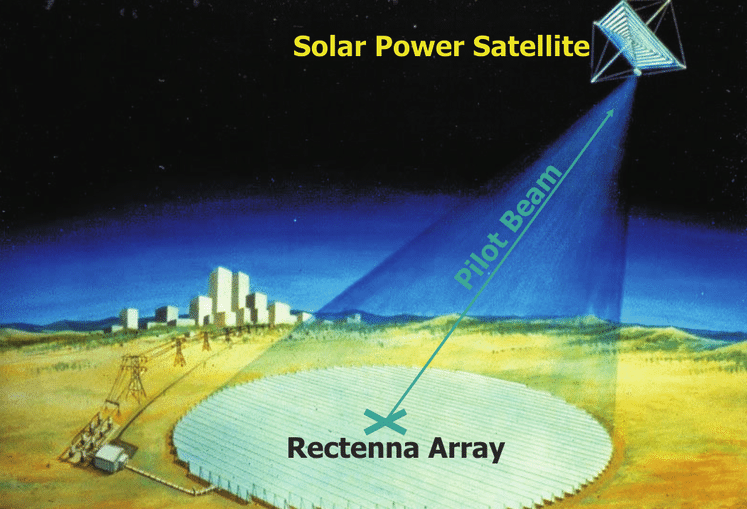
Microwaves spread out as they travel, meaning that multiple antennae receiving a single beam would need to be positioned as an array over a large area. At temperate latitudes, this would mean an area roughly 13 kilometres long and 7 kilometres wide (8 by 4 miles). Scientists say the microwave beam's energy intensity would be only a quarter that of sunlight at the equator. This means it would be completely safe for anyone who was exposed to it—should the beam between satellite and rectenna array ever wander off course.
Benefits
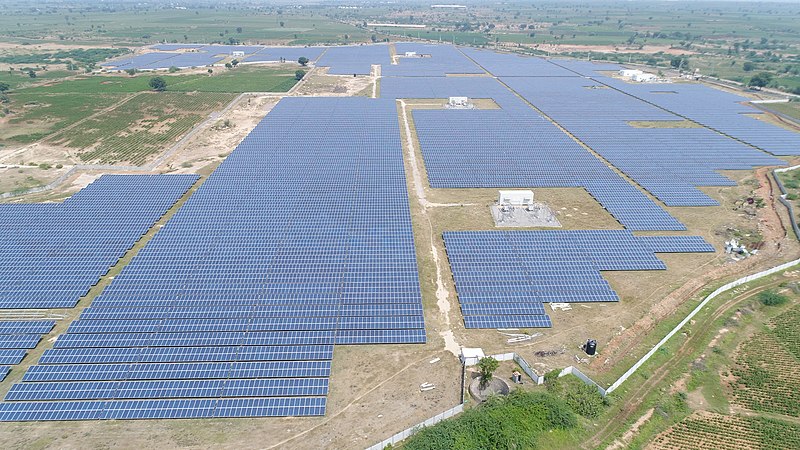
A solar power satellite could generate electricity more or less continuously, unlike Earth-based solar panels, which are able to produce electricity only during the day, and depending on the cloud cover. This would mean SBSP is able to provide what is known as baseload power, the minimum amount of electric power required by the grid at any given time. At present, only fossil fuels and nuclear power stations can provide this; renewable sources cannot. In addition, inexhaustible supplies of SBSP could be beamed to different parts of the world wherever and whenever it is needed.
Challenges
A space-based solar power station would be made up of a large number of modules, assembled in orbit by robots. Transporting all these parts into space is likely to be costly, even if ultra-light solar cells are used, keeping the weight to a minimum. Many reusable launch vehicles will be needed to send the modules (and robots) into space, making the project extremely expensive—although less than the cost of a large new nuclear power station.
The satellites' operation faces several practical challenges, too, including the risk of damage both by space debris and—because the solar panels are not shielded by Earth’s atmosphere—long exposure to high-intensity solar radiation. Repairs would be difficult to carry out to a spacecraft in geostationary orbit, 35,786 kilometres (22,236 miles) above Earth's surface.
The efficiency of wireless power transmission is another issue. Transmitting energy across long distances means that, with existing technology, only a small fraction of collected solar energy would actually reach Earth.
Will it happen?
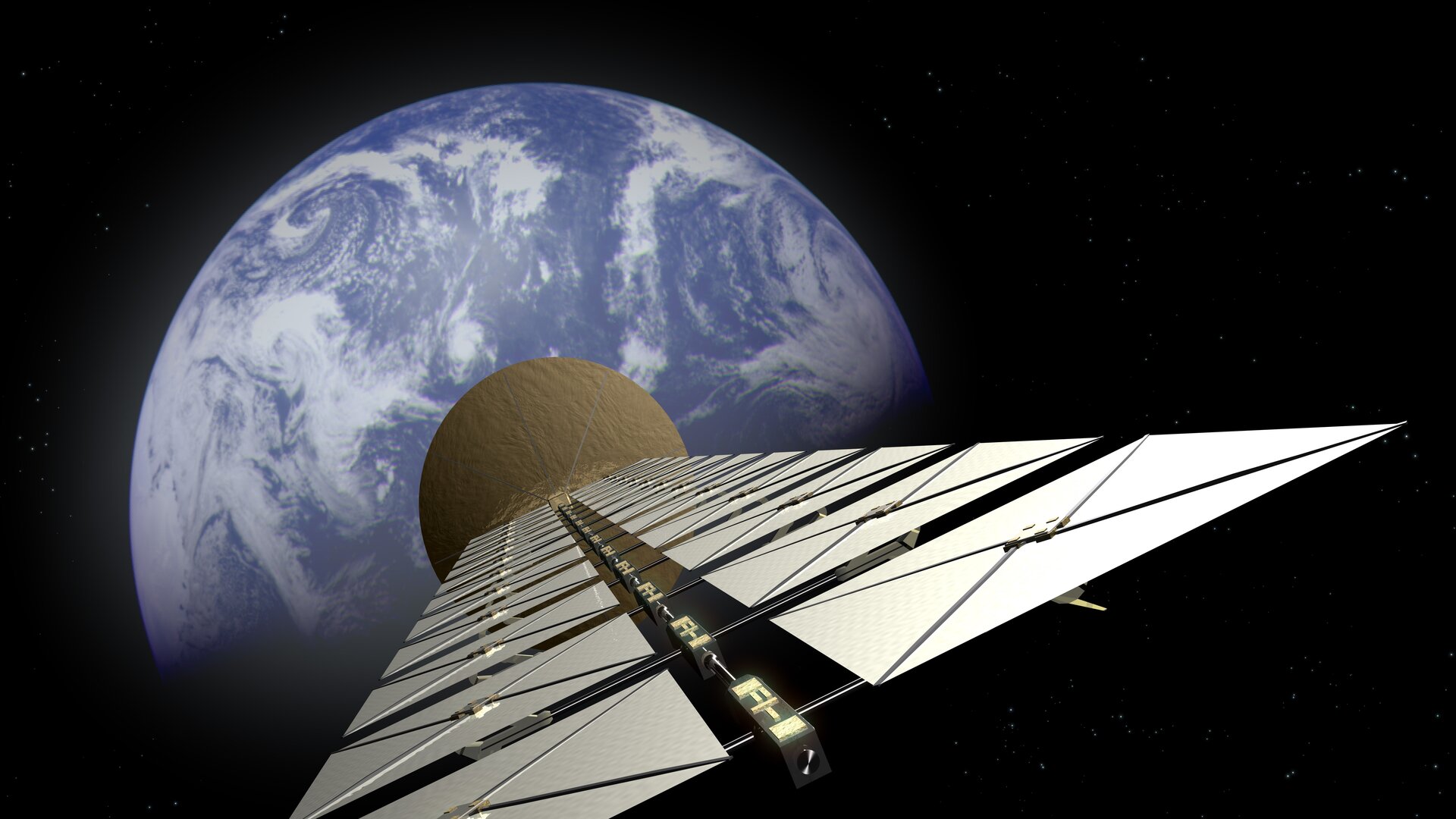
Despite the practical difficulties and doubts about whether enough power could be created using SBSP technology, a number of trial projects are under way. The US Naval Research Laboratory tested a solar module and power conversion system in space in 2020. The US Air Force Research Laboratory’s Arachne project, which launches in 2025, is intended to trial the use of SBSP technology to beam power to military bases.
Japan’s space agency is working on a space solar farm. China has announced progress on their Bishan space solar energy station, with the aim of having a functioning system, based in Chongqing, by 2035. The UK is scheduling the construction of an operational solar power station for 2040. The solar power satellite would deliver 2 GW of power (enough to power approximately 1.5 million homes)—although just a small contribution to the UK’s generation capacity of around 76 GW.
Consultant: Mike Goldsmith