
Trains
Steam engines
An engine is a machine that converts the energy stored in fuel into energy for operating other machines. In a steam engine, burning fuel heats water in a boiler, turning it to steam, which builds up in the boiler. The pressurized steam is used to operate the moving parts of the engine. In the 1st century AD, Greek inventor Hero built a device that was turned by jets of steam, but it was a curiosity rather than a useful machine. The first locomotive powered by a steam engine was built in 1804 by English engineer, Richard Trevithick. Steam engines were used to power trains until the 1950s and 60s, when they were replaced by electric and diesel-powered locomotives.
Atmospheric pressure
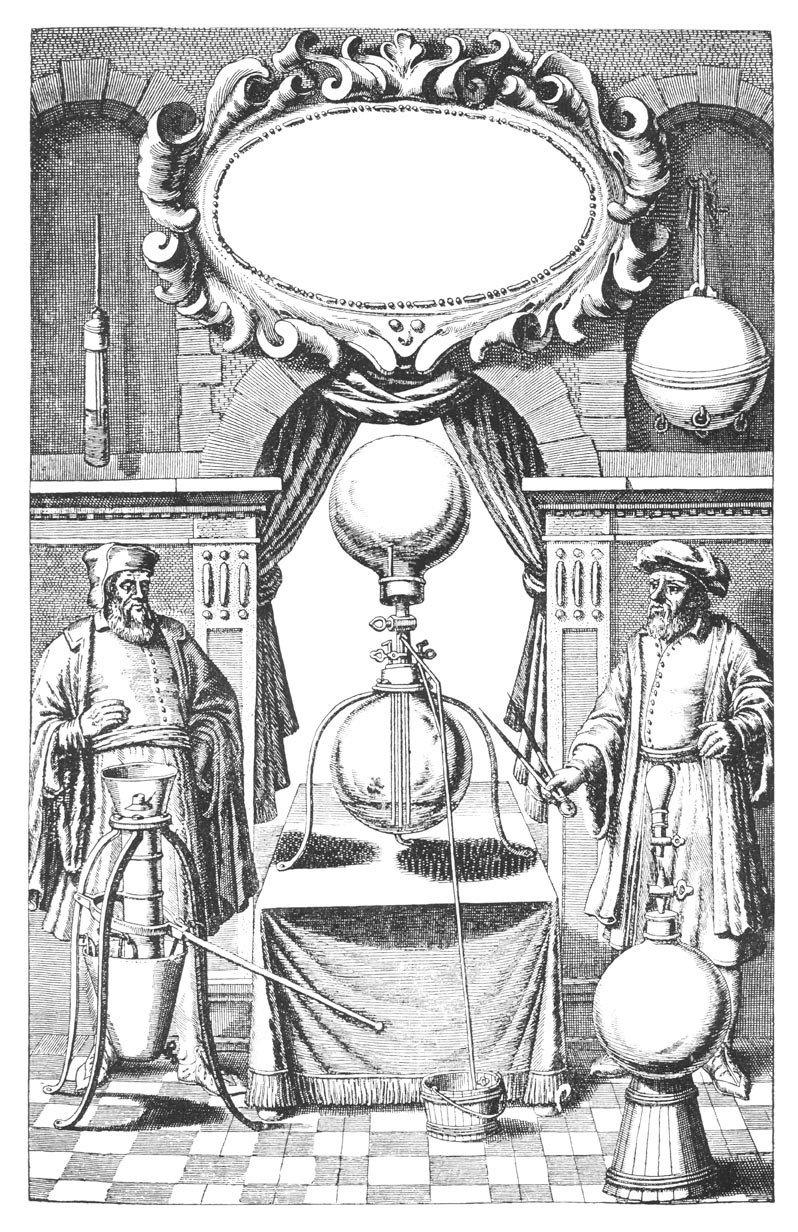
The first steam engines made use of the results of a simple scientific experiment carried out in 1606. Giovanni Battista della Porta (1535–1615) of Naples showed that when a flask full of steam was cooled, water could be sucked up into it as the steam condensed (turned back into droplets of water). Della Porta had created a vacuum, a space containing no air, inside his flask. The weight of air around it, called atmospheric pressure, forced water up into the empty space.
Savey's engine
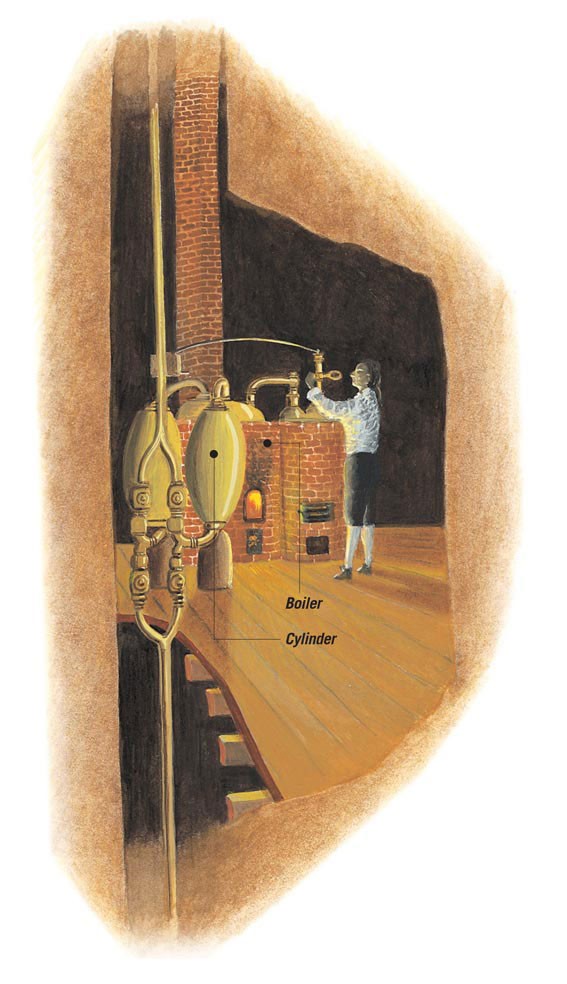
The first steam-powered machine was built in 1698 by English engineer Thomas Savery. Called the “miner’s friend”, it was designed to pump water from flooded mines. In Savery’s engine, steam from the boiler filled a large cylinder. Then cold water was poured over the outside of the cylinder, which cooled it, making the steam condense (turn back to liquid water). This created a vacuum in the cylinder, which could suck in water from a mine through a pipe. A valve below the cylinder was then closed. More steam was fed to the cylinder to push the water up an outlet pipe.
Newcomen's engine
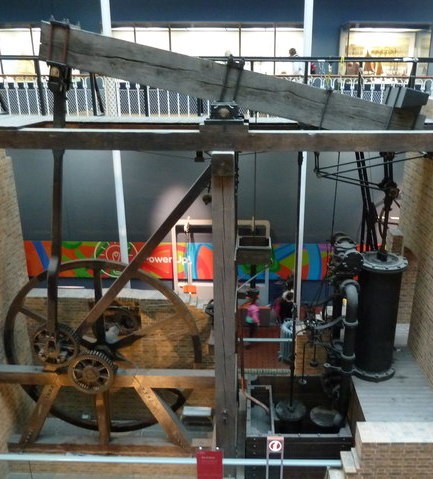
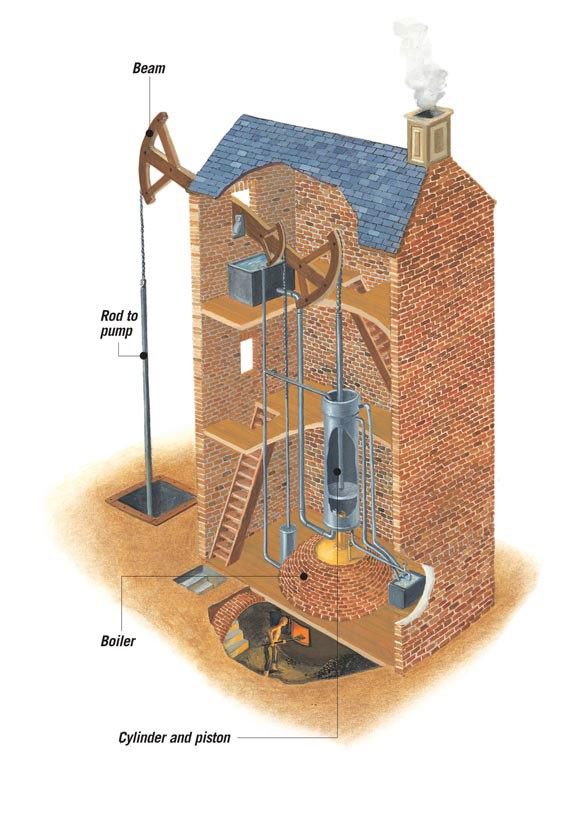
The first working steam engine was built in 1712 by the English engineer Thomas Newcomen. A large beam rocked back and forth 16 times a minute as it pumped water in a mine. In Newcomen’s engine, steam from the boiler went along pipes to a cylinder, where its pressure pushed a piston upwards. Then cold water was sprayed into the cylinder, which made the steam condense. This reduced the pressure in the cylinder, and the pressure of the air in the atmosphere outside pushed the piston back down. The movement of the piston was transferred to the pump by a rocking beam. Newcomen’s engine is often called an atmospheric engine. Although it used a huge amount of coal, it was very successful, especially at coal mines, where there was an endless supply of coal.
James Watt's engine
Steam engine design was greatly improved in the 1770s by Scottish engineer James Watt. He realized that Newcomen’s engine was very inefficient because the cylinder was heated and cooled on every cycle. So Watt built his own engine, which became popular for powering industrial machinery, such as spinning and weaving machines.
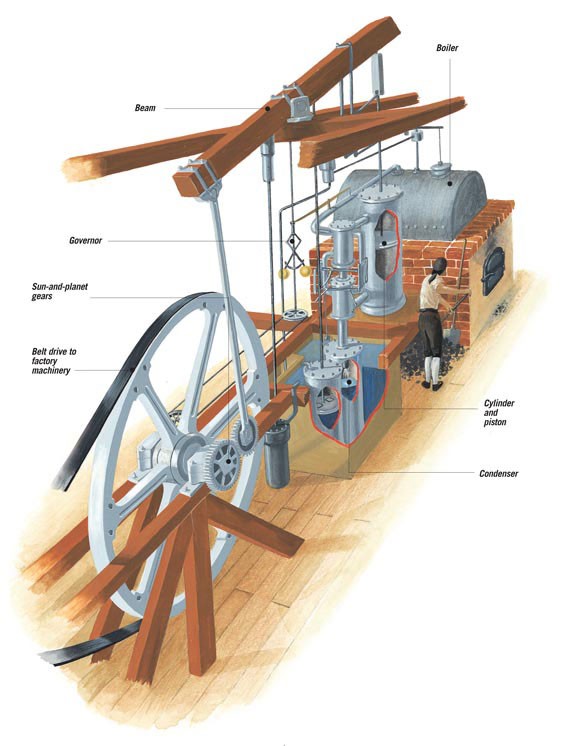
Watt’s first steam engine, patented in 1769, included many improvements over Newcomen’s. It had a separate cylinder where the steam was condensed (turned back to liquid water), allowing the main cylinder to remain hot all the time. Watt's later engines used low-pressure steam to force the piston down, rather than relying on atmospheric pressure. This increased the power of the engine. An automatic governor controlled the flow of steam to the cylinder, and so regulated its speed. Sun-and-planet gears converted the up-and-down movement of the cylinder into a turning movement. Wheels and belts could link the engine to factory machines.

High-pressure steam
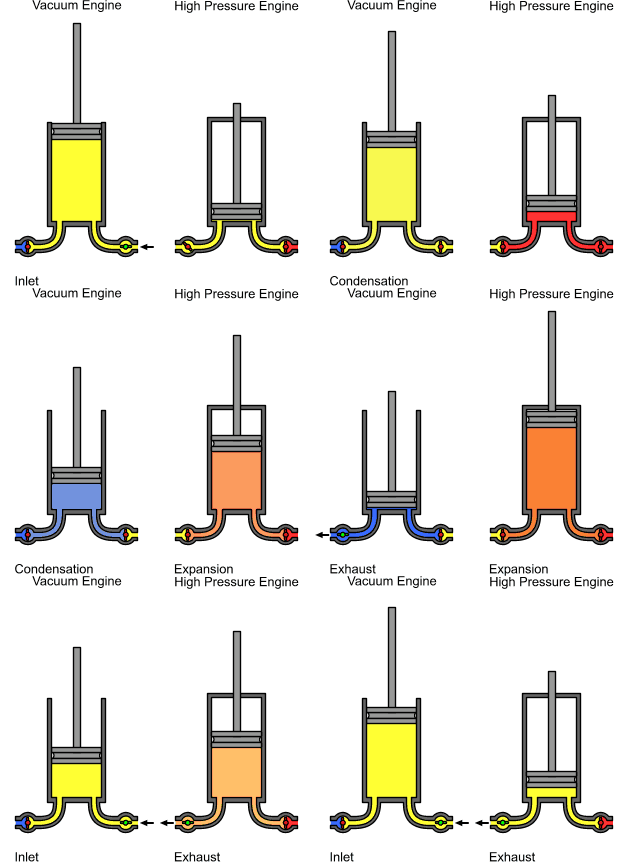
Later steam engines carried out mechanical work using high-pressure steam. Water is heated and turns into steam within a boiler under high pressure. When the steam was allowed to expand, the force of the expanding steam pushed pistons inside cylinders. The reduced-pressure steam was then released into the atmosphere as a waste gas, or condensed and piped back into the boiler.
Trevithick's engine
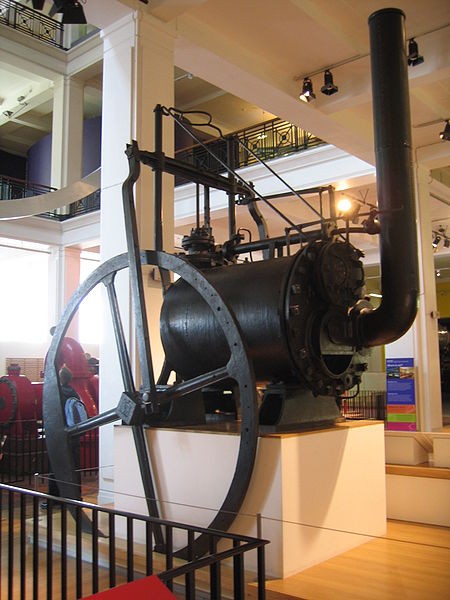
Taking advantage of improvements in boiler construction, which permitted the safe use of high-pressure steam, English mining engineer Richard Trevithick (1771–1833) developed the first high-pressure steam engine in 1799. In his engine, the piston moved up and down without relying on atmospheric pressure. Trevithick took out a patent for his high-pressure steam engine in 1802 and built one at the Coalbrookdale Company's works in Shropshire.
Trevithick’s engine could also be made compact and light enough to to carry its own weight and even pull a carriage. He later built the world's first steam locomotive, which made its first journey on rails from the Pen-y-darren ironworks, near Merthyr Tydfil, to Abercynon in Wales on 21st February 1804.
Steam turbine
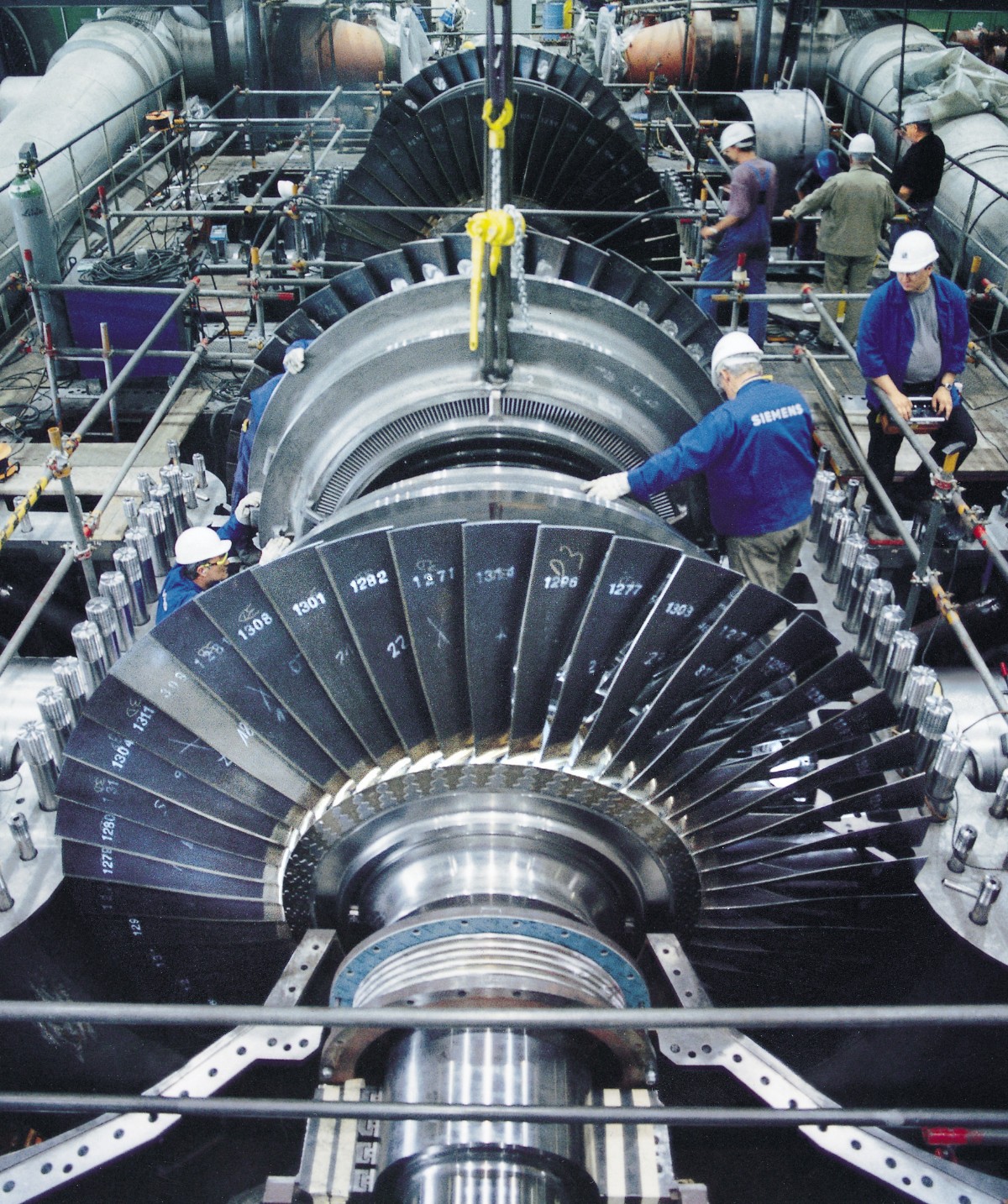
Invented by Anglo-Irish engineer Sir Charles Parsons (1854–1931) in 1884, the steam turbine uses jets of pressurized steam to spin a turbine, a drum fitted with blades around its edges, at high speed. Steam turbines were used to power ships, via a shaft connected to the ship’s propellers. They were the most popular engines for powering steamships until the mid-20th century.
Steam turbines are still used today in power stations, where they are connected to rotors inside an electric generator. Steam produced by water heated by burning fossil fuels or nuclear reactions drives the turbines.
Consultant: Chris Oxlade