
Ships and boats

CITE
We have made every effort to follow citation style rules, but there may be some minor differences. If in doubt, please refer to the appropriate citation style manual.
History of steamships. (2026). In Q-files Encyclopedia, Technology, Ships and boats. Retrieved from
https://www.q-files.com/technology/ships-and-boats/history-of-steamships
"History of steamships." Technology, Ships and boats, Q-files Encyclopedia, 13 Mar. 2026.
https://www.q-files.com/technology/ships-and-boats/history-of-steamships.
Accessed 2 Sep. 2026.
History of steamships 2026. Technology, Ships and boats. Retrieved 2 September 2026, from
https://www.q-files.com/technology/ships-and-boats/history-of-steamships
Technology, Ships and boats, s.v. "History of steamships," accessed September 2, 2026.
https://www.q-files.com/technology/ships-and-boats/history-of-steamships


History of steamships
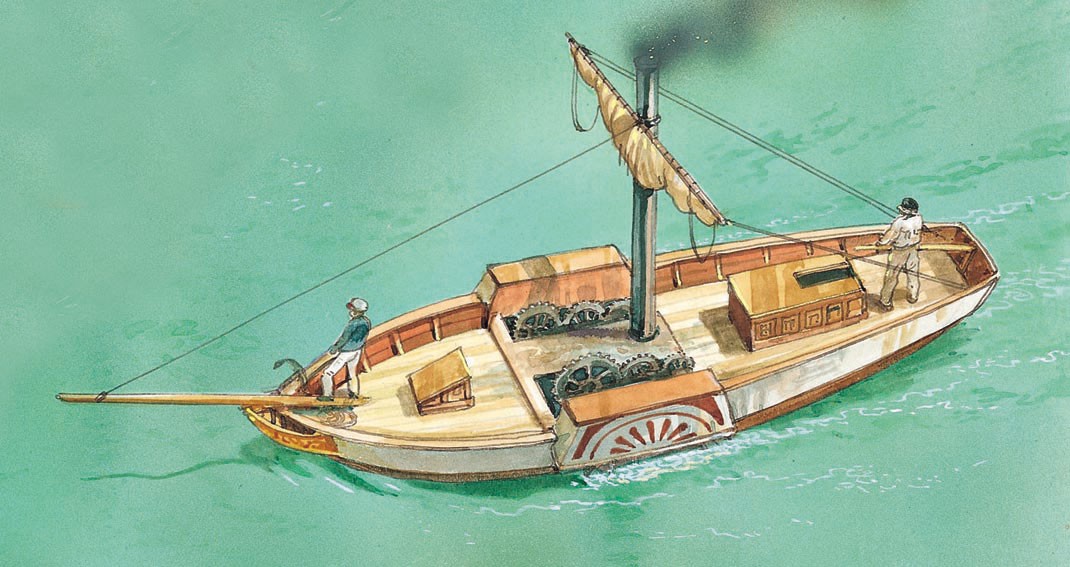
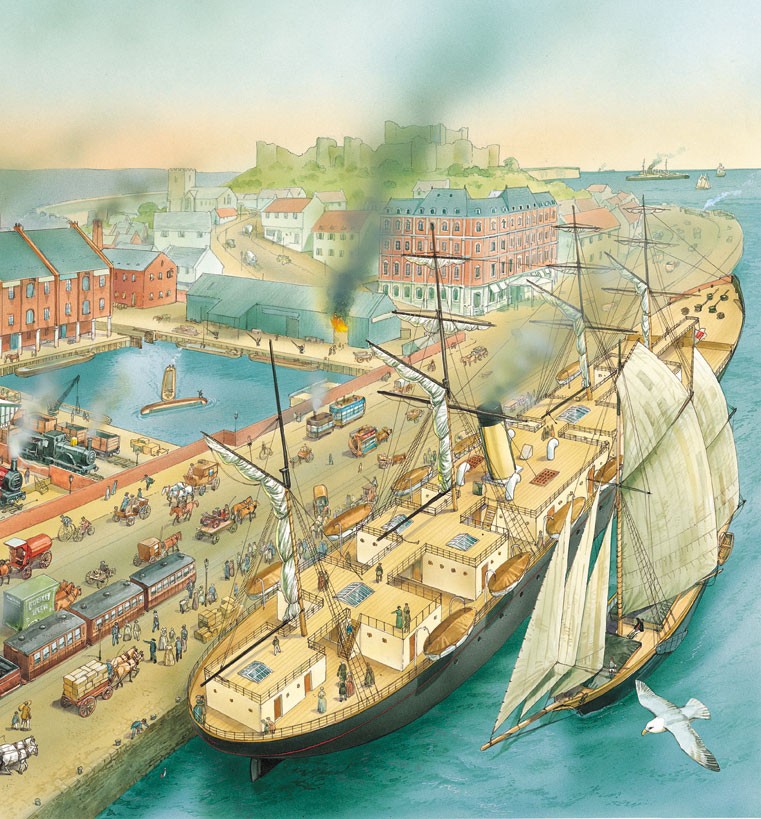
During the later 19th century, large sailing ships almost completely disappeared as steam power took over. The first successful steam-powered vessels were built for use on canals and rivers in the early 1800s. On early steamships, the steam engine turned paddle-wheels that moved the ship along, but by the 1850s most ships were using propellers (first fitted to a steamship in 1839), instead. The first ocean-going steamships kept sails, too, because they could not carry enough coal or water for long-distance voyages, and their engines were not very reliable.

The first steam vessels
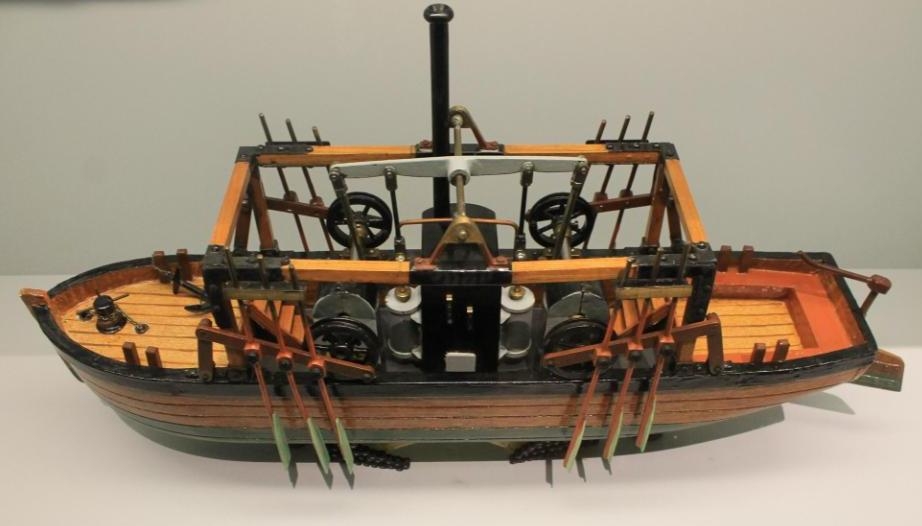
Steam engines, perfected by James Watt in partnership with Matthew Boulton in the 1770s, were soon used to power ships. The first steam vessels were built in the 1780s (including a vessel propelled by oars, invented by American inventors John Fitch and Henry Voight) but their designs were not practical.
The first successful steamboat was the Charlotte Dundas, built by Scottish engineer William Symington, to replace barges towed by horses along the Clyde Canal in Scotland. The 17.7-metre (58-foot) wooden vessel, driven by a single paddle-wheel at the stern, made her maiden voyage in 1802. She towed barges along the canal for a few weeks, before being taken out of service because it was feared that wash from the vessel’s paddle-wheel would cause the canal’s banks to fall in.
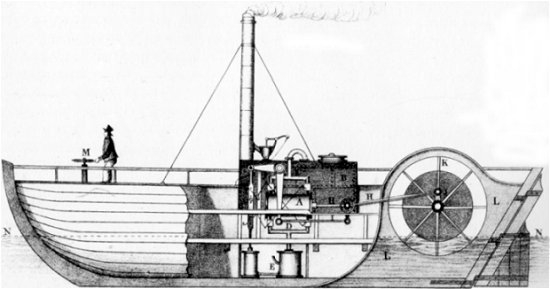
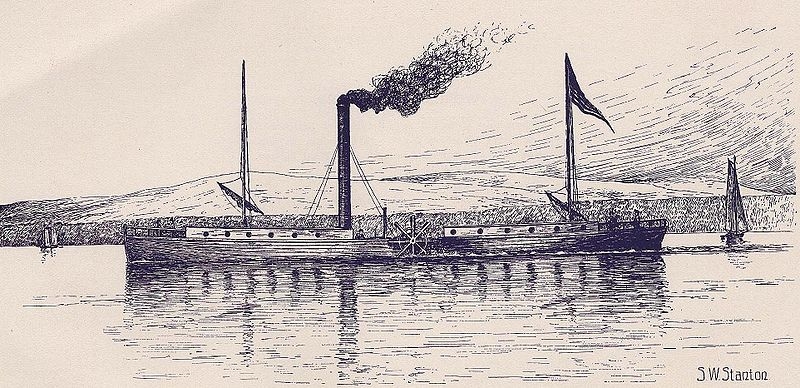
American inventor Robert Fulton, who had been on board the Charlotte Dundas, saw the great potential of steam power. He fitted a Watt engine to a much larger vessel with two paddle-wheels, named the North River Steamboat (later the Clermont). Making her maiden voyage in 1807, she carried passengers between New York City and Albany, covering the 240-kilometre (150-mile) trip in 32 hours. Following the commercial success of the Clermont, other steamboats soon went into service on major rivers in the US.
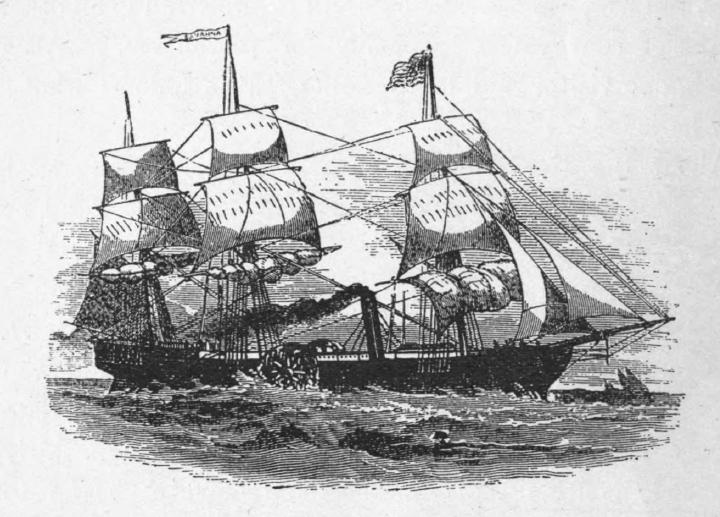
The first commercially successful steamboat in Europe, Scottish engineer Henry Bell's Comet of 1812, started a rapid growth of steam services on the Firth of Clyde. In 1819, the first steamer to make an ocean voyage, the Savannah, crossed the Atlantic from Savannah, Georgia to Liverpool, England. However, she completed most of her voyage under sail—she was too small to carry sufficient coal to fuel her engines all the way.
Transatlantic route

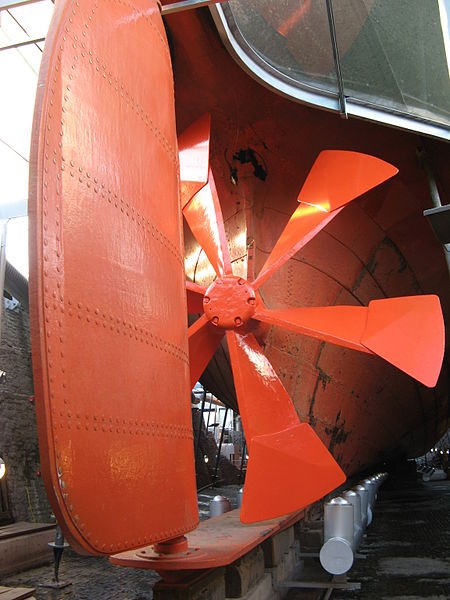
One of the most important sea routes in the 19th century was across the Atlantic Ocean from Europe to the United States. Millions of people emigrated to the US in ships. The first regular transatlantic service, starting in 1838, was the wooden paddle-steamer SS Great Western, built by English engineer Isambard Kingdom Brunel (1806–59). In 1845, Brunel's SS Great Britain became the first large iron steamship driven by a screw propeller to cross the Atlantic.
Larger and larger ships followed, including, in 1858, Brunel’s SS Great Eastern, easily the biggest ship in the world at the time. Measuring 211 metres (692 ft) long, she could carry 4000 passengers. Ocean-going ships continued to increase in size, especially with the introduction of steel hulls in the late 19th century.
Marine steam engines
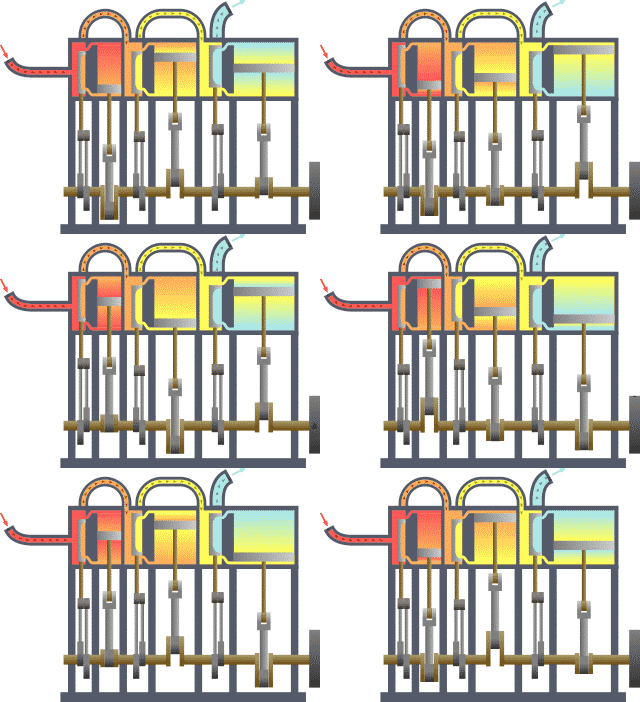
A wide variety of steam engines (called reciprocating engines, because of the back-and forth action of their pistons) were developed over the course of the 19th century for use in powering ships and boats. Compound steam engines, such as the triple-expansion engine, became popular after about 1880. These engines had a closed water circuit, enabling them to use the same water again and again (repeatedly turning it to steam, then back to water in a condenser) without needing to be topped up.
Steam turbine
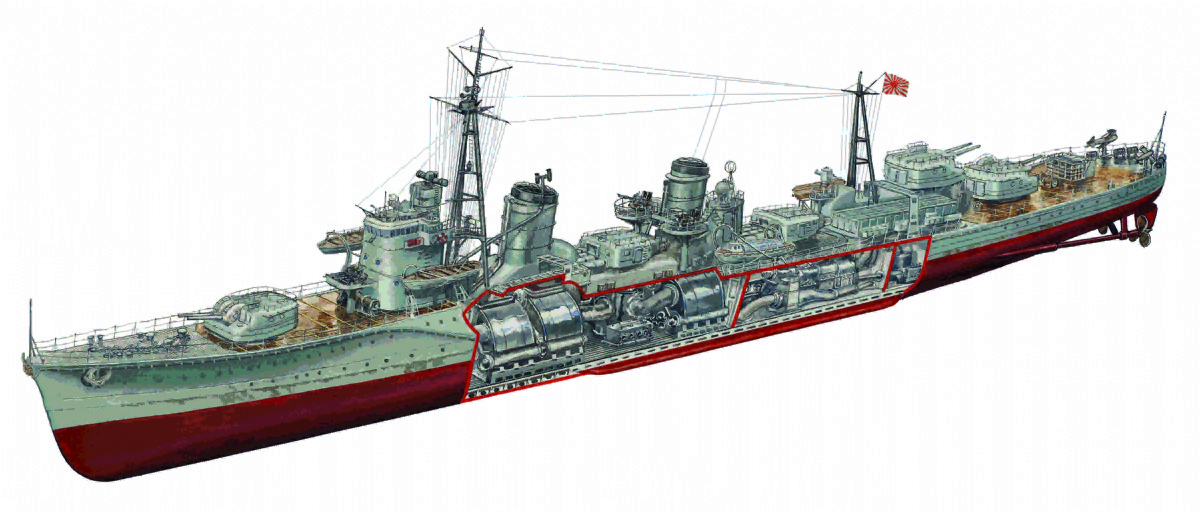
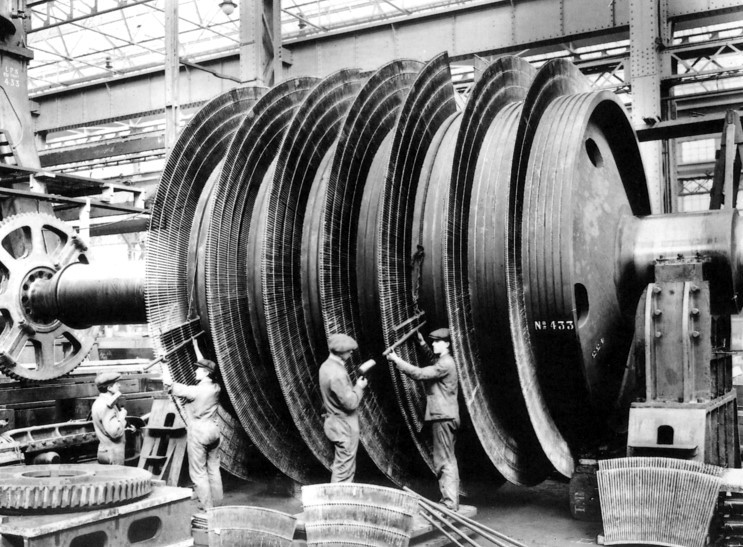
Invented by Anglo-Irish engineer Sir Charles Parsons (1854–1931) in 1884, the steam turbine quickly replaced triple-expansion engines in ocean liners and warships from the beginning of the 20th century. It used jets of pressurized steam to spin a turbine, a drum fitted with blades around its edges. The turbine turned the ship’s propellers, to which it was connected by a shaft, at high speed. Steam turbines were smaller and lighter than triple-expansion engines, and had less vibration. The ships they powered could go faster, too—an important feature for warships and ocean liners.
In some ships, the steam turbine powered an electrical generator, which ran electric motors connected to the propeller shafts. This was called turbo-electric transmission.
Water-tube boiler
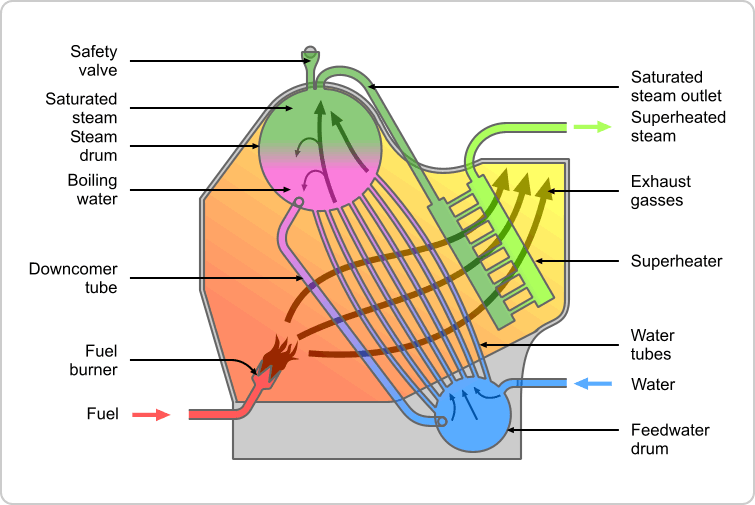
Steam turbines were driven by water-tube boilers. Water in steam-generating tubes was heated in an oil-fired furnace. The heated water rose into a steam drum. From here, saturated steam was fed back into the furnace, where it was superheated (heated, at high pressure, above the normal boiling point of water). A jet of superheated steam, a dry gas, was used to drive the turbines; water droplets from ordinary steam could severely damage turbine blades.
Liners and warships
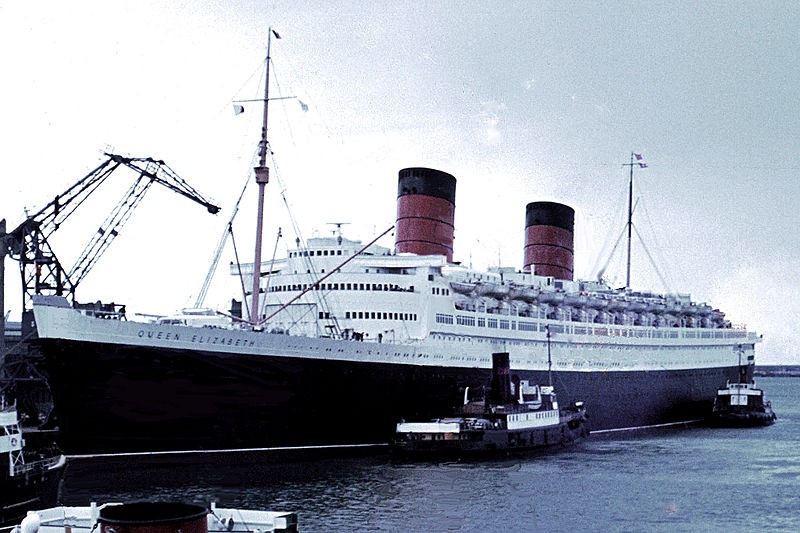
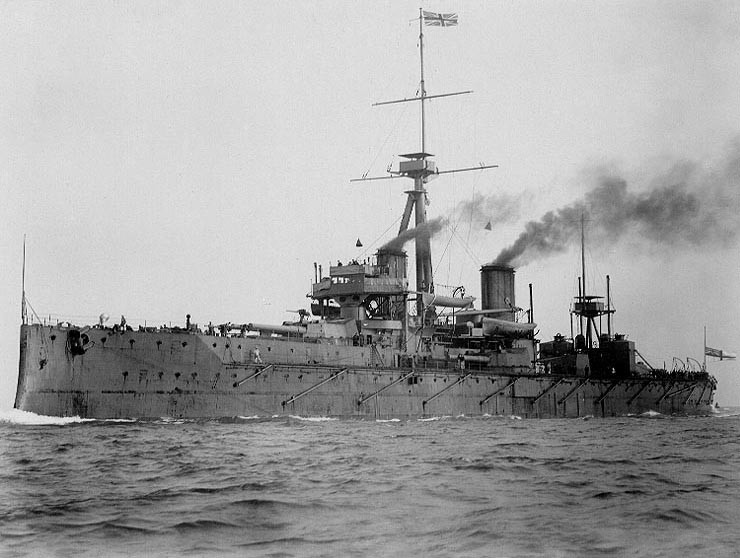
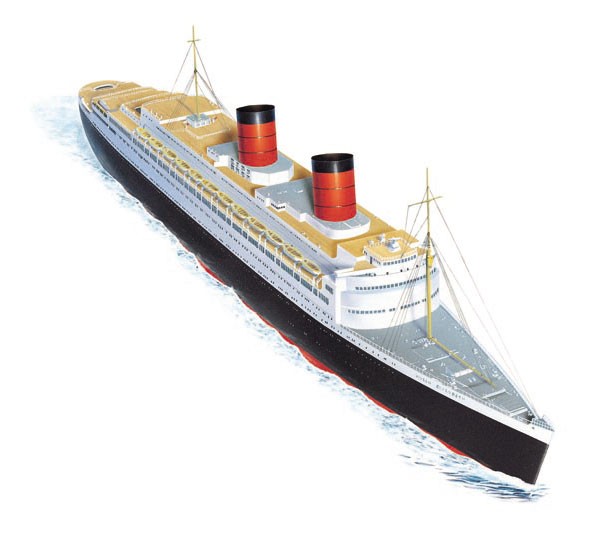
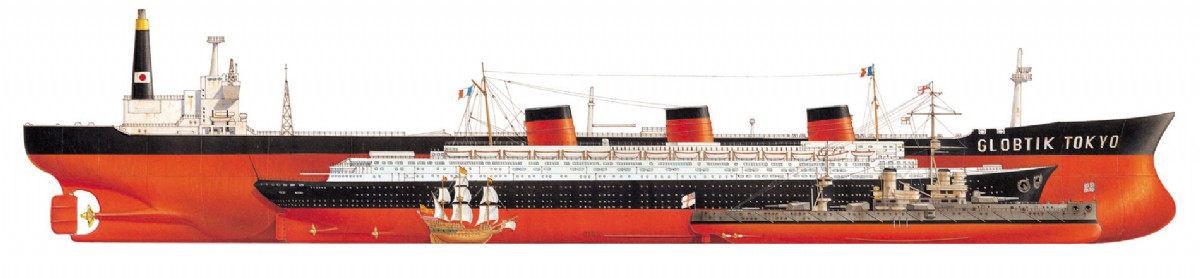
By the early 20th century, huge luxury liners were crossing the Atlantic and steam-powered merchant ships were carrying most of the world’s cargo. The fastest liners and warships used the new steam turbine engine. HMS Dreadnought, launched in 1906, was the first major warship to replace the reciprocating engine with the steam turbine. It set the pattern for all later battleship construction. Most new warships, passenger ships and merchant ships since around 1960 have been built with diesel engines, which use less fuel.
The voyage of the Titanic
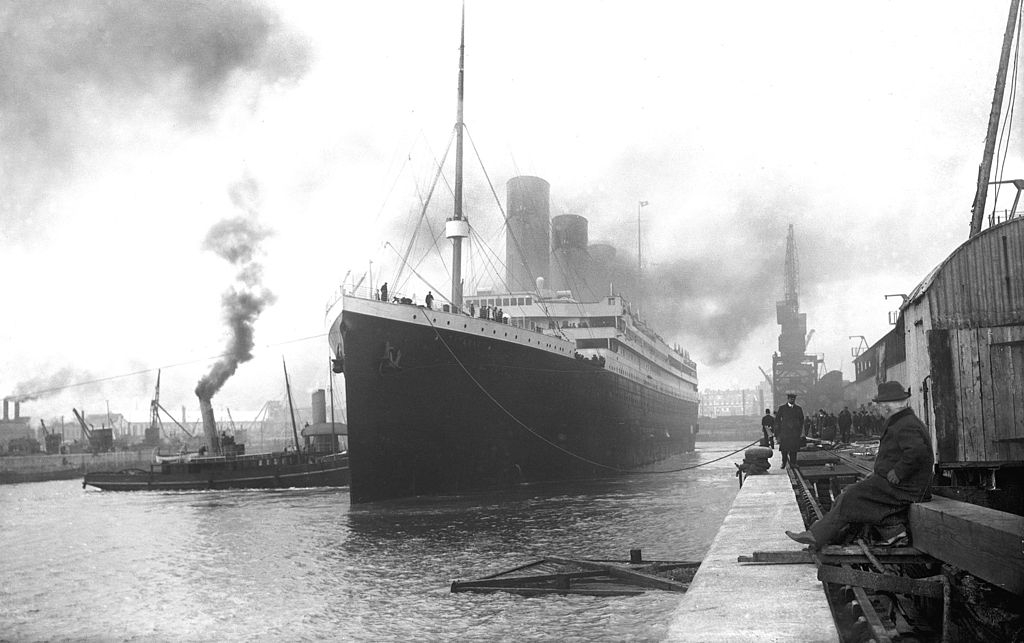
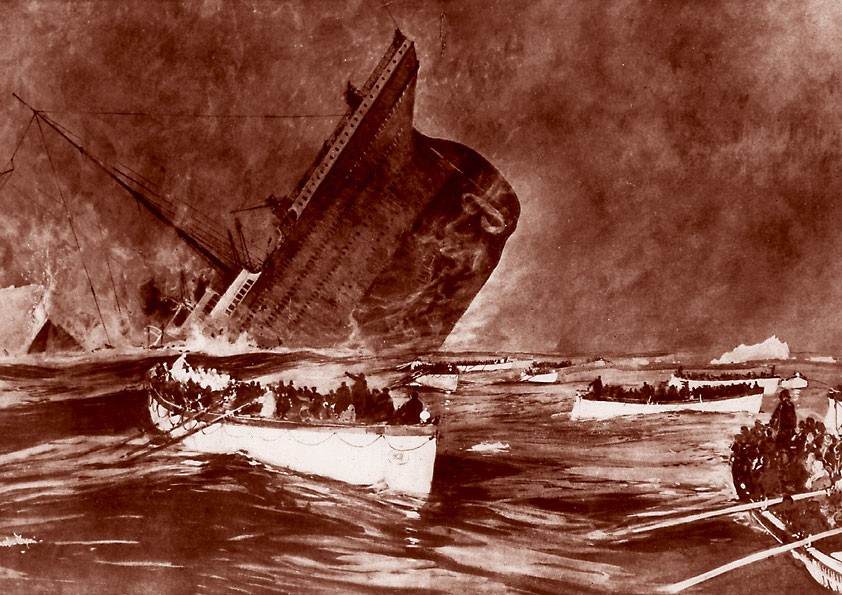
On the 10th April 1912, the British ocean liner RMS Titanic set sail from Southampton bound for New York across the Atlantic Ocean. It was the maiden (first) voyage of the most luxurious ship ever built. Weighing around 50,000 tonnes, Titanic had over 2000 passengers on board. But disaster struck one night on that voyage. The look-out spotted an iceberg ahead just before midnight, but it was too late. Titanic collided with it, which cut a hole in her side. The ship began to fill with water. The cargo was stored in the lower part of the ship’s hull. These areas of the ship were the first to flood. The crew were sleeping on the lower decks. They tried to escape to the upper decks but the water was coming up fast.
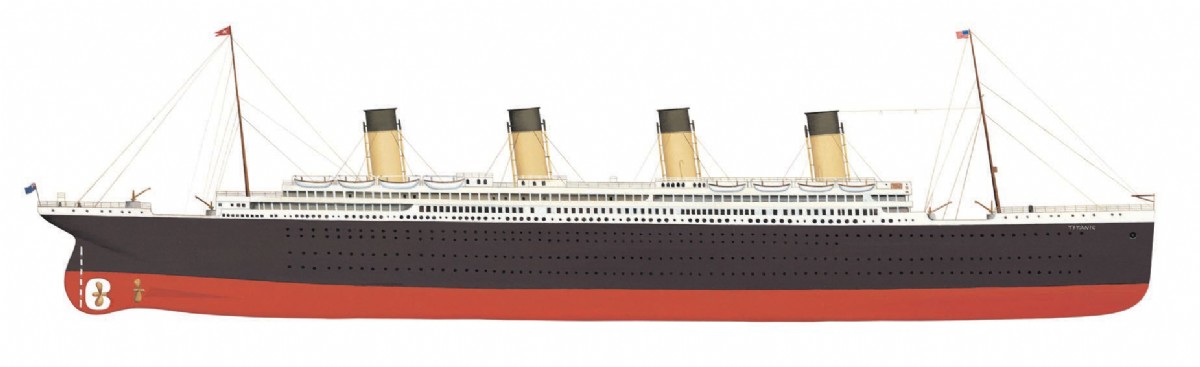
The boiler rooms were also deep in the hull of the ship and flooded soon after Titanic struck the iceberg. The engine crew had to keep the pumps and lighting going for as long as possible. When the order came to abandon ship, it was too late for many of them to climb out and escape. Other members of the crew helped passengers into lifeboats, but there were only 20 of them—far too few to save everyone. Women and children were the first passengers allowed into the lifeboats. Some people did not believe that they were in danger and refused to get in. Titanic eventually sunk with 1500 people still on board. Most perished in the icy waters. Following the disaster, new safety regulations for ships were introduced.
Consultant: Chris Oxlade
pics

Without in any way limiting Q-files Ltd’s exclusive rights under copyright, any use of this publication to “train” generative artificial intelligence (AI) technologies to generate text is expressly prohibited. Q-files Ltd reserves all rights to license use of this work for generative AI training and development of machine learning language models.