
Famous inventors

CITE
We have made every effort to follow citation style rules, but there may be some minor differences. If in doubt, please refer to the appropriate citation style manual.
Isambard Kingdom Brunel. (2026). In Q-files Encyclopedia, Technology, Famous inventors. Retrieved from
https://www.q-files.com/technology/famous-inventors/isambard-kingdom-brunel
"Isambard Kingdom Brunel." Technology, Famous inventors, Q-files Encyclopedia, 16 Mar. 2026.
https://www.q-files.com/technology/famous-inventors/isambard-kingdom-brunel.
Accessed 6 Aug. 2026.
Isambard Kingdom Brunel 2026. Technology, Famous inventors. Retrieved 6 August 2026, from
https://www.q-files.com/technology/famous-inventors/isambard-kingdom-brunel
Technology, Famous inventors, s.v. "Isambard Kingdom Brunel," accessed August 6, 2026.
https://www.q-files.com/technology/famous-inventors/isambard-kingdom-brunel


Isambard Kingdom Brunel
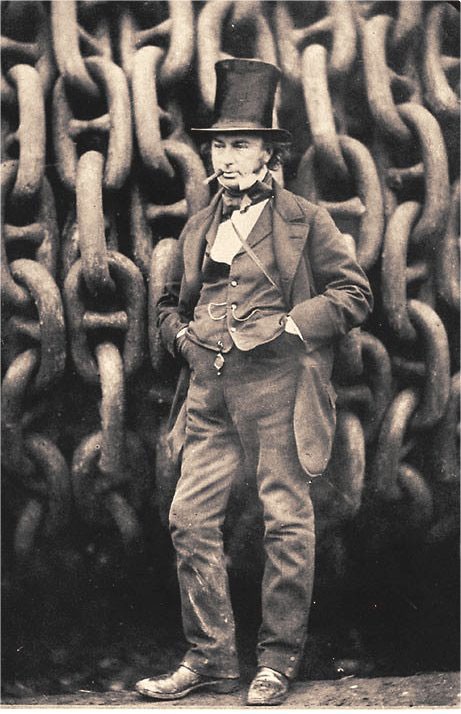
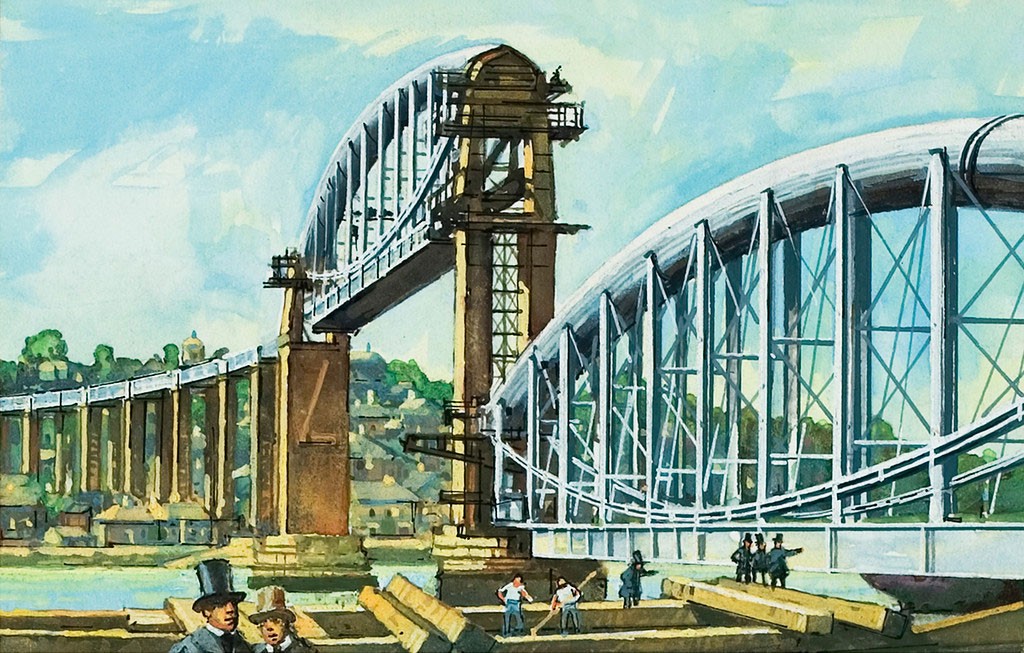
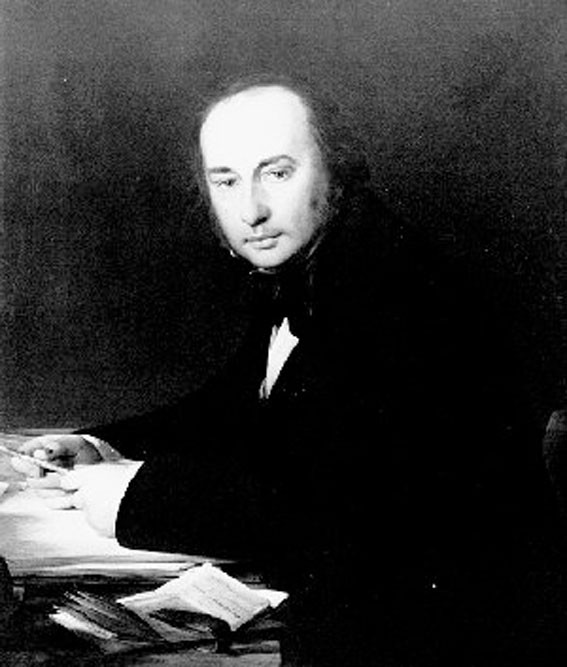
Isambard Kingdom Brunel (1806–1859) was an English engineer, famous for building the Great Western Railway, connecting the west of England with London. For it, he constructed a number of viaducts, tunnels and bridges, many still in use today. Brunel went on to design three great steamships, including the Great Britain (1843), the world's first propeller-driven transatlantic steamship. Brunel's tunnels and bridges were the longest in the world at the time; his ships were the largest and speediest. His designs were engineering marvels of the Victorian Age.
Early life
Isambard's father, Sir Marc Isambard Brunel (1769–1849), was himself a famous engineer. French by birth, he settled in Britain after the French Revolution and married Englishwoman Sophia Kingdom. Isambard was born on 9th April 1806 in Portsea, Portsmouth, Hampshire. He was sent to school in France and was 16 when he returned to England to work with his father. Marc was building a tunnel under the River Thames from Rotherhithe to Wapping, a project eventually completed in 1843.
Clifton Suspension Bridge
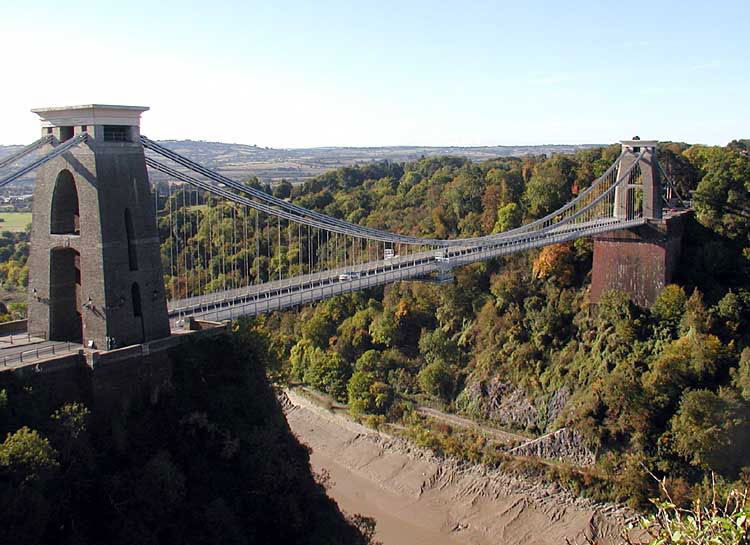
A design competition was held for a bridge over the Avon Gorge in Bristol, with the great bridge-builder Thomas Telford, responsible for the Iron Bridge at Coalbrookdale, serving as expert adviser. Brunel presented four designs for a bridge with a span of more than 210 metres (700 feet) and height above water of 75 metres (245 feet). Brunel won the competition and work started in 1831, but was stopped after riots in Bristol. Only the end piers were erected in Brunel's lifetime. The Clifton Suspension Bridge was completed in his honour by engineering colleagues in 1864. It is still in use as a road bridge today.
Great Western Railway
Brunel was appointed chief engineer for the building of a railway linking London with Bristol, and later to Wales and southwest England, in 1833. The Great Western Railway, as it was named, required a system of tunnels, cuttings, bridges and viaducts to be built. They included the viaducts at Hanwell and Chippenham, the Maidenhead Bridge and the Box Tunnel (the longest railway tunnel in the world at the time).
Brunel also designed London Paddington and Bristol Temple Meads stations for the Great Western Railway, both of which buildings still stand today. He also made designs for several smaller stations along the line.
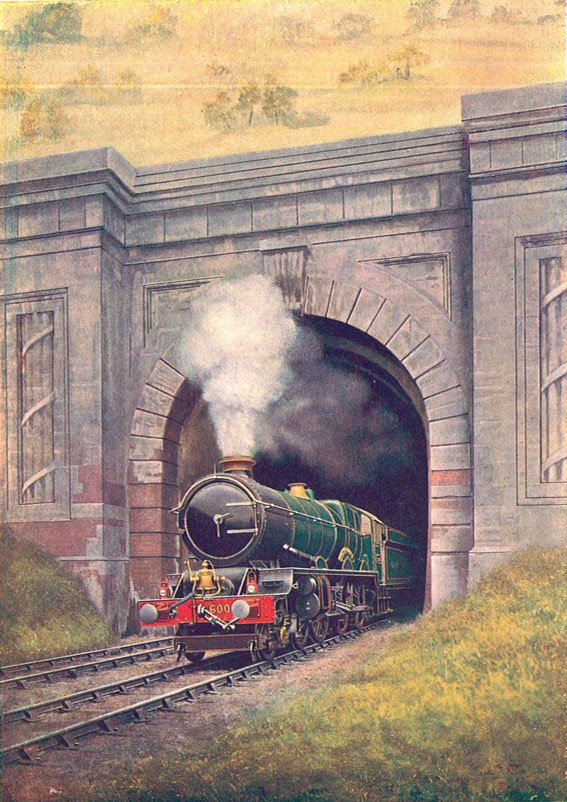
Brunel decided on a broad gauge (7 feet / 2.13 metres) instead of the standard 4 feet 8½ inches (1.49 metres), which had been used for lines already laid. Brunel argued that the broad gauge gave a more stable and comfortable ride, but the government insisted on the standard gauge.
Great Western
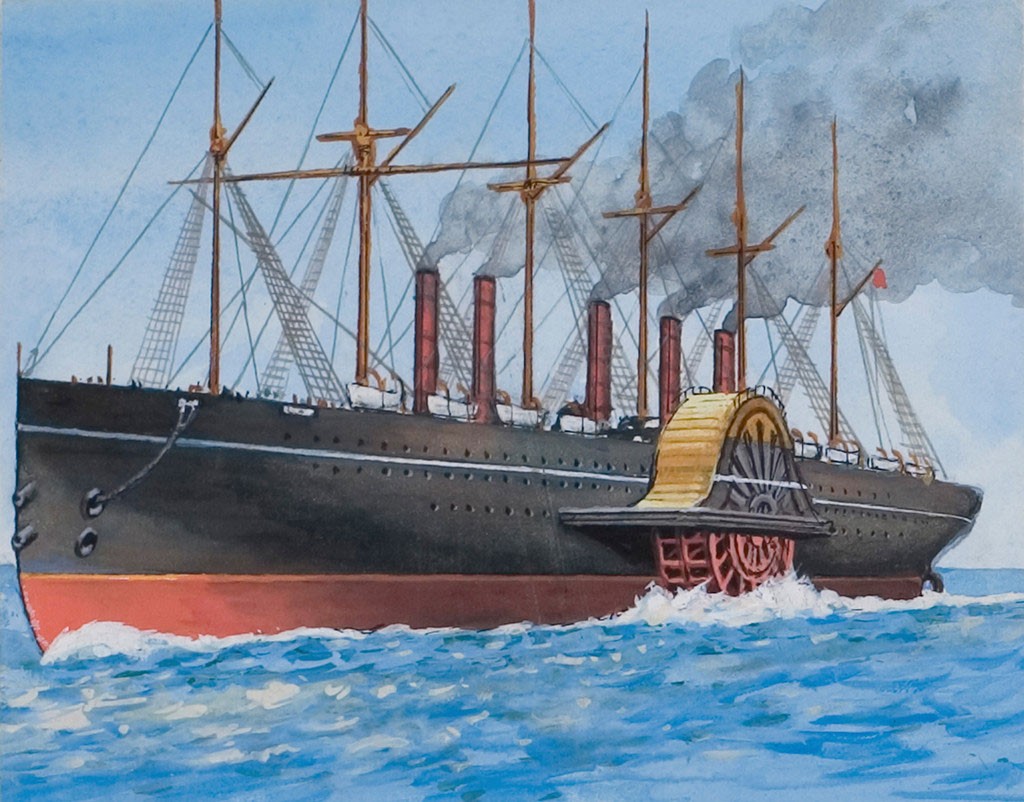
Brunels' vision was a continuous link from London to New York, first by train on the Great Western Railway, then by ship, also called the Great Western. Brunel formed the Great Western Steamship Company, and construction started on the ship in Bristol in 1836. The Great Western was launched the following year. Built of wood and 72 metres (236 feet) long, it was powered by both sail and paddlewheels. The first trip to New York took 15 days: previously a one-way trip under sail would take more than a month. The Great Western was the first steamship to enter transatlantic service and over the course of its lifetime made 74 crossings to New York.

Great Britain
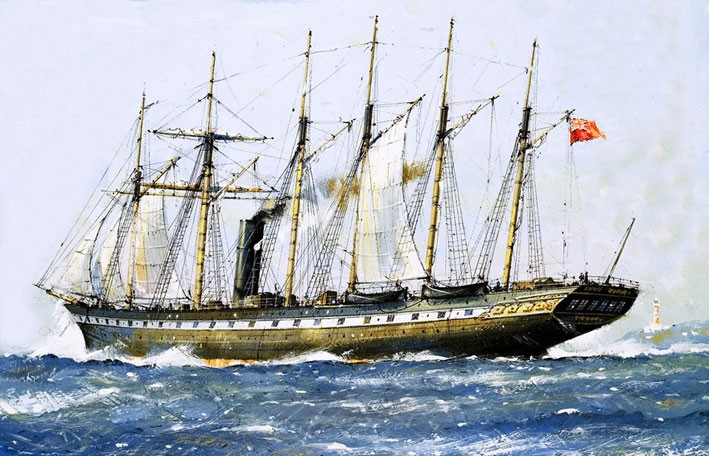
Brunel immediately got to work on an even bigger ship. The Great Britain was made entirely of iron and would be 98 metres (322 feet) long. To begin with, Brunel intended her to have paddlewheels like the Great Western, but he later decided to attach a propeller instead. The Great Britain was launched in 1843. She was the first propeller-driven, iron-hulled, steam-powered passenger ship to cross the Atlantic.
Great Eastern
Brunel then designed the biggest ship ever, five times larger than any other ship before. It would be large enough to carry fuel to reach Australia without refuelling and would be able to carry 4000 passengers. Construction began on the 211-metre (692-foot) Great Eastern in 1854. After several delays, she was ready for launch on her maiden voyage in September 1859.
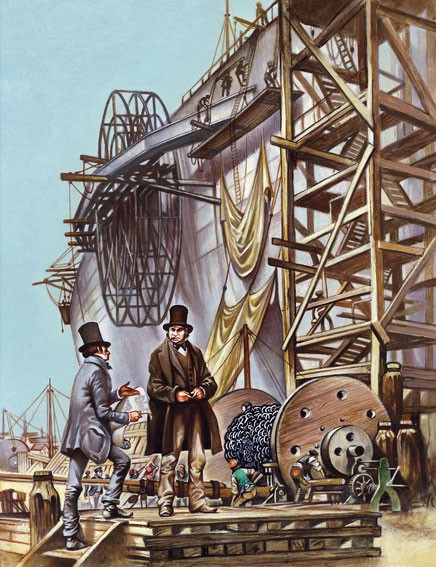
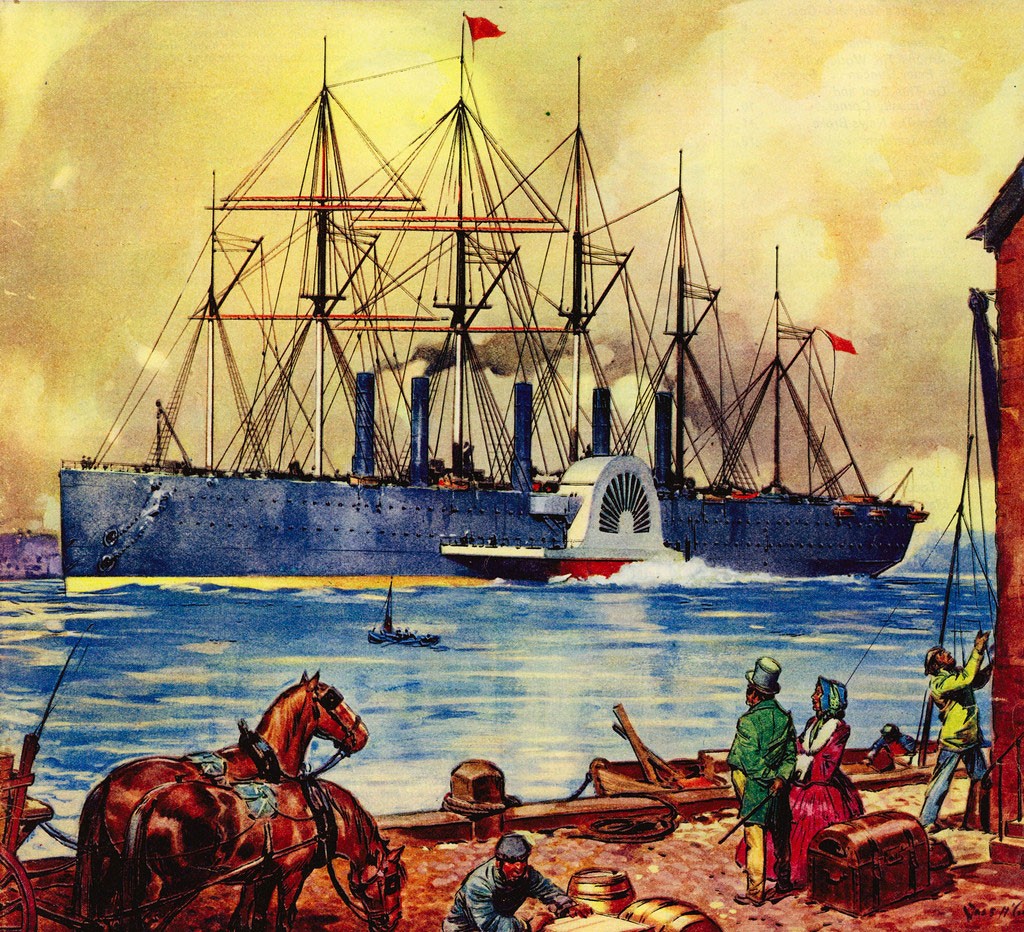
Brunel died of a stroke within a week or so of the launch of the Great Eastern, on 15th September 1859. She never carried 4000 passengers, and although made several transatlantic crossings, was not a financial success. She soon acquired an unintended role, however. She was hired to carry 5000 tons of telegraphic cable, which was to be laid on the ocean floor from Ireland to Newfoundland. On 27th July 1866 the Great Eastern successfully completed this task, and was later used for laying cable across other seas and oceans.
Consultant: Dave Hawksett
pics
Without in any way limiting Q-files Ltd’s exclusive rights under copyright, any use of this publication to “train” generative artificial intelligence (AI) technologies to generate text is expressly prohibited. Q-files Ltd reserves all rights to license use of this work for generative AI training and development of machine learning language models.