
Famous inventors

CITE
We have made every effort to follow citation style rules, but there may be some minor differences. If in doubt, please refer to the appropriate citation style manual.
George Stephenson. (2026). In Q-files Encyclopedia, Technology, Famous inventors. Retrieved from
https://www.q-files.com/technology/famous-inventors/george-stephenson
"George Stephenson." Technology, Famous inventors, Q-files Encyclopedia, 16 Mar. 2026.
https://www.q-files.com/technology/famous-inventors/george-stephenson.
Accessed 21 Sep. 2026.
George Stephenson 2026. Technology, Famous inventors. Retrieved 21 September 2026, from
https://www.q-files.com/technology/famous-inventors/george-stephenson
Technology, Famous inventors, s.v. "George Stephenson," accessed September 21, 2026.
https://www.q-files.com/technology/famous-inventors/george-stephenson


George Stephenson
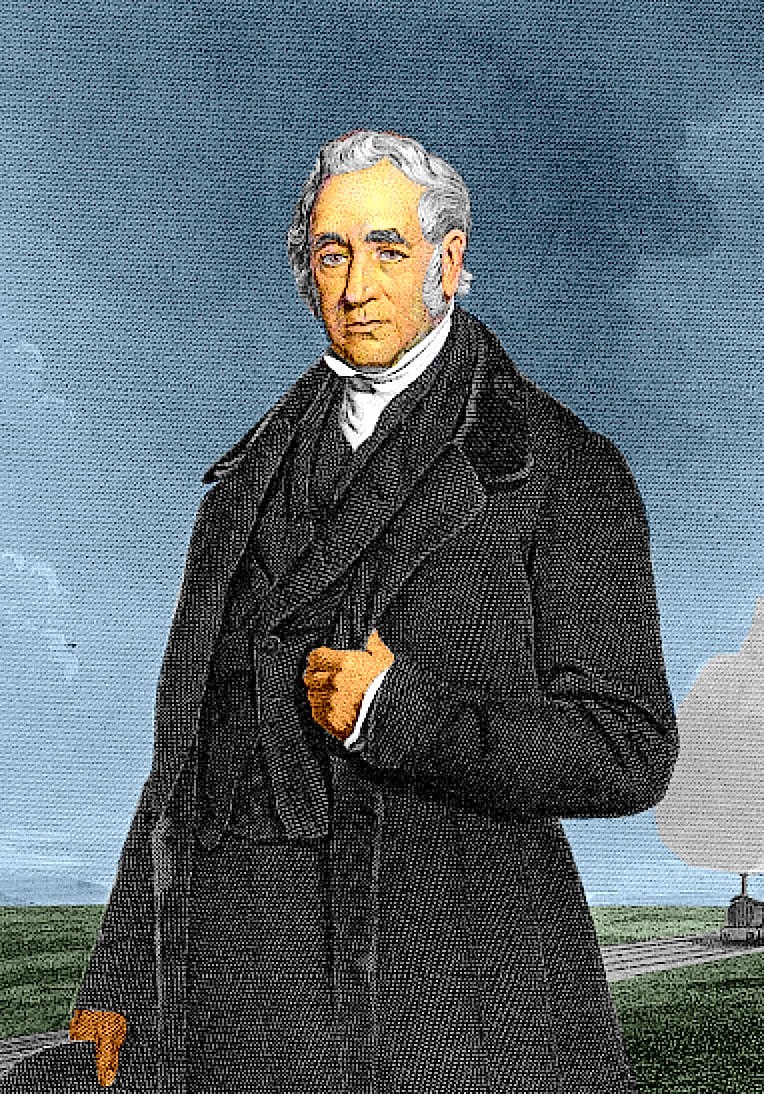
George Stephenson (1781–1848) was an English engineer. In 1815, he invented a safety lamp for use in mines that would burn without causing an explosion. The first steam locomotive had been invented by Richard Trevithick in 1804, and Stephenson designed his first locomotive, Blücher, in 1814. It was used for hauling coal at Killingworth Colliery near Newcastle-upon-Tyne. Along with his son, Robert (1803–1859), also an engineer, Stephenson supervised the construction of the Stockton and Darlington Railway, which opened in 1825.

Early life
George Stephenson was born on 9th June 1781 in Wylam, a village in Northumberland. While he worked as a brakesman, a pithead winch operator at the nearby colliery, he learned to read and write in his spare time. In 1811, after successfully repairing a faulty pumping engine at a coalmine, he was given responsibilty for repairing all its engines, and so became an expert in how steam engines worked. Soon Stephenson was designing steam locomotives to haul coal—and improving the design of iron rails to reduce track breakage.
Stockton and Darlington Railway
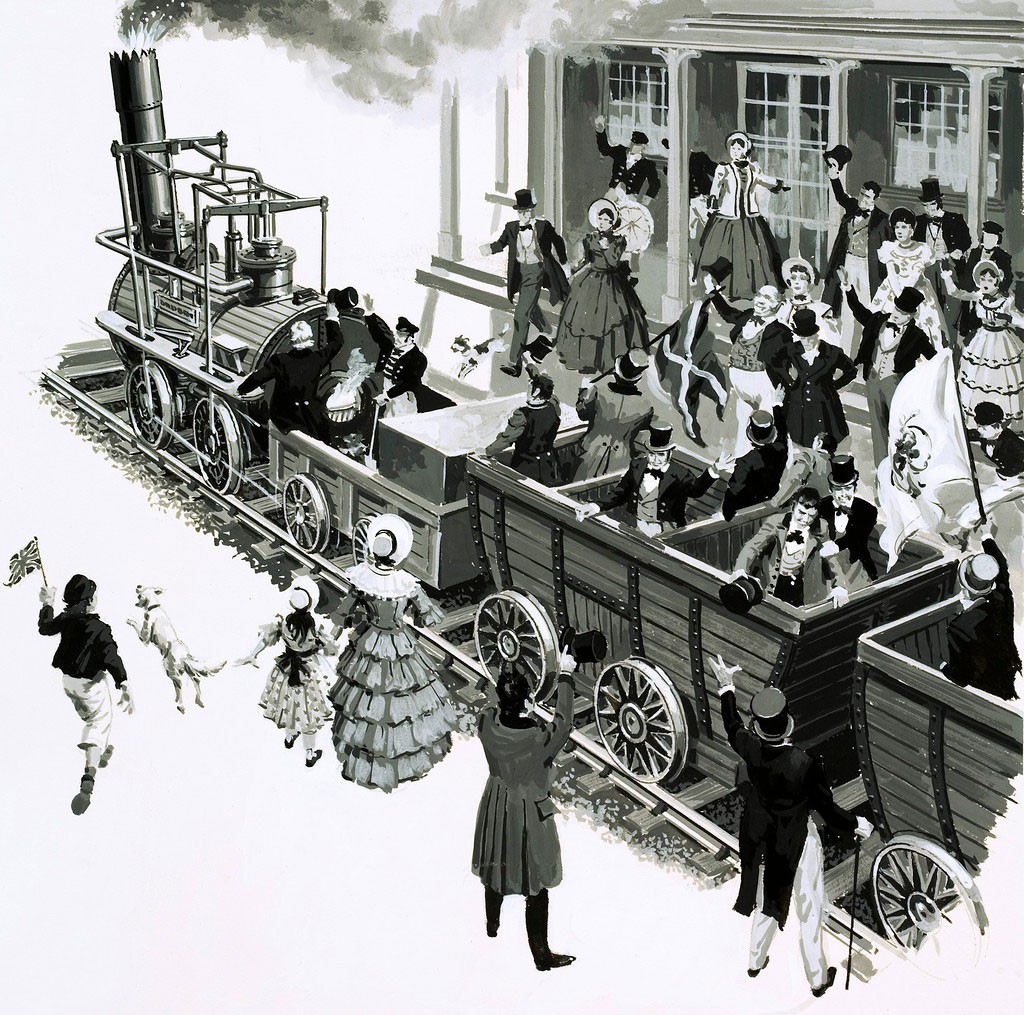
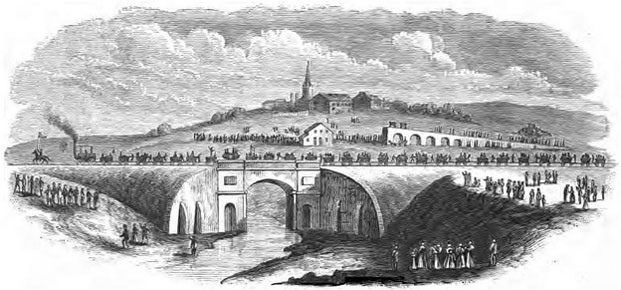
The Stockton and Darlington Railway was to be the first public railway. Stephenson, assisted by his 18-year-old son Robert, was appointed engineer for its construction in 1821. The locomotive the Stephensons built to run on it, Locomotion, pulled the first passenger car to run on a steam locomotive railway. The track itself was built to a gauge of 4 feet 8 1⁄2 inches (1435 mm), which remains the standard gauge for railways all over the world today.

Rocket
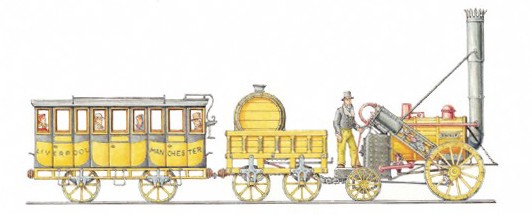
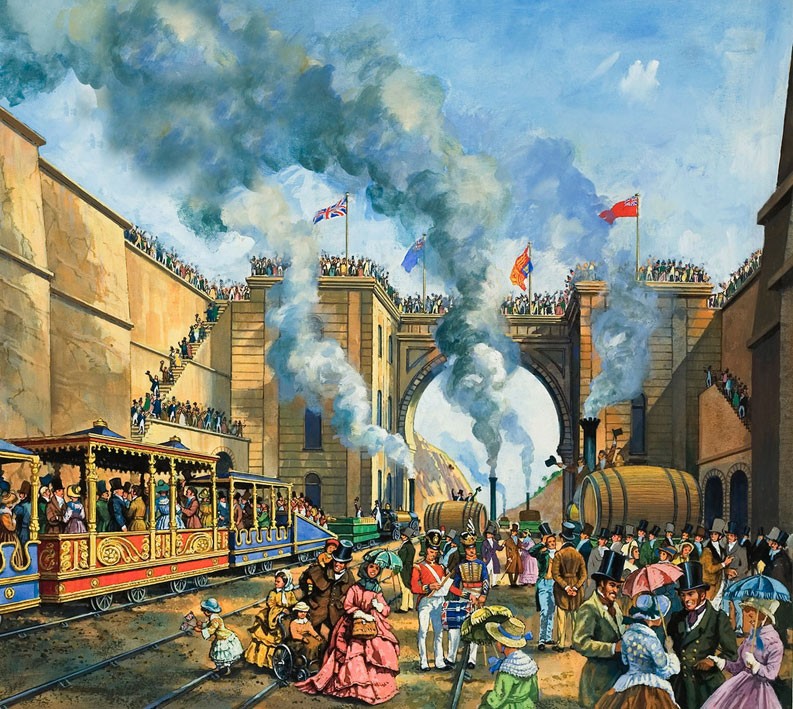
In 1829, while the new Liverpool and Manchester Railway was being built in northern England, a competition, called the Rainhill Trials, was held by its owners to find the best locomotive to run along it. The £500 prize was won easily by the Rocket, entered by George and Robert Stephenson. It reached the then breathtaking speed of 46.7 km/h (29 mph)—a world record. So successful was it that all later steam locomotives were based on its design. George Stephenson himself became much in demand as engineer for other railway builders.
Consultant: Dave Hawksett
pics
Without in any way limiting Q-files Ltd’s exclusive rights under copyright, any use of this publication to “train” generative artificial intelligence (AI) technologies to generate text is expressly prohibited. Q-files Ltd reserves all rights to license use of this work for generative AI training and development of machine learning language models.