
Famous inventors

CITE
We have made every effort to follow citation style rules, but there may be some minor differences. If in doubt, please refer to the appropriate citation style manual.
Clarence Birdseye. (2026). In Q-files Encyclopedia, Technology, Famous inventors. Retrieved from
https://www.q-files.com/technology/famous-inventors/clarence-birdseye
"Clarence Birdseye." Technology, Famous inventors, Q-files Encyclopedia, 16 Mar. 2026.
https://www.q-files.com/technology/famous-inventors/clarence-birdseye.
Accessed 22 Sep. 2026.
Clarence Birdseye 2026. Technology, Famous inventors. Retrieved 22 September 2026, from
https://www.q-files.com/technology/famous-inventors/clarence-birdseye
Technology, Famous inventors, s.v. "Clarence Birdseye," accessed September 22, 2026.
https://www.q-files.com/technology/famous-inventors/clarence-birdseye


Clarence Birdseye
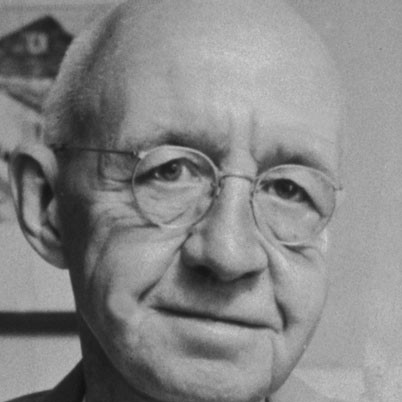
Clarence Birdseye (1886–1956) was an American inventor and businessman. He invented the "flash-freezing" method by which foodstuffs were frozen quickly, ensuring they remained fresh to eat after they had thawed out. Birdseye began his career as a naturalist. Working in Labrador, Canada in 1912–15, he learnt from the native Inuits that, in temperatures of –40°C, any fish that they caught froze almost instantly—and, when later thawed, they tasted fresh. This gave him the idea for his invention.
Fast freezing
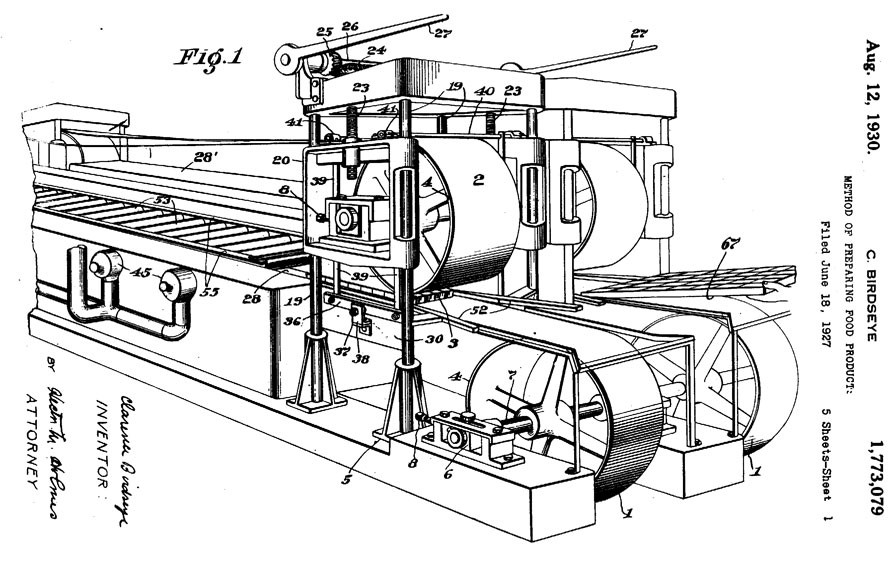
Food freezing in the early 20th century was usually done at higher temperatures, so the freezing occurred more slowly and the food did not taste fresh on thawing. Fast freezing, it was later discovered, produces smaller ice crystals which cause less damage to living tissue. In 1925, Birdseye's company, the General Seafood Corporation, started using Birdseye's invention, the double belt freezer, in which packaged fish was frozen quickly using brine (salty water) while compressed between two refrigerated surfaces. The process was quickly extended beyond fish to the rapid freezing of meat, poultry, fruit and vegetables.
Consultant: Dave Hawksett
pics
Without in any way limiting Q-files Ltd’s exclusive rights under copyright, any use of this publication to “train” generative artificial intelligence (AI) technologies to generate text is expressly prohibited. Q-files Ltd reserves all rights to license use of this work for generative AI training and development of machine learning language models.