
Famous inventors

CITE
We have made every effort to follow citation style rules, but there may be some minor differences. If in doubt, please refer to the appropriate citation style manual.
Richard Trevithick. (2026). In Q-files Encyclopedia, Technology, Famous inventors. Retrieved from
https://www.q-files.com/technology/famous-inventors/richard-trevithick
"Richard Trevithick." Technology, Famous inventors, Q-files Encyclopedia, 16 Mar. 2026.
https://www.q-files.com/technology/famous-inventors/richard-trevithick.
Accessed 21 Sep. 2026.
Richard Trevithick 2026. Technology, Famous inventors. Retrieved 21 September 2026, from
https://www.q-files.com/technology/famous-inventors/richard-trevithick
Technology, Famous inventors, s.v. "Richard Trevithick," accessed September 21, 2026.
https://www.q-files.com/technology/famous-inventors/richard-trevithick


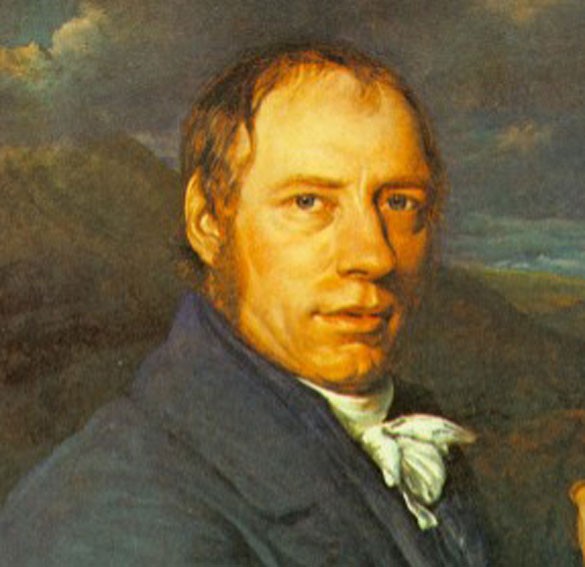
Richard Trevithick
The first steam locomotive to run on rails was built by Richard Trevithick (1771–1833) an inventor and mining engineer from Cornwall, England. He developed the first high-pressure steam engine in 1799. Taking advantage of improvements in boiler construction, which permitted the safe use of high-pressure steam, Trevithick designed an engine in which the piston could move up and down without relying on atmospheric pressure as did Thomas Newcomen's atmospheric engine. Trevithick also built the world's first steam locomotive, which made its first journey from the Pen-y-darren ironworks, near Merthyr Tydfil, to Abercynon in Wales on 21st February 1804.

First steam locomotive
Trevithick's high-pressure steam engine was more compact than the atmospheric engine—and light enough to carry its own weight and even pull a carriage. After experimenting with steam road vehicles, Trevithick designed a four-wheel locomotive to run on rails. It made a demonstration run in 1804, reaching 8 km/h (5 mph, a brisk walking-pace) when loaded. It showed that, even with a gentle gradient, it was possible to haul heavy carriages along a track relying on the weight of the steam locomotive itself to provide the necessary grip. Unfortunately, the weight of the train eventually broke the rails.

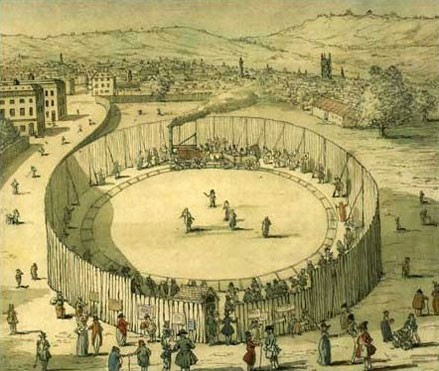
Steam circus
In 1808, Trevithick built a new steam locomotive called "Catch me who can". Intended to publicize the advantages of rail travel over horses, it ran on a circular track specially built in London. The public were treated to rides on the "steam circus", but the tracks kept on breaking and it was not a success. After that, Trevithick built no more locomotives.
By 1812, stronger tracks had been built between Middleton Colliery and Leeds. They carried the first successful steam locomotives, built by English manufacturer Matthew Murray (1765-1826).
Consultant: Dave Hawksett
pics
Without in any way limiting Q-files Ltd’s exclusive rights under copyright, any use of this publication to “train” generative artificial intelligence (AI) technologies to generate text is expressly prohibited. Q-files Ltd reserves all rights to license use of this work for generative AI training and development of machine learning language models.