
Sport
Athletics
Athletics is a collection of running, walking, jumping and throwing contests requiring a mix of strength, speed, endurance and agility. Athletics can be divided into track events, which take place on a running track; field events, held on the space inside the track; and other events that take place on roads outside the sports stadium. Track events are held on an oval track that has a diameter of 400 metres on the innermost of eight lanes. The track events fall into several groups: sprints, middle distance, long distance, hurdling and relays.
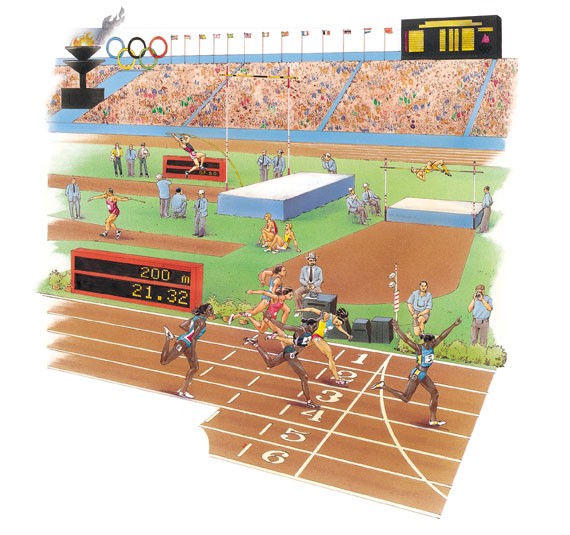
History
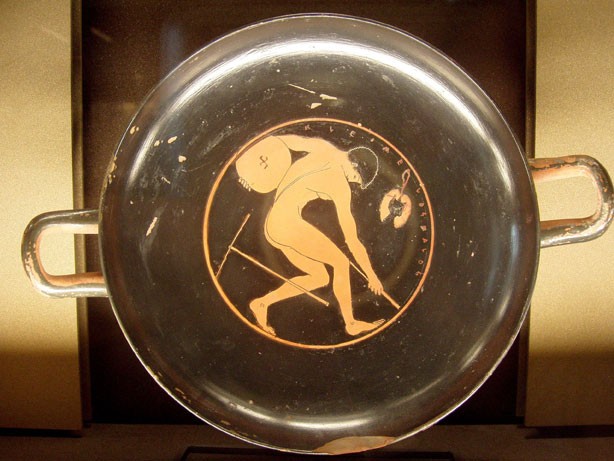
Athletics events are pictured on ancient Egyptian tombs from about 2250 BC. At the first Olympic Games in ancient Greece in 776 BC, the only event was a 192-metre sprint. Modern athletics has its roots in 19th-century contests organized by schools and colleges, military organizations and sports clubs. The first track and field championships were held at the New York Athletic Club in 1876. The first modern Olympics took place 20 years later, and, together with the World Athletic Championships, which is held every two years, it is the most important international athletics competition.
Sprints
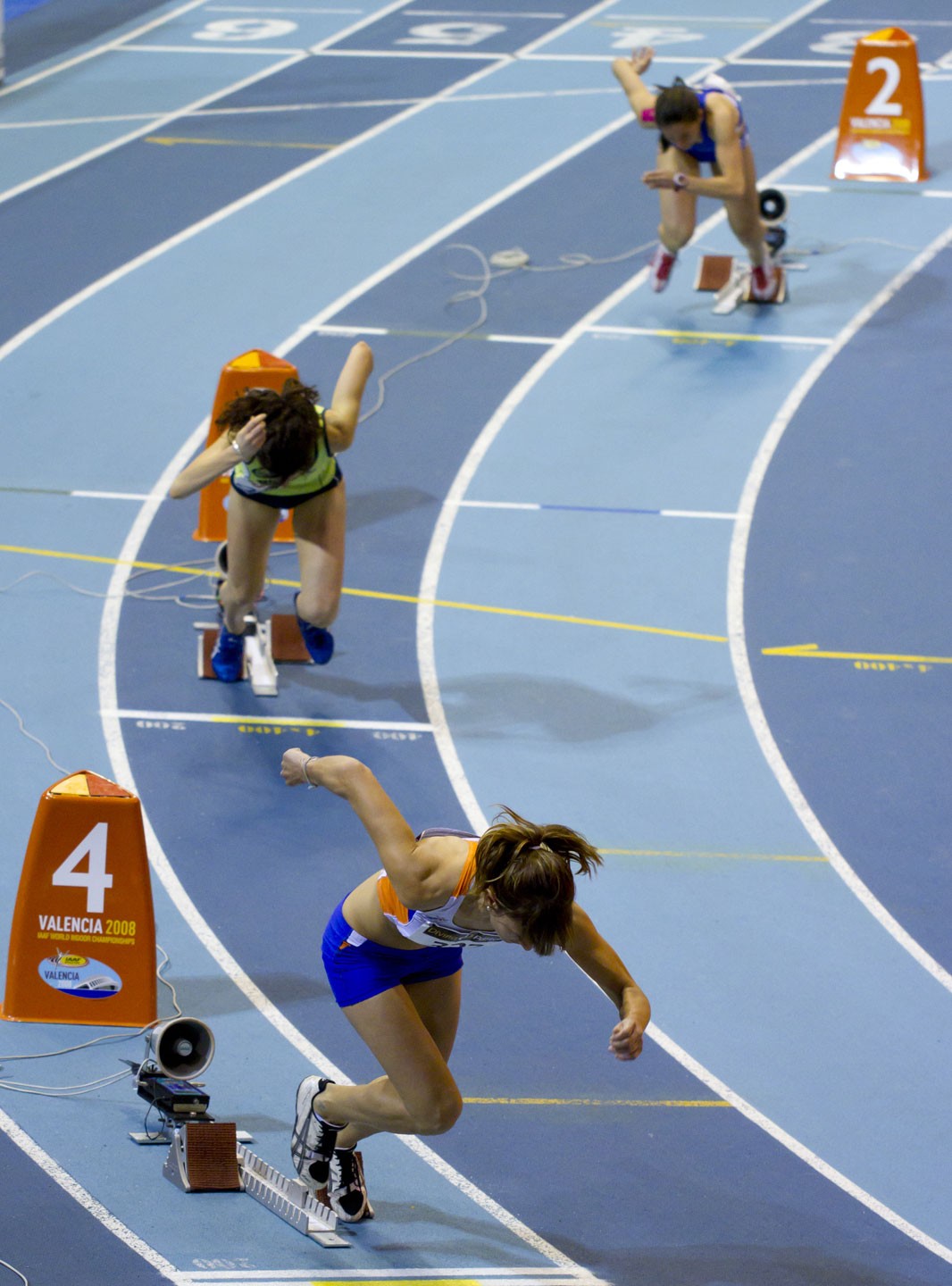
Sprints begin with runners in starting blocks. The shortest outdoor sprint is the 100 metres, which is run on a straight track. Other sprint distances are 200 metres and 400 metres. In these longer sprints, the starts are staggered to allow for the curvature of the track.
Hurdles races
Hurdles are frames that runners must jump over. Men and women both run a 400-metre event, while there is a 110-metre hurdle race for men and a 100-metre event for women. All use a total of 10 hurdles. The key technique is to maintain a set number of strides between each hurdle.

Distance races
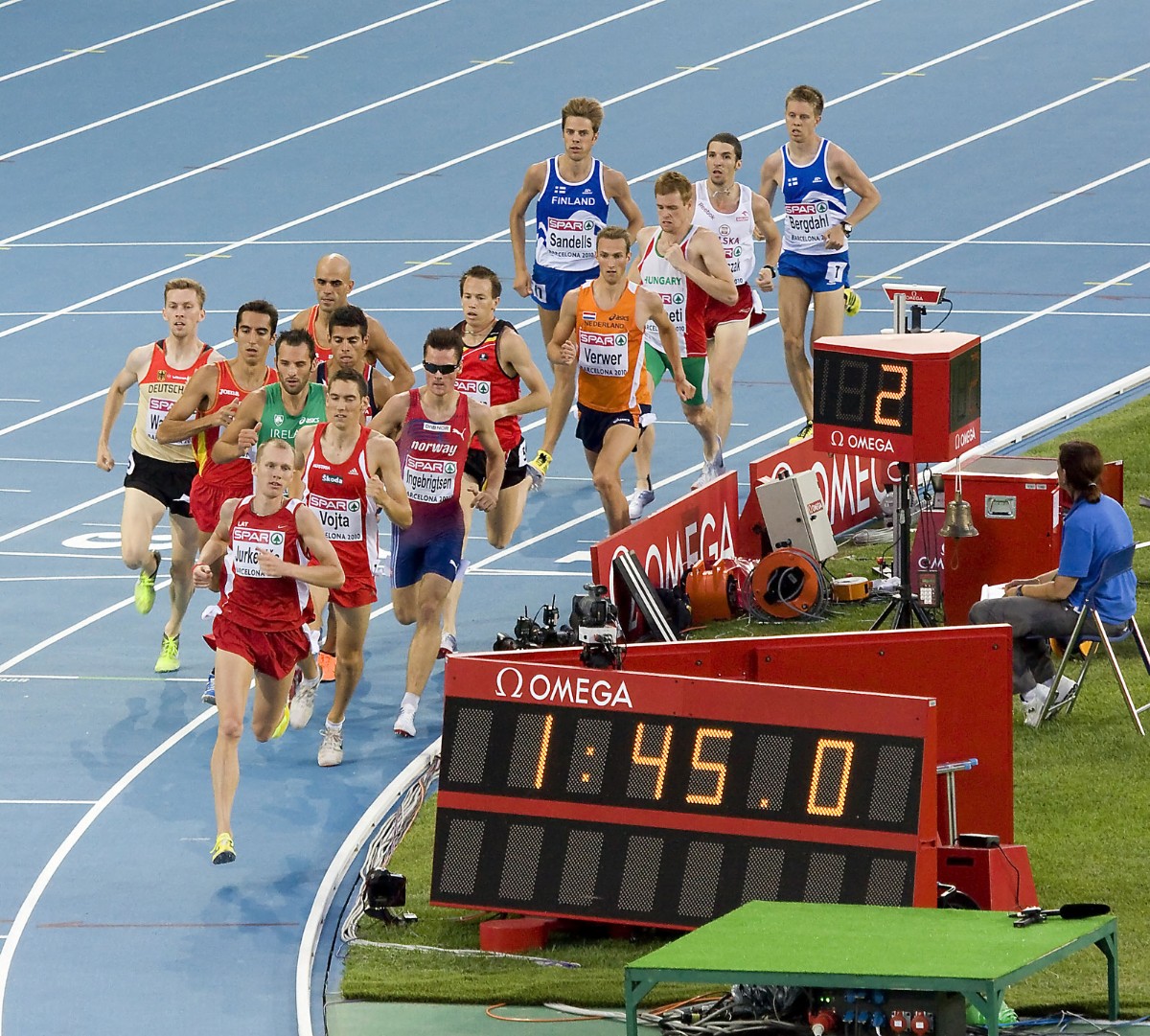
Middle-distance races are run over 800 metres to 1500 metres. Unlike in sprints, runners do not have to stay in any lane as they lap round the track. These races are often run tactically: runners often start quite slow but give a sprint finish. Longer distances are the 5000- and 10,000-metre runs. Some runners try to tire the others out by setting a brisk pace from the start. Others concentrate in getting into a good position for a sprint finish.

The longest race is the marathon, run as a road race over exactly 42.195 kilometres (26 miles 385 yards). Its name comes from the Greek town from where a soldier ran approximately the same distance to Athens to report a Greek victory over the Persians in 490 BC.
Relays
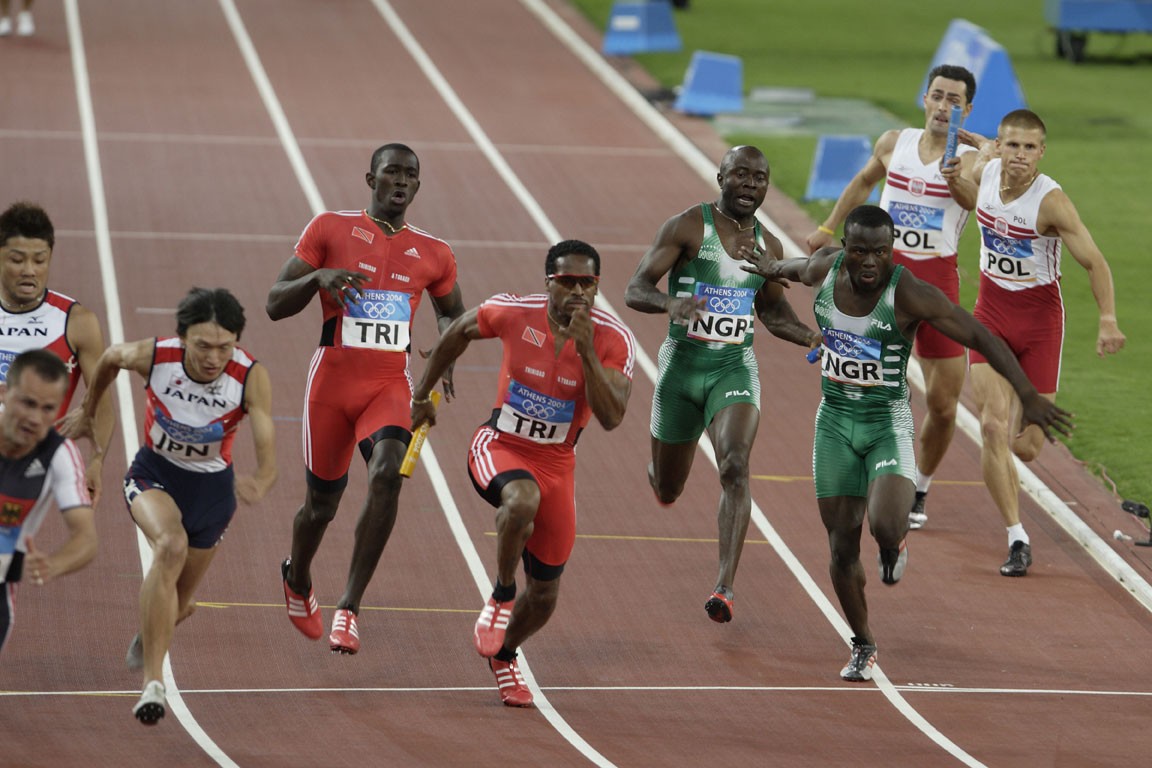
Relays are sprints by four team mates who must each run the set distance before passing a hollow tube called a baton on to the next runner to carry. There is a 20-metre exchange zone for passing the baton. Relays are run in lanes for the 4 x 100-metre distance, but in the 4 x 400-metre relay only the first runner stays in the same lane.

Throwing events
Throwing events are the discus, shot put, hammer and javelin. Scoring is the same for all, with six rounds of three throws each. Only the longest throwers stay in after each round. The discus is a metal disc thrown from within a circle of 2.5-metre diameter. Inside the circle, the athlete spins around to build momentum before launching the discus with a straight arm.
Shot putters hold the shot, a heavy metal ball, close to their neck, before punching out their throwing arm to launch the shot. They also spin in their throwing circle, but it is smaller than that for the discus (2.135 metres) so the turn is tighter. Hammer throwers use the same size throwing circle as shot putters, but it is partly enclosed by a wire cage. The hammer is actually a metal ball attached to a steel wire with a handle. The thrower spins round at speed before releasing the missile.
The javelin looks like the spear that inspired the original event in ancient Greek times. Athletes take a run-up before throwing, taking care not to cross a line on the ground. The tip of the javelin must strike the ground for it to be a legal throw.
Jumping events
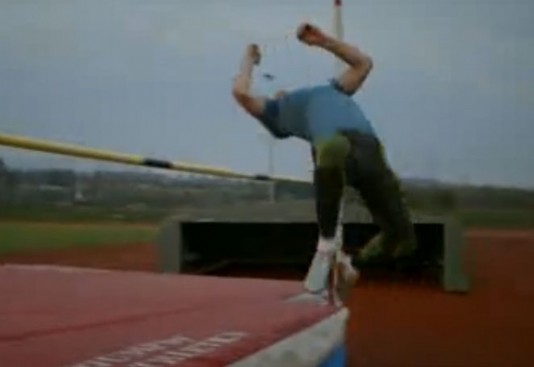
High jumpers must clear a bar without knocking it from its supports. Competitors are allowed three attempts to jump a certain height, or they can pass and wait for the next round, when the bar will be set higher. Missing three successive jumps means they are out of the contest, and the winner is the single highest jump.
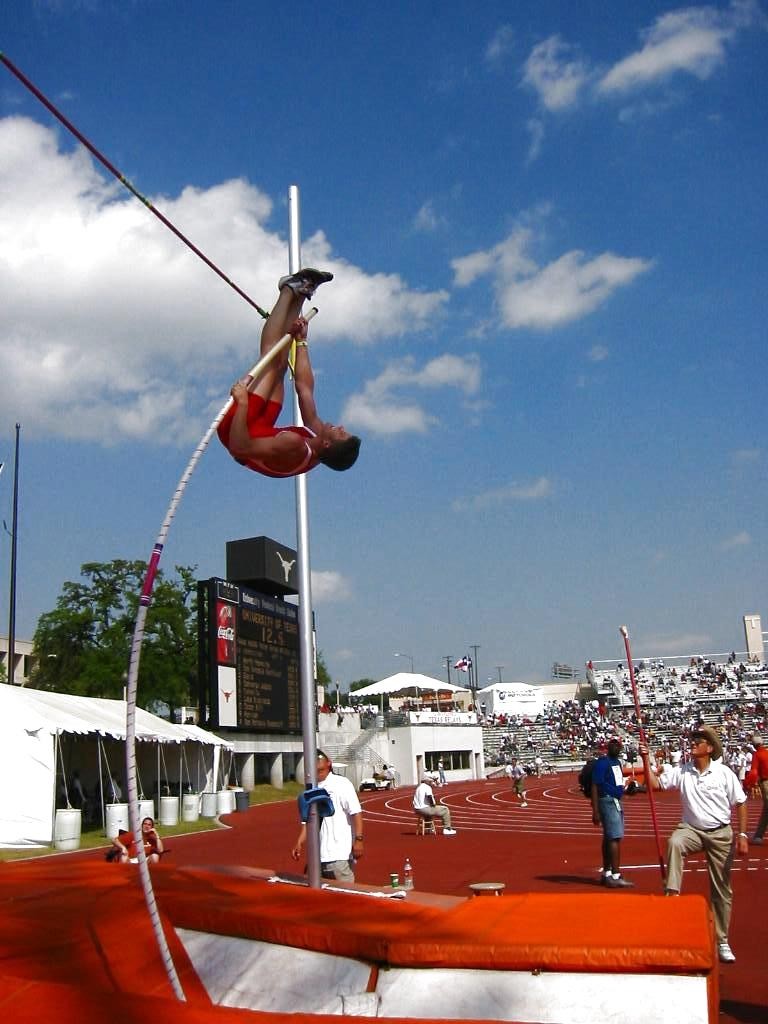
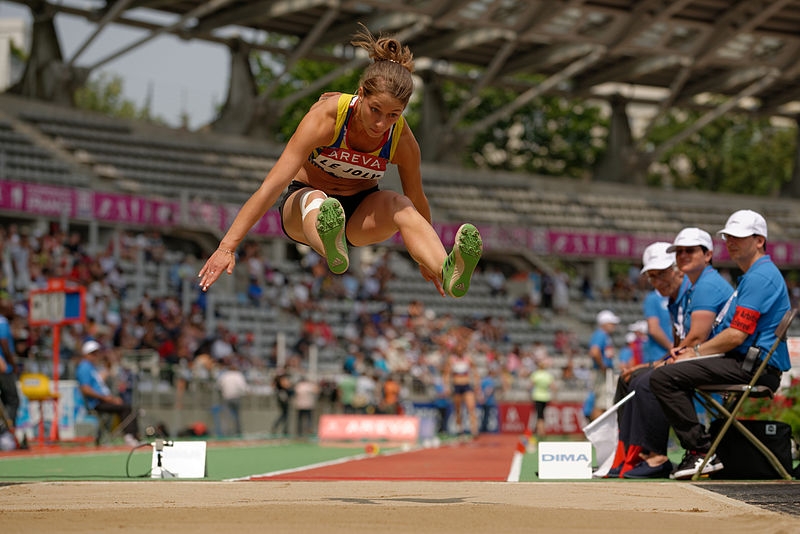
Long jumpers sprint down a runway and leap when they hit the takeoff bar, landing in a sand pit, where their jump is measured. Speed is vital for the jump, so some sprinters also compete in this event. Triple jumpers start as in the long jump, pushing off the takeoff board with one foot, then land on the same foot for a step, then land on the opposite foot before making the final jump into the pit. Pole vaulters use a long, bendy pole to help them leap over a bar. They sprint up to 40 metres to plant their pole in a small box and soar into the air over a bar, landing on a foam cushion. The rules are the same as for the high jump.
Combination events
These are events with elements of running, jumping and throwing. The men’s decathlon has two sprints, a 1500-metre run, a hurdles race, throwing the discus, javelin and shot, plus the long and high jumps and pole vault. The equivalent for women is the seven-event heptathlon: 200-metre sprint, hurdles, 800-metre run, javelin, shot put, long jump and high jump.
Consultant: Sean Callery