
Sport

CITE
We have made every effort to follow citation style rules, but there may be some minor differences. If in doubt, please refer to the appropriate citation style manual.
Baseball. (2026). In Q-files Encyclopedia, Culture, Sport. Retrieved from
https://www.q-files.com/culture/sport/baseball
"Baseball." Culture, Sport, Q-files Encyclopedia, 13 May. 2026.
https://www.q-files.com/culture/sport/baseball.
Accessed 8 Nov. 2026.
Baseball 2026. Culture, Sport. Retrieved 8 November 2026, from
https://www.q-files.com/culture/sport/baseball
Culture, Sport, s.v. "Baseball," accessed November 8, 2026.
https://www.q-files.com/culture/sport/baseball


Baseball
Baseball is a bat-and-ball sport that takes its name from the four bases that form a diamond (the infield) around the pitcher's mound. There are nine players on each side. The batting team attempts to score runs by using a wooden bat to hit a leather-covered hard ball thrown by the pitcher, then running anticlockwise around a series of four bases. Called first, second, third and home plate, these are set at the corners of the square-shaped baseball diamond. A run is scored whenever a player returns to home plate—although it may take several plays to do so. Players on the batting team take turns hitting against the pitcher of the fielding team, which tries to get batters out. A runner who reaches a base later attempts to advance to the next base or bases when his teammates are batting. The teams switch between batting and fielding whenever the fielding team succeeds in putting three men out. One turn at bat for each team is called an inning; a game consists of nine innings each. The team with the greater number of runs at the end of the game wins.
Field
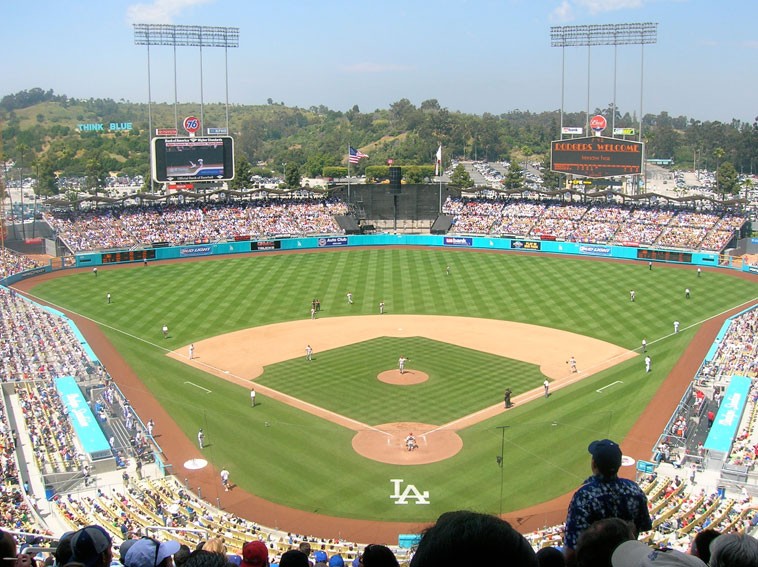
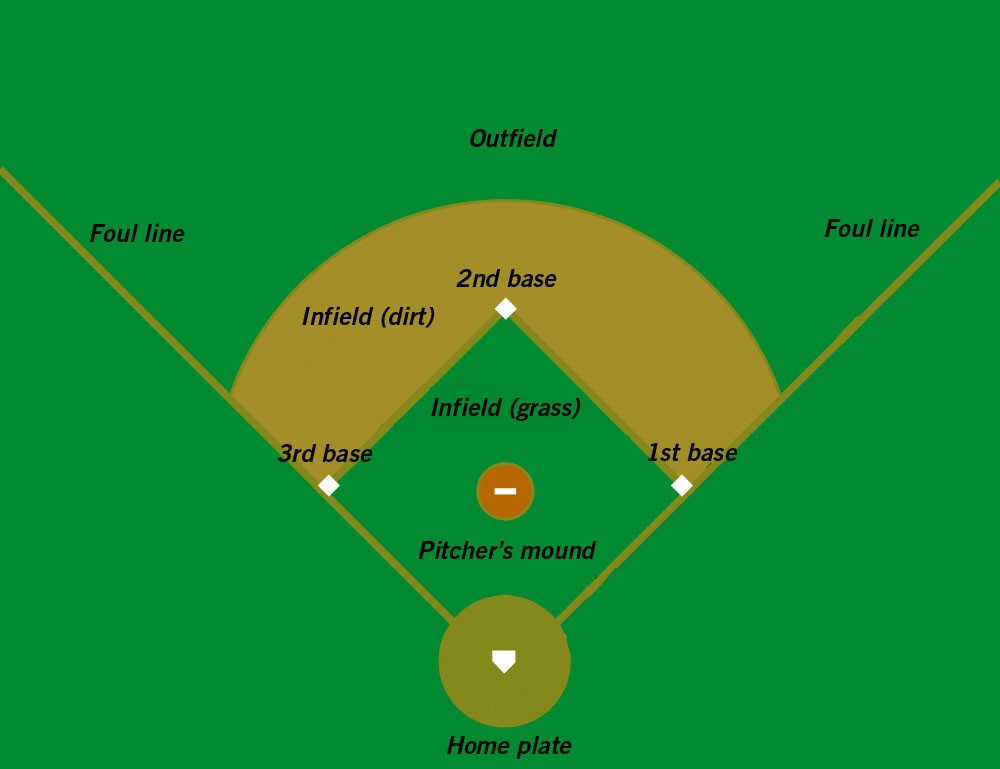
The game is played on a field whose boundaries, called the foul lines, extend from the home plate beyond first and third bases. The diamond-shaped part of the field enclosed by the bases, together with a dirt area several yards beyond them, is called the infield. The area beyond the infield is called the outfield. In the centre of the infield is a raised pitcher's mound with a rectangular rubber plate (the rubber) on it. The outer boundary of the outfield is marked by a raised fence.
Fielders
The field is made up of pitcher, a catcher, four infielders and three outfielders. The fielders each wear a padded leather glove called a mitt. The catcher squats on the far side of home plate facing the pitcher. The infielders are stationed like this: a first baseman several steps to the left of first base; a second baseman to the right of second base; a shortstop to the left of second base; a third baseman to the right of third base.
Pitcher
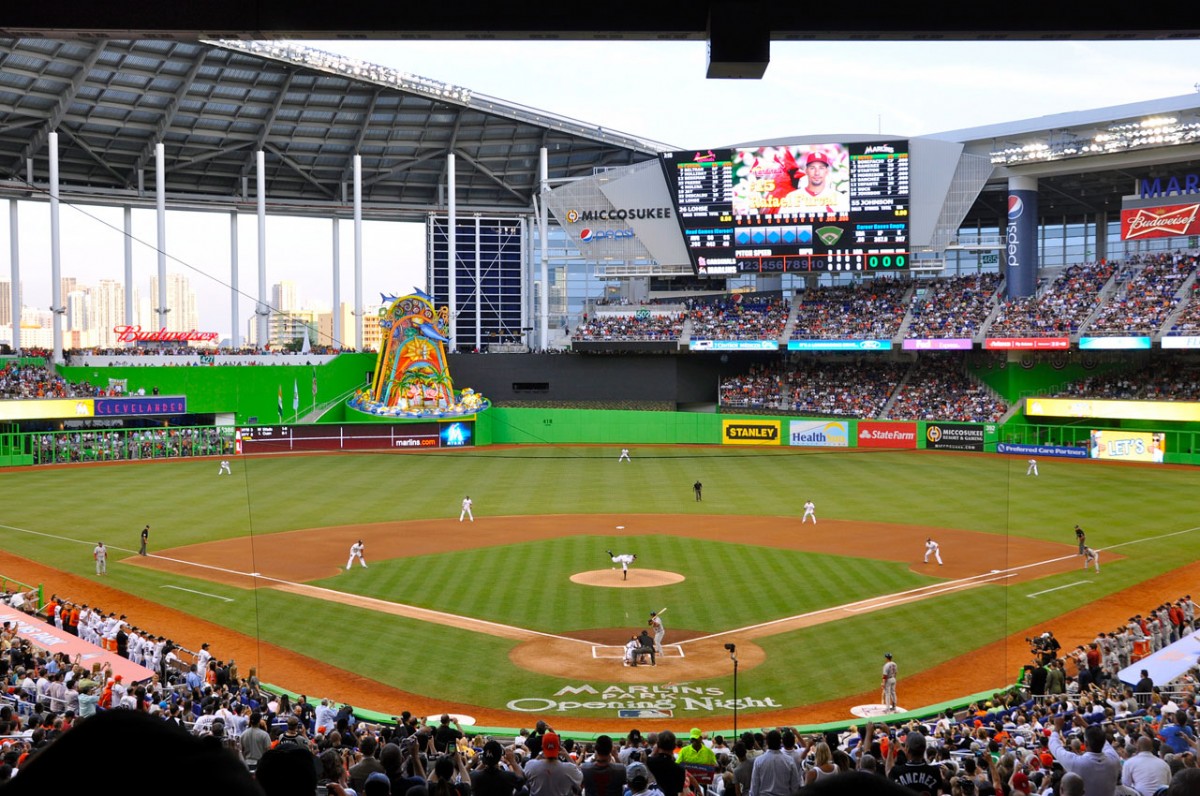
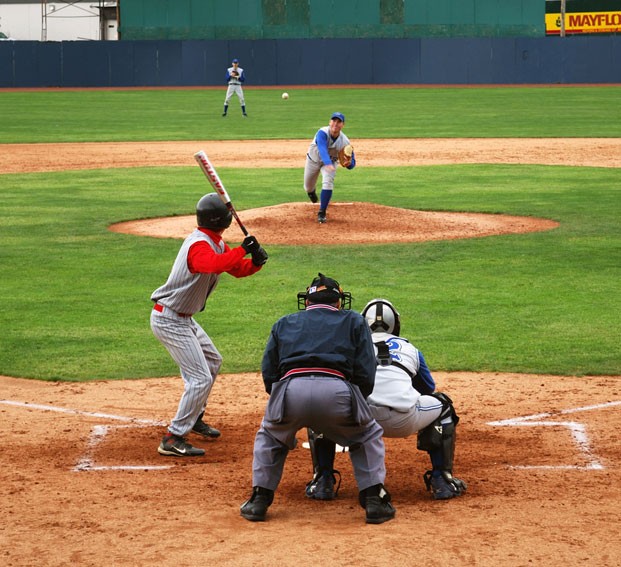
The pitcher throws overhand from a raised mound to the home plate, a distance of 60.5 feet (18.4 metres). He uses a variety of deliveries, including fastball, curveball and knuckleball, to make it more difficult for the batter to hit the ball. A batter who misses three pitches, or fails to swing at three pitches adjudged hittable (in the “strike zone”) by the umpire, is out on "strikes”—a strikeout. A strike is called when the batter swings at a pitch whether it is deemed to be in the strike zone or not. If, however, the pitcher throws four pitches out of the strike zone, known as “balls”, the batter advances freely, or "walks”, to first base.
Runs
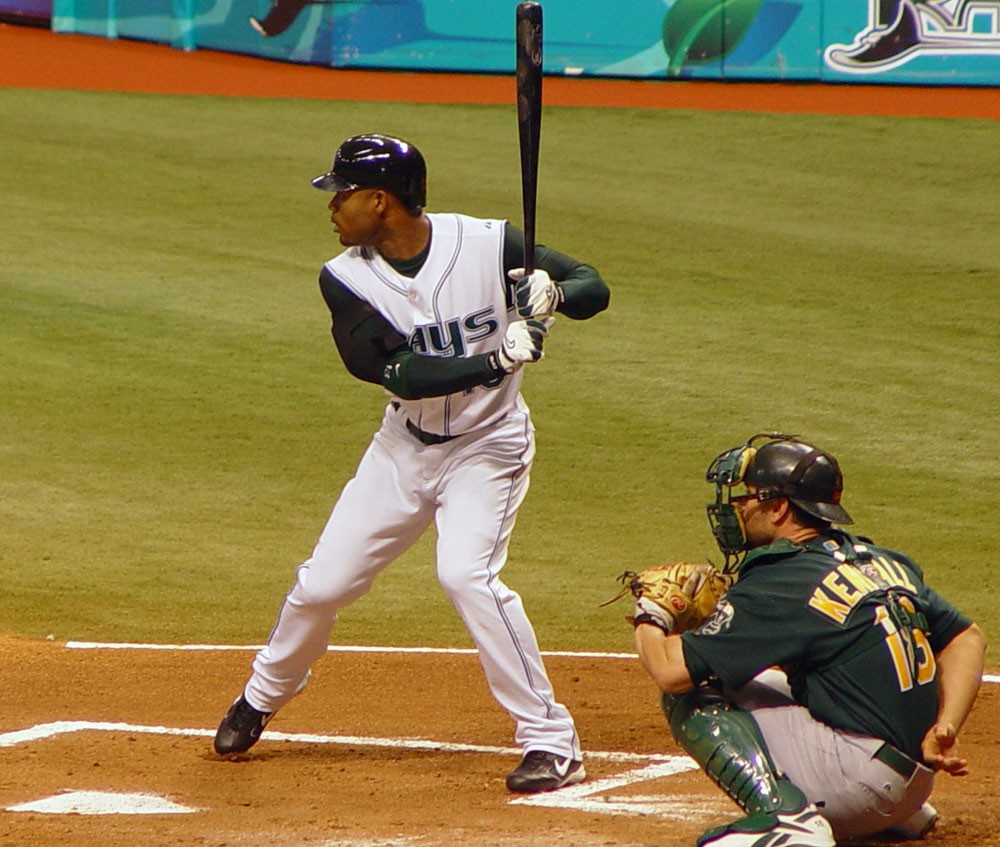
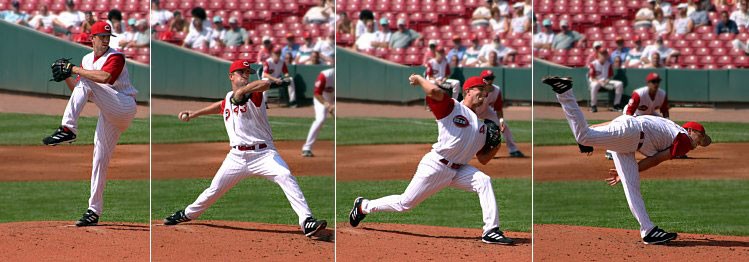
The batter attempts to hit the pitches and reach a base. A batter who hits the ball into the field of play must drop the bat and begin running towards first base; the player is now referred to as a runner. A run is scored every time a runner successfully crosses home plate after touching each base in order. A runner may choose to remain at first base, or attempt to advance to second base, or however far round the diamond he thinks can be reached safely without being put out by a fielder.
If the ball is hit in the air within the foul lines and over the entire outfield, it is known as a home run: the batter and any runners on base may all run round the bases, each scoring a run. If the batter hits the ball beyond the foul lines, this is called a foul. It counts as a strike against the batter.
Putting a batter out
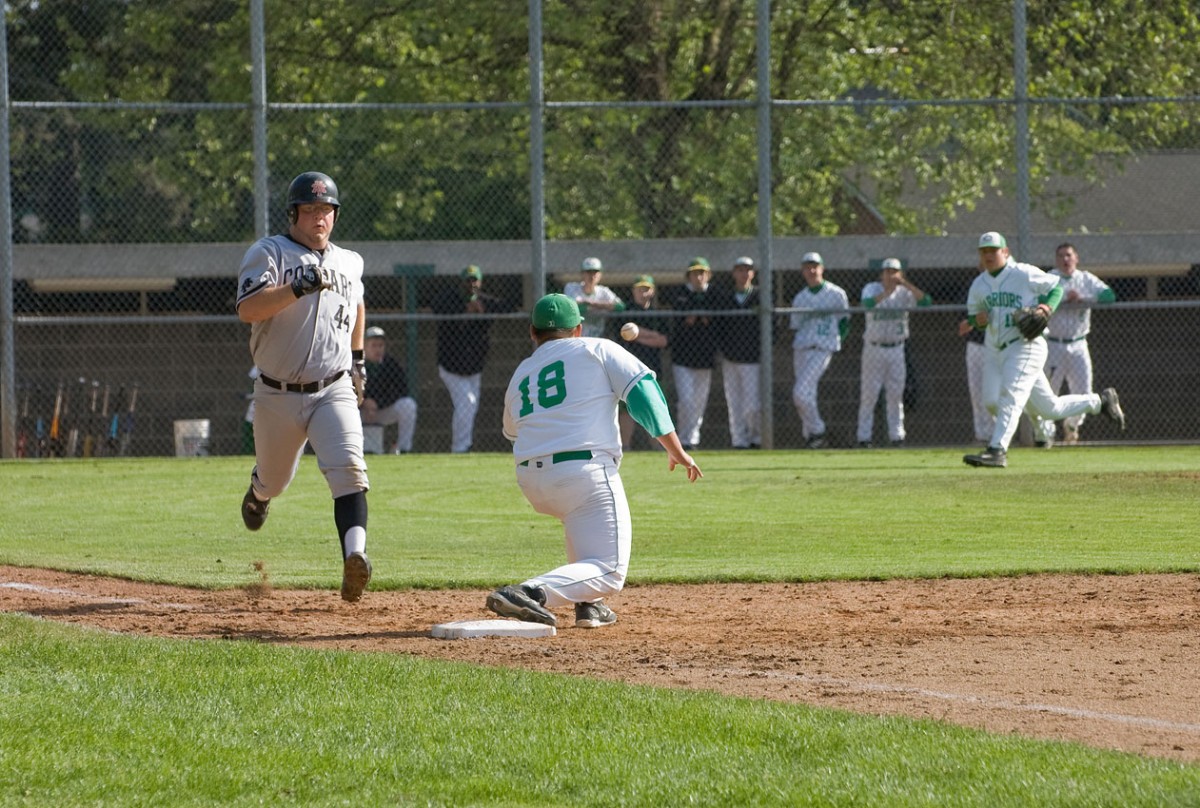
Apart from a strikeout, there are several ways the fielding side can put a batter out. They include: the flyout, when a ball hit into the air is caught by a fielder before it lands; the force out, when, before the runner can reach a base, a fielder touches the base while holding the ball, or throws it to another fielder who does the same; the tag out, when a runner who is not touching a base is touched by a fielder holding the ball. It is possible to record two outs in the course of the same play—a double play.
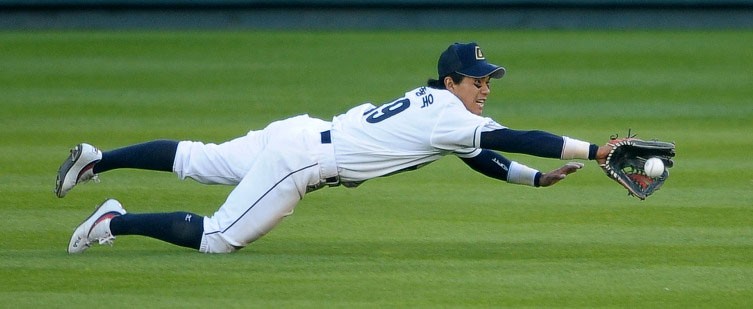
Bunt
A bunt is a special technique used in baseball, in which the batter holds the bat loosely and intentionally taps the ball from the pitcher into play—but as far from the fielders as possible. The batter sometimes does this in order to advance a runner, usually from first to second base, but often at the expense of being put out himself. This is called a sacrifice bunt.

History
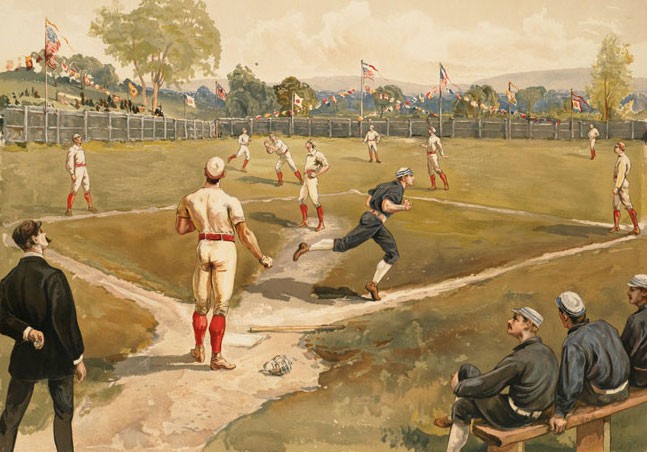
Modern baseball may have evolved from the English game of rounders—or the two sports may have evolved from another, earlier bat-and-ball game. In the 1840s and 50s, Alexander Cartwright and Louis Wadsworth of the New York Knickerbocker Club standardized many of the rules and features of baseball still in use today. The first game of modern baseball was played by the Knickerbockers in 1845 in Elysian Fields, Hoboken, New Jersey. In the 1870s a number of competing leagues were formed, including the National League, which soon became the predominant association. The Western Association changed its name the American League in 1900. In 1903 the champions of the American and National leagues (which together make up Major League Baseball) met for the first time in what became known as the World Series.
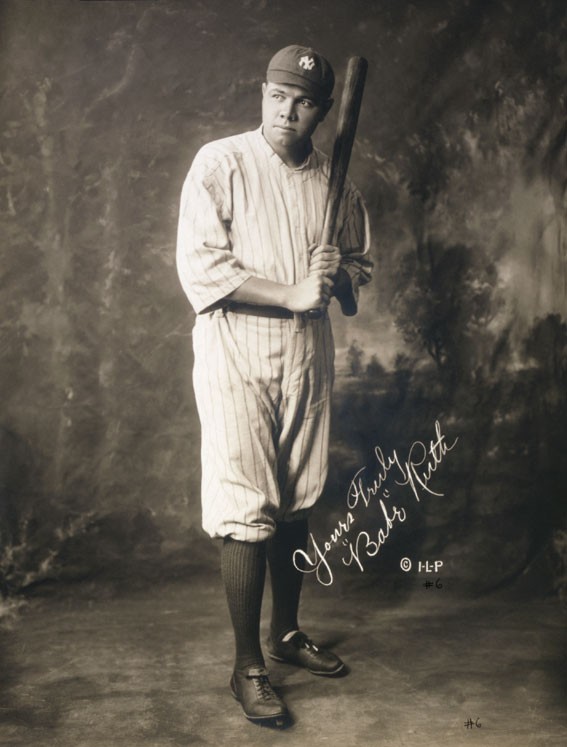
The years between 1920 and World War II were the heyday of Babe Ruth, the greatest legend of the game. When the number of spectators fell during the Depression years in the 1930s, night baseball was introduced. From then on, professional baseball became chiefly an evening event.
Baseball spread to a number of countries, including Cuba and Japan, as early as the 1860s and 70s. The International Baseball Federation (IBAF) was founded in 1938 and now has 112 member countries.
Statistics
Players’ statistics are very important to many followers of baseball. Managers and player scouts use statistics to evaluate players and make strategic decisions.
At bat (AB) A turn at batting. A player normally has four or five per game.
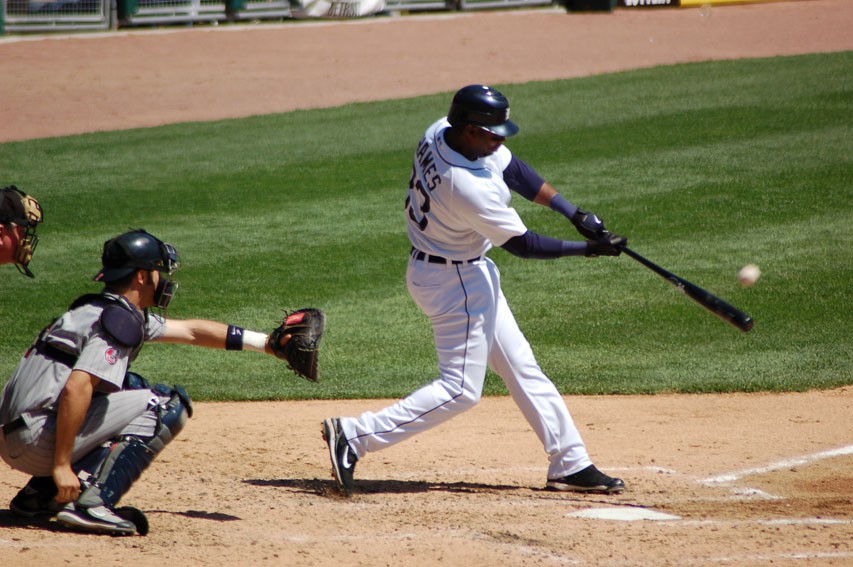
Hit (H) If at any time a player connects with the ball and gets at least to first base, this is known as a hit. If, however, a fielder makes a mistake, known as an error, or decides to throw to another base to try to get somebody else out, a hit is not counted. Getting to first base is called a single, second base a double, third base a triple—and all the way around is a home run. They all count as one hit. A batter who records the feat of a single, a double, a triple and a home run all in the same game is said to have hit for the cycle.
Batting average (AVG) This is hits divided by bats, the key measure of player's worth. The average is calculated as a fraction of one, with 0.300 regarded as the benchmark of a good player.
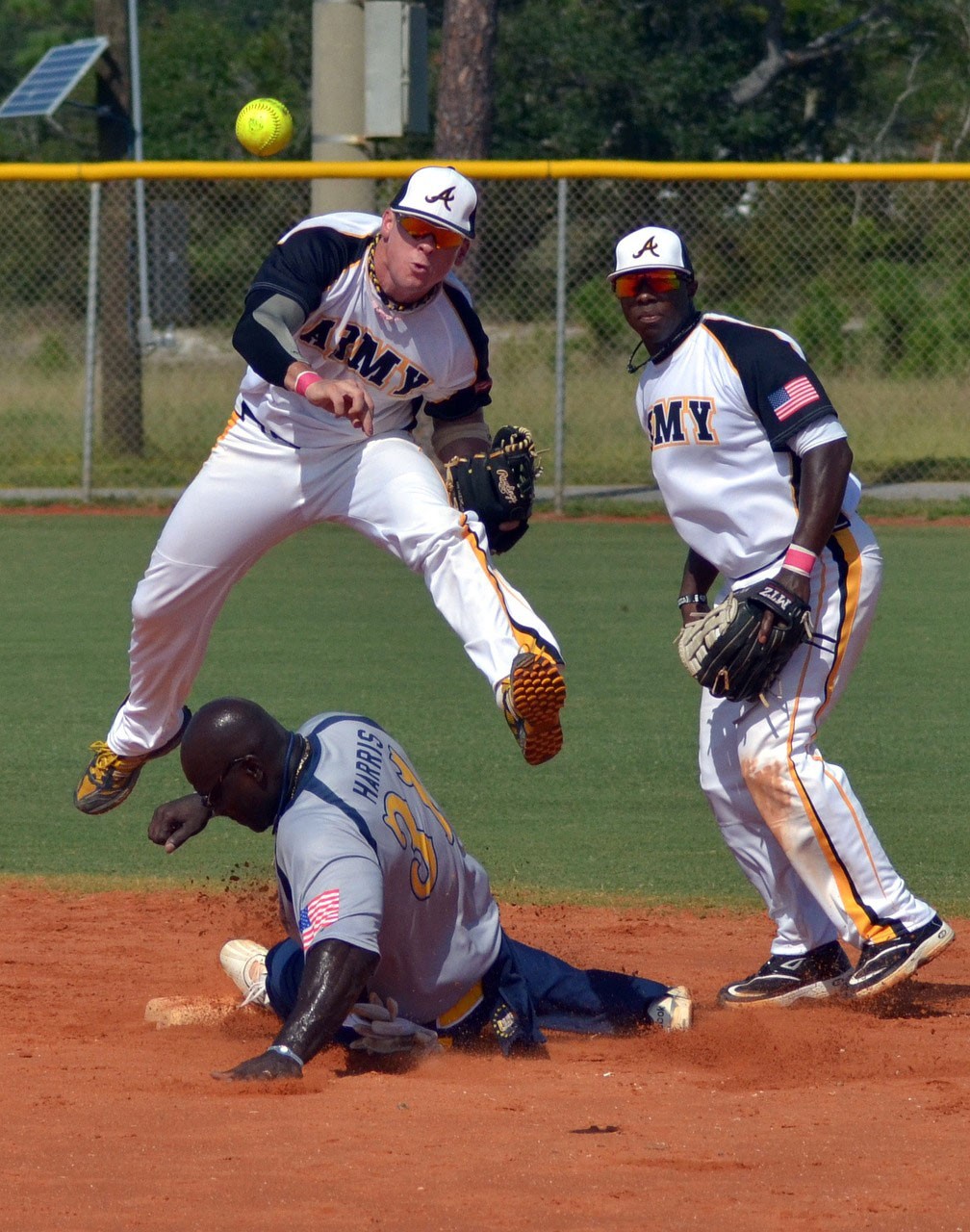
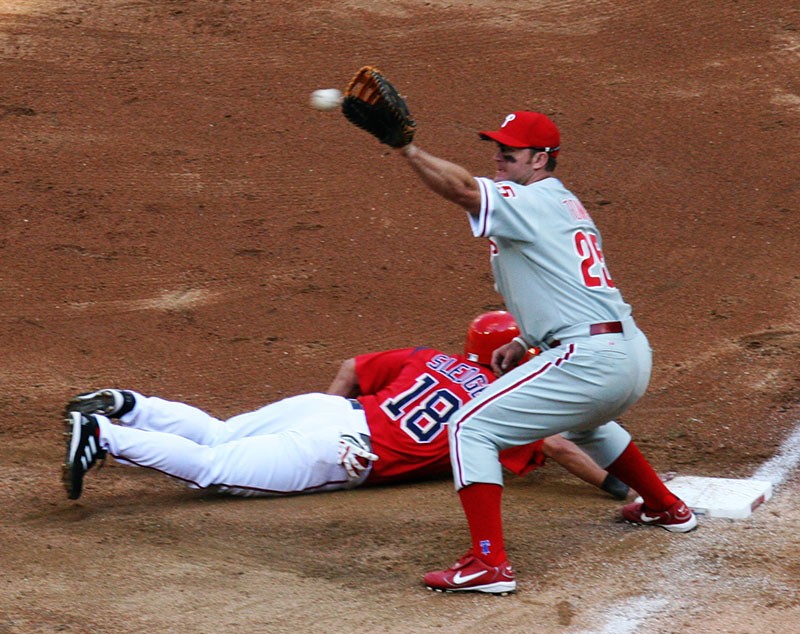
Stolen base (SB) Once on base, fast-running players will try to steal a base—normally from first to second, because second base is the farthest throw for the catcher to make from behind home plate. The player on base starts running as soon as the pitcher begins his action. The pitcher may then to throw to base instead of the plate—a pickoff throw. If the first baseman receives the ball before the runner gets back to the base, the fielder may attempt to tag him out.
Runs batted in (RBI) An RBI is obtained every time a batter enables someone on his team to score, including himself. If he hits a home run with the bases loaded (a runner on each base), called a grand slam, he gets four RBIs.
Earned run average (ERA) The number of runs a pitcher concedes per nine innings. Runs scored by players who get on base due to an error are not earned. A good ERA is anything below 4.00 (four runs per nine innings).
Passed ball (PB) A catch that a catcher should have held, allowing a runner or runners to advance.
Softball
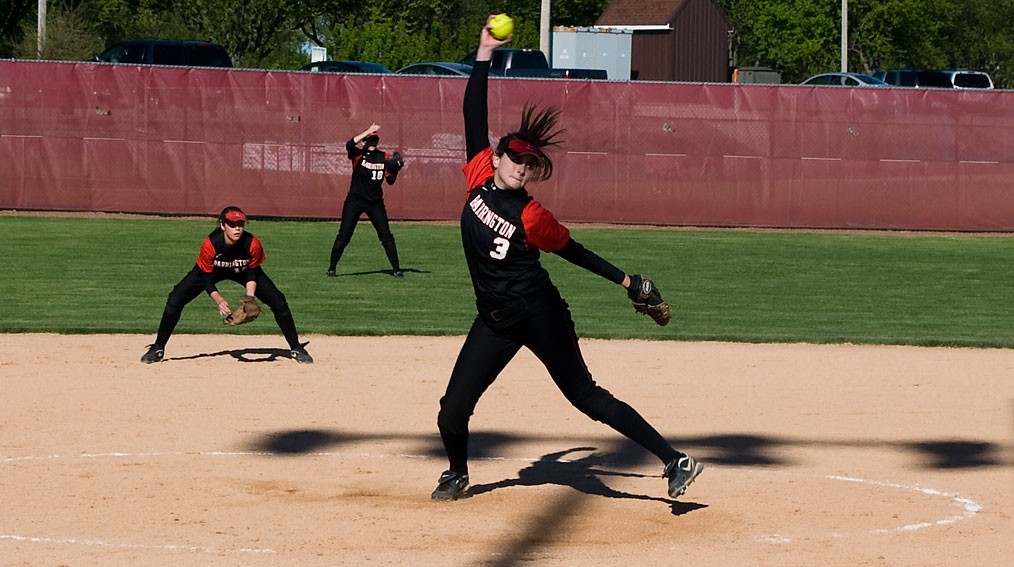
Softball is a version of baseball played with a larger ball on a smaller field. It was invented in Chicago 1888 as an indoor game. The name softball became official in 1926—although the ball used is not soft. Softball rules vary from those of baseball. Two major differences are, firstly, that the ball must be pitched underhand—from 46 feet (14 metres) for men or 40 feet (12 metres) for women—and, secondly, that the game consists of seven innings each.
pics
Without in any way limiting Q-files Ltd’s exclusive rights under copyright, any use of this publication to “train” generative artificial intelligence (AI) technologies to generate text is expressly prohibited. Q-files Ltd reserves all rights to license use of this work for generative AI training and development of machine learning language models.