
Sport
Cricket
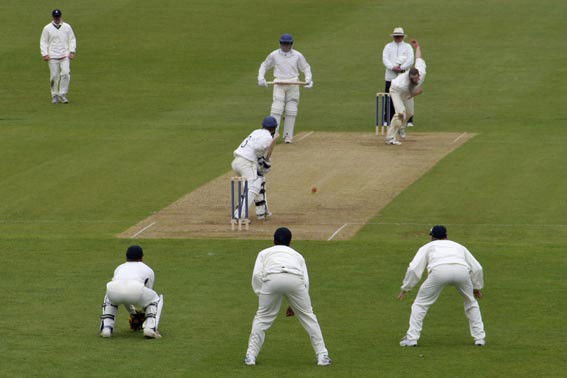
Cricket is a bat and ball sport played on a grass field between two teams of 11 players. Batters score points, called runs, by running between two sets of small wooden posts called wickets. The aim of the game is to score more runs than the opposing team. Matches can last between one and five days. The most famous regular contest is the Ashes, contested between England and Australia. Cricket is played by both men and women, although not in mixed teams. The referees are called umpires.
History
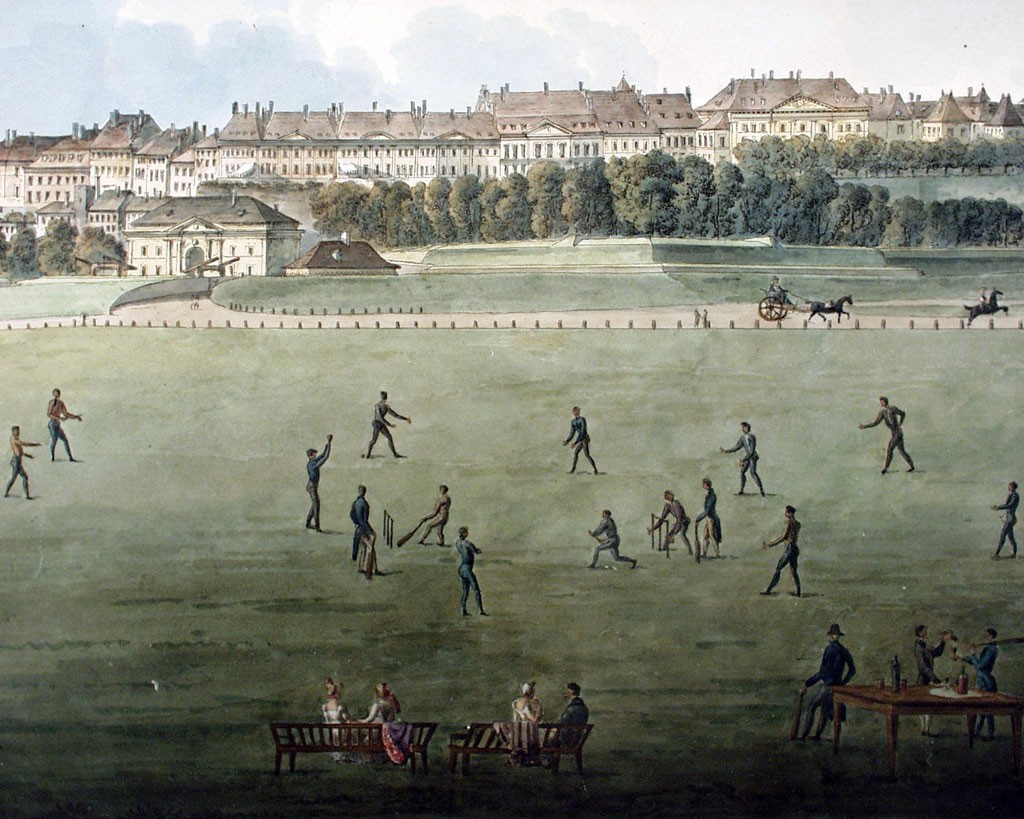
Early versions of cricket were games when a player used a club to hit a small piece of wood or a ball. The first evidence of it being played is from about 1550 at the Royal Grammar School in Guildford, Surrey, England. The laws of cricket were set down in 1788 by the Marylebone Cricket Club (MCC), which still revises them from time to time. Having been invented in Britain, the game became especially popular in the territories that once formed the British Empire, and which are now Commonwealth countries. Test matches between countries have been held since 1877, with one-day internationals dating from 1972.
Playing field
Cricket is played on a large oval field. There are no set dimensions but the minimum diameter is 150 yards (137.16 metres), with its boundary marked by rope. In the middle is a narrow rectangular strip 10 feet (3.05 metres) wide where the grass is cut very short. This is called the pitch, and the wickets are placed at either end, 22 yards (20.12 metres) apart.
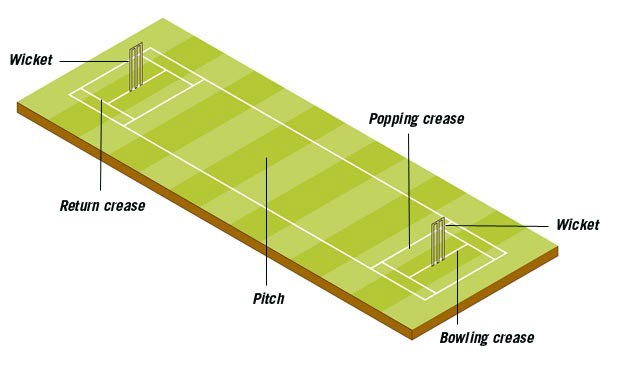
The three wooden stumps, together known as the wicket, have 28 inches (71.1 centimetres) showing above the ground. Two small pieces of wood, the bails, rest on grooves carved into the top of the stumps. In line with each wicket is a white line 8 foot 8 inches (2.64 metres) long, called the bowling crease. Parallel to it 4 feet (1.22 metres) inside the pitch is another line, the popping crease.
Bowling
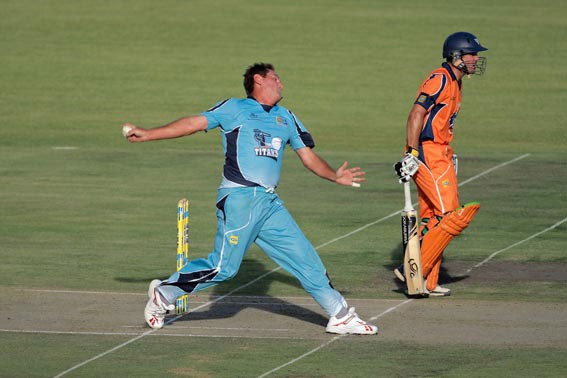
All 11 members of the bowling team stay on the field during an innings. Nine are fielders, placed in various positions to catch or gather the ball hit by the batter. Another is the bowler, who takes a run-up and bowls the ball overarm from behind the bowler’s crease towards the wicket guarded by the batter at the other end of the pitch. When the bowler has bowled the ball six times, it is the end of the over and another bowler will deliver the ball from the other end of the pitch.
The final member of the bowling team is the wicketkeeper, who remains behind the wicket to catch or collect the ball if it is missed or slightly deflected by the batter, and so changes ends after every over.
Batters
Two batters are in play at any one time, one facing the bowler, the other standing by the wicket at the other end of the pitch. A batter guards his or her wicket by blocking, deflecting or striking the ball, taking runs whenever the opportunity arises until they are "out" (see "Ways to be out" below). When this happens, another player from batting team takes their place. When ten of the batting team are out, it is the end of the innings, and the teams swap roles. Sometimes the team captain decides the team has enough runs and ends the innings early (or "declares"), putting the other side in to bat.

Bowling skills
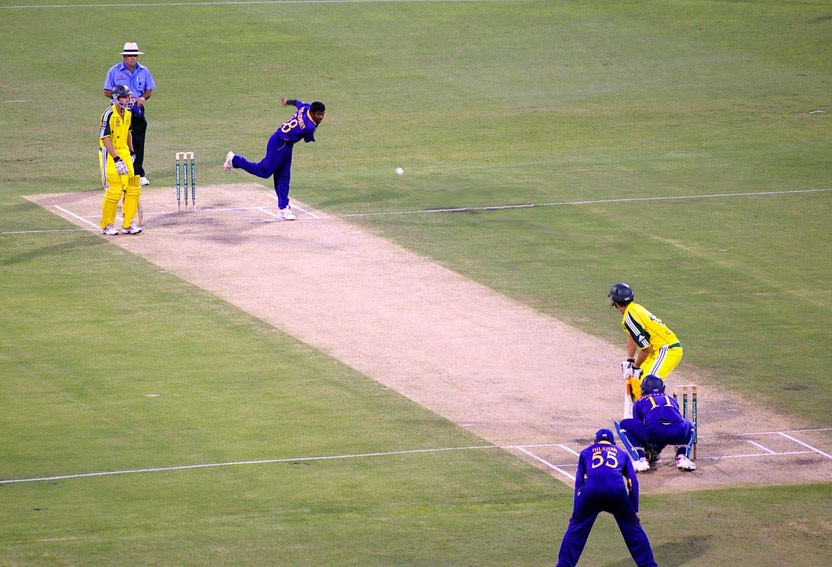
Bowlers might use pace or spin to make it hard for batters to protect the stumps. Fast bowlers use a long run-up to build speed. They sometimes try to make the ball land on its raised seam to change the direction of its bounce. Spin bowlers rotate the ball with their wrist or fingers as they launch it, making it harder for the batters to predict where the ball will travel after bouncing.
Scoring
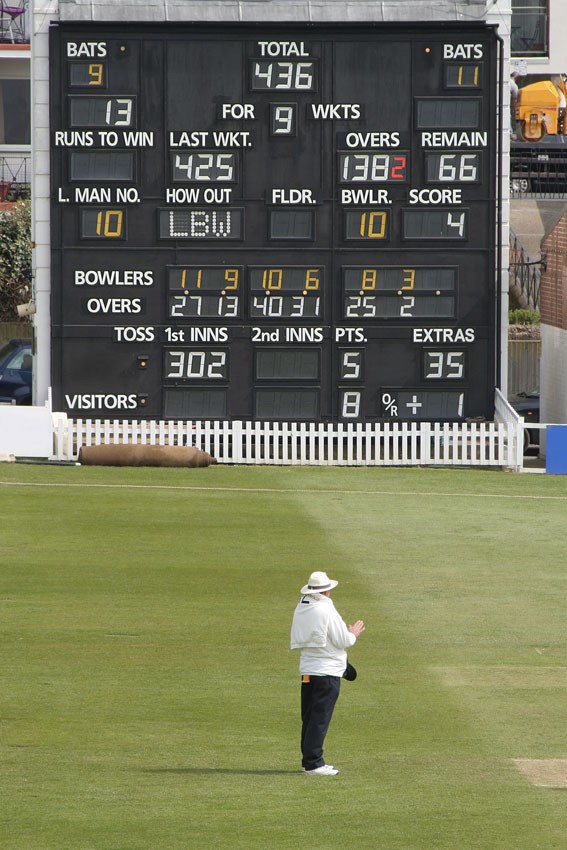
Batters hit the ball around the field and score one run every time they swap places by running to the other end of the pitch before the ball reaches the stumps from a throw by a fielder. A ball that crosses the boundary line around the field scores four—six if it does not touch the ground first. A ball bowled too wide for a batter to reach (a "wide") also scores for the batting team. Runs, known as "byes", are also scored if the batter fails to hit the ball with the bat, but the wicketkeeper also fails to stop it, and the batters are able to swap places.

Equipment
Cricketers traditionally dress in white, although players in one-day or T20 (Twenty20) matches wear colourful outfits. Batters and wicketkeepers have padded gloves and other protective clothing including pads to guard their legs and helmets to protect their heads. Bats are made from willow wood and can be up to 38 inches (96.5 centimetres) long including the handle and the long, flat blade. The ball is red (white for night games) leather: the slightly raised join around its centre is called the seam.
Types of match
In a one-day match, each team has one innings of an agreed number of overs. In five-day Test matches, each team has two innings. In T20 matches, each team bowls 20 overs. The winner is whoever scores more runs in total. In a five-day match, if, for whatever reason, the teams have insufficient time to complete both innings, the match is declared a draw.

Consultant: Sean Callery
Ways to be out
The fielding team must appeal to the umpire to decide if a batter is out. There can be several reasons:
Bowled: The bowler’s ball hits the stumps to remove at least one bail.
Caught: A fielder catches a ball before it hits the ground after being struck by a batter.
Run out: The fielders return a ball to hit the stumps before a batter, running from one end to the other, reaches the popping crease.
Stumping: The wicketkeeper knocks off a bail with the ball while the batter is standing forward of the popping crease.
Leg before wicket (lbw): A batter uses his or her legs or body to block a bowled ball that the umpire decides would have hit the stumps.
Hit wicket: A batter knocks a bail from his or her own wicket while the ball is in play.
