
Theatre
William Shakespeare
William Shakespeare (1564–1616) was the greatest writer in the English language. His plays have been performed in theatres around the world for more than 400 years. He wrote plays about history, as well as comedies, romances and tragedies. Their plots are often complex but contain real-life characters and deal with believable events. Their language is very powerful and moving. During his life, Shakespeare wrote 39 plays, as well as 154 sonnets (14-line poems). Despite his fame as a playwright, we actually know little about his life.

Early life
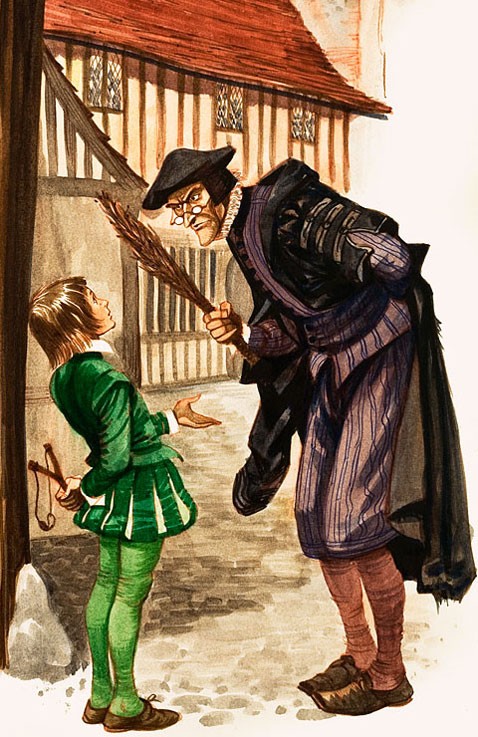
William Shakespeare was born around 23rd April 1564 in Stratford-upon-Avon in Warwickshire, England. His father was a prosperous glove-maker and member of the town council; his mother, Mary Arden, was the daughter of a well-off landowner from Warwickshire. There is no record of Shakespeare attending any schools, but it is probable that he went to the local grammar school, where he learned to read and write. He did not go to university but at the age of 18 he married Anne Hathaway, who was eight years older than him. In 1583 the couple had a daughter, Susanna, and then in 1585 twin children, Judith and a boy called Hamnet (who died aged 11).
Actor and playwright
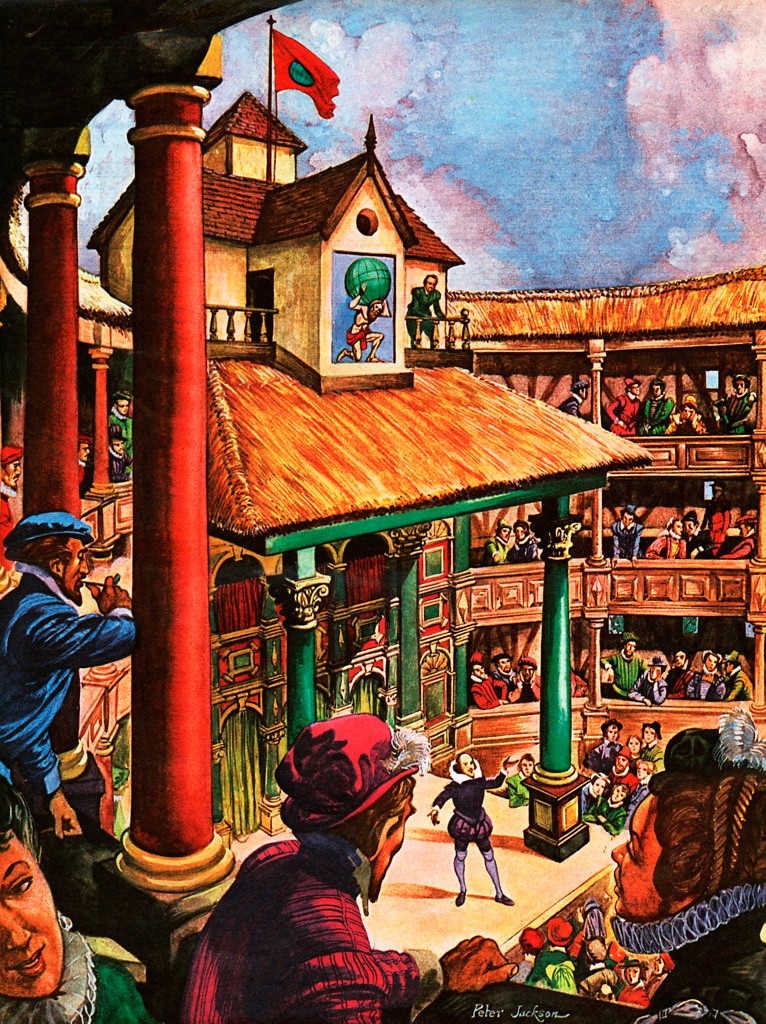
We then know nothing about Shakespeare’s life until 1592, when it was reported that he was writing plays in London. In 1594 he became a member of the Lord Chamberlain’s Men, a theatre company sponsored by the Lord Chamberlain, a high court official. Shakespeare remained with this group, known as the King’s Men after 1603, for the rest of his career. The King's Men built their own theatre on the south bank of the River Thames in 1608 and called it the Globe Theatre.
Shakespeare bought New Place in Stratford-upon-Avon as a family home in 1596. He divided his time between there and London, where he also owned or rented properties. After about 1610, Shakespeare, now a wealthy man, wrote fewer plays and none at all after 1613. He died in Stratford on 23rd April 1616, aged 52.

The plays
Shakespeare wrote 39 plays: 11 history plays, 13 comedies, 10 tragedies and 5 romances. Each play consists of five acts, each of which is divided into several scenes. Up to 30 characters have speaking parts in each play. The plays are written in a mixture of verse (as used in poetry) and prose (non-verse). Five of the history plays are entirely in verse. Some verse lines are in rhyming couplets, in which the word at the end of the first line, for example "takes", rhymes with the word at the end of the second line, "makes". Other verse lines are written in what is known as blank verse, in which there are no rhymes. Most of the verse lines follow the patterns of human speech.
New words
and phrases
Shakespeare wrote his plays at a time when the English language was taking in many words from European and other languages. Shakespeare used these new words, as well as making up new words of his own: for example, he made up the word "bandit" from the Italian word bandito. He also made up new words based on ancient Greek and Latin, such as "negotiate" and "manager". Shakespeare also created phrases or expressions that are commonly used today, such as "dead as a doornail", "love letter" and "puppy dog".

Authorship
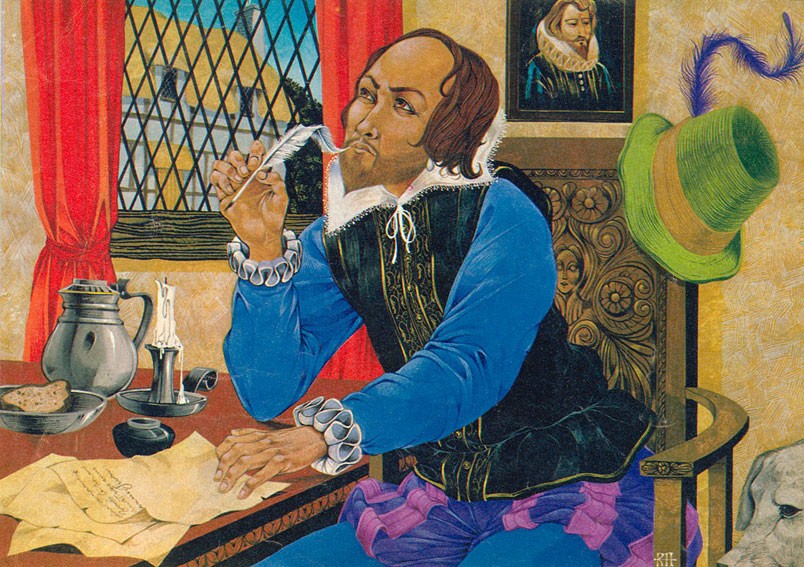
Shakespeare’s plays were written to be performed in the theatre and were not intended for publication. Some of them remained unprinted until the first version of the plays, called the First Folio, was published by two friends and fellow actors, John Heminges and Henry Condell, in 1623. Ever since then, some people have said that Shakespeare could not have written all his plays. They cannot believe that someone who appears to have had no proper education could have written such complex and detailed works. Some people suggest that some or all the plays were written by the Earl of Oxford or by Sir Francis Bacon, a famous writer of essays, while others suggest that they were written by a rival playwright, Christopher Marlowe. Nearly everyone does now accept, however, that Shakespeare, the glove-maker's son from Stratford, was indeed their author.
Histories
Shakespeare wrote 11 history plays about the kings of England. Most of them focus on the Wars of the Roses, and dramatize events that started with the reign of Richard II in 1377 and ended with the death in battle of Richard III in 1485. This was the era that came before that of the Tudors; Shakespeare began his career as a playwright during the reign of the great Tudor queen, Elizabeth I.
This series of plays tells of kings fighting wars against France and losing their crowns to rivals. In Richard III, Shakespeare introduces one of his most famous villains, who murdered and married his way to the throne. The final history play concerns Henry VIII. All the history plays are full of murders, battles and evil scheming between the main characters.

Comedies and romances
The 13 comedies are set in lands as far apart as Greece, Italy and the Balkans, as well as England. They have complex plots about love, marriage and the family. Lovers must overcome problems before they can get married, while characters put on a disguise or mistake each other for someone else. Among the most famous comedies are A Midsummer Night’s Dream, As You Like It, and Twelfth Night, in which twins are separated by unfortunate events.
Five of the last seven plays Shakespeare wrote are romances, or tragi-comedies. These plays are adventure stories that stir up great feelings of both joy and sadness. In A Winter’s Tale, a statue comes to life, while The Tempest involves magical happenings on an enchanted island.
Tragedies
Perhaps Shakespeare’s most famous plays are the 10 tragedies. Most of them are based on historical figures, each of whom meets a tragic end as a result of human failings such as greed or stupidity. In King Lear, Lear dies of a broken heart while his daughter Cordelia is hanged. In the love story of Romeo and Juliet, Romeo drinks poison while Juliet stabs herself. In what is possibly Shakespeare's greatest play, Hamlet, the prince seeks revenge against the new king of Denmark and is eventually killed by a poisoned sword.

The tragedies contain some of Shakespeare’s most poetic language, often delivered by the actors speaking directly to the audience—a soliloquy—to explore and explain their thoughts and actions.

The sonnets
Shakespeare wrote some of the greatest love poetry in the English language. He wrote 154 sonnets, as well as four long poems and a number of other short verses. His sonnets are about love, beauty, death and other serious subjects. A sonnet consists of 14 lines divided up into three groups of four lines, known as quatrains, and a final couplet of two lines. In the quatrains, rhymes occur at the end of alternate lines—the end of lines 1 and 3, and then 2 and 4—while the couplet contains two rhyming lines.
Most of the sonnets are addressed to a Fair Youth, an unnamed young man, while a few are for a Dark Lady. The final two are written to the love god, Cupid. It is not known who the Fair Youth was, although a dedication at the beginning of the first edition of the sonnets, a book published by Thomas Thorpe, is addressed to a Mr W. H. A number of noble people who supported Shakespeare have been suggested as this unknown person, with the most likely candidate being his patron, Henry Wriothesley, the Earl of Southampton. The identity of the Dark Lady is unknown.
Consultant: Philip Wilkinson