Erosion
Escarpments and cuestas
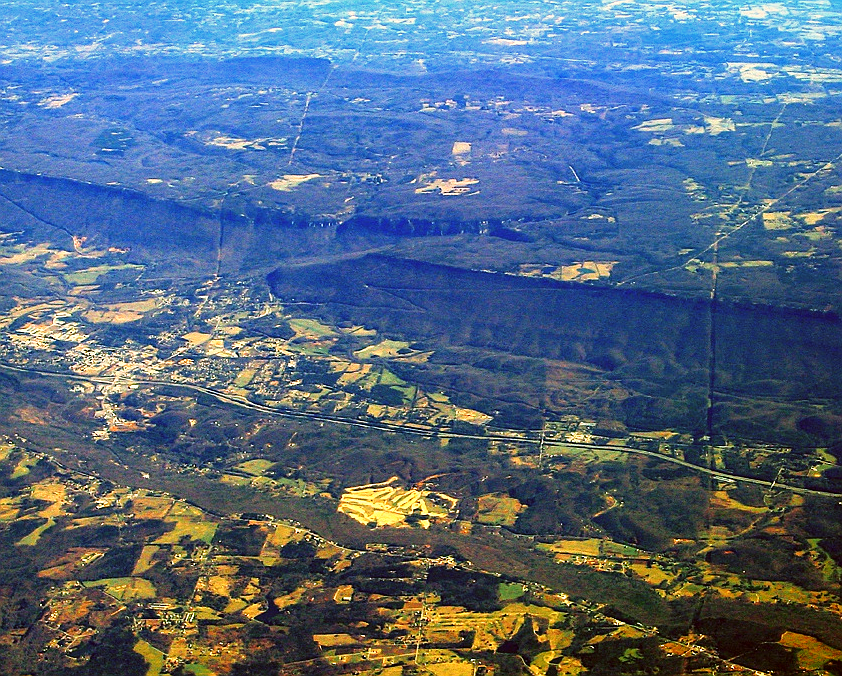
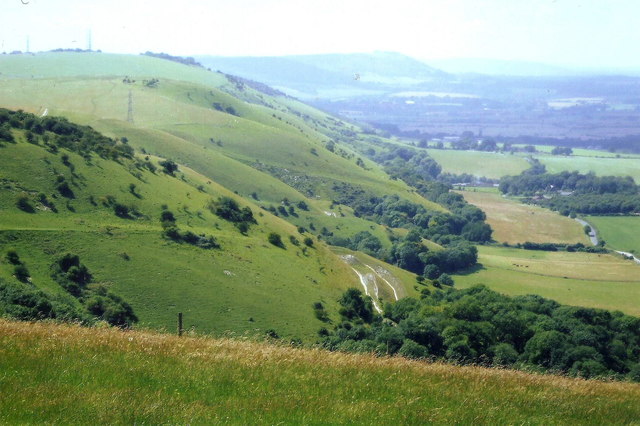
An escarpment (or scarp) is a steep slope or long cliff that forms as a result of faulting or erosion—where it marks the boundary between harder and softer layers of rock. A cuesta (the Spanish word for "slope") is a hill or ridge that usually has a long, gentle slope—the back slope—on one side, and a steep front slope, or escarpment, on the other. Cuestas with quite steep back slopes are known as hogback ridges, or hog's backs, because their shape is like that of the body of a hog, or pig.

Cuesta
Beds of sedimentary rocks typically consist of strata (layers) of softer rocks, such as clay or mudstone, alternating with harder, more resistant rocks, such as sandstone, chalk or limestone. When the beds are tilted and become exposed at the surface, the softer rocks weather more easily than the harder rocks lying above or below them. The forces of erosion produce an escarpment that cuts across the softer strata. A more resistant layer at the base of the escarpment may form the back slope to another cuesta.
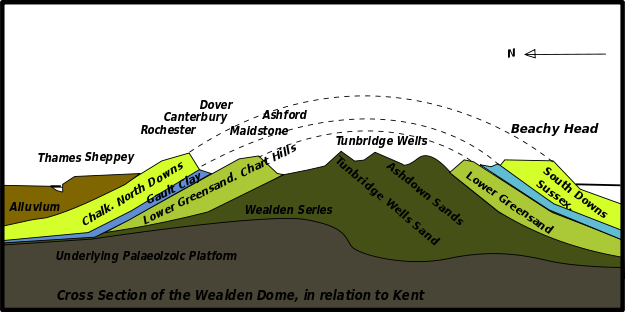
In southern England, chalk beds form the North Downs, South Downs and Chilterns cuestas, while Jurassic limestone forms the cuesta known as the Cotswolds.
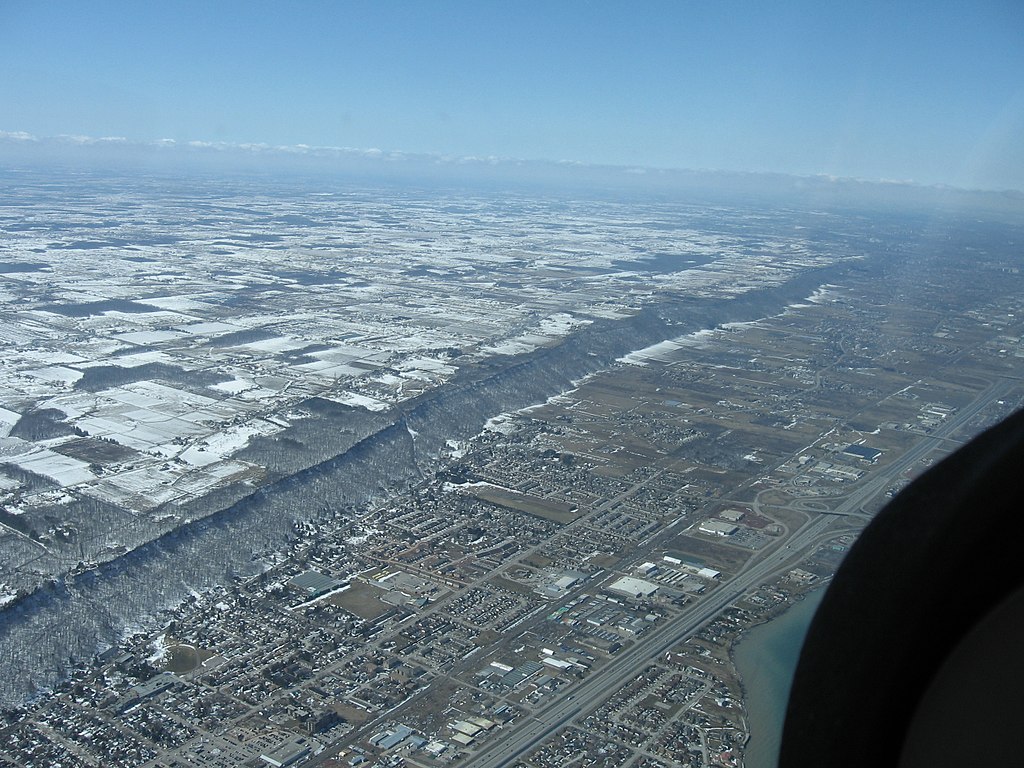
In the US, the Gulf coastal plain in Texas features a series of cuestas that run parallel to the coast. The Niagara Escarpment, which forms the cliff over which the Niagara River plunges at Niagara Falls, is the edge of a cuesta in New York state and southern Ontario in Canada.
The region of Côte d'Or in Burgundy, France, is a southeast-facing escarpment, providing the sunny slopes that are ideal for vineyards.