
EASY READ Our world

CITE
We have made every effort to follow citation style rules, but there may be some minor differences. If in doubt, please refer to the appropriate citation style manual.
EASY READ How is the environment being harmed?. (2026). In Q-files Encyclopedia, Geography, EASY READ Our world. Retrieved from
https://www.q-files.com/geography/easy-read-our-world/easy-read-how-is-the-environment-being-harmed
"EASY READ How is the environment being harmed?." Geography, EASY READ Our world, Q-files Encyclopedia, 1 Apr. 2026.
https://www.q-files.com/geography/easy-read-our-world/easy-read-how-is-the-environment-being-harmed.
Accessed 13 Sep. 2026.
EASY READ How is the environment being harmed? 2026. Geography, EASY READ Our world. Retrieved 13 September 2026, from
https://www.q-files.com/geography/easy-read-our-world/easy-read-how-is-the-environment-being-harmed
Geography, EASY READ Our world, s.v. "EASY READ How is the environment being harmed?," accessed September 13, 2026.
https://www.q-files.com/geography/easy-read-our-world/easy-read-how-is-the-environment-being-harmed


How is the environment being harmed?
People have made many changes to the world we live in, and some of these have had harmful effects. As the world population increases, there is need for bigger cities, new towns and farmland. Land has to be cleared of forests. This destroys the habitats of animals and plants. Loss of habitat, pollution and hunting have driven many to extinction. Industry can damage the environment. Harmful chemicals, plastics and waste pollute our oceans and kill ocean life. The burning of fossil fuels in power stations and vehicles releases carbon dioxide into the air, contributing to global warming. It also pollutes the air we breathe.


Global warming
Carbon dioxide is a greenhouse gas. In the right amounts, greenhouse gases in the atmosphere trap heat from the Sun preventing the Earth becoming either too hot or too cold. But if greenhouse gases build up, too much heat is trapped and the Earth heats up.
Climate change will have disastrous effects if current trends continue. The ice in the polar regions will melt, raising sea levels and causing severe flooding in low-lying areas. Changes in the climatic pattern worldwide are already leading to more violent storms, flooding and extreme drought.
Desertification

Desertification is when a region becomes more dry and desert-like. It loses its plants and animals and becomes barren wasteland. Climate change and drought are mostly responsible, but allowing animals to graze on the thin grass and shrubs in dry areas makes matters worse.
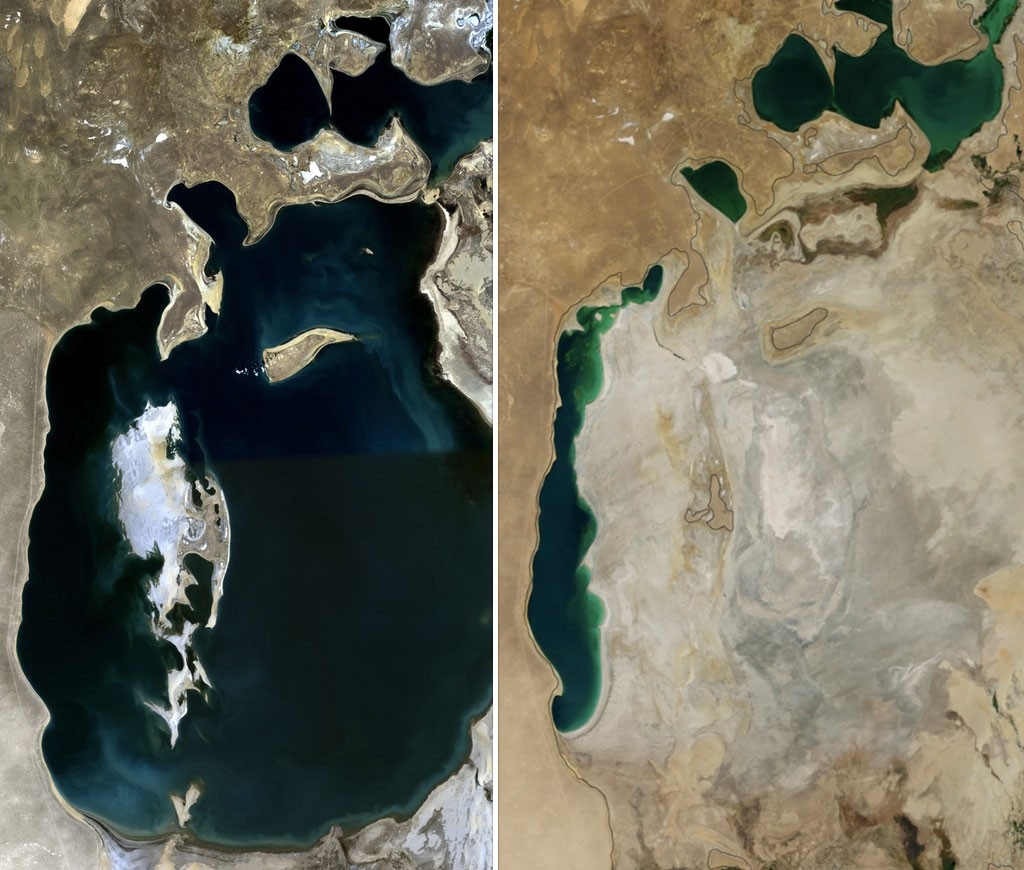

Deforestation
Deforestation is the cutting down of forests. This destroys the habitats of many plants and animals. Trees prevent the soil they grow in being washed or blown away, so cutting them down often results in less fertile land for farming. Trees also absorb carbon dioxide, one of the greenhouse gases that contribute to global warming. Their loss causes CO2 levels in the air to rise.
Sustainable forestry is a way to ensure that trees are harvested in a way that protects the future of forests. When part of a forest is cut down, new seedlings are planted so that, over time, the forest grows back.
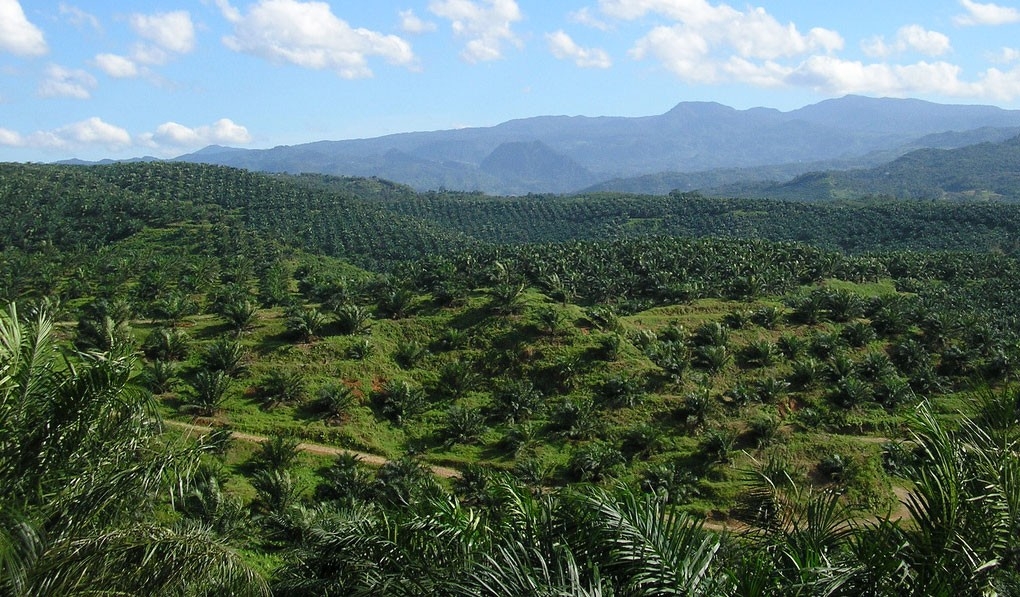
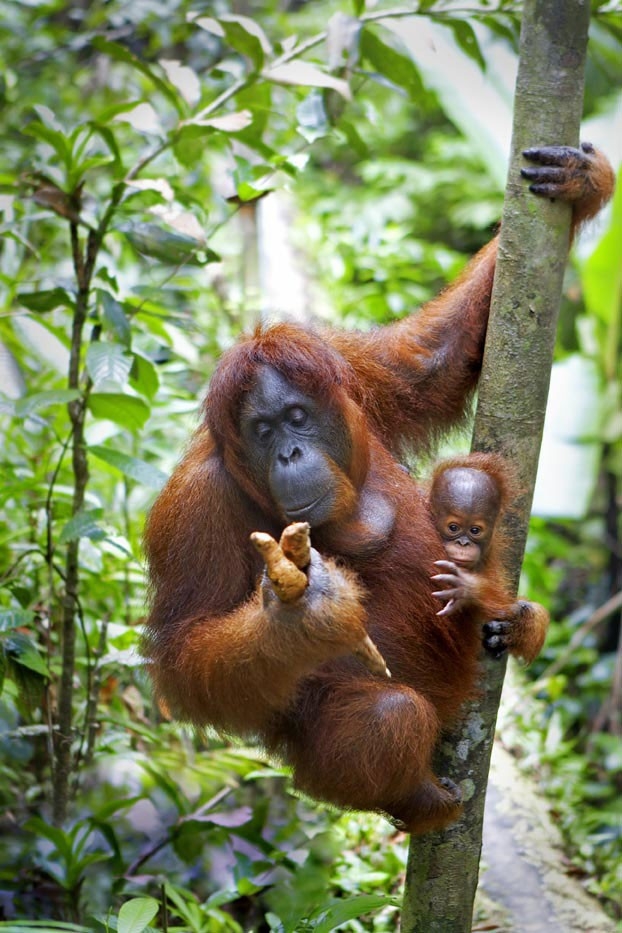
Today, many tropical rainforests are cut down to make room for farmland or plantations. Palm oil, a vegetable oil, comes from the fruit of oil palms. It is in great demand because it is used in food and other products. This has led to the clearing of forests, particularly in Indonesia, to make space for oil palm plantations. This threatens the survival of animals like the orang-utan, which lives here and nowhere else.

Soil erosion
Soil erosion is the wearing away of topsoil by wind or water. Soil with little or no vegetation is more easily eroded. Some farming practices and the cutting down of forests can cause soil erosion. Through the loss of fertile upper soil layers, soil erosion reduces farmland. It also threatens the survival of animals that depend on plants that grow in the soil. The eroded soil particles may choke rivers, lakes and wetlands elsewhere. Fine soil particles picked up by the wind also causes dangerous air pollution.
Increasing vegetation cover, especially by planting crops and trees, helps prevent soil erosion. Planting windbreaks, rows of trees or shrubs, along the edges of fields shield them against strong winds.
Air pollution
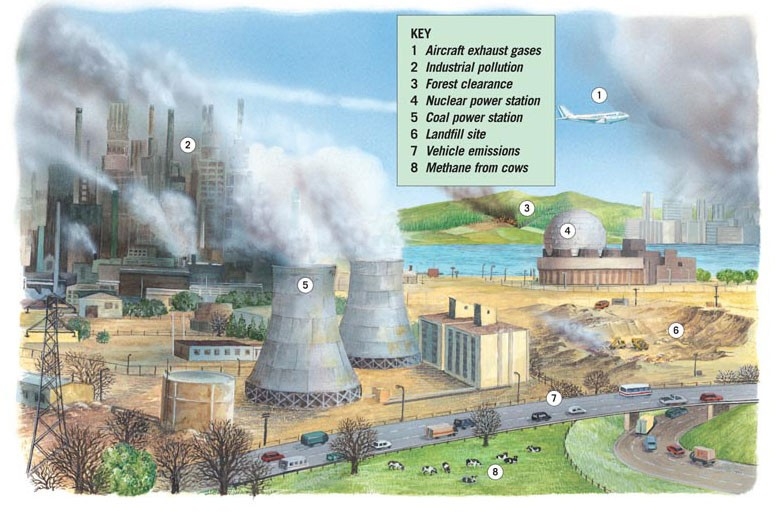
Air pollution is caused by fumes and smoke from vehicles, factory chimneys and power stations. Poisonous gases, such as sulphur dioxide released from factories, can mix with rain and mist to produce acids. When the acid rain falls, it kills plants over a wide area. Carbon monoxide released by vehicle exhausts causes city smogs, which are damaging to people's health.
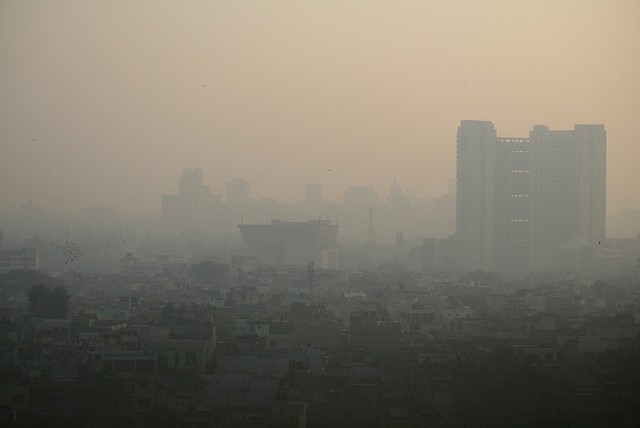

Many efforts are being made to reduce air pollution. These include making sure factories control their emissions of pollutants. Some countries are moving towards using cleaner fuels, such as biofuels, renewable energy and using electric vehicles. Petrol-engine cars are fitted with catalytic converters on their exhausts, which make the exhaust gases less poisonous. Many cities are introducing zoning to make the air in cities cleaner. For example, drivers who take their cars into central London now have to pay a fee.
Ocean pollution
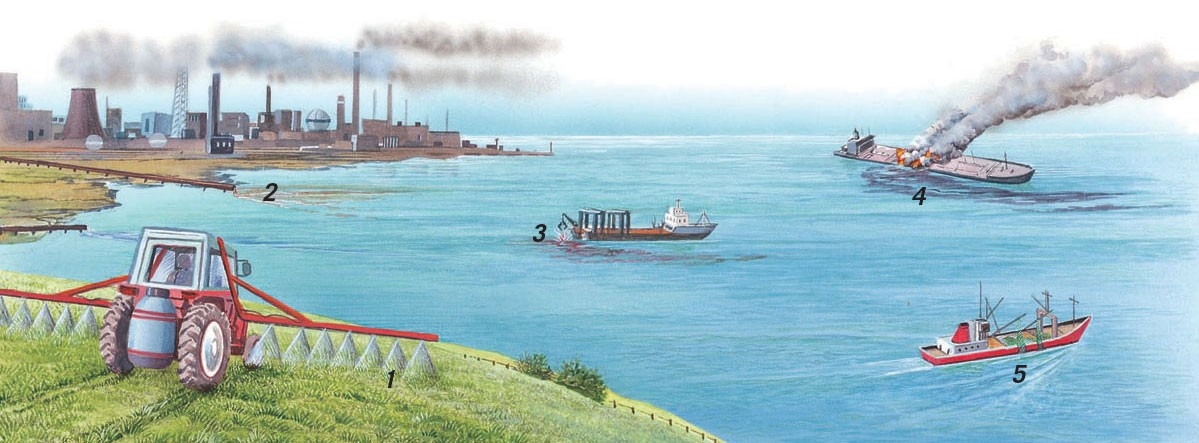
Pollution of the oceans endangers the lives of marine animals and causes serious health problems for humans. Water pollution comes from a number of sources. Fertilizers and pesticides used in farming are washed out into the ocean by rivers (1). Chemical waste and sewage may pour straight into the sea through pipes (3). Other causes of marine pollution are the dumping of chemicals or waste at sea (3), leaking oil tankers (4) and discarded fishing nets (5).
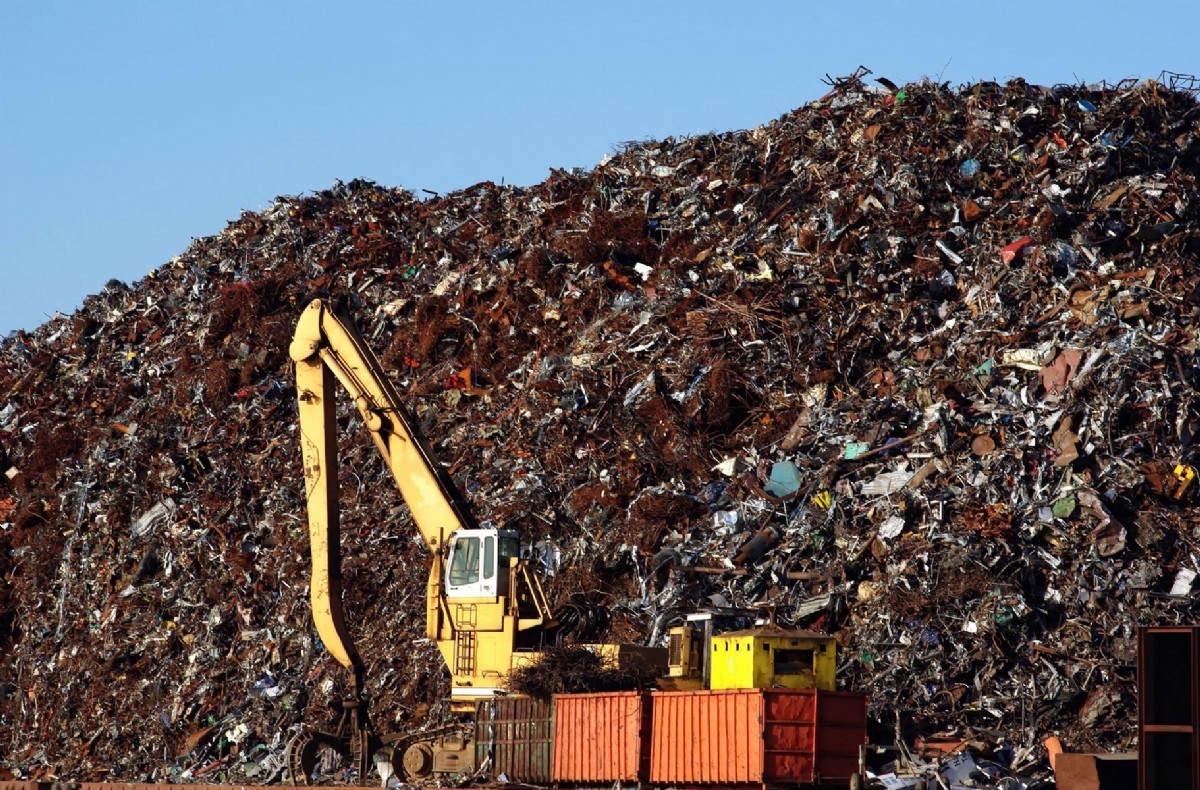
By recycling as much of our waste as possible (glass, metals, paper and some plastics and electronic items), we can reduce the amount of waste in landfills. Here, waste is buried in the ground, but harmful substances leak into rivers through groundwater—and from rivers into the ocean. Food and plant materials can be used as compost for farms and gardens. Other waste products can be burned and used as fuel.
Ready to find out more?
Here are some pages in other parts of Q-files you might like to explore:
Global warming
Environmental issues
Natural resources
Water supply
Pollution
Plastic pollution
Soil erosion
Endangered oceans
Endangered species
Environmental issues A-Z
pics

Without in any way limiting Q-files Ltd’s exclusive rights under copyright, any use of this publication to “train” generative artificial intelligence (AI) technologies to generate text is expressly prohibited. Q-files Ltd reserves all rights to license use of this work for generative AI training and development of machine learning language models.