
Aztec, Inca & Maya

CITE
We have made every effort to follow citation style rules, but there may be some minor differences. If in doubt, please refer to the appropriate citation style manual.
Teotihuacán. (2026). In Q-files Encyclopedia, History, Aztec, Inca & Maya. Retrieved from
https://www.q-files.com/history/aztec-inca-maya/teotihuacan
"Teotihuacán." History, Aztec, Inca & Maya, Q-files Encyclopedia, 30 Mar. 2026.
https://www.q-files.com/history/aztec-inca-maya/teotihuacan.
Accessed 7 Aug. 2026.
Teotihuacán 2026. History, Aztec, Inca & Maya. Retrieved 7 August 2026, from
https://www.q-files.com/history/aztec-inca-maya/teotihuacan
History, Aztec, Inca & Maya, s.v. "Teotihuacán," accessed August 7, 2026.
https://www.q-files.com/history/aztec-inca-maya/teotihuacan


Teotihuacán
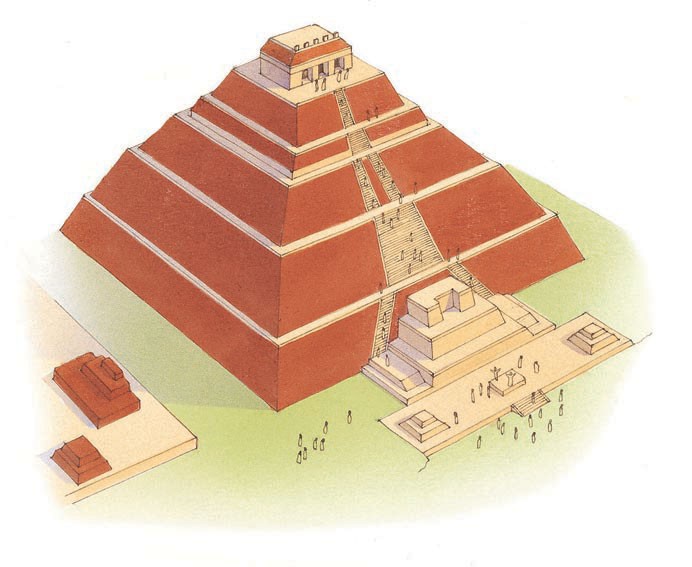
The great city of Teotihuacán was built from around 200 BC, about 50 kilometres (30 miles) from present-day Mexico City in Mexico. Teotihuacán is also the name given to the civilization that flourished around the city. Historians are not sure exactly which people or peoples built the city, but it may have been the Nahua, Otomi or Totonac groups. The site of Teotihuacán was a place of pilgrimage: a cave there was said by the local people to be the birthplace of the Sun. From AD 100, the giant Pyramid of the Sun was built over that cave.
The city
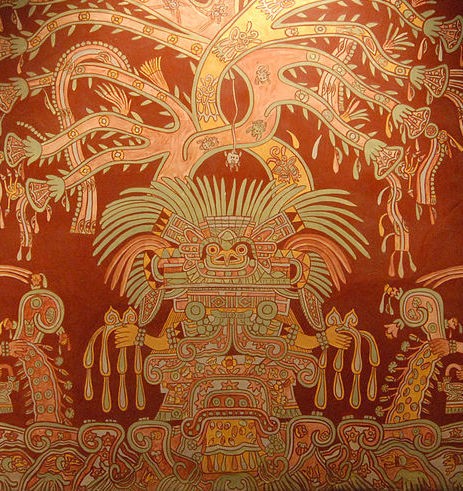
At its peak, at least 125,000 people lived in Teotihuacán, making it one of the largest cities in the world at the time. The earliest building in the city took place around 200 BC, and construction continued until around AD 250. The city remained powerful until the 7th or 8th century. Wealthy people lived near the centre of the city, many of them in huge complexes of apartments, several stories high. The internal walls were often covered with beautifully painted murals. Farmers and craftworkers had simpler homes on the outskirts of the city.
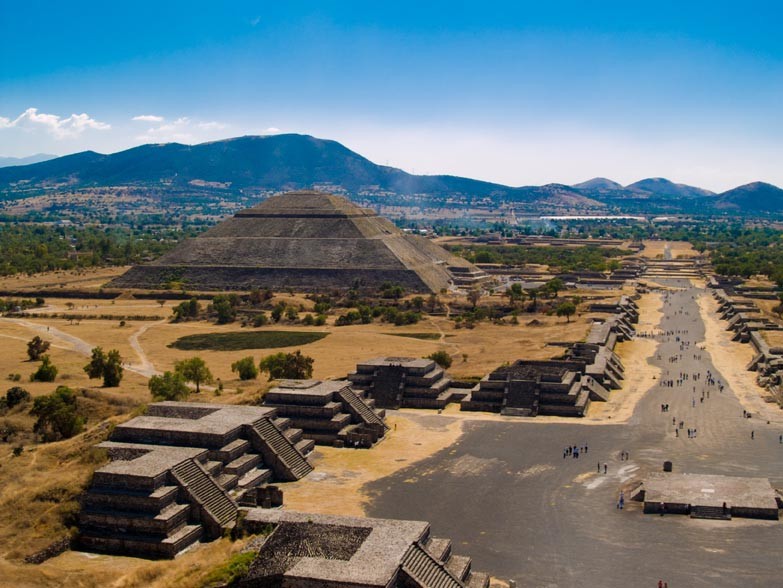
Construction of the huge Pyramid of the Sun was begun in the 1st century AD. It lay beside a broad central avenue that was later named the Avenue of the Dead. Several smaller pyramids were also constructed along the avenue. It is likely that all the pyramids were used as temples to worship the gods.
Destruction
Teotihuacán was destroyed in AD 750, either in an uprising by its own inhabitants or by being sacked by enemy invaders. Although all its inhabitants moved away, Teotihuacán remained a place of pilgrimage. Its layout and architecture probably influenced the Aztecs, when they built their city of Tenochtitlán hundreds of years later.
Consultant: Philip Parker
pics
Without in any way limiting Q-files Ltd’s exclusive rights under copyright, any use of this publication to “train” generative artificial intelligence (AI) technologies to generate text is expressly prohibited. Q-files Ltd reserves all rights to license use of this work for generative AI training and development of machine learning language models.