
Pirates & galleons
Life aboard a galleon
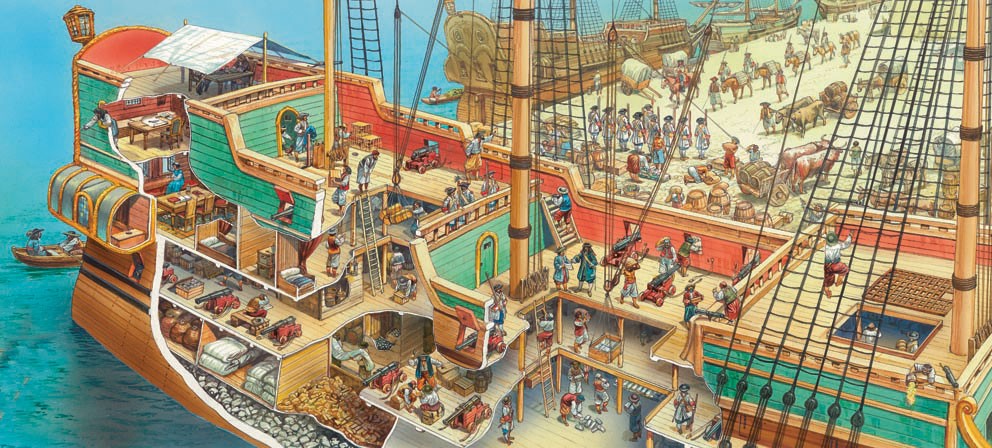
How many men would set sail on a Spanish galleon in the 1500s? On board would be the sailing crew and their commanders, numbering about 80, and soldiers with their officers, about 120. With so many people (and animals, kept for fresh meat, milk and eggs) crowded together in a small space, conditions on board a galleon could become extremely unpleasant—noisy, filthy and smelly. It was important that the crew cleaned the ship thoroughly, including pumping the dirty water out of the bilges, on a daily basis.
Commanders and officers
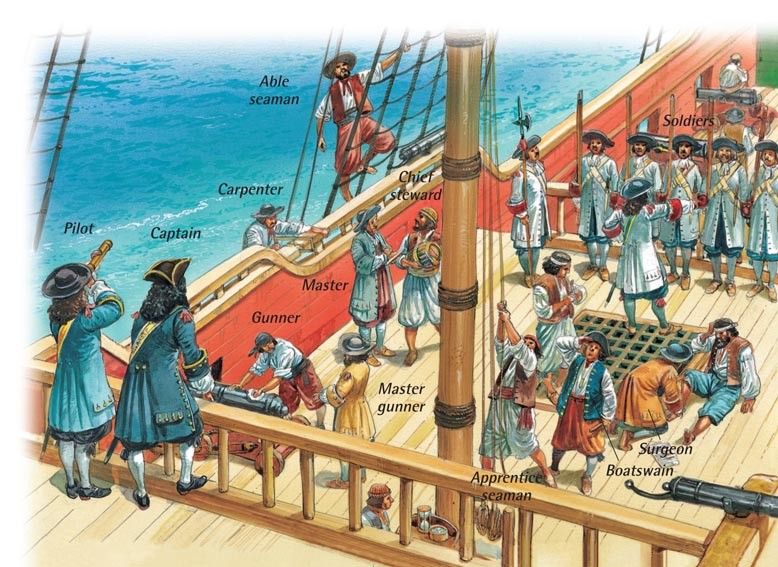
In overall command was the capitán (captain). He was a soldier rather than a sailor; the commander of the ship’s sailing crew was the maestre (master). He was responsible for sailing the galleon, for keeping it seaworthy and for ensuring it had adequate supplies. The maestre was assisted by a number of officers, including the piloto (pilot), responsible for navigation, the contramaestre (boatswain, or bosun), who looked after the rigging and ensured the ship runs smoothly, the despensero (chief steward), in charge of food and drink, and the codestable (master gunner) who supervised the the ship’s guns.
There were also officers who played no part in the running of the ship, including a chaplain, a surgeon and government officials who oversaw the cargo. The soldiers had their own chain of command. They were infantrymen whose purpose was to defend the ship from attackers.
Crew

The ship’s crew comprised, in descending order of rank, marineros (able seamen), grumetes (apprentice seamen) and pajes (ship’s boys). The ship’s boys performed menial tasks such as scrubbing the decks and serving meals. In addition there were the maestranza, specialist craftsmen, including carpenters, coopers and caulkers, and the artilleros, gunners, who maintained and operated the ship’s guns.
Shipshape
All upper decks had to be scrubbed clean each Sunday morning before prayers. A holystone, a block of sandstone, helped scrape off the grime. The gaps between the planks needed to be sealed regularly to stop water getting through. The men used a caulking iron to drive the tar-soaked rope between the planks.


Carpenters and coopers
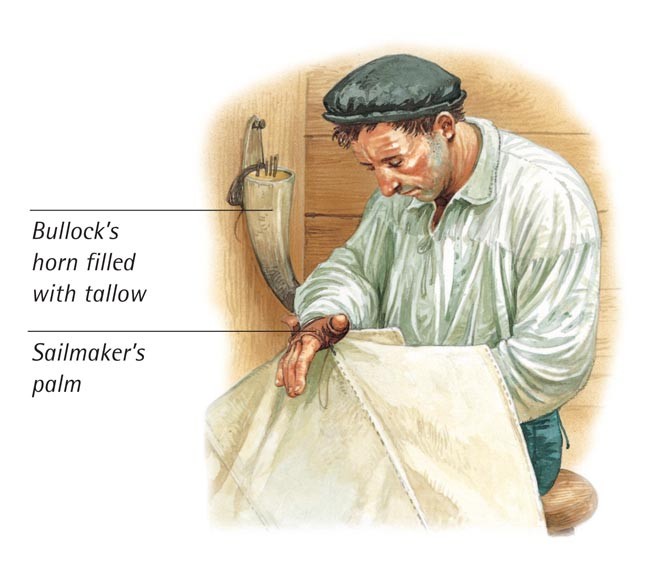
Skilled carpenters and coopers were essential members of the crew. The carpenter and his apprentices made any running repairs to the ship as required. The cooper ensured that the barrels, in which food, wine and water were stored, were in good repair and did not leak. If the cooper were not to do his job properly, the ship risked losing valuable food supplies with food rotting and wine and water going bad.

Toilets
The lack of proper toilets aboard could be a problem. The crew might use the “heads” in the ship’s prow, holes cut into wooden boxes to either side of the bowsprit. Others might prefer buckets, or the bilges, which would soon stink of human waste. Attracted by the dreadful smell, rats would always find their way on board in their hundreds while the ship was in port. They not only spread disease but ate provisions, tormented livestock and damaged sails and rope.
Quarters
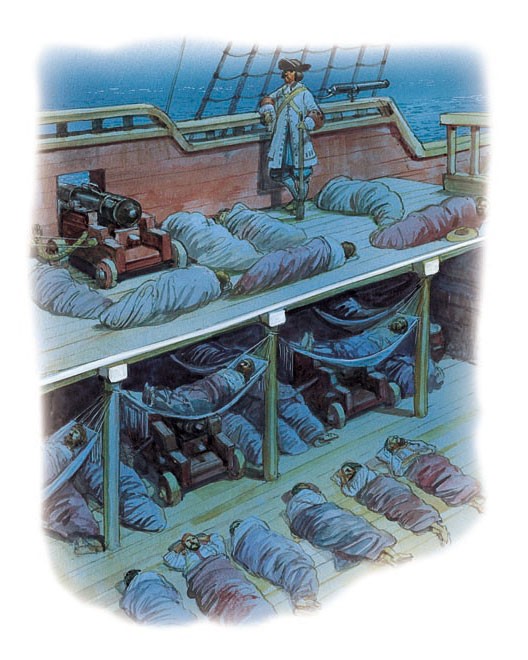
Space was in short supply on board ship. The captain lodged in his cabin in the stern, while his officers slept in screened-off areas on the upper decks. The crew and the solidiers slept in hammocks or on the floor of the main or lower decks. Many of them preferred to sleep in the open air.
Food
The crew’s daily rations were as follows: wheat biscuit, a soupy mixture of beans, lentils and rice called menestra along with a litre of wine per man. Boiled salted beef and sardines might be added on alternate days or, when it was unsafe to light the galley fires in rough seas, cheese. Garlic, olives and onions provided vitamins and so helped make the diet healthier on a Spanish ship than that of sailors manning northern European ships, which lacked fresh fruit and vegetables.

Watch
A system of three watches operated while the galleon was at sea. The ship’s company was divided into three teams, each keeping watch for four hours at a time. The passing of the hours was recorded by the turning of a 30-minute sandglass. The change of each watch was marked by the chanting of prayers.