
The world in the 21st century
War in Sudan
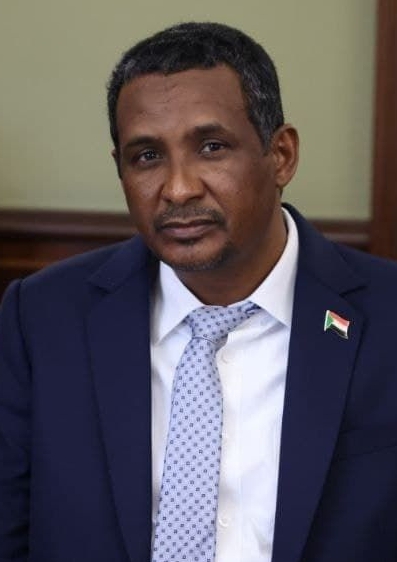
The Sudanese Civil War began on 15th April 2023. It is being fought between two rival factions of the military government of Sudan: the Sudanese Armed Forces (SAF), led by General Abdel Fattah al-Burhan, and the Rapid Support Forces (RSF), a militia (private army) commanded by General Mohammed Hamdan Dagalo, known as Hemedti (“Little Mohammed”). Several smaller armed groups are also taking part. Fighting has been concentrated mainly in the capital, Khartoum, where the conflict began, and in the Darfur region of western Sudan. Many Masalit, a black African people living in Darfur, have been reported dead as a result of massacres, described as a genocide, carried out by the RSF. Due to the war, Sudan is facing the world's worst humanitarian crisis—around 34 million people are suffering extreme hunger.
22nd July 2026

Miltary coups
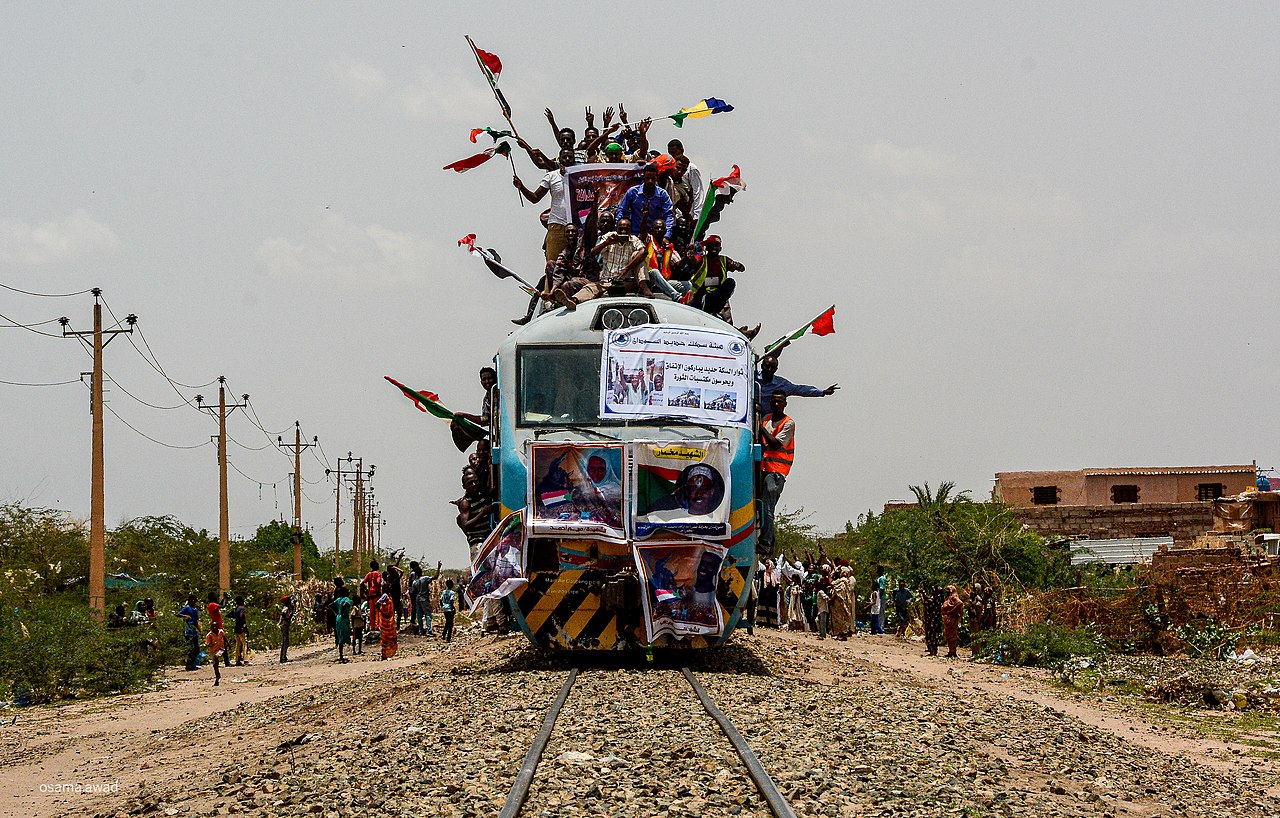

In December 2018, there were massive street protests in Sudan calling for an end to the rule of President Omar al-Bashir. In April 2019, the army ousted Bashir in a military coup (overthrow), ending his 30-year rule. Bashir was imprisoned and a junta (military government) established.
Protests calling for civilian (non-military) rule continued. In June 2019, the junta's security forces (which included both the RSF and the SAF) carried out a massacre in Khartoum in which more than a hundred demonstrators were killed. The military agreed to share power in a joint civilian-military government, but that was overthrown in another coup in October 2021. The coup was led by two men: Abdel al-Burhan, the head of the armed forces, who became Sudan's ruler, and RSF leader Hemedti, who became Burhan's deputy.
War breaks out
It was not long before disagreements emerged between the two men. The main dispute was over Burhan's plans to incorporate the 100,000-strong RSF into the army. Hemedti suspected that his forces would come under the command of Burhan, Sudan's commander-in-chief, rather than himself. Hemedti decided to station members of the RSF around the country, a move that the SAF saw as a threat. Shooting between the two sides broke out on 15th April 2023. The fighting swiftly escalated, with the RSF seizing most of Khartoum. Burhan relocated his government to Port Sudan.
RSF
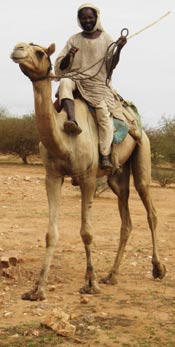
Years of tension and disputes over land and water in Sudan's western region of Darfur between black African farming peoples and nomadic Arabs erupted into a violent conflict in 2003. Bashir's government brutally crushed the African rebels of Darfur by employing a militia (private army) called the Janjaweed. Its members were Sudanese Arabs, led by Hemedti. The Janjaweed onslaught left approximately 300,000 Darfuri Africans dead and 2.7 million forcibly displaced (moved from their homes). As a result of his actions, Bashir was charged with war crimes, crimes against humanity and genocide by the International Criminal Court.
In 2013 Bashir announced that the Janjaweed would be re-organized as the Rapid Support Forces (RSF) under Hemedti's command. The RSF proceeded to carry out mass killings and destruction of villages of the Fur, Masalit and Zaghawa peoples, a policy described as "ethnic cleansing" (the mass expulsion or killing of members of one ethnic or religious group in an area by those of another).
In 2017 Bashir rewarded Hemedti with several gold mines in Darfur, greatly increasing his personal wealth. Bashir sent RSF units to fight in Yemen and Libya. As a result, the number of troops in the RSF and amount of military equipment available to them grew rapidly.

The course of the war
Having made advances in the Khartoum area and central Sudan in April–June 2023, Hemedti's RSF consolidated its control of Darfur in the west of the country. Tens of thousands of Darfuris fled across the border to Chad to escape the fighting. After capturing West Darfur’s capital city, Geneina, in July 2023, RSF troops carried out a massacre of the city's black African inhabitants—up to 15,000 people—many of whom were Masalit people. By December, the RSF had seized control of Wad Madani, capital of Gezira state. The city had become a refuge for those who had escaped conflict in other parts of the country. Hundreds of thousands of people were forced to flee once more from RSF death squads and looters.
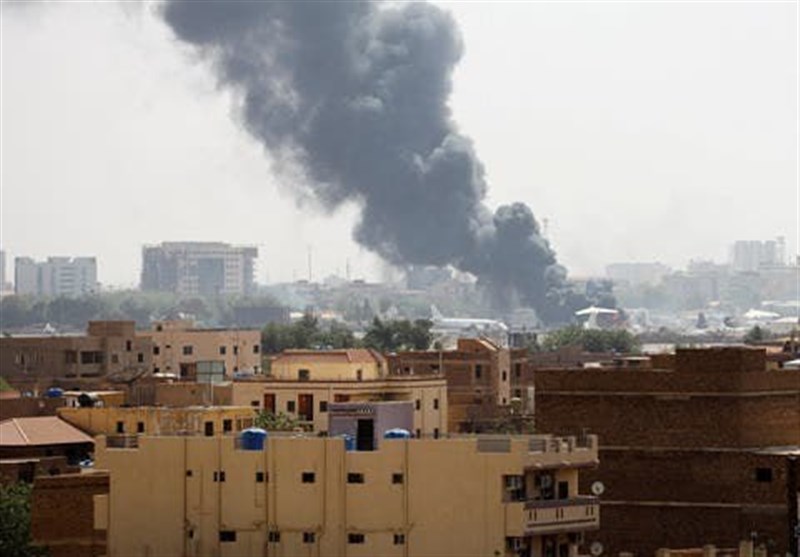
The Sudanese Armed Forces (SAF) regained momentum in early 2024, making gains in Omdurman (Khartoum’s twin city on the other side of the River Nile), and Gezira state. By March 2025, they had retaken Khartoum itself, including the presidential palace and airport. The city had been almost completely destroyed by the time the RSF left.

Fighting continues to rage in the country’s south and west. In early June 2025, the RSF took control of territory along Sudan's border with Libya and Egypt. In October, after a siege that had begun in May 2024, it succeeded in capturing the city of El-Fasher, in the western Darfur region. It was the SAF's last stronghold in Darfur.
Since the start of the war, both the SAF and the RSF have been accused of war crimes. These include deliberately targeting civilians, launching airstrikes at hospitals and blocking humanitarian aid. The UN has accused both armies of using “starvation tactics” against the civilian population.
Genocide
Many Darfuris suspect the RSF war aim has been to transform the ethnically mixed region of Darfur into an Arab-ruled domain. To that end, the RSF has carried out massacres of the black African population in the cities where it has taken control. In March 2024, the campaign group Human Rights Watch (HRW) said it was possible that the RSF were carrying out a genocide (the intent to destroy, in whole or in part, a national, ethnic or religious group) against the Masalit people and other black African communities. In January 2025, the United States formally confirmed the accusation of genocide against the RSF.
Humanitarian crisis

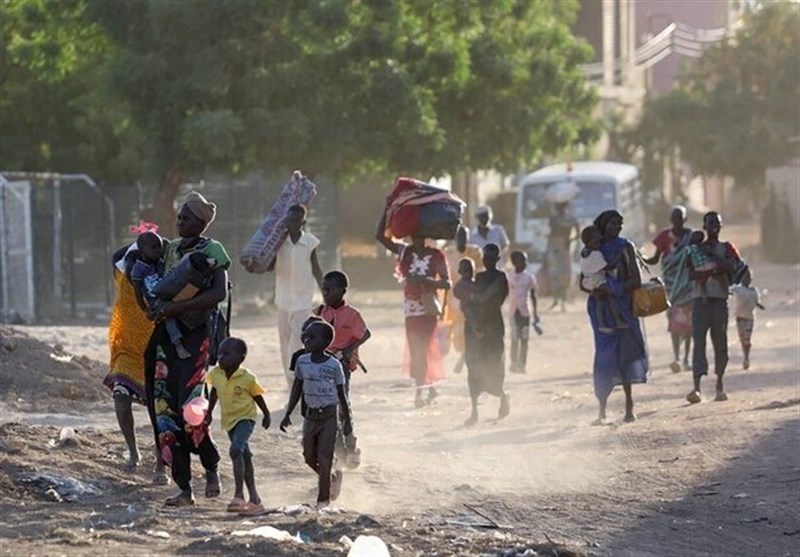
The war has resulted in the world's largest humanitarian crisis, with extreme shortages of food, water and medicines, and outbreaks of famine (in the Zamzam camp near El Fasher in Darfur) and disease. Famine alone has killed an estimated 522,000 children, while the overall death toll of the war, including deaths from violence, starvation and disease, is even higher. More than 34 million people—around two-thirds of Sudan's total population—is in need of food aid. The situation has worsened since the decision of the administration of US President Trump to cut aid: almost 80% of the emergency food kitchens set up by aid organizations have been forced to shut.
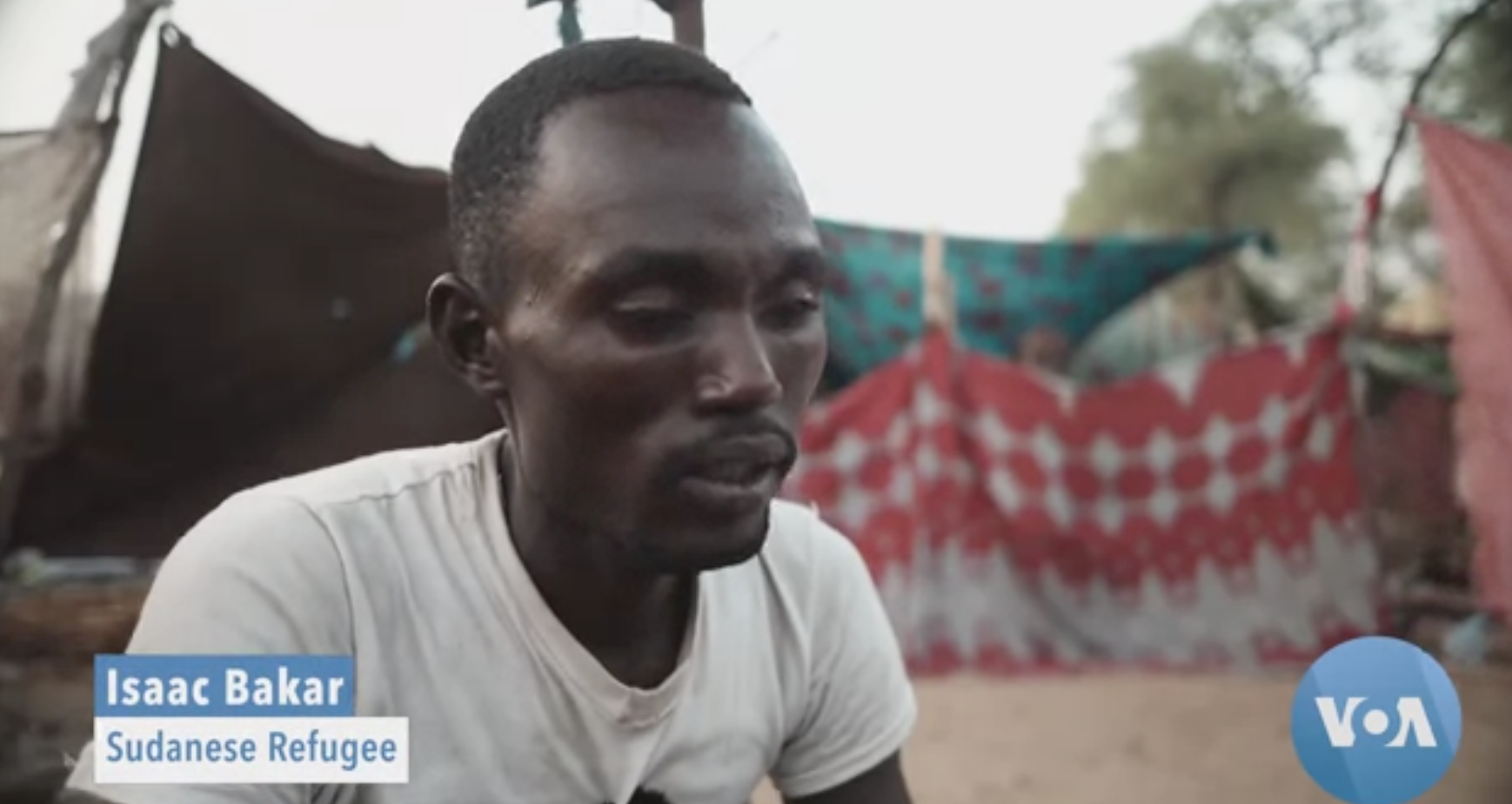
Between 13 and 14 million Sudanese people have been displaced, with 9–10 million fleeing to other parts of the country, and between 3 and 4 million seeking refuge in the neighbouring countries of Chad, Libya, Egypt, Central African Republic, South Sudan and Ethiopia. There are widespread reports of human rights abuses, including the recruitment of children as soldiers.
Fall of El Fasher
El Fasher, the last major city in Darfur held by the SAF, fell to the RSF at the end of October 2025. For over 18 months, the RSF had laid siege to the city, blocking food supplies and attempting to prevent residents from escaping—even building an earthen wall around it. The SAF also destroyed the nearby Zamzam camp which had already been devastated by famine, forcing its occupants into the city. The RSF's capture of El Fasher has left Hemedti in control of almost all of Darfur and much of neighbouring Kordofan.
Around 36,000 people managed to flee El Fasher. Many of them travelled west to the town of Tawila, which is under the control of the Sudan Liberation Army faction, a black African rebel group led by Abdul Wahid Mohamed al-Nur (SLA-AW), and already sheltered more than 652,000 displaced people. But there are grave concerns about the fate of an estimated 250,000 people remaining in El Fasher, most of them of black African ethnicity. Yale University’s Humanitarian Research Lab, which has been monitoring the war in Sudan using satellite imagery, says it has found evidence of mass killings by the RSF.

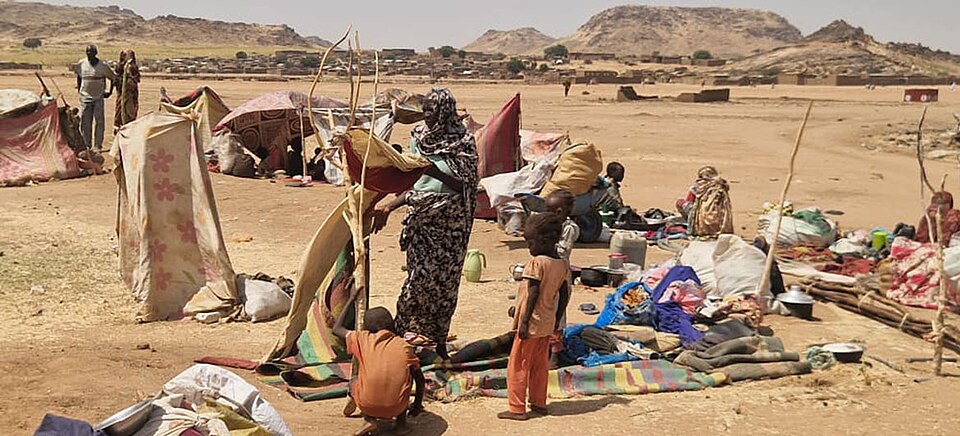
A United Nations fact-finding report, published in February 2026, said that after the seizure of El Fasher, the RSF inflicted “three days of absolute horror” on the city's inhabitants. The RSF is accused of killing tens of thousands of people, particularly from the Zaghawa ethnic group (a black African people, traditionally nomadic herders) and assaulting women and girls. According to the report, the RSF's actions bore “the hallmarks of genocide”.
Kordofan
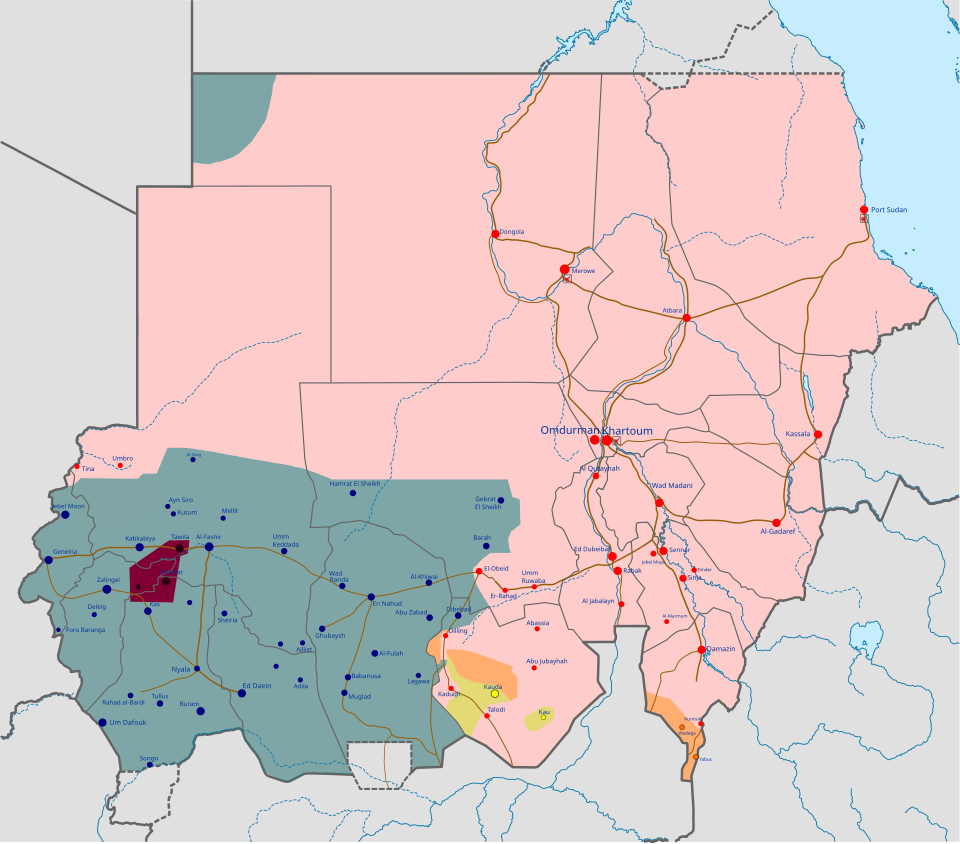
Following the SAF's recapture of Khartoum and the RSF's consolidation of control in Darfur, the focus of the war shifted to the Kordofan region—central Sudan—in early 2026. Both sides have been accused of carrying out drone strikes on civilian targets (there has been a sharp increase in the use of deadly drones in the war, mirroring the war in Ukraine), while hundreds of thousands of people have been displaced. Famine conditions are reported in parts of South Kordofan.