
United States history
Oregon Trail
By the 1840s, all the lands to the west of the Mississippi River had become part of the United States. People heard that Oregon, on the Pacific coast, was lush and green. With so little farming land available in the east, many decided to leave their homes for ever and make the 3000-kilometre (1900-mile) journey west. Over the next 25 years, around half a million people trudged along what came to be known as the Oregon and California trails. But it was a hard and dangerous trip across the “Great American Desert”. Many fell victim to disease, and almost all suffered from hunger, thirst and exhaustion.
The routes
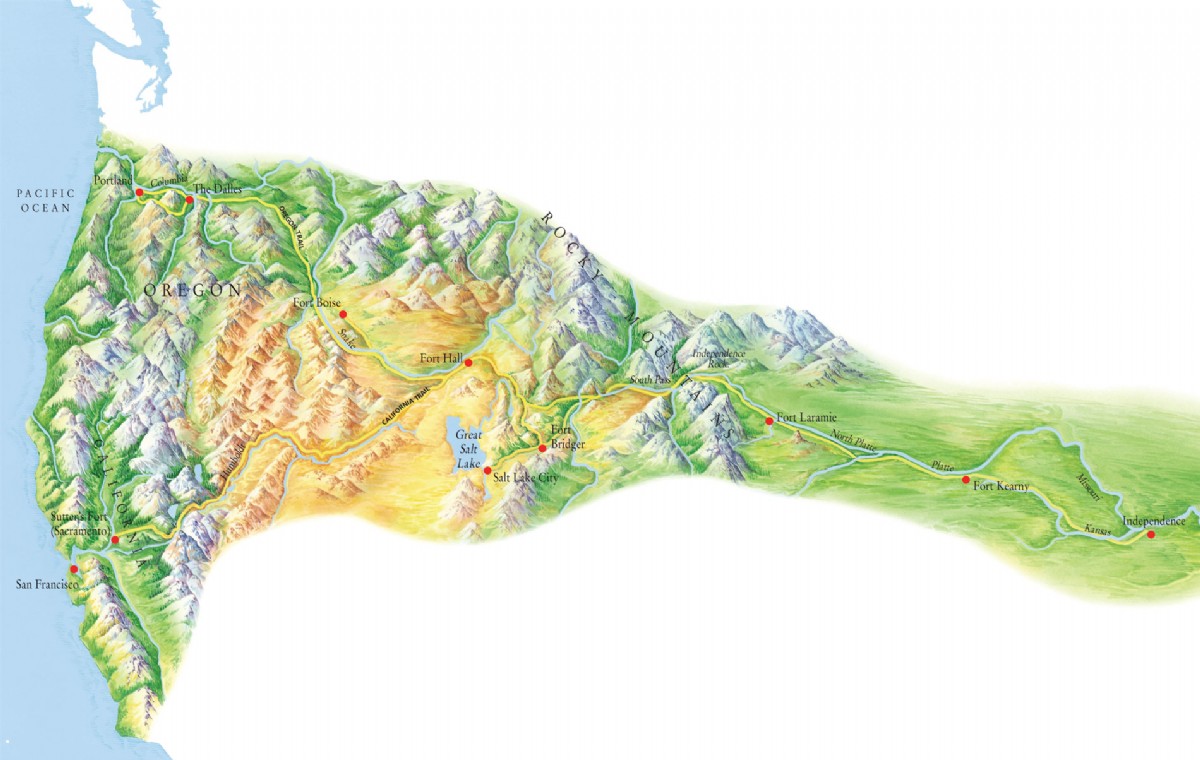
The Oregon Trail connected towns along the Missouri River to valleys in Oregon. The trail was marked by fur trappers from 1811 onwards, but it was not until 1841 that it became entirely passable by wagons. From 1843, the eastern part of the trail was also used by travellers on the California Trail, which branched southwards to the fertile land and goldfields of California. After 1847, Mormon travellers also used the Oregon Trail before branching on to the Mormon Trail. This led to Salt Lake City, in Utah, where Mormon pioneers established a centre for the Mormon Church.
Following the completion of the First Transcontinental Railroad in 1869, linking the Missouri River with the Pacific Coast by train, traffic on the trails started to die down.
On the wagon train
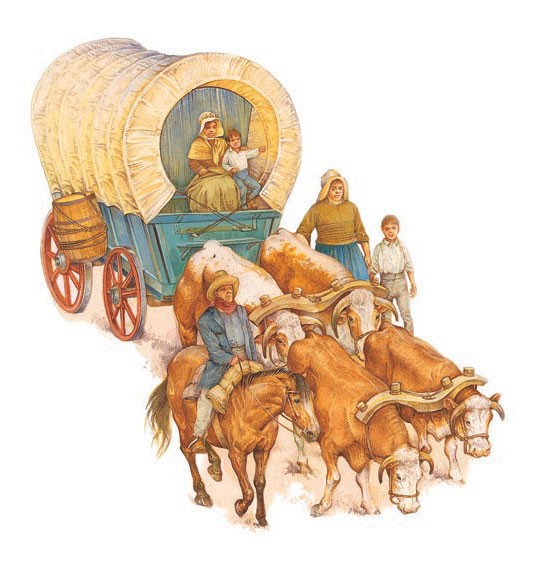
When travelling along the Oregon, California or Mormon Trails, pioneers set out in groups of farm wagons, known as wagon trains. They believed a large group would be safer from wild animals and attack. Travelling overland across America more than 150 years ago was a very different experience from what it is today. There were no roads—only the tracks made by people and wagons that had gone before. There were no towns, although the land was populated by Native Americans.

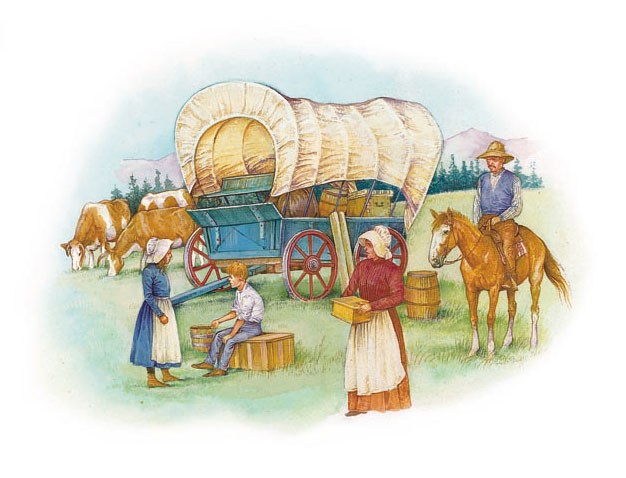
The wagons were wooden, with iron tyres and a canvas covering. Water was stored in a barrel strapped to one side. They were pulled by teams of oxen. Only young children and the sick rode in the wagon: everyone else walked alongside. Steep descents were often a problem: the travellers tied tree trunks to the rear wheels to act as brakes.
Encounters with
Native Americans
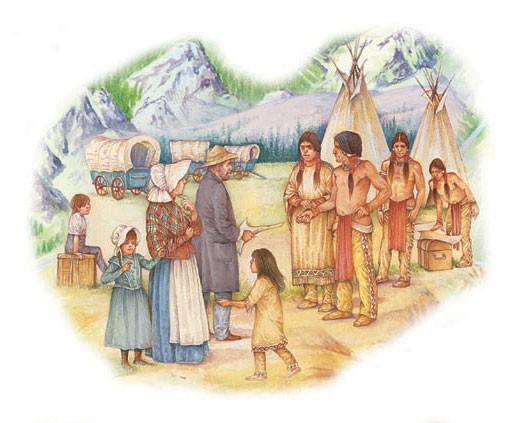
The lands crossed by the Oregon Trail were home to many Native American peoples. They had lived there for thousands of years, hunting buffalo, trapping and fishing. They lived in villages of tipis, tents made from sticks and buffalo hides. Most Native Americans were friendly to the pioneers and traded buffalo robes and mocassins for food, knives or clothes.
Although the pioneers lived in fear of Native American attack, in fact the number of attacks was very low. Only around 360 pioneers died at the hands of Native Americans on the Oregon Trail. Over the same period (around 1840–70), the travellers killed around 420 Native Americans.
Corrals

At night, when the wagons stopped, they were drawn up to form a ring, called a corral, for protection. Tents were pitched inside the corral. The women prepared food for an evening meal, while the men made repairs to the wagons, and tended to the animals.
Forts
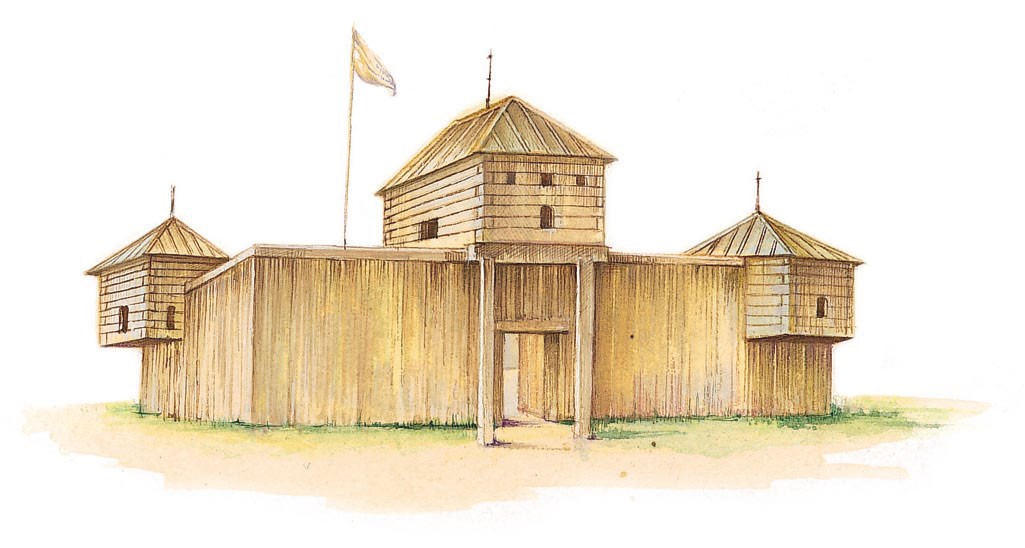
Eventually, forts were built along the trail. Fort Laramie (in modern-day Wyoming), for example, was a place where fur traders and Native Americans met to buy and sell furs. Here, too, travellers on the trail stocked up on supplies. Later, other forts were built further west along the trail. In the early years, however, there were no stores, no farmhouses—nothing to supply the pioneers with food.

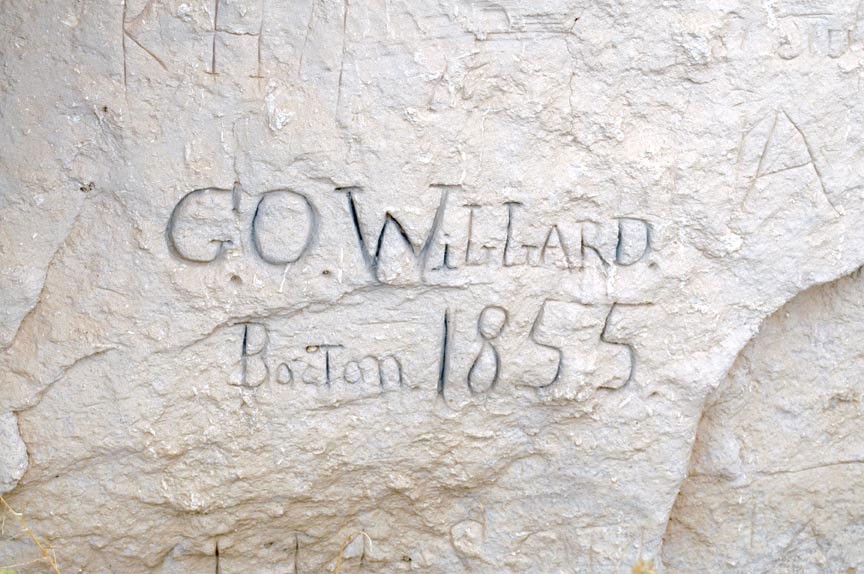
Crossing the Rockies
The Rocky Mountains were the first major obstacle the travellers had to face. Fur trappers, called mountain men, who knew the Rockies well from hunting beaver, had already discovered a fairly easy way across. After following the Platte River, the trail took the travellers overland to Independence Rock, which stood at the entrance of a valley. Here thousands stopped to carve their names in the granite rock (their carvings remain to this day). Crossing this route, called the South Pass, a 30-kilometre (20-mile) low saddle over the Rockies, the travellers entered the American West.
California Trail
Beyond the Rocky Mountains, the trail divided in two. The Oregon Trail followed the Snake River northwestwards to Oregon, while the California Trail led southwest, following the Humboldt River across the desert to the fertile Sacramento Valley. On the way, many of the travellers’ animals perished in the searing heat of the desert. Wagon wheels were soaked to prevent the iron rims falling off the dried-out, shrunken wheels. Dust kicked up by the wagons was so thick, people could not see where they were going.
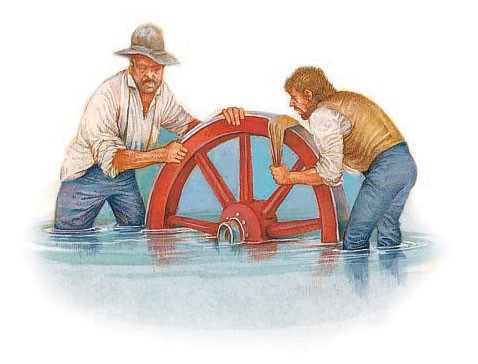
Reaching Oregon

It was essential that the travellers bound for Oregon reached their destination before the winter snows came. The Donner party were forced to spend the winter of 1846 camping out in the mountains. The few that survived did so by eating their dead companions. News of this gruesome event reminded all travellers of the many dangers they risked.
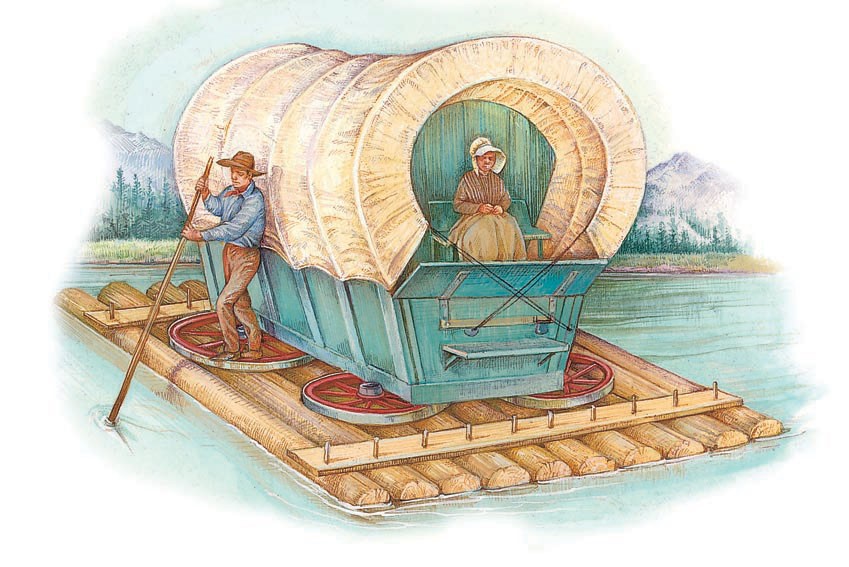
Willamette Valley, Oregon, was the chosen destination of many of the travellers on the Oregon Trail. It was reached after a very difficult climb over the mountains, which were impassable in winter. Some risked rafting down the treacherous Columbia River for the last few hundred kilometres.
Consultant: Philip Parker
Timeline
1841
The first party of travellers, about 100 farmers and their families in the Bidwell-Bartleson party, heads for California. On the way, some decide to go to Oregon.
1843
The first major migration to Oregon, to be made by over 800 people, begins.
1847
Brigham Young leads the Mormon Brigade along the Oregon Trail, before striking out for Utah.
1849–50
The Gold Rush. About 85,000 gold-seeking travellers head for California. Cholera spreads along the trail.
1854–57
The American Indian Wars reduce the numbers of travellers
1859
The first stagecoaches travel along the Oregon Trail.
1860
The Pony Express, an overland mail route using the California Trail, is established. Relays of young men, among them William Cody (later known as Buffalo Bill), carry mail on horseback.
1861
The Pony Express goes bankrupt as transcontinental telegraph lines are completed.
1869
The Union Pacific transcontinental railroad is completed. People can now travel by train and the era of overland travel by wagon draws to an end.