
Vikings
Norse gods and myths
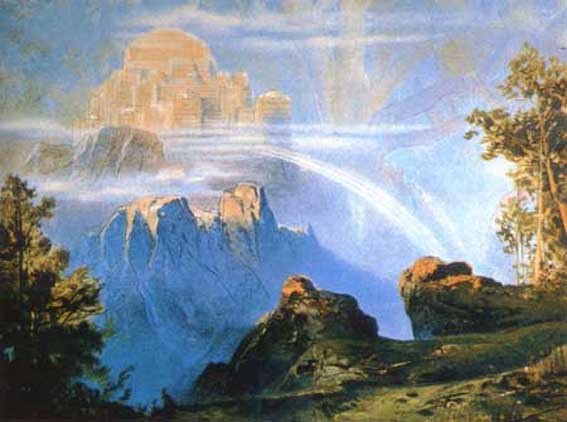
The Vikings worshipped many gods and goddesses. The stories they told about gods, giants and monsters are known today as Norse myths. According to these myths, people lived in Middle Earth, together with giants and dwarfs. The gods lived in the sky, which was linked to Middle Earth by a rainbow bridge. Vikings believed that a warrior killed in battle went to Valhalla, a great hall where dead heroes feasted. Odin, the chief god, sent his warrior-maidens, the Valkyries, to bring warriors who had fallen in battle to Valhalla.
Odin
Much of what we know about Viking gods and goddesses comes from the Eddas, a collection of folk tales. Many of them were written in the 13th century by an Icelandic chieftain, but the stories, known as sagas, were first told centuries earlier.
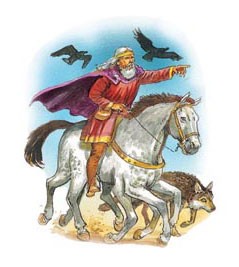
The most powerful god was Odin, the god of warfare, justice and wisdom. He was married to Frigg and had several sons, including Thor and Baldr. As he sat on his throne, news was brought to him by his ravens, Huginn and Muninn.
Thor
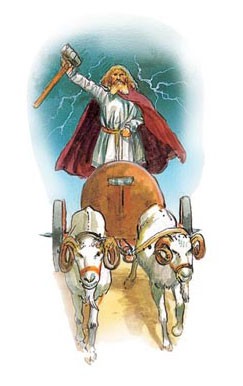
With his great hammer Mjollnir, Thor was the main defender of the gods against their enemies, the giants. He was also the god of thunder, lightning, storms, strength and oak trees. He rode on a chariot pulled by two goats, called Tooth-gnasher and Tooth-grinder. The fourth day of the week, Thursday, is named after him.
There are many myths about Thor's endless battles with his enemies, particularly with the sea serpent Jörmungandr. This terrible monster grew so long that she was able to stretch right around the world and bite her own tale. When she lets go, the world will end.
Freyr, Freyja and Hel
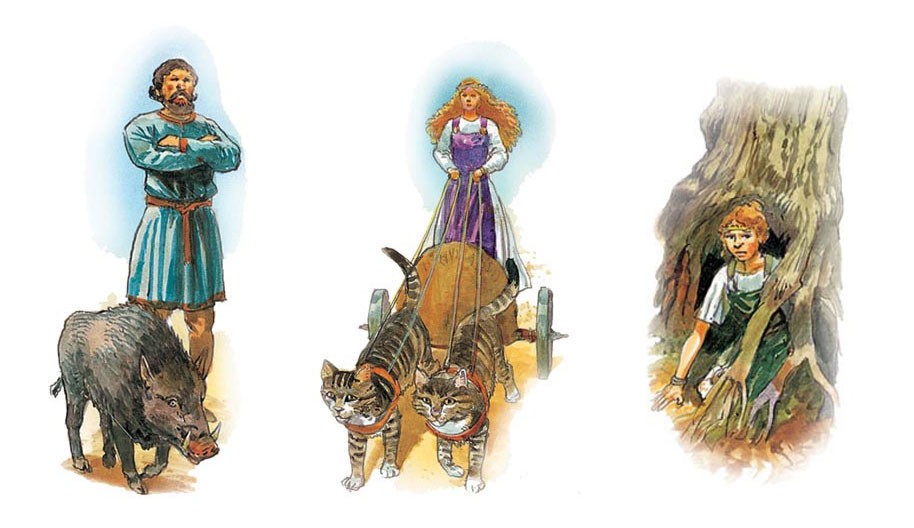
Freyr and Freyja, brother and sister, were the god and goddess of fertility. Freyr, also god of peace, rode in a chariot pulled by two boars. Freyja flew across the sky in a chariot drawn by cats. She was also goddess of love.
Hel was sent by Odin to the “lowest world” where she was to be in charge of all those who did not die a glorious death in battle: the sick and the old.
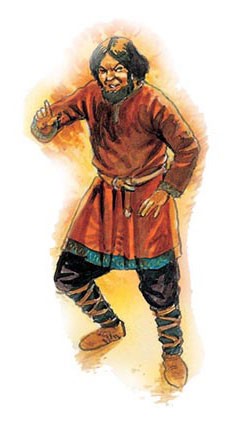
Loki the trickster
The great enemies of the gods were the giants, and there were always conflicts between the two. Only Thor was a match for the giants in strength, so the gods also had to rely on the cunning of Loki, fire-god and trickster. As well as helping the gods, Loki often caused problems for them.
When Thor's son Baldr began having nightmares about death, his mother, Frigg, was worried. She made all harmful things—fire, water, stones, plants, disease—promise never to hurt her son. Loki tricked Frigg into admitting that one plant, mistletoe, had not made the promise. Loki made an arrow from a mistletoe branch and persuaded Baldr’s blind brother, Hod, to shoot Baldr, assuring him he could not be harmed.
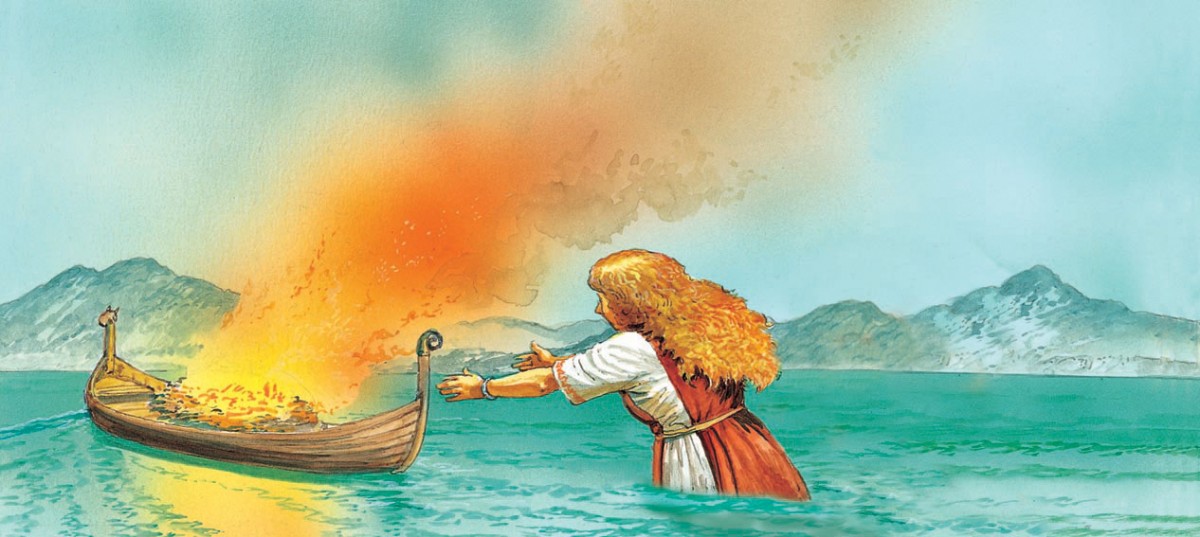
Of course, the arrow pierced Baldr’s heart, killing him instantly. Baldr's body was placed on a ship piled with treasure and set alight. The giantess Hyrrokin pushed it out to sea. Frigg begged Hel to bring Baldr back to life. Hel agreed, but only if the entire world would weep for him. Everyone but an evil giantess—actually Loki in disguise—wept. So Baldr had to stay in the Underworld.
Ragnarök
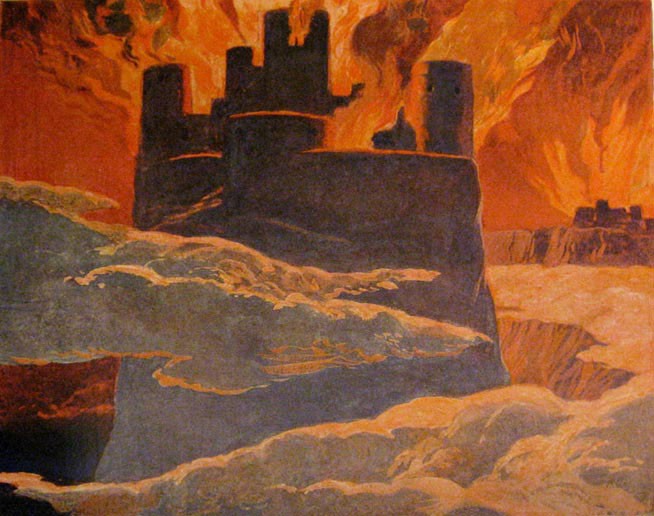
The Vikings believed that the world would end with one final battle, Ragnarök, fought between the gods and the giants. One by one, the gods would meet their deaths and then a fire would sweep across the whole world. There would be just a few survivors of the great battle, ready to live in a new world in which evil would be banished and men and gods would live together peacefully. The human race would be descended from two humans, Lif and Lifthrasir, who hid inside a tree during Ragnarök.
The Valkyries
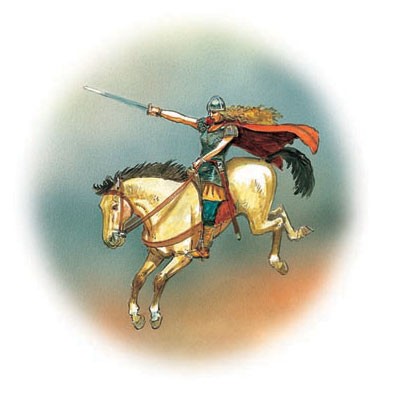
The Valkyries (“Choosers of the Slain”) were female warriors who served Odin, the father of the gods. Given names like Shaker and Power, they flew over battlefields on horseback, deciding who would die. They chose the most valiant warriors to become heroes. These men would live on after death in Valhalla, the Hall of the Slain. Here they would be guests of Odin himself, who would eat and drink with them every evening.
The myth of Gylfi and Gefjon
One day, King Gylfi, the earliest king of the humans, was travelling in disguise through his kingdom. He met an old beggar woman at the roadside. She was kind and invited him to sit by her fire and share her food with him. As a reward, Gylfi offered her as much land as she could plough with four oxen in one day and night. She thanked him and accepted, not revealing that she was actually the goddess Gefjon, also in disguise.
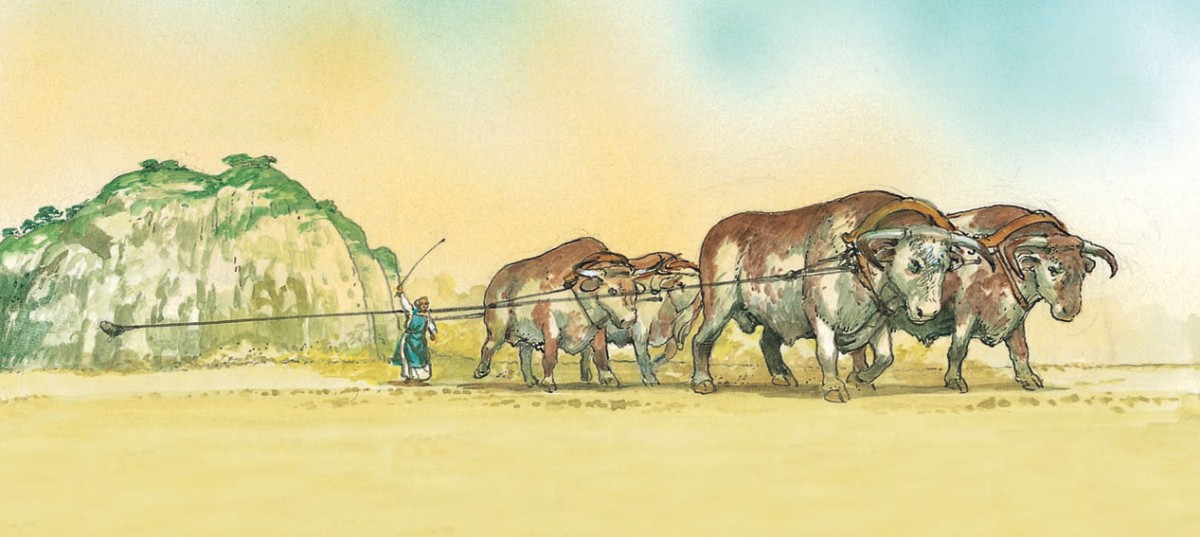
The king was foolish, she thought, to give so much to someone so poor, so she decided to teach him a lesson. She called on her four sons, who had each been born as a giant ox, to help her plough a huge chunk of the king’s land. They dragged the land across the sea to Denmark, leaving behind a great hole in the landscape, which became a lake. The chunk of land is now known as the island of Zealand. The hole left behind in Sweden became Lake Malar.
Consultant: Philip Parker