
EASY READ The living world

CITE
We have made every effort to follow citation style rules, but there may be some minor differences. If in doubt, please refer to the appropriate citation style manual.
EASY READ How do plants live?. (2026). In Q-files Encyclopedia, Life, EASY READ The living world. Retrieved from
https://www.q-files.com/life/easy-read-the-living-world/easy-read-how-do-plants-live
"EASY READ How do plants live?." Life, EASY READ The living world, Q-files Encyclopedia, 24 Mar. 2026.
https://www.q-files.com/life/easy-read-the-living-world/easy-read-how-do-plants-live.
Accessed 30 Oct. 2026.
EASY READ How do plants live? 2026. Life, EASY READ The living world. Retrieved 30 October 2026, from
https://www.q-files.com/life/easy-read-the-living-world/easy-read-how-do-plants-live
Life, EASY READ The living world, s.v. "EASY READ How do plants live?," accessed October 30, 2026.
https://www.q-files.com/life/easy-read-the-living-world/easy-read-how-do-plants-live


How do plants live?
Like all living things, plants need energy and water to grow. They take in their energy not from food but from sunlight. They use this energy to make the food that they need to grow. Plants provide food for animals, including us humans. They help keep the air filled with oxygen for us to breathe. There are nearly 300,000 species (kinds) of plant. They come in all shapes and sizes, from tiny mosses to enormous trees. Plants are divided into two main kinds: the simpler types without flowers, and those that have flowers. The study of plants is called botany.

Flowering plants
Like an animal’s body, a plant is made up of parts which have different jobs. The roots take in water, minerals and other vital nutrients from the soil in which the plant grows. The stiff stem holds the main parts of the plant above the ground. This is so that the leaves can catch as much sunlight as possible.
Most plants are flowering plants. They include herbs, grasses, reeds, rushes, wild and garden flowers, and most trees and bushes (except for the conifers). The flowers of a flowering plant are used for breeding. They contain male and female parts, which enable the plant to make fruit and seeds. In suitable conditions, these grow into new plants.
Non-flowering plants

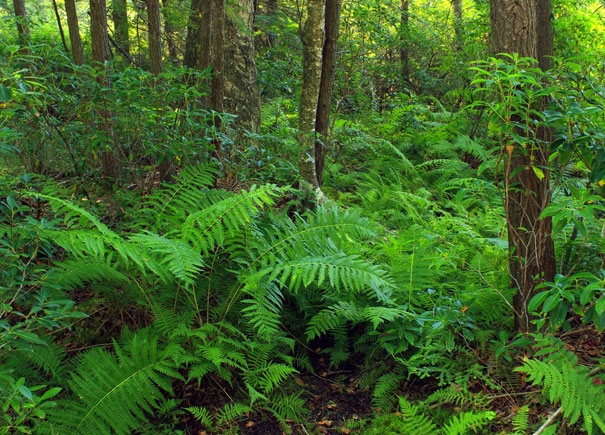
Not all plants have colourful flowers, broad leaves, tall stems and spreading roots. Neither liverworts nor mosses have roots. They soak up water and minerals through their whole body. The branching “leaves” of a fern are known as fronds. None of these plants has flowers. They make new plants from spores instead of seeds. Spores are like tiny specks of dust.
Liverworts, ferns and mosses grow mainly in damp, shady places. They are common in woods and along the banks of streams.
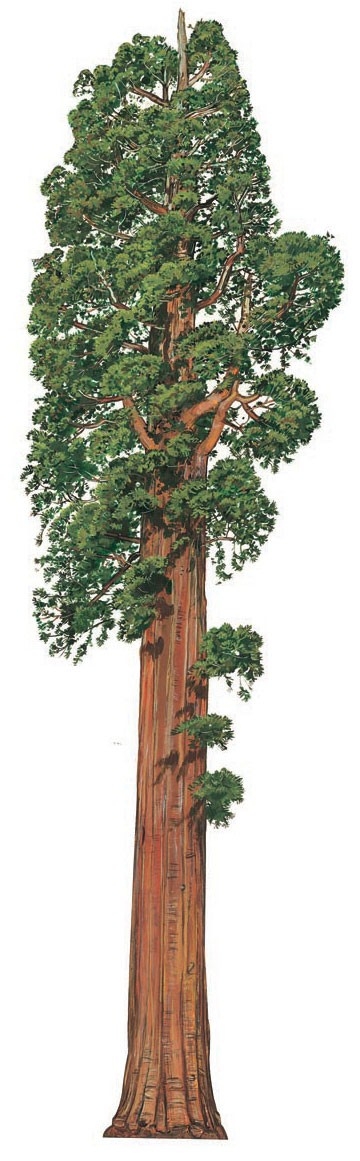
Other non-flowering plants include conifers, trees that bear cones. Pines, firs, spruces, larches, redwoods and cypresses are all conifers.
Meat-eating plants

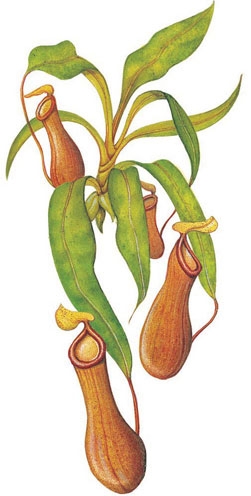
Some plants get vital nutrients from eating animals. The spiny-edged leaf of a Venus fly-trap snaps shut whenever a small insect lands on it. The spines interlock to trap the struggling insect. This part of the plant then turns into a "stomach". It produces digestive juices, which allow the plant to take in the insect's nutrients.
Like the Venus fly-trap, the pitcher plant grows in nutrient-poor soil. Insects attracted to the plant’s nectar fall into bottle-shaped pitchers filled with rainwater and the plant’s digestive juices, where they drown. The plant soaks up nutrients from the dead insects.
Consultant: Chris Jarvis
Ready to find out more?
Here are some pages in other parts of Q-files you might like to explore:
pics
Without in any way limiting Q-files Ltd’s exclusive rights under copyright, any use of this publication to “train” generative artificial intelligence (AI) technologies to generate text is expressly prohibited. Q-files Ltd reserves all rights to license use of this work for generative AI training and development of machine learning language models.