
EASY READ The living world

CITE
We have made every effort to follow citation style rules, but there may be some minor differences. If in doubt, please refer to the appropriate citation style manual.
EASY READ What is micro-life?. (2026). In Q-files Encyclopedia, Life, EASY READ The living world. Retrieved from
https://www.q-files.com/life/easy-read-the-living-world/easy-read-what-is-micro-life
"EASY READ What is micro-life?." Life, EASY READ The living world, Q-files Encyclopedia, 24 Mar. 2026.
https://www.q-files.com/life/easy-read-the-living-world/easy-read-what-is-micro-life.
Accessed 13 Sep. 2026.
EASY READ What is micro-life? 2026. Life, EASY READ The living world. Retrieved 13 September 2026, from
https://www.q-files.com/life/easy-read-the-living-world/easy-read-what-is-micro-life
Life, EASY READ The living world, s.v. "EASY READ What is micro-life?," accessed September 13, 2026.
https://www.q-files.com/life/easy-read-the-living-world/easy-read-what-is-micro-life


What is micro-life?
The tiniest living things can be seen only by using powerful microscopes. This "micro-life" is more correctly known as micro-organisms or microbes. They include bacteria, protists and some types of fungi. They are each made of just one living “unit”, called a cell. Some micro-organisms cause diseases in animals. We call them germs.

Bacteria
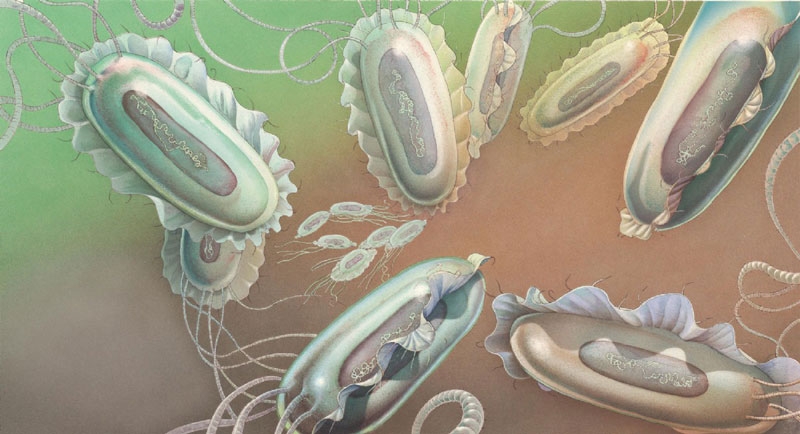
Minute bacteria live everywhere in their countless billions. They are found in the air, soil, water—even inside our bodies. Many kinds are vital to life (we could not digest our food without them), but harmful bacteria, called germs, may cause disease. Some bacteria have frilly edges and and long tails, which help them swim along.
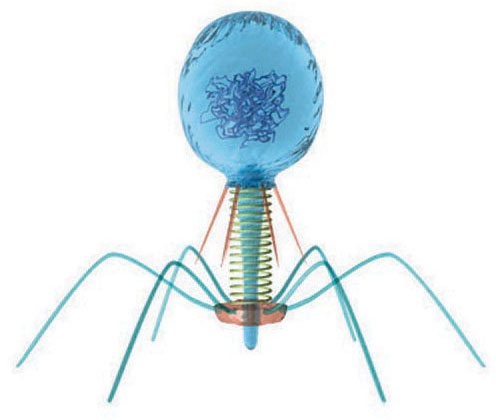
Viruses
Viruses are even smaller than bacteria. They are shaped like rods, balls, golfballs or even rockets. They are tiny things that can only reproduce by invading the cells of a living thing. All viruses cause disease, such as colds, flu and measles.
Protists
Protists are much bigger than viruses or bacteria, but still microscopic in size. They also consist of a single cell. Some protists, called algae, are like tiny plants. Others, called protozoa, take in food.

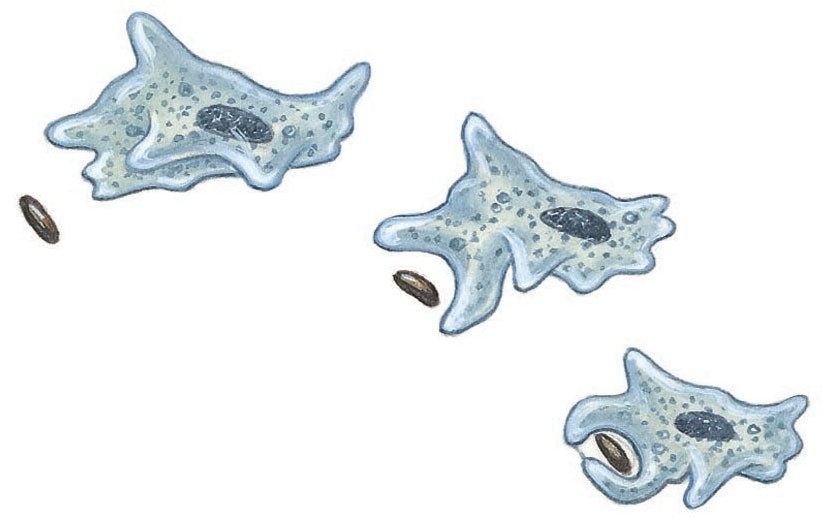
An amoeba, a kind of protozoa, hunts bacteria and eats them. It can change shape and move along like a flowing blob of jelly. A few protists cause diseases. They include plasmodia, which produce malaria.
Consultant:Chris Jarvis
Ready to find out more?
Here are some pages in other parts of Q-files you might like to explore:
pics
Without in any way limiting Q-files Ltd’s exclusive rights under copyright, any use of this publication to “train” generative artificial intelligence (AI) technologies to generate text is expressly prohibited. Q-files Ltd reserves all rights to license use of this work for generative AI training and development of machine learning language models.