
Reptiles
Turtles
Turtles are reptiles with shells made of bony plates. They live in the water: some in the oceans, others in freshwater rivers and ponds. Most have webbed feet, but marine turtles have paddle-like flippers that allow them to swim at speed. Turtles do not have teeth. Instead they have sharp, horny, beak-like mouths. They are mostly plant-eaters, but some species also feed on fish and other small animals.


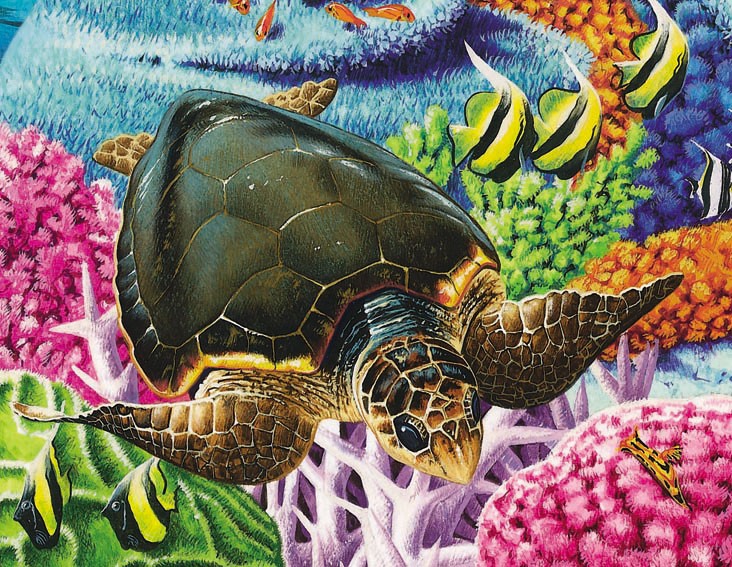
Shells
Turtles' shells are in two parts: one, the carapace, forms a dome over the back; the other, called the plastron, covers the belly; a bony bridge connects the two. For extra protection, the shell is covered with thick, horny scales called scutes. If threatened, most turtles are able to draw their heads backwards into their shells. Marine turtles' shells are flatter and streamlined for swimming. By counting the rings formed by the layers of scutes, it is possible to work out the age of the turtle.
Breeding
All turtles breed and lay eggs on land. Some large sea turtles lay over 100 eggs at once, returning to the same beaches to lay them every year. They dig holes in the sand, lay their eggs, then cover them over. Then they return to the water. After hatching, the young must dig their way to the surface. Many newly hatched turtles are killed by predators as they run across the beach to reach the sea.
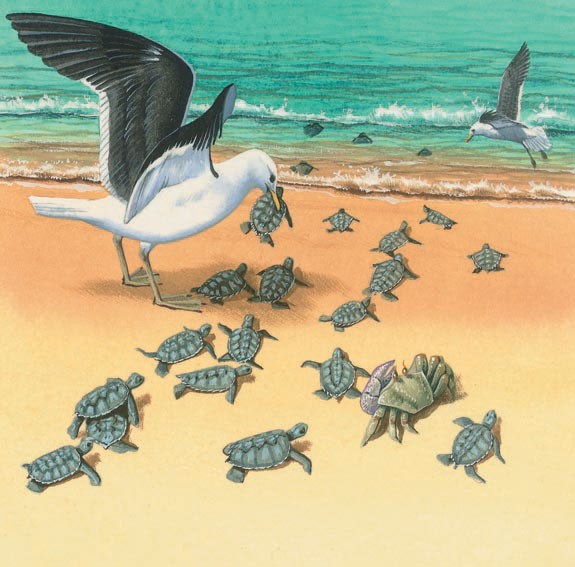
Marine turtles

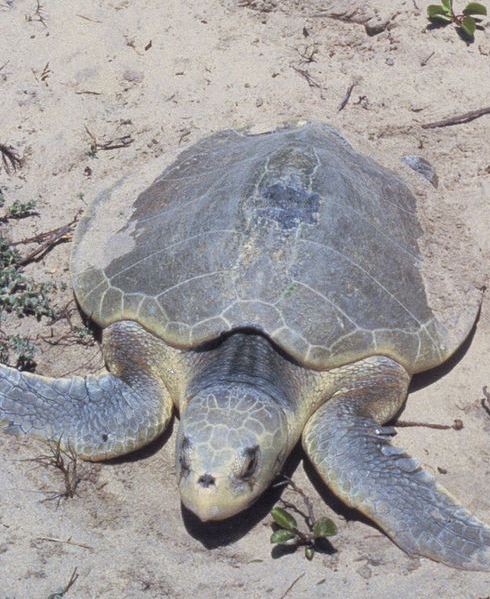
There are seven species of ocean-dwelling turtle: the flatback, green, hawksbill, Kemp’s ridley, olive ridley, leatherback and loggerhead turtles. Most feed on jellyfish, fish and crustaceans, except for the herbivorous green turtle. Marine turtles can hold their breath underwater for over three hours while asleep. They have glands near their eyes that produce salty tears: they contain the excess salt taken in from the water when they drink.
Marine turtles have flippers instead of feet. They "fly" through the water, using their front flippers like "wings" to power them forwards. The back limbs are used for steering.
The largest marine turtle is the leatherback, which can grow up to 3 metres (10 feet) long, although it is usually 1.6–2 metres (5–6.5 feet). Its "shell" is a thick, leathery skin embedded with bony plates on its back.
Freshwater turtles
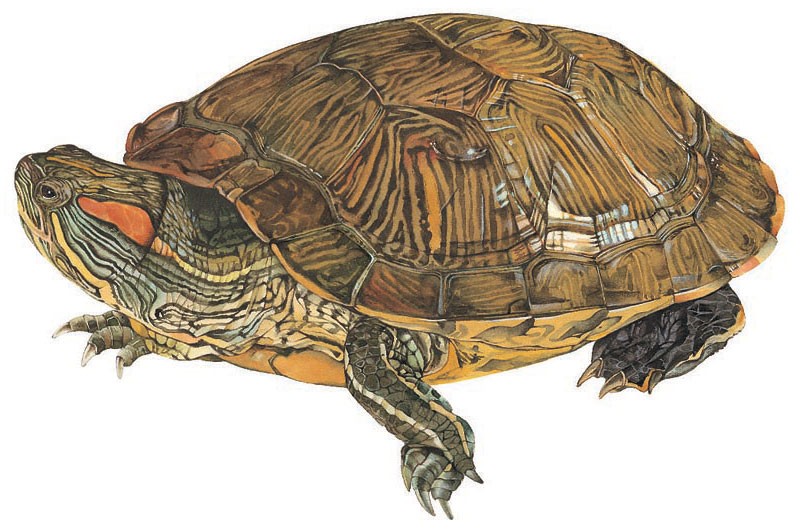
Freshwater turtles, sometimes called terrapins, live in ponds, lakes or rivers. They include soft-shelled turtles, diamondback terrapins, painted turtles and the aggressive snapping turtles. They swim by using all four feet as paddles, or they simply walk along the bed of the river or lake.
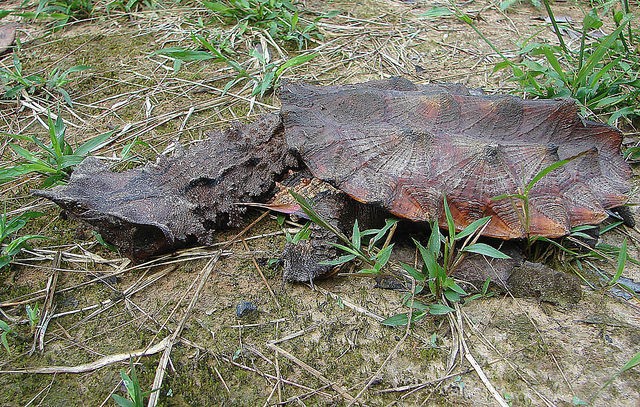
The matamata lives in rainforest rivers of South America. It lurks on the river bed, waiting for fish, its prey, to approach. The flaps of skin on its neck wave in the water, attracting a fish's curiosity. Then the matamata suddenly thrusts out its neck, grabs the fish in its mouth and swallows it in a single gulp.
Consultant: Chris Jarvis