
Q-news
Coronavirus and pollution concerns force changes to the Ganesh Hindu festival
Ganesh Chaturthi, the Hindu festival of the god Ganesh, takes place over 10 days at the end of August and the beginning of September each year. Statues of Lord Ganesh, most of them made from Plaster of Paris, are put on display for offerings and prayers in homes or in public places, then later immersed into water. Many of them are immersed off the western coast of India in the Arabian Sea. This year, because of the coronavirus pandemic and growing concerns over marine pollution, things have been different. In order to prevent large crowds gathering in places like Girgaon Chowpatty beach, near Mumbai (where around 150,000 statues are immersed each year), artificial ponds have been built instead. Many hope these ponds, which will stop the sea being polluted, will become a permanent feature of Ganesh Chaturthi in future years.


Ganesh Chaturthi
Ganesh Chaturthi, also called Vinayaka Chavithi, is a Hindu festival which is celebrated for 10 days every year. It marks the arrival of the elephant-headed Lord Ganesha to earth from Mount Kailash with his mother Goddess Parvati (Gauri). Ganesha is known as the God of wealth, sciences, knowledge, wisdom and prosperity. His festival celebrates him as the God of New Beginnings and the Remover of Obstacles. In India, it is mainly celebrated by Hindus in the states of Maharashtra, Gujarat, Goa, Madhya Pradesh, Karnataka and Telangana.
The Ganesha idols or statues are installed on decorated stages, called pandals, in homes, temples and other public places. They are decorated with garlands of flowers and lights. Hymns are chanted, and prayers are offered. People sing, dance to drum beats and light fireworks. Dishes, including Lord Ganesha's favourite modak, pooran poli and karanji, are prepared for friends, family and visitors.


Ganesh Visarjan
On the final day of the festival the ritual of Ganesh Visarjan takes place. The statues, usually made of Plaster of Paris, are traditionally carried in public processions with music and chanting, before being immersed in water—rivers or the sea. Ganesh is believed to return to Mount Kailash to Parvati and Shiva.

Environmental effects
The statues slowly dissolve, leaking chemicals into the water and so causing widespread pollution. In addition, paints and materials, used to colour and decorate the statues, containing lead, mercury and other harmful substances seep into the water, along with plastic flowers thrown in with them.
In recent years, eco-friendly idols made from clay have been used instead, reducing water pollution. Using clay to make the statues is, however, much more expensive, so plaster statues remain popular. Some artificial ponds where statues could be immersed instead of rivers or the sea, were installed in Mumbai last year, an idea that many local residents—increasingly aware of the damage to fragile marine ecosystems humans are causing—welcomed. Some families avoid bodies of water and let the clay statue disintegrate in a barrel of water at home.

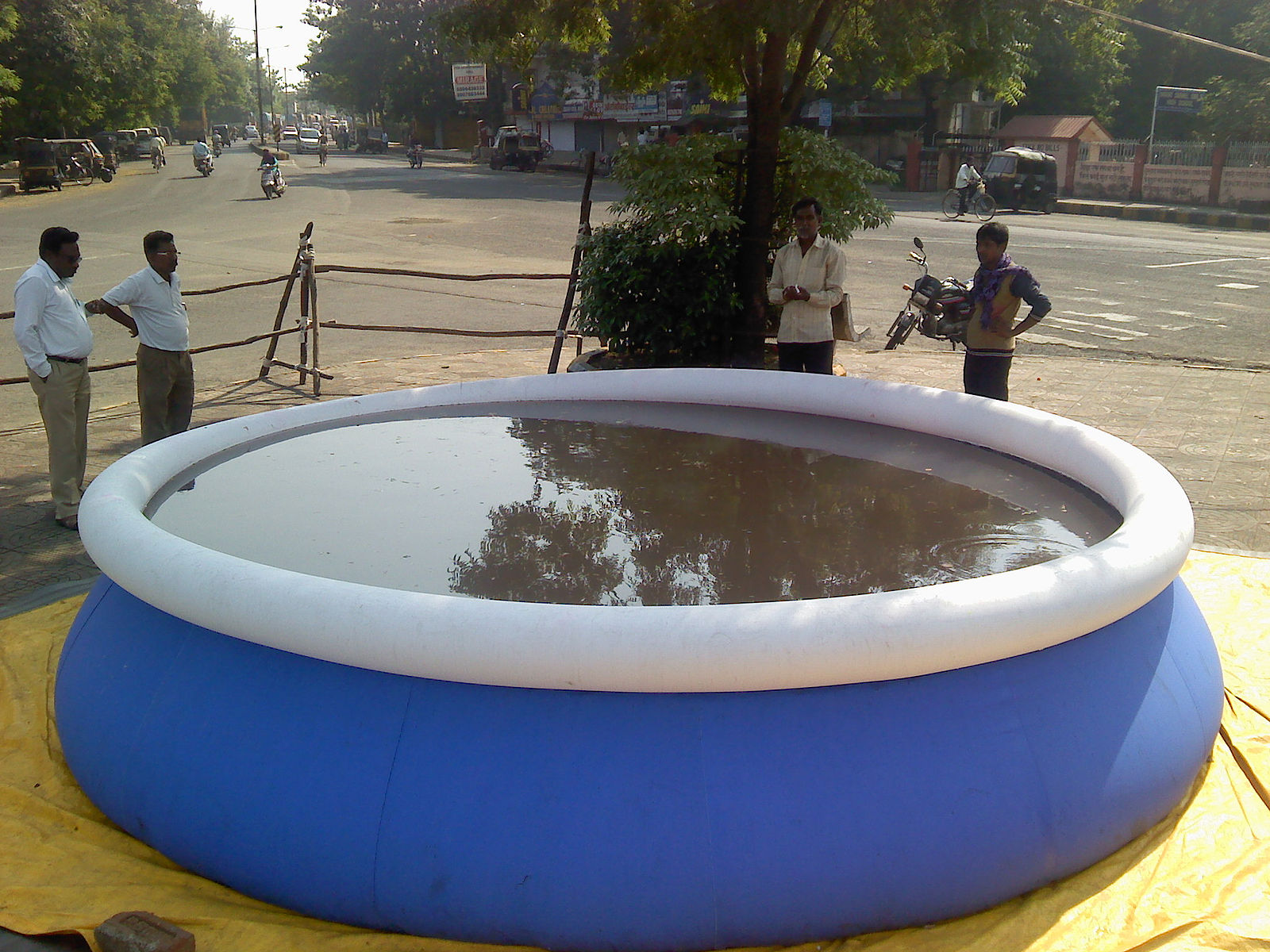
This year, Mumbai’s governing body, the Brihanmumbai Municipal Corporation (BMC), installed more than 200 artificial ponds across the city. Festival-goers were not be allowed near the new ponds; instead they handed over their statues to workers who immersed them as the owners watched from a distance. In addition, all ornaments were removed before a statue was immersed.