
Q-news

CITE
We have made every effort to follow citation style rules, but there may be some minor differences. If in doubt, please refer to the appropriate citation style manual.
Astronomers find out why the supergiant star Betelgeuse has been acting strangely. (2026). In Q-files Encyclopedia, , Q-news. Retrieved from
https://www.q-files.com/news/astronomers-find-out-why-the-supergiant-star-betelgeuse-has-been-acting-strangely
"Astronomers find out why the supergiant star Betelgeuse has been acting strangely." , Q-news, Q-files Encyclopedia, 15 Jan. 2026.
https://www.q-files.com/news/astronomers-find-out-why-the-supergiant-star-betelgeuse-has-been-acting-strangely.
Accessed 6 Aug. 2026.
Astronomers find out why the supergiant star Betelgeuse has been acting strangely 2026. , Q-news. Retrieved 6 August 2026, from
https://www.q-files.com/news/astronomers-find-out-why-the-supergiant-star-betelgeuse-has-been-acting-strangely
, Q-news, s.v. "Astronomers find out why the supergiant star Betelgeuse has been acting strangely," accessed August 6, 2026.
https://www.q-files.com/news/astronomers-find-out-why-the-supergiant-star-betelgeuse-has-been-acting-strangely


Astronomers find out why the supergiant star Betelgeuse has been acting strangely
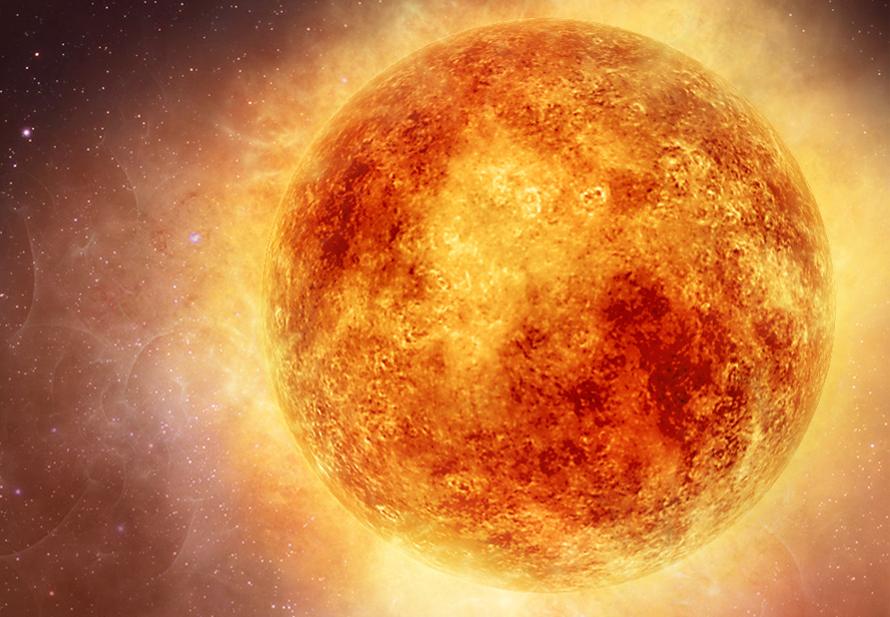
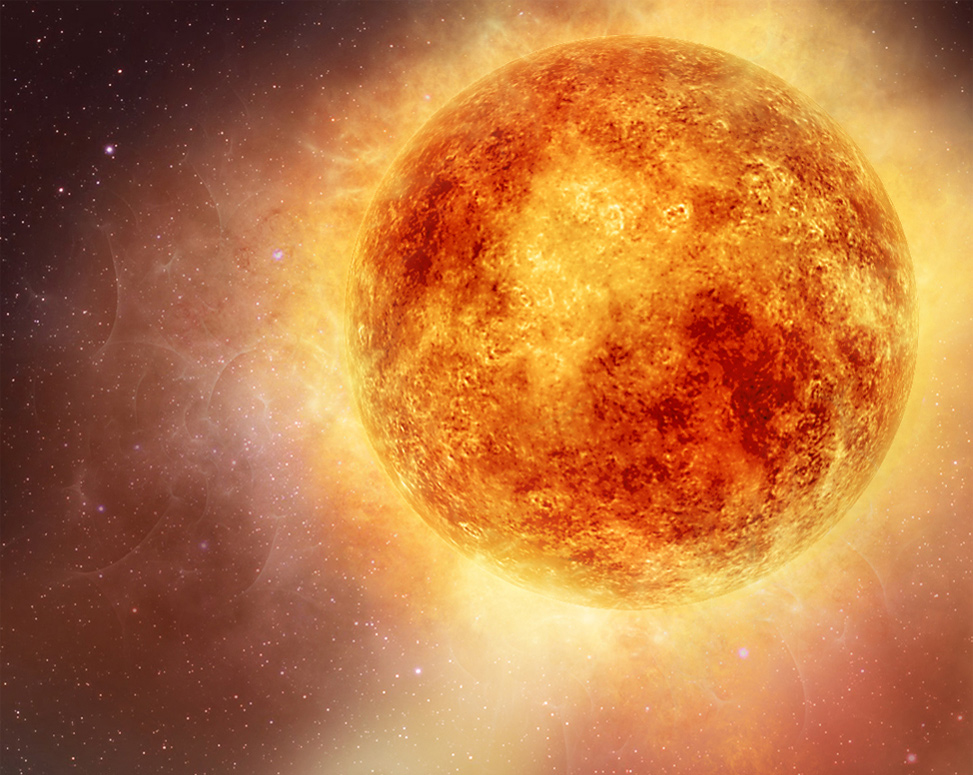
A team of astronomers has announced that it has solved the mystery of why Betelgeuse, one of the night sky's most dazzling stars, regularly changes in brightness. The red supergiant, which sits on the left shoulder (as we view it) of Orion, harbours a secret companion star, and that is very likely to be the cause of the dimming. It has long been suspected that Betelgeuse has a much less massive star in close orbit around it hidden in its glare, but it is only now that astronomers—assisted by the Hubble Space Telescope and ground-based observatories—have finally been able to confirm its existence.
14th January 2026
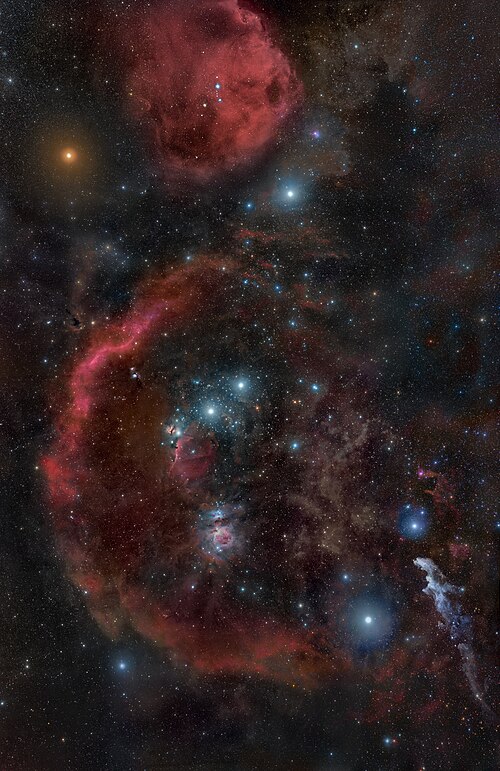
Betelgeuse
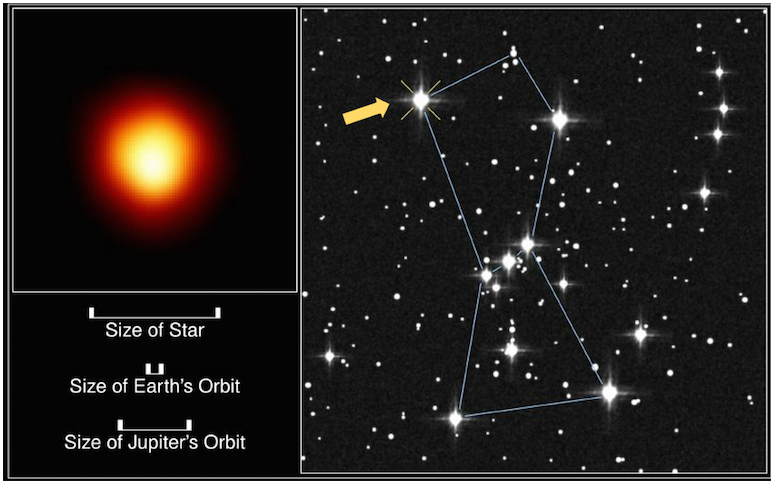

The red supergiant Betelgeuse (often pronounced “beetlejuice”) is one of the stars of the constellation of Orion, named after a hunter in Greek mythology, and lies "only" about 550 light years from Earth. Its name comes from the Arabic Yad al-Jawzāʾ (“the hand of the giant"). In Arabic astronomy, the same constellation represents a giant celestial maiden.
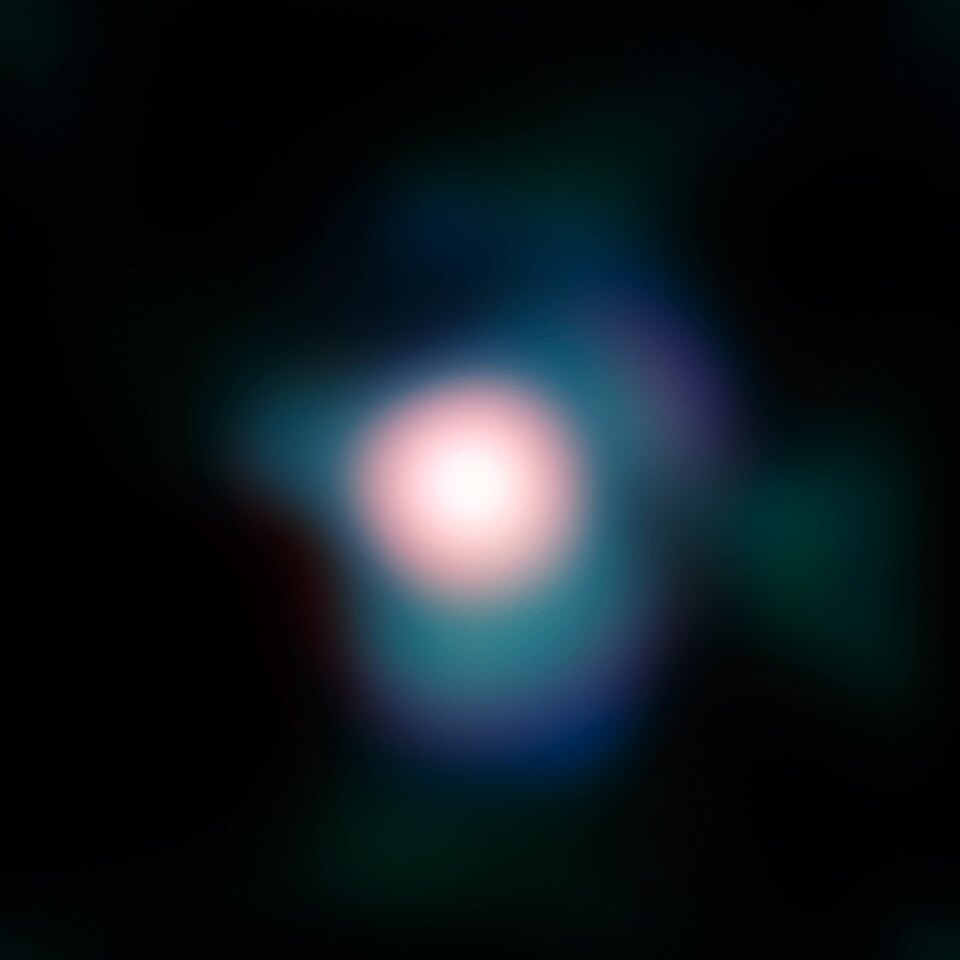
One of the largest stars visible to the naked eye, Betelgeuse is between about 700 and 800 times the size of the Sun. If it were located at the centre of our own Solar System, its surface would lie within the Asteroid Belt and it would engulf the orbits of Mercury, Venus, Earth and Mars.
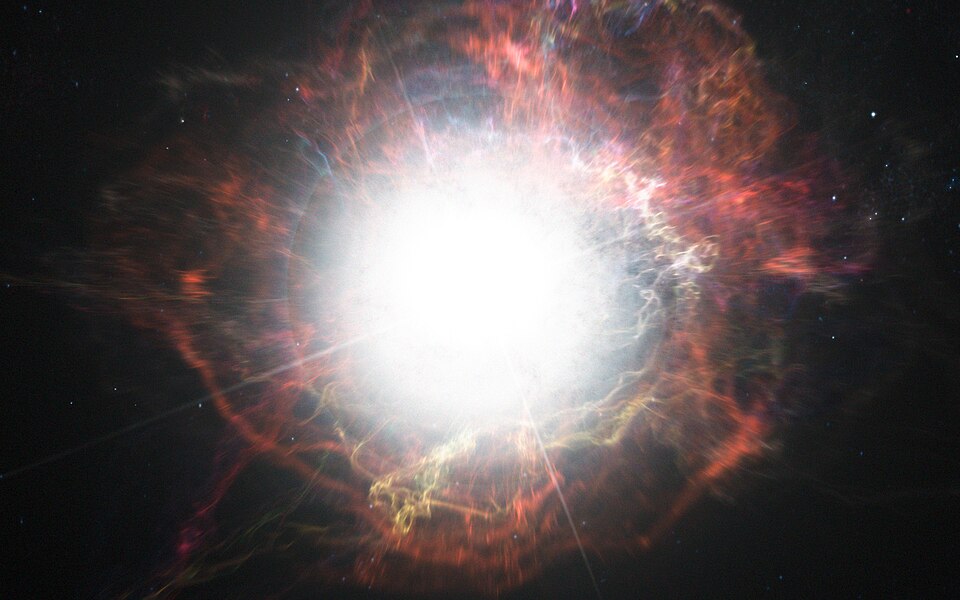
Just 10 million years old, Betelgeuse is much younger than our five-billion-year-old Sun. Astronomers predict it will have a vastly shorter lifespan than the Sun, rapidly burning through its materials and exploding in a supernova some time in the next 100,000 years. It is just possible (but very unlikely) that you may witness its explosive death in the skies during your lifetime. The Sun, meanwhile, is expected to keep going for another five billion years or so.
Brightness cycles
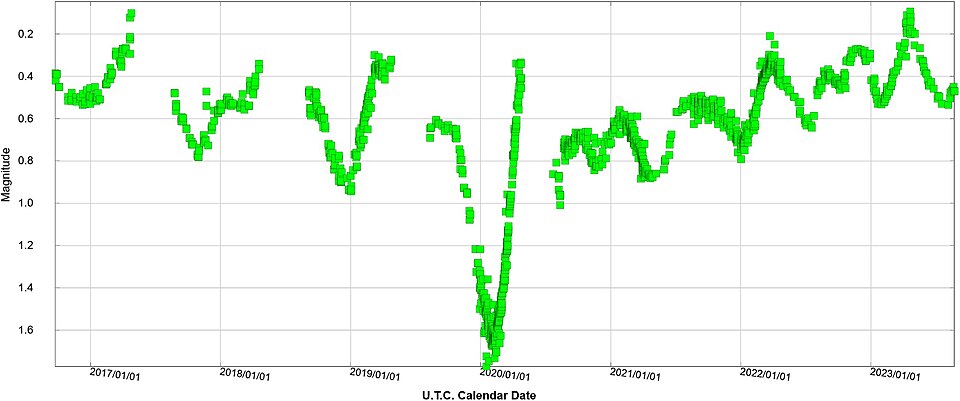
Betelgeuse has two distinct brightness cycles, during which it becomes brighter and dimmer: a 400-day period and a 2100-day (5.8-year) cycle. The shorter dimming episodes are due to what are called stellar pulsations, in which the star's outer layers regularly expand and contract, brightening and dimming as they do so. Betelgeuse is thus a type of star called a pulsating variable.
The longer cycle has, up until now, been a mystery. To solve it, a team of astronomers at the Center for Astrophysics, Harvard & Smithsonian led by Andrea Dupree, decided to test whether a small, as yet unknown secondary star orbiting close to Betelgeuse was responsible. The question was this: as it passed in front of Betelgeuse on its orbit, could it be causing a temporary dip in the red supergiant's brightness as viewed from Earth?
Looking for its companion
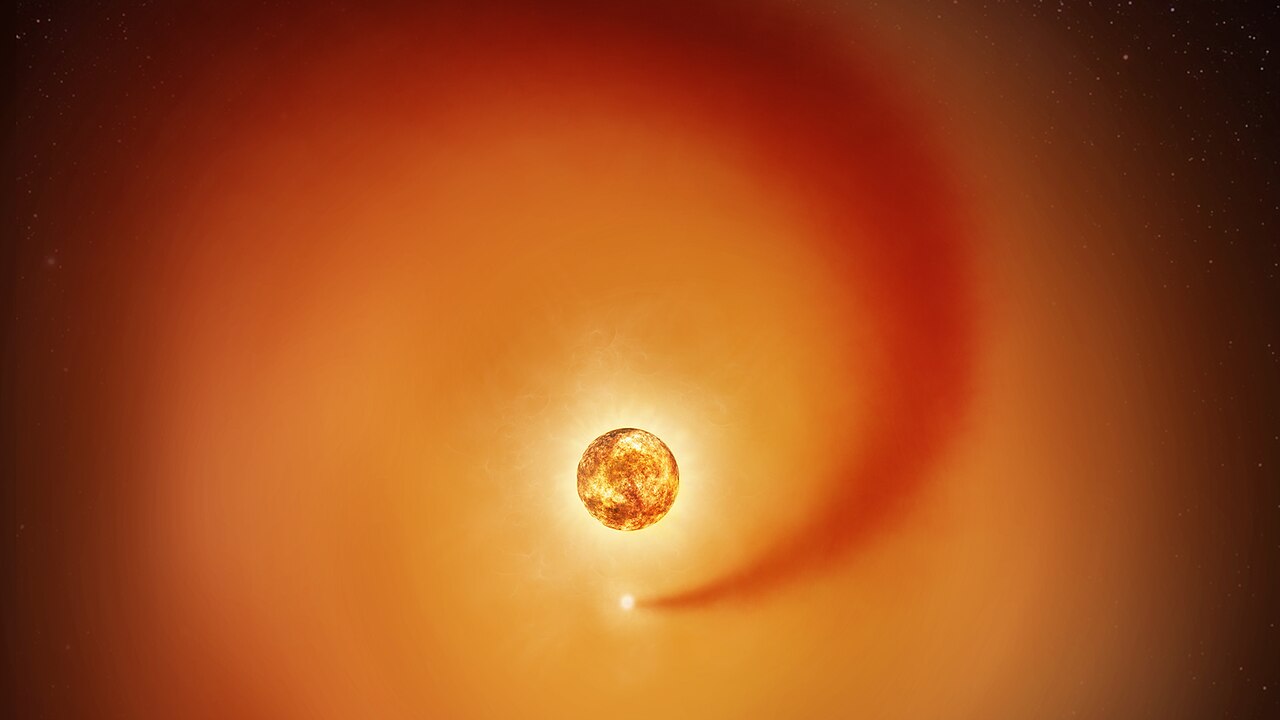
Since Betelguese is between 7500 and 14,000 times brighter than the Sun, spotting anything nearby would be extremely difficult. So, rather than attempting to observe the companion directly, the team reasoned that any object orbiting in Betelguese's outer atmosphere would stir up the gases that make up that atmosphere. This would create a denser trail of material behind it, in much the same way as when a boat cuts through water it leaves ripples, or a wake, behind it. The dense trail of gases forming that companion star's "wake" could be enough to dim Betelgeuse's brightness. To test this theory, the astronomers needed to look for patterns of movement in the supergiant's atmosphere.
Over a period of eight years, the team analysed spectra, the different colours of light emitted by different elements present in Betelgeuse's atmospheric gases. Using data collected from the Hubble Space Telescope along with that from two observatories, the Fred Lawrence Whipple Observatory in Arizona and the Roque de los Muchachos Observatory in Spain, the team monitored the changing speed and direction of the gases. Sure enough, a picture of a moving trail of denser material emerged, confirming the presence of a companion star. And that star's orbital period of 5.8 years exactly matched the 2100-day cycle between dimming events observed from Earth.
Siwarha
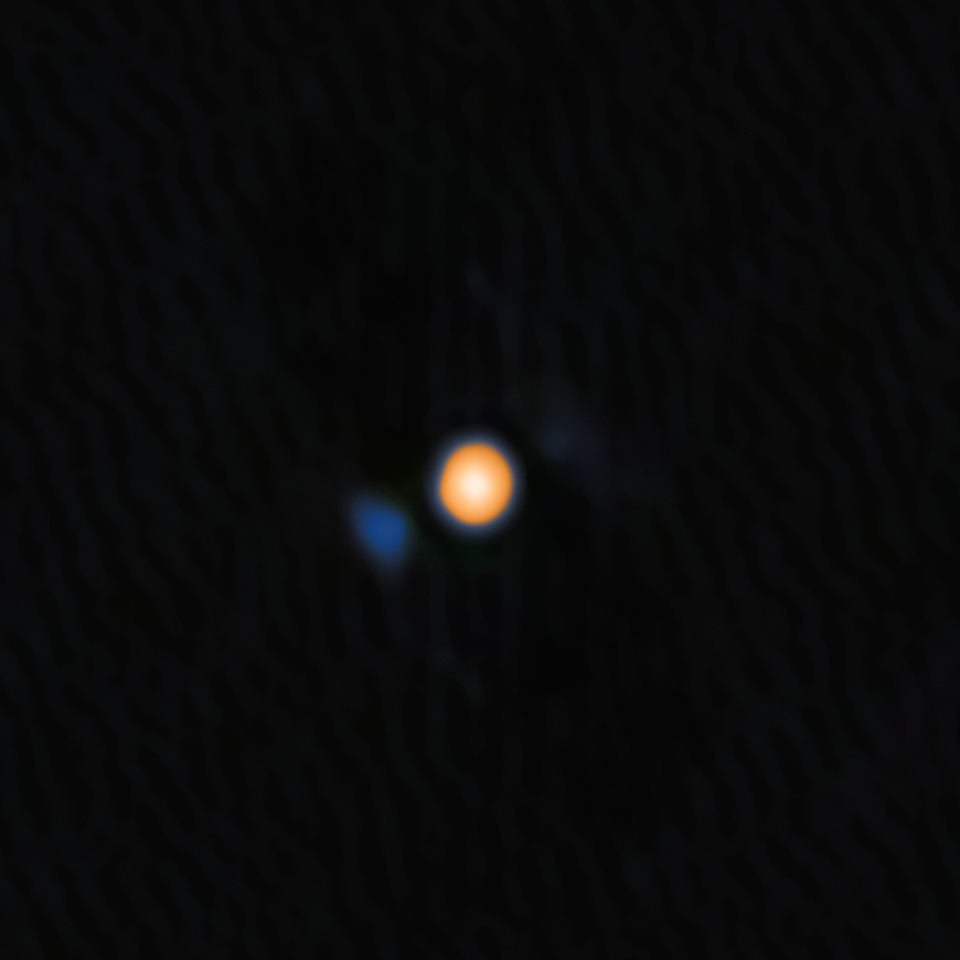
About 1.5 times the mass of the Sun but much fainter, Betelgeuse's companion star is hundreds of times smaller than itself. It has been officially named Siwarha, meaning "her bracelet" in Arabic (it is worn on the "hand" after which Betelgeuse is named in Arabic mythology). A possible direct detection of Siwarha, made at the Gemini North Observatory using the ‘Alopeke telescope, was announced in July 2025.
Viewed from Earth, Siwarha is currently behind Betelgeuse and therefore not visible. But astronomers say they will carry out new observations to coincide with Siwarha's re-emergence in 2027.
The Great Dimming
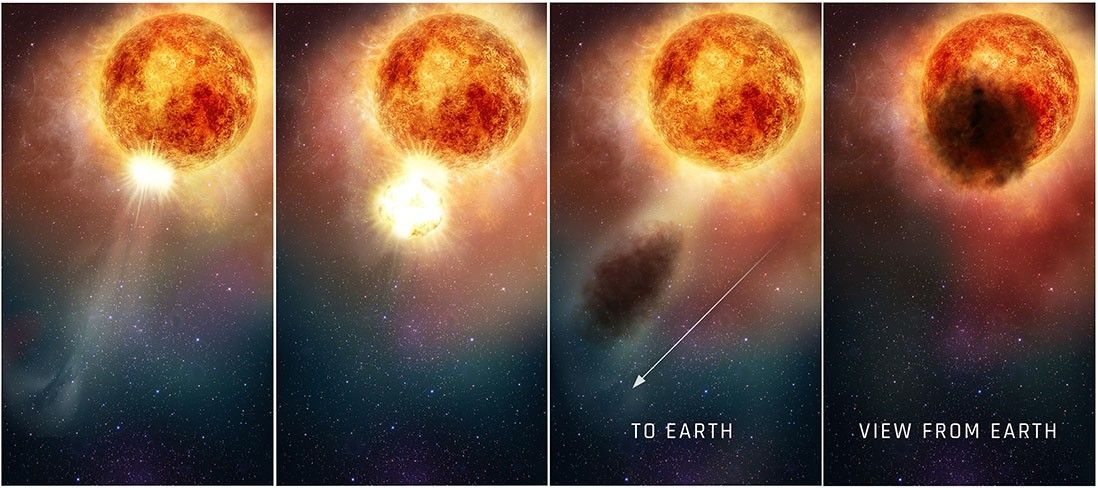
Betelguese has form for behaving oddly. In late 2019, the red supergiant started to drastically dip in brightness, an event seemingly unrelated to its typical (and now possibly fully explained) 2100-day brightness cycle. Within months, the star had dimmed by about 60%, in an event now known as the Great Dimming. Betelgeuse dropped from being one of the top 10 brightest stars in the sky to outside the top 20. The dimming was so unexpected that some scientists wondered if Betelgeuse was about to explode in a spectacular supernova. But by April 2020, it had returned to its normal brightness.
What happened? Scientists discovered that the star had "sneezed", throwing a huge mass of gas from its surface into space, where it cooled and became a dust cloud. This blocked much of the light of the star for a few months. Ejecting material is quite normal for stars: the Sun does it often, in what are called coronal mass ejections. Betelgeuse's eruption was on a massive scale, however. Since light from Betelgeuse takes 550 years to reach us, the event actually took place in late Medieval times, in around 1470.

pics
Without in any way limiting Q-files Ltd’s exclusive rights under copyright, any use of this publication to “train” generative artificial intelligence (AI) technologies to generate text is expressly prohibited. Q-files Ltd reserves all rights to license use of this work for generative AI training and development of machine learning language models.