
Myths and legends

CITE
We have made every effort to follow citation style rules, but there may be some minor differences. If in doubt, please refer to the appropriate citation style manual.
Greek myths. (2026). In Q-files Encyclopedia, Culture, Myths and legends. Retrieved from
https://www.q-files.com/culture/myths-and-legends/greek-myths
"Greek myths." Culture, Myths and legends, Q-files Encyclopedia, 13 May. 2026.
https://www.q-files.com/culture/myths-and-legends/greek-myths.
Accessed 6 Aug. 2026.
Greek myths 2026. Culture, Myths and legends. Retrieved 6 August 2026, from
https://www.q-files.com/culture/myths-and-legends/greek-myths
Culture, Myths and legends, s.v. "Greek myths," accessed August 6, 2026.
https://www.q-files.com/culture/myths-and-legends/greek-myths


Greek myths
The mythology of the ancient Greeks tells of a world of gods, monsters and heroes. They inhabited a land that reached from the home of the gods atop Mount Olympus, down to underworld below ground. Despite their awesome powers, the Greek gods and goddesses were similar to humans, or “mortals”—their actions were often driven by pride, jealousy, love and the desire for revenge. The gods often left Mount Olympus to become involved in the affairs of mortals. Greek myths originate with two ancient civilizations: that of the Mycenaeans, on the Greek mainland, and the earlier Minoan civilization, on the island of Crete. The ancient beliefs merged with legends from Greek kingdoms and city-states as well as myths borrowed from other peoples. The works of Homer, which date from the 700s BC, are important sources for Greek mythology. His epic poems the Iliad and the Odyssey, show how the gods influenced human destiny.
Gods and goddesses
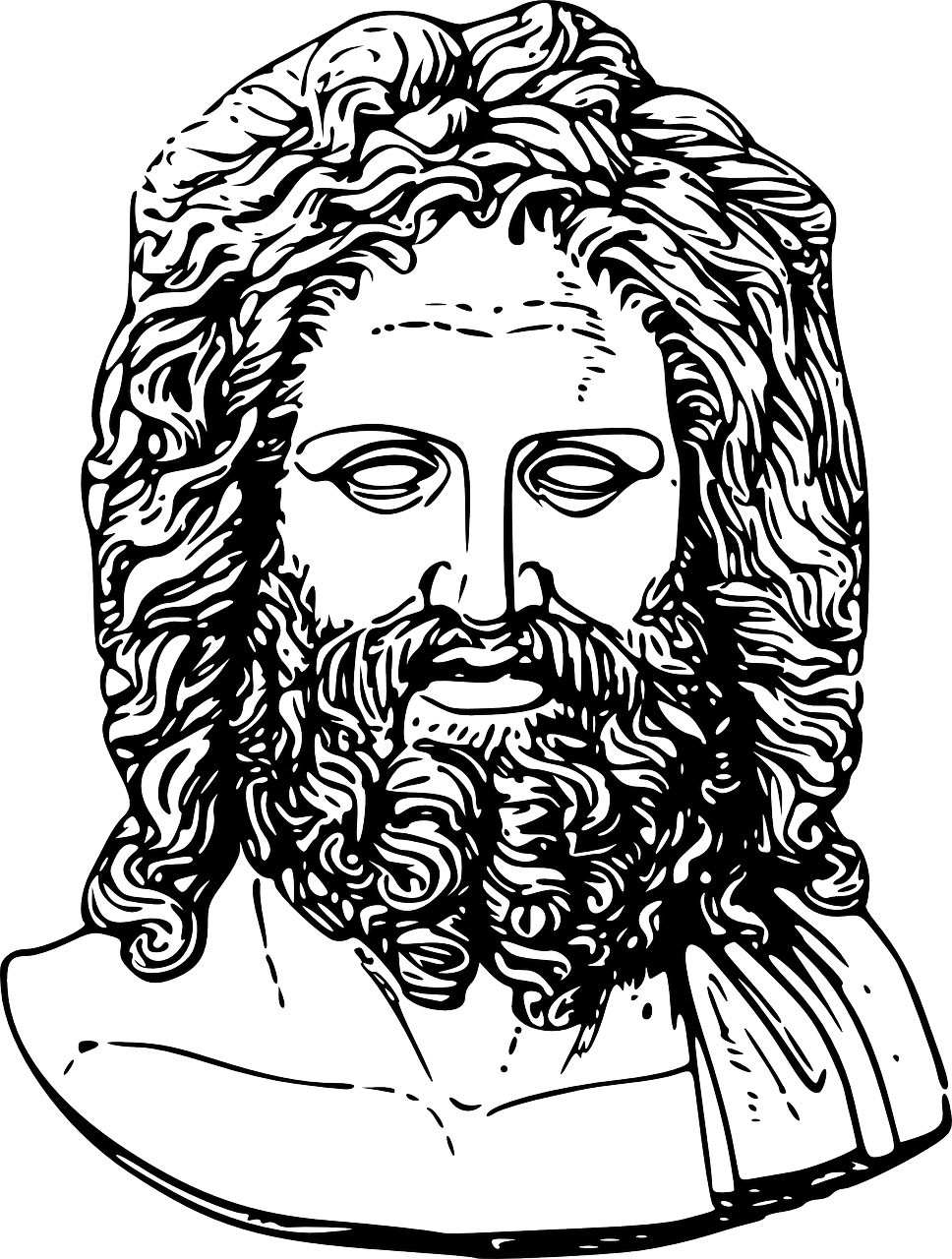
The twelve principal Greek gods (six gods and six goddesses) lived on Mount Olympus. Zeus (called Jupiter by the Romans) was the king of the gods and reigned over all the others. Many myths tell of his love affairs with various goddesses and human women—and of the consequences. Hera (Roman: Juno), queen of the gods, was both sister and wife to Zeus. Poseidon (Roman: Neptune), Zeus's brother, was god of the sea and of earthquakes. Demeter (Roman: Ceres), a sister of Zeus, was the goddess of grain, farming and the soil. She had a daughter, Persephone, by Zeus.

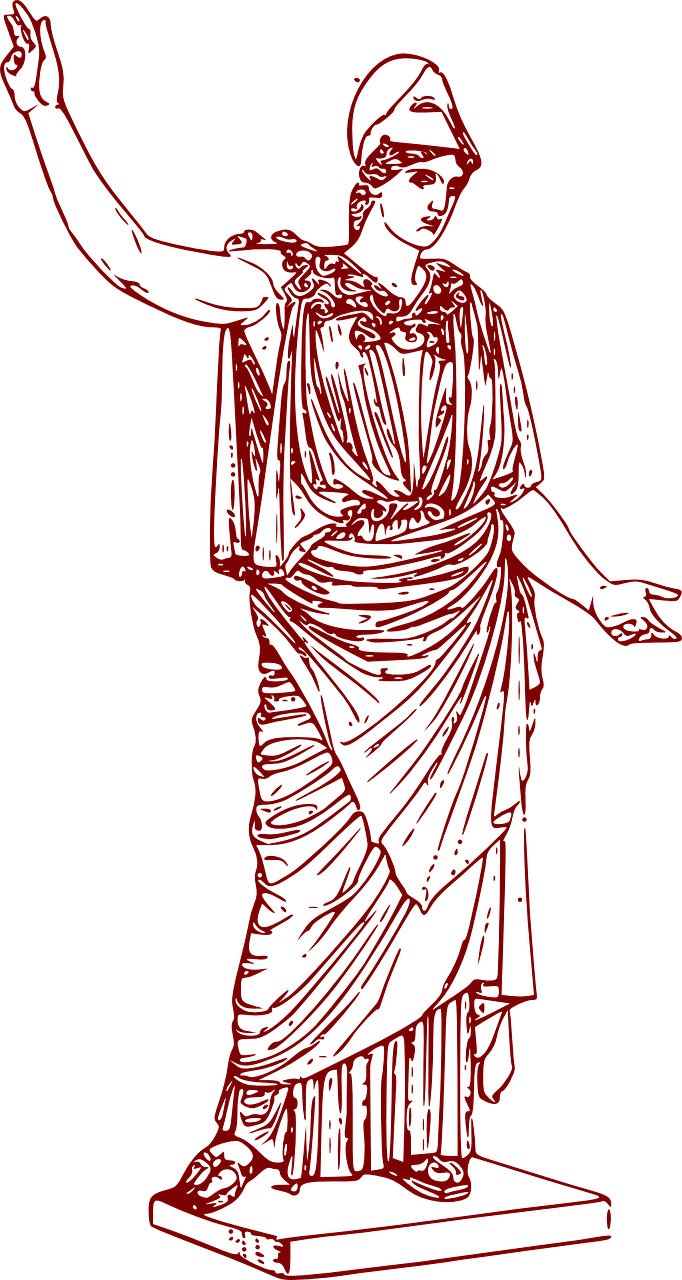
Aphrodite (Roman: Venus), was the goddess of love and beauty. Her husband was Hephaestus (Roman: Vulcan), god of fire, but she had a love affair with the god of war, Ares (Roman: Mars). Athena (Roman: Minerva), the daughter of Zeus, was the goddess of wisdom and military skill. Artemis (Roman: Diana) was the goddess of hunting and the protector of wild animals. Her twin brother was Apollo, the god of music and the arts.
Hestia (Roman: Vesta), another sister of Zeus, was goddess of the hearth and the home. Hermes (Roman: Mercury) a son of Zeus, was the gods' messenger. Hades (Roman: Pluto), the brother of Zeus and Poseidon, was god of the underworld, where the dead could receive either punishment or an afterlife. Dionysus (Roman: Bacchus) was the god of wine.
The Romans incorporated Greek gods and myths into their own mythology. Illustrations of the Roman gods can be found here.
Heroes
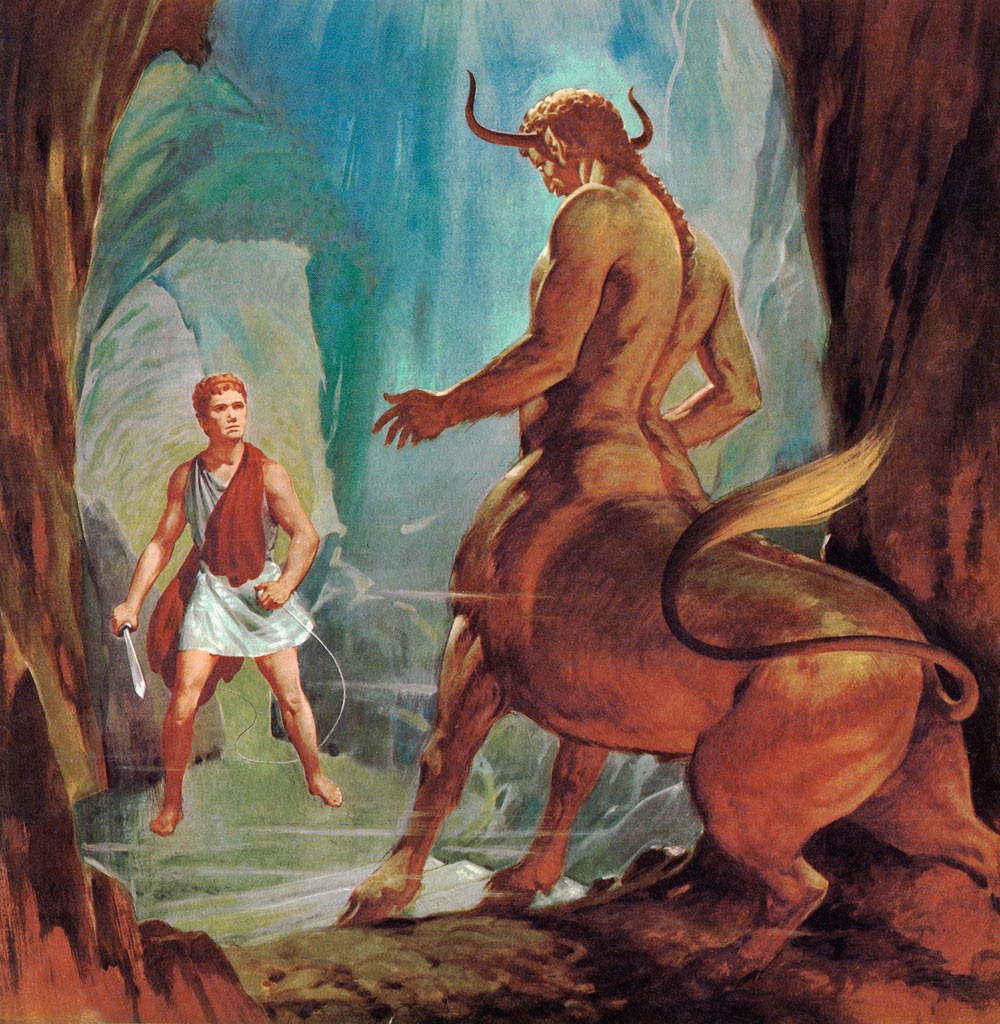
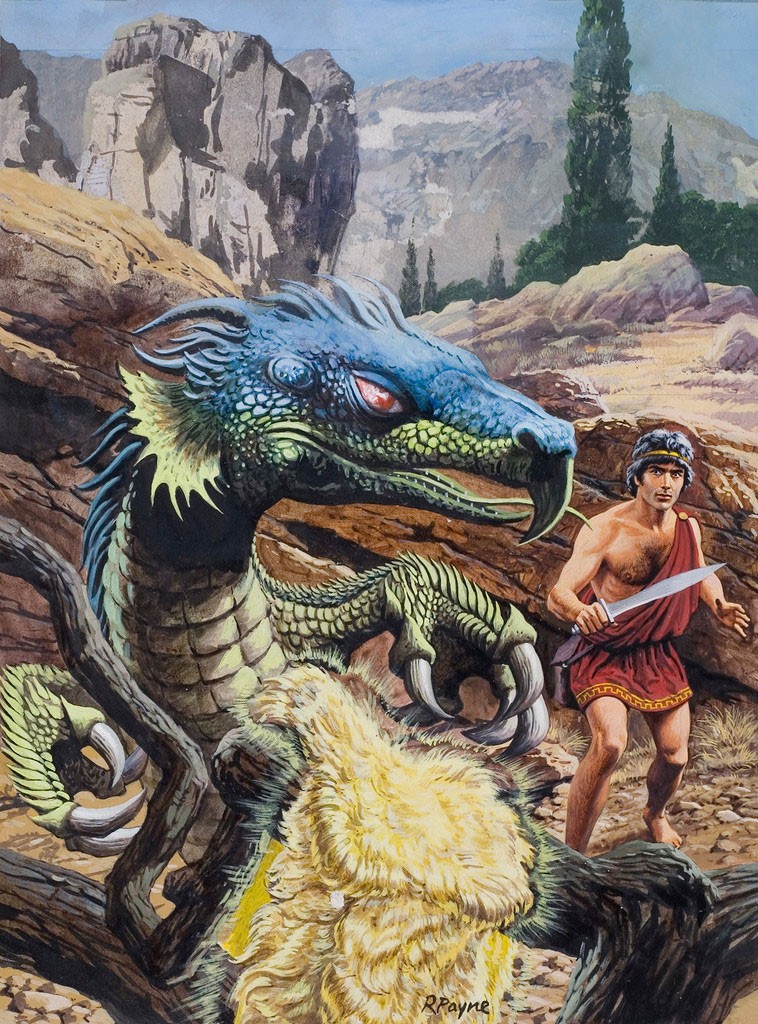
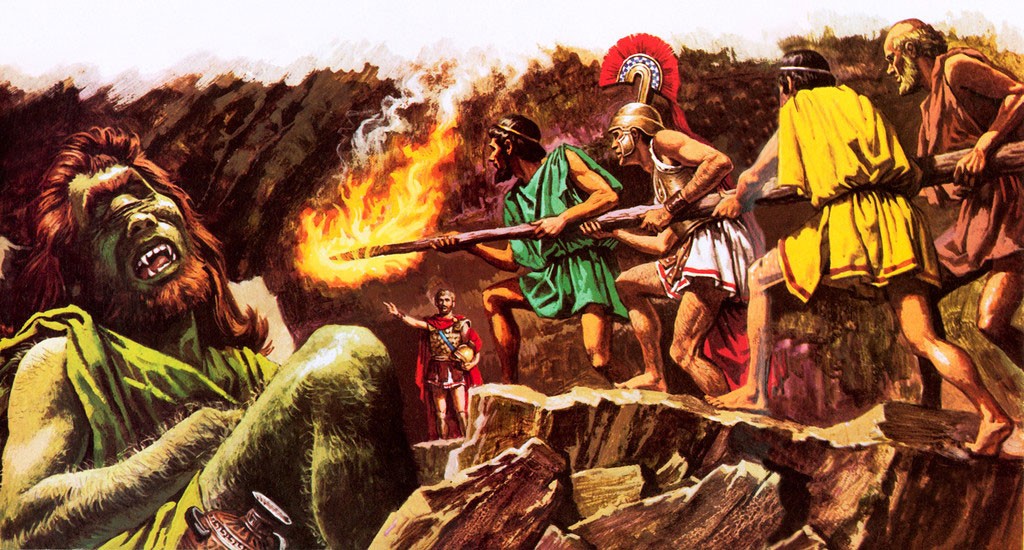
Many Greek myths focus on the achievements of heroes. They often had a god for one parent and a human for another. One was Heracles (known to the Romans as Hercules), Zeus's son by a mortal princess, who completed 12 amazing feats. Hercules eventually became immortal and was worshipped as a god. Other heroes were: Perseus, who killed the serpent-haired Medusa and rescued a princess from a sea monster; Theseus, who defeated the fearsome Minotaur of Crete; Jason, who captured the Golden Fleece; Achilles, a mighty warrior of the Trojan War; and Odysseus, who fought at Troy and overcame many obstacles and challenges on his long journey (Odyssey) back to his home on the island of Ithaca.
Underworld
Characters in Greek myths sometimes enter the Underworld, the kingdom of the god Hades. Persephone, daughter of the god Demeter, was carried to the underworld by Hades, who fell in love with her.
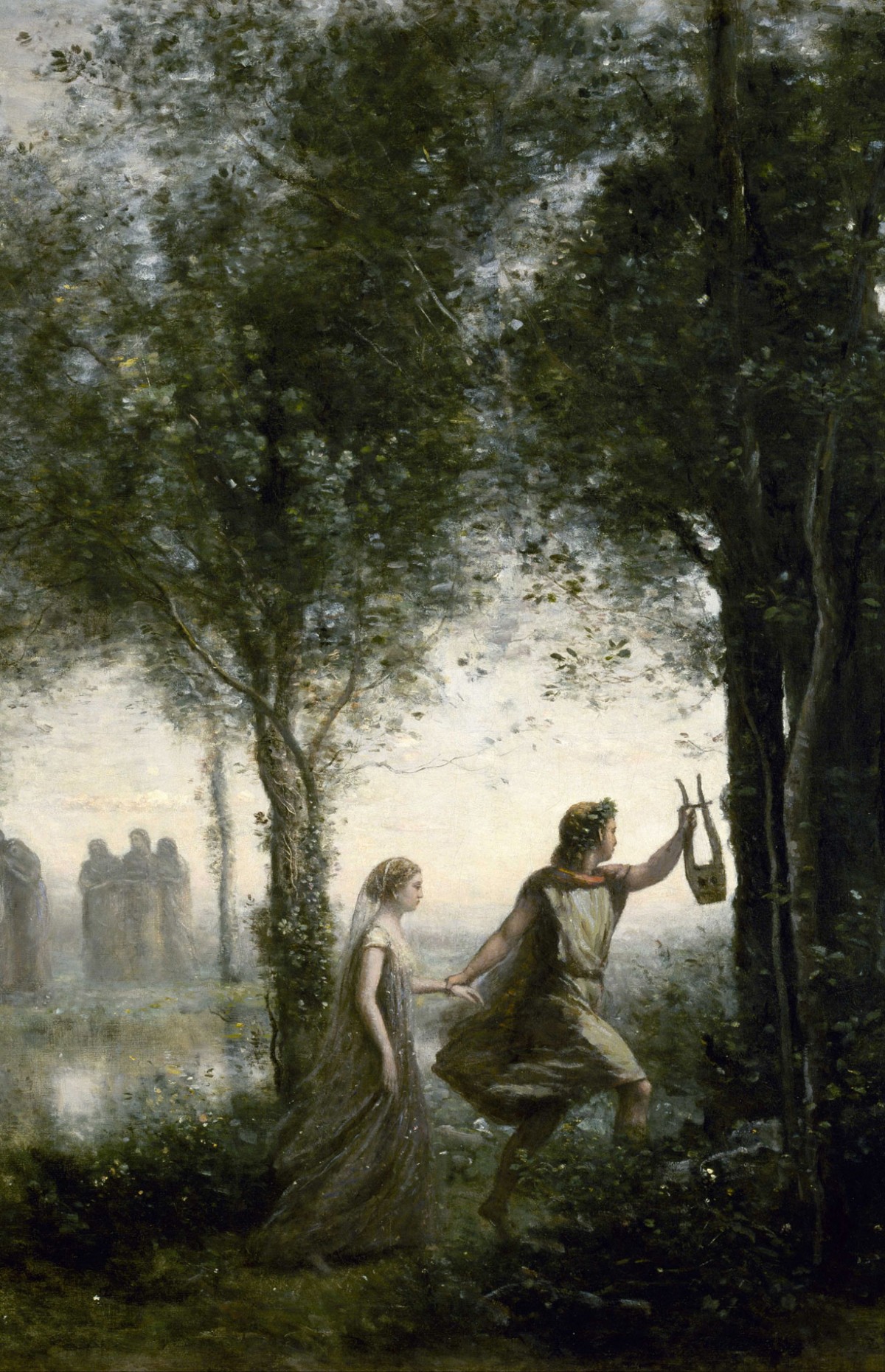
Orpheus was a musician who sang and played so beautifully that even animals and trees danced. He fell in love with Eurydice. But shortly after their marriage, Eurydice was bitten by a snake and died, and went to the Underworld. The grieving Orpheus refused to play or sing, but eventually decided to go to the Underworld to find her. His playing enchanted Charon, the ferryman who carried the souls of the dead across the River Styx into the Underworld, and tamed Cerberus, the monstrous three-headed dog who guarded the gates. Even Hades and Persephone, king and queen of the underworld, could not resist. They agreed to let Orpheus take Eurydice back, but on one condition: he was not to look back at her until they had both left the Underworld. But Orpheus was so overjoyed when he reached the surface that he looked back to share the moment with Eurydice. Immediately she disappeared back into the Underworld for ever.
Morality
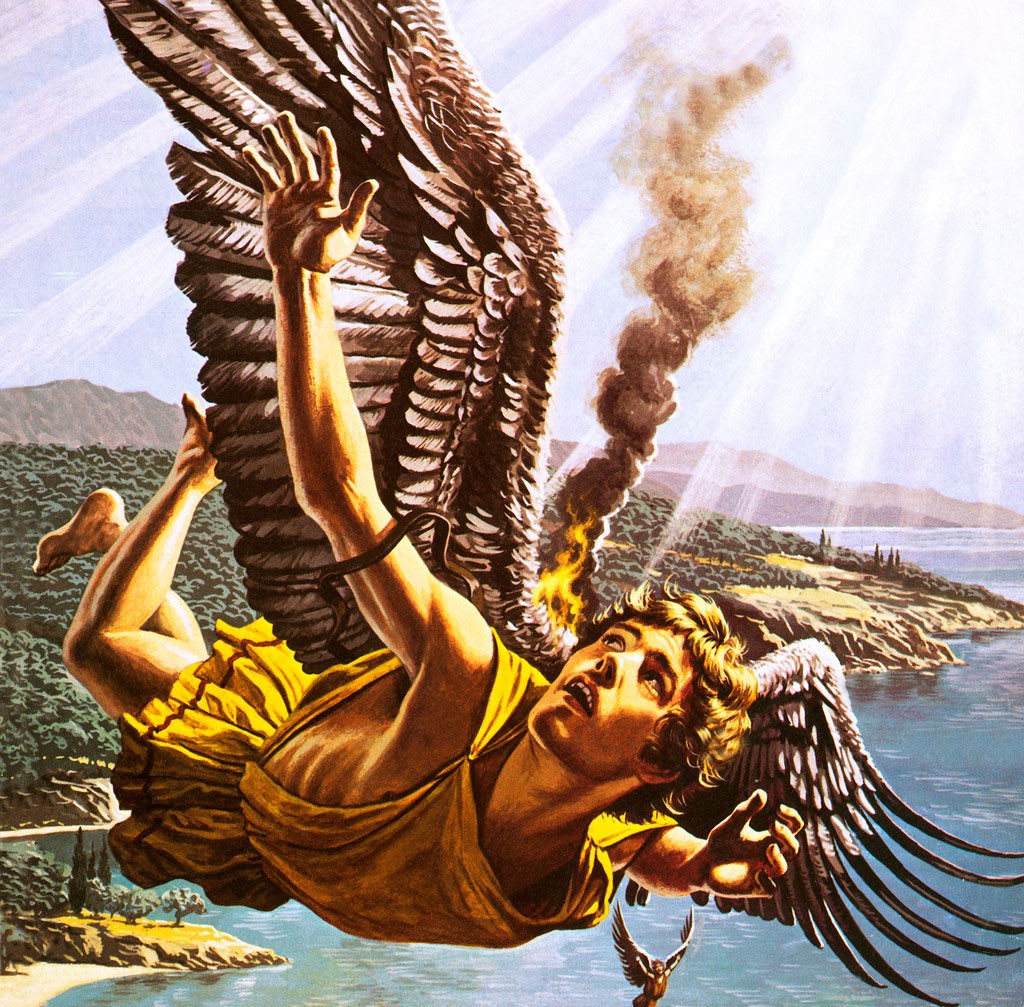
Many Greek myths demonstrate morality—right and wrong behaviour—and the good or bad consequences. One story tells how the handsome Narcissus, so vain that he could love only himself, drowned while gazing at his reflection in a stream. Another tells the tale of Icarus, who gained the ability to fly but soared too close to the sun, causing his wings to melt; he fell to his death. Arachne was a mortal who boasted that she could weave better cloth than the goddess Athena. The goddess turned her into a spider weaving its web.
Consultant: Philip Wilkinson
pics
Without in any way limiting Q-files Ltd’s exclusive rights under copyright, any use of this publication to “train” generative artificial intelligence (AI) technologies to generate text is expressly prohibited. Q-files Ltd reserves all rights to license use of this work for generative AI training and development of machine learning language models.