Q-news

CITE
We have made every effort to follow citation style rules, but there may be some minor differences. If in doubt, please refer to the appropriate citation style manual.
Ebola virus epidemic in Africa. (2022). In Q-files Encyclopedia, , Q-news. Retrieved from
https://www.q-files.com/news/ebola-virus-epidemic-in-africa
"Ebola virus epidemic in Africa." , Q-news, Q-files Encyclopedia, 10 Feb. 2022.
https://www.q-files.com/news/ebola-virus-epidemic-in-africa.
Accessed 22 Sep. 2026.
Ebola virus epidemic in Africa 2022. , Q-news. Retrieved 22 September 2026, from
https://www.q-files.com/news/ebola-virus-epidemic-in-africa
, Q-news, s.v. "Ebola virus epidemic in Africa," accessed September 22, 2026.
https://www.q-files.com/news/ebola-virus-epidemic-in-africa


Ebola virus epidemic in Africa
The current Ebola outbreak in West Africa was first reported in March 2014 and has now become the worst occurrence of the disease since it was discovered in 1976. The current epidemic has now killed more than all other known Ebola outbreaks combined. Up to 28th November, 7275 people had been reported as having died from the disease in six countries; Liberia, Guinea, Sierra Leone, Mali, Nigeria and United States. The total number of reported cases is more than 16,000.
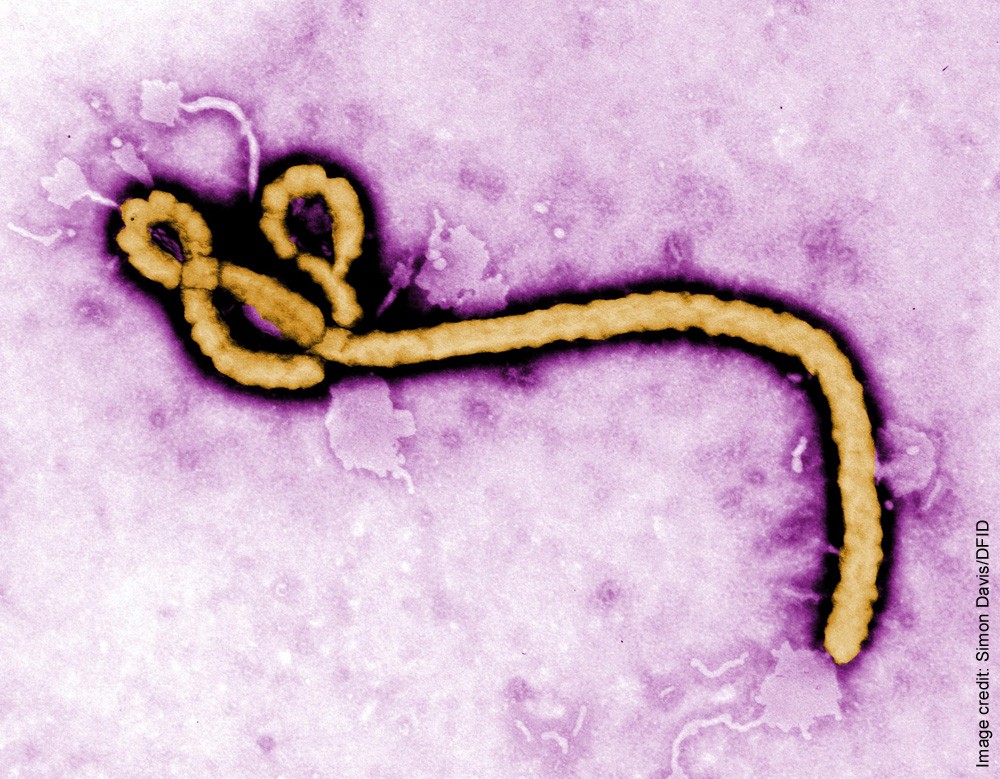

Ebola was named after the river in the Democratic Republic of the Congo, near where one of the first two villages that reported outbreaks (in 1976). There are normally fewer than 500 cases reported each year, and no cases were reported at all between 1979 and 1994. Ebola is believed to spread from animals to humans either through direct contact with fruit bats, which are thought to be the natural hosts of the virus, or other animals that have been infected by the bats.
Ebola is a disease caused by infection with a virus in the ebolavirus group (including one known as the Ebola virus). The disease is spread by contact through broken skin, the mouth or nose with the blood, saliva, mucus, vomit, sweat, faeces and other body fluids of an infected person. Frequent hand-washing and good sanitation may prevent infection. The first symptoms of Ebola, which appear two to 21 days after infection, include fever, sore throat and muscle pain, followed later by vomiting, rash and bleeding. Ebola kills around half of infected people.
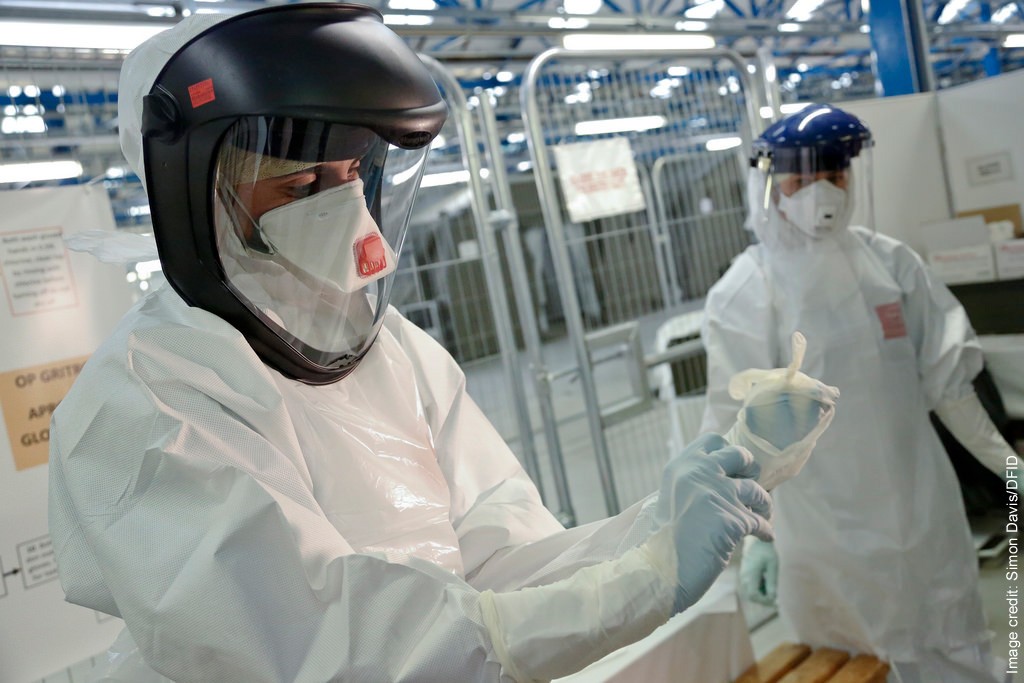
Healthcare workers must wear protective clothing such as masks, gowns and gloves. Dead bodies remain infectious so people handling them—for example, those carrying out traditional burial rituals—are at risk. Healthcare systems in the region were stretched even before the epidemic began, and now there is even greater pressure as staff become ill themselves, or do not go to work for fear of catching the disease. There is not enough protective clothing and the suits are uncomfortable to wear in hot weather. Isolation facilities in hospitals, often simply a curtain pulled across, are inadequate. The first symptoms of Ebola are similar to malaria, which is common in Africa, so Ebola is not always suspected.
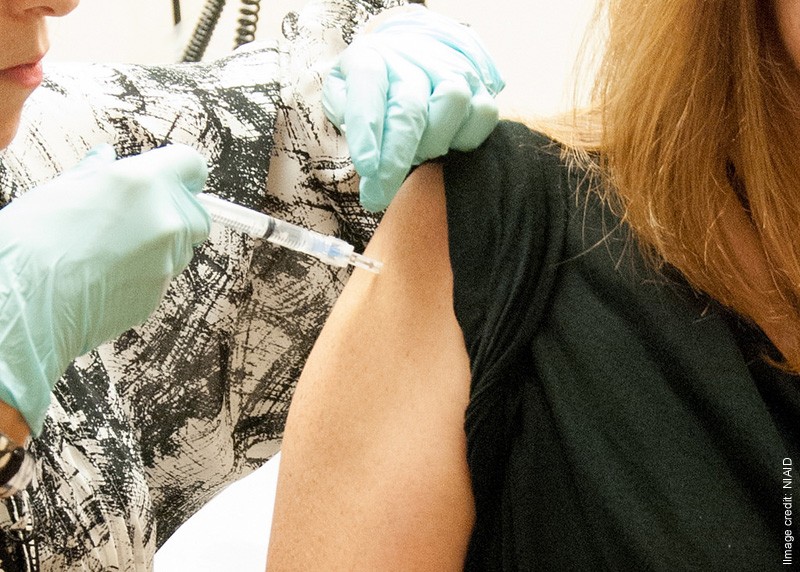
The first human trials of a vaccine against Ebola have been described as "promising". None of the 20 people immunized showed major side-effects and all produced anti-Ebola antibodies (substances carried in the blood that identify and destroy viruses, bacteria and other micro-organisms). The experimental vaccine is being produced by GlaxoSmithKline (GSK). They say they can create one million doses a month by the end of 2015.