
Great scientists

CITE
We have made every effort to follow citation style rules, but there may be some minor differences. If in doubt, please refer to the appropriate citation style manual.
Marie Curie. (2026). In Q-files Encyclopedia, Science, Great scientists. Retrieved from
https://www.q-files.com/science/great-scientists/marie-curie
"Marie Curie." Science, Great scientists, Q-files Encyclopedia, 10 Mar. 2026.
https://www.q-files.com/science/great-scientists/marie-curie.
Accessed 28 Oct. 2026.
Marie Curie 2026. Science, Great scientists. Retrieved 28 October 2026, from
https://www.q-files.com/science/great-scientists/marie-curie
Science, Great scientists, s.v. "Marie Curie," accessed October 28, 2026.
https://www.q-files.com/science/great-scientists/marie-curie


Marie Curie
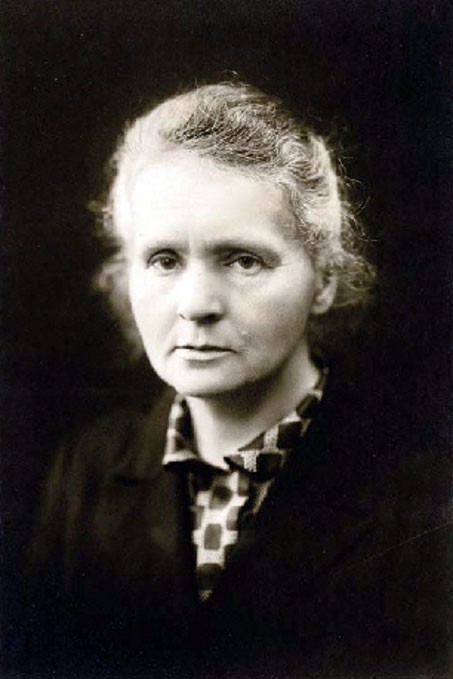
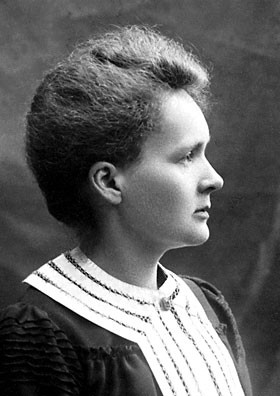
Marie Curie (1867–1934) was a pioneering scientist in an age when it was unusual for a woman to be a scientist at all. She is remembered today for her work with her husband Pierre Curie on radioactivity, especially the discovery of two radioactive elements, radium and polonium, and the use of radioactivity in the treatment of cancer. Marie Curie also played an important part in developing the use of X-rays, especially during World War I. She was the first woman to win a Nobel prize, and the only woman to have to have won in two different fields, physics and chemistry.

Early life
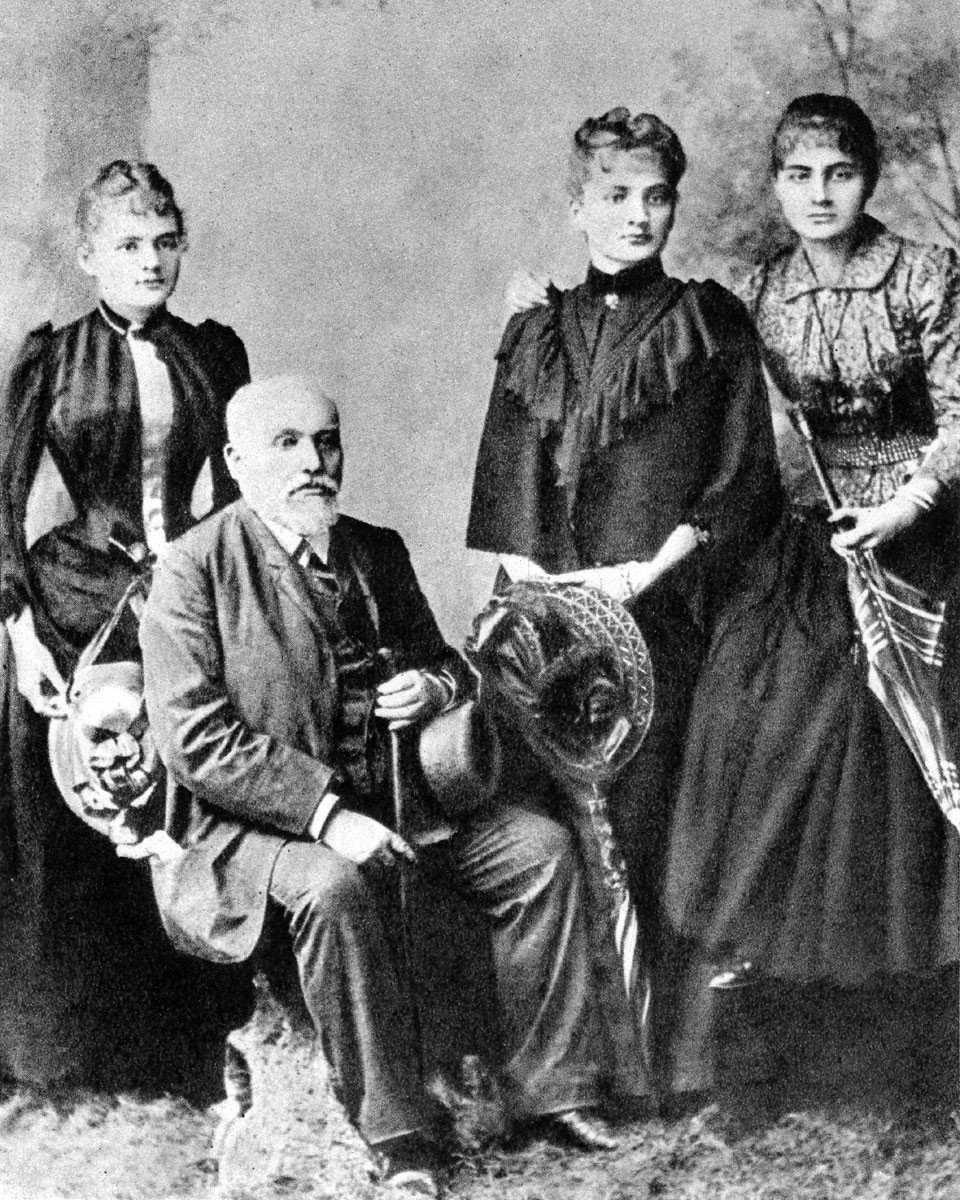
Maria Sklodowska was born on 7th November 1867, in Warsaw, Poland. She was the youngest of five children. Her parents were teachers and enthusiastic about education, making sure both their sons and daughters were taught well. When Maria was just 11 years old, her mother died.
Maria continued to do well at school, but as she grew up she faced the problem of how to go to university. Poland was ruled by Russia at the time, and the Russians made it a rule that the University of Warsaw should not accept women. So Maria and her sister, Bronislawa ("Bronia") decided they would have to continue their studies abroad.
After a long struggle to raise the money, both settled in Paris, where Bronia become a doctor and Maria, now Marie, the French version of her name, enrolled at the Sorbonne, Paris's university. She was the first woman to study physics there. Two years later she graduated with the highest marks in her class. A year later, she gained a degree in mathematics.
Paris and marriage
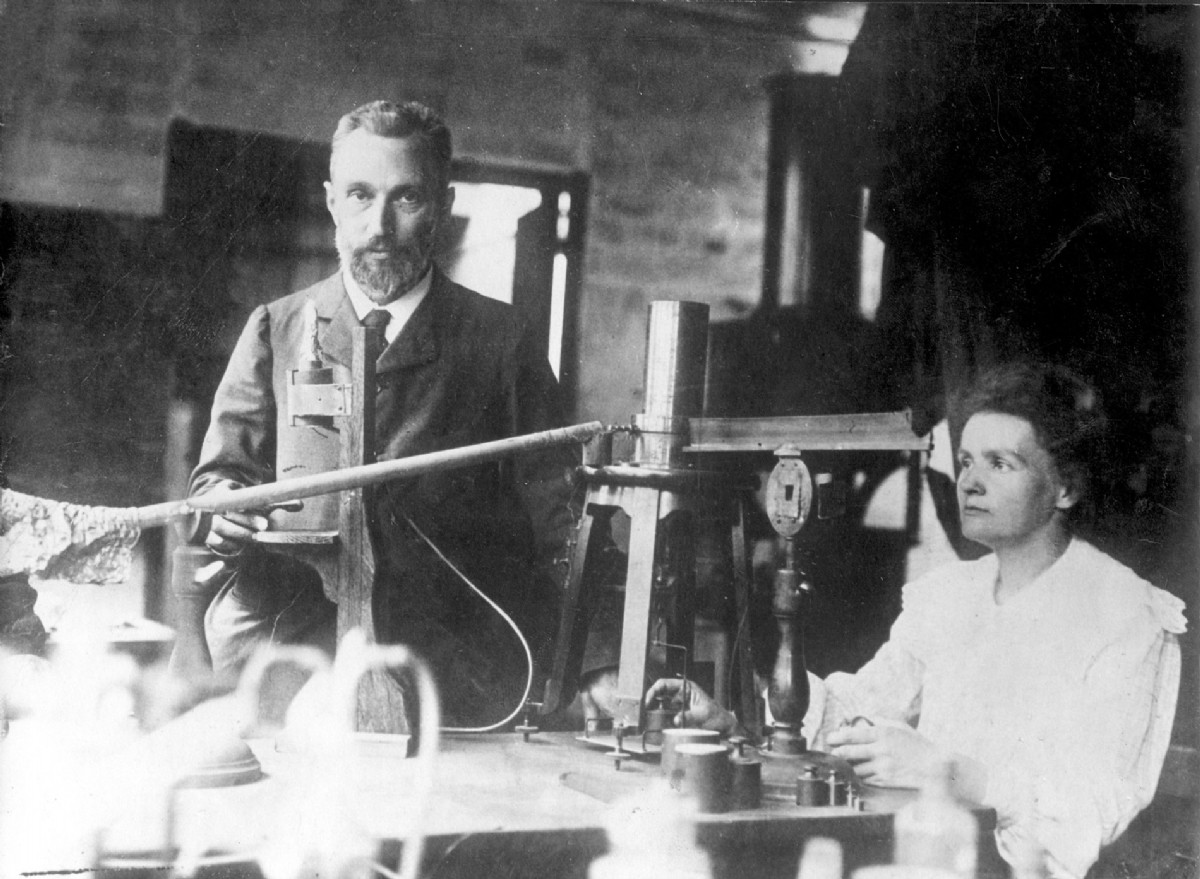
Marie’s first job was to study the magnetism of steel. It was at this time when, looking for a place to work in, she met Pierre Curie, a fellow research scientist, an expert in magnetism and an inventor of scientific instruments. He offered her the accommodation she needed—and the two fell in love. They were married in 1895, and their first child, Irène was born in 1897. Another daughter, Ève, was born in 1904.
Marie continued to work after she had children but admitted, like many women since: "I have frequently been questioned, especially by women, of how I could reconcile family life with a scientific career. Well, it has not been easy."
Radioactivity
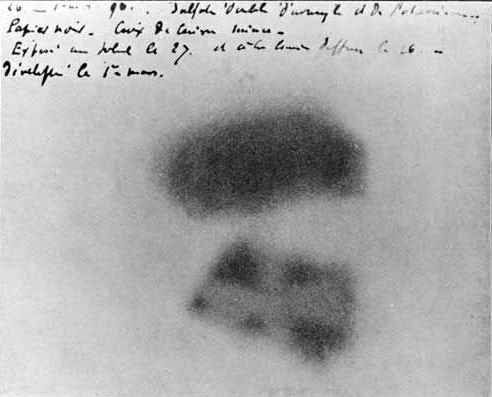
Marie decided to study for a doctorate, and chose to follow up the work of French scientist Henri Becquerel (1852–1908). He had been researching X-rays—a phenomenon discovered in 1895 by the German physicist Wilhelm Röntgen (1845–1923). X-rays are like light, but have much shorter wavelengths and can pass through some solids. Becquerel found that the compounds containing the element uranium also gave out rays, different from X-rays. These rays left a foggy mark on a light-sensitive photographic plate.
Investigating uranium samples herself, Marie Curie came to the conclusion that the radiation came from the uranium atoms. She coined the word "radioactivity" to describe the way that uranium emitted radiation.
Discovering new elements
Marie went on to study pitchblende, an ore of uranium (the mineral in which it occurs naturally). The pitchblende gave off rays that were more powerful than expected, leading Marie to suspect the ore contained other substances that were more strongly radioactive than uranium.
In 1898, Pierre dropped his own scientific work to join Marie on her research. After much work—attempting to extract minute traces of other substances from a ton of pitchblende—they Curies managed to identify the different elements that made up the pitchblende. They included two undiscovered elements. They named the first polonium after Marie’s native Poland and the second radium from the Latin for "ray".

Marie gained her doctorate from this research. She was the first woman in France to achieve this.
Nobel Prize
Marie and Pierre were now famous. They were jointly awarded the 1903 Nobel prize for Physics, along with Henri Becquerel, and Pierre was given a professorship at the Sorbonne. Marie was made head of research there. A new research centre, the Radium Institute was proposed.
But tragedy struck in 1906, when Pierre was killed, knocked down in the street by horses pulling a heavy wagon. Marie was desperately unhappy, but she remembered that Pierre had always told her that, if anything were to happen to him, she should continue her work.
This she did, and was promoted to Pierre’s job at the Sorbonne, becoming the university’s first woman professor. In 1911, Marie was awarded a second Nobel prize—this time in Chemistry, and not shared with anyone else.
Radium Institute
World War I broke out in 1914, and Marie and her daughter Irène played an important role by fitting out trucks as mobile X-ray stations, so that doctors could view the soldiers’ injuries better, and so operate more successfully.
After the war, Marie became Director of the newly formed Radium Institute in Paris, where her daughter Irène also worked. However, her health was poor and she was diagnosed with leukaemia, almost certainly caused by so much exposure to radioactivity, which damages healthy body cells as well as cancerous ones. She died in 1934 and was buried beside her husband in Sceaux, the suburb of Paris where they had lived for many years.
In 1995, both bodies were moved to the Panthéon, a memorial in Paris to France’s greatest men and women.

Consultant: Mike Goldsmith
pics
Without in any way limiting Q-files Ltd’s exclusive rights under copyright, any use of this publication to “train” generative artificial intelligence (AI) technologies to generate text is expressly prohibited. Q-files Ltd reserves all rights to license use of this work for generative AI training and development of machine learning language models.