
Famous inventors

CITE
We have made every effort to follow citation style rules, but there may be some minor differences. If in doubt, please refer to the appropriate citation style manual.
Alfred Nobel. (2026). In Q-files Encyclopedia, Technology, Famous inventors. Retrieved from
https://www.q-files.com/technology/famous-inventors/alfred-nobel
"Alfred Nobel." Technology, Famous inventors, Q-files Encyclopedia, 16 Mar. 2026.
https://www.q-files.com/technology/famous-inventors/alfred-nobel.
Accessed 6 Aug. 2026.
Alfred Nobel 2026. Technology, Famous inventors. Retrieved 6 August 2026, from
https://www.q-files.com/technology/famous-inventors/alfred-nobel
Technology, Famous inventors, s.v. "Alfred Nobel," accessed August 6, 2026.
https://www.q-files.com/technology/famous-inventors/alfred-nobel


Alfred Nobel
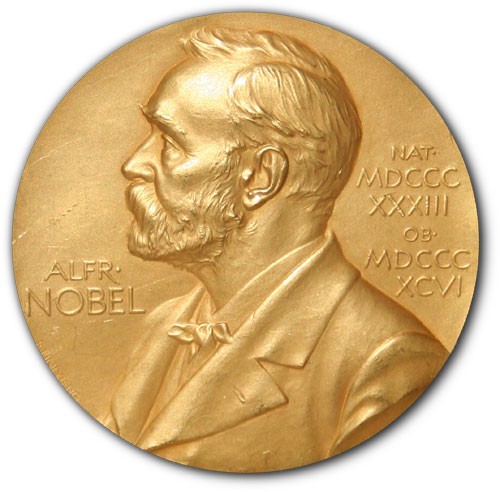
Alfred Nobel (1833–96) was a Swedish chemist and the inventor of dynamite and gelignite. After discovering ways of producing safer explosives, Nobel established factories to manufacture explosives in the 1870s and 1880s. These businesses made a fortune for Nobel. In 1895 he set aside most of it to establish annual prizes in Physics, Chemistry, Medicine, Literature and Peace. An Economics Prize was added later. Called the Nobel Prize, they are the most prestigious prizes in science.
Dynamite
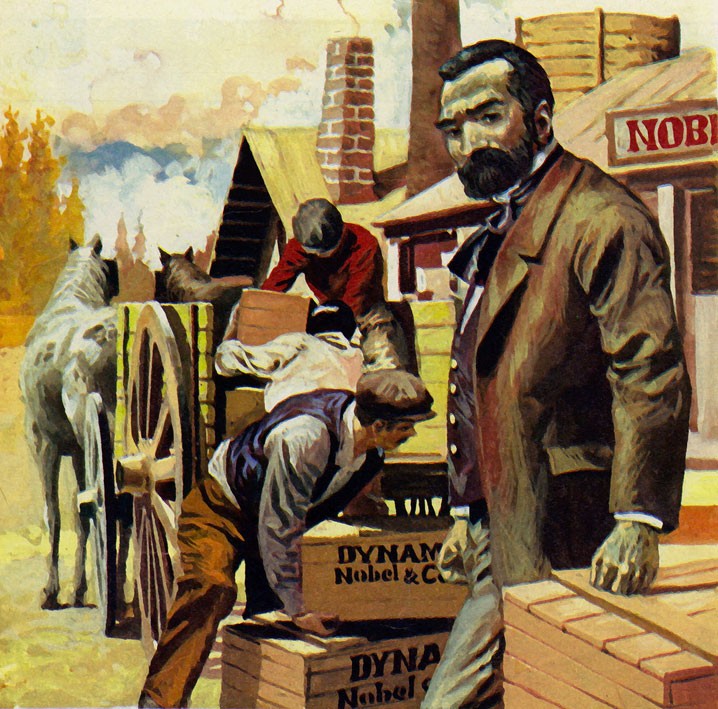
Nobel was interested in the safe manufacture and use of nitroglycerine, a highly unstable explosive. In 1863, he invented a method of exploding from a distance using a detonator. But serious accidents continued to happen—including one in which his younger brother, Emil, was killed in 1864.
Determined to find a solution, Nobel found that mixing nitroglycerine with silica (silicon dioxide) made it safer and easier to manipulate. He patented this mixture in 1867 under the name of dynamite.
In 1875, Nobel invented an even safer explosive, made from dissolving a substance called nitrocellulose in the nitroglycerine and mixing it with potassium nitrate and wood pulp. Nobel named it gelignite, or blasting gelatin.
Dynamite and gelignite were soon used in blasting tunnels and making cuttings for canals, railways and roads all over the world.

Consultant: Dave Hawksett
pics

Without in any way limiting Q-files Ltd’s exclusive rights under copyright, any use of this publication to “train” generative artificial intelligence (AI) technologies to generate text is expressly prohibited. Q-files Ltd reserves all rights to license use of this work for generative AI training and development of machine learning language models.