
EASY READ Space

CITE
We have made every effort to follow citation style rules, but there may be some minor differences. If in doubt, please refer to the appropriate citation style manual.
EASY READ What are stars?. (2026). In Q-files Encyclopedia, Space, EASY READ Space. Retrieved from
https://www.q-files.com/space/easy-read-space/easy-read-what-are-stars
"EASY READ What are stars?." Space, EASY READ Space, Q-files Encyclopedia, 25 Mar. 2026.
https://www.q-files.com/space/easy-read-space/easy-read-what-are-stars.
Accessed 28 Oct. 2026.
EASY READ What are stars? 2026. Space, EASY READ Space. Retrieved 28 October 2026, from
https://www.q-files.com/space/easy-read-space/easy-read-what-are-stars
Space, EASY READ Space, s.v. "EASY READ What are stars?," accessed October 28, 2026.
https://www.q-files.com/space/easy-read-space/easy-read-what-are-stars


What are stars?
Stars are giant, hot spinning balls of gas. Our Sun is a star. Stars give off massive amounts of energy, including light and heat. They vary enormously in size and by the amount of light they give off. Stars vary in colour according to their temperature. Blue stars are hot; red stars are cool. Orange and yellow stars (like our Sun) are moderately hot.

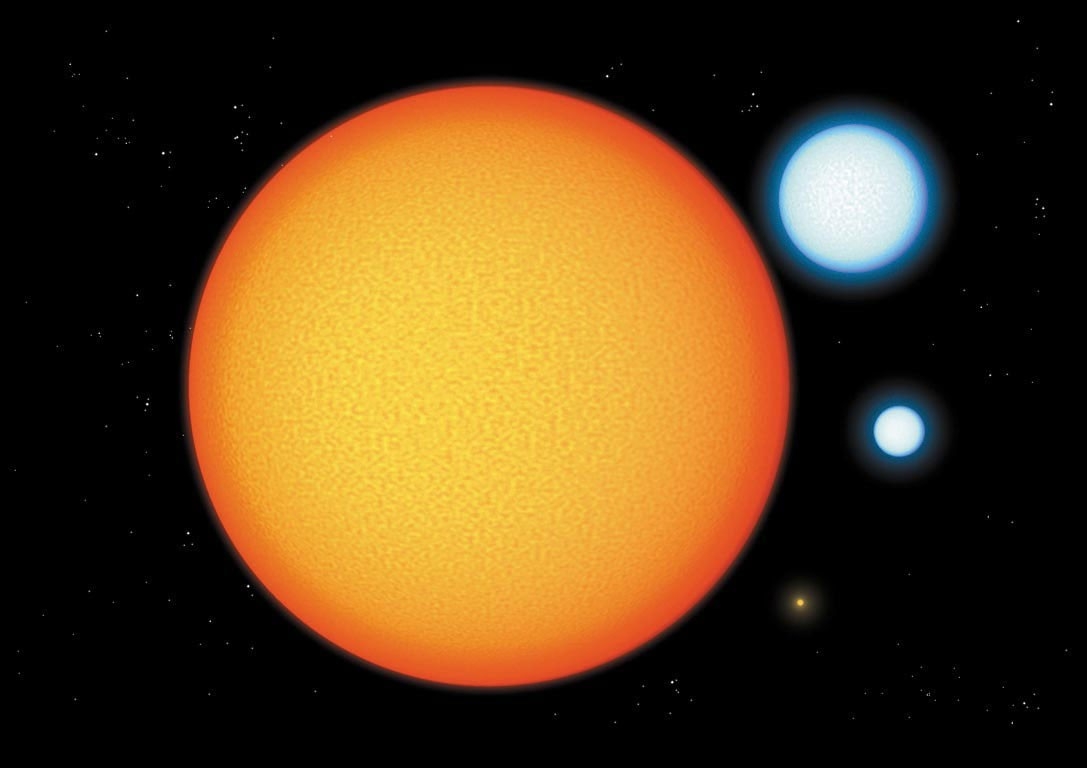
Giants and dwarfs
Stars come in many colours and sizes. The largest star in this scale illustration is the red supergiant Betelgeuse in the constellation of Orion. Next are the blue giants Rigel and Polaris (the Pole Star). Our Sun, known as a "yellow dwarf" is the small yellow dot. Betelgeuse's diameter is nearly 900 times that of the Sun.
Starbirth
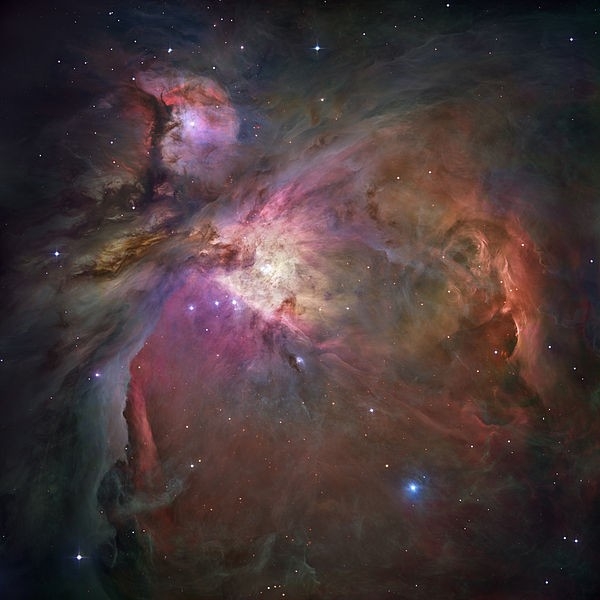
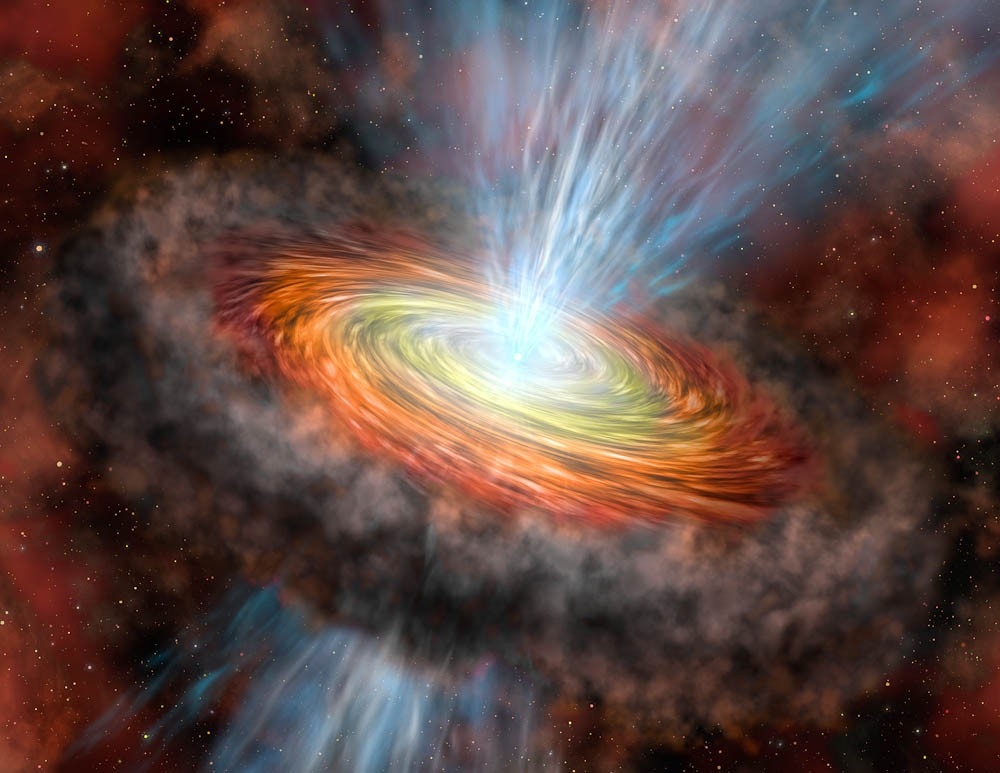
Stars are born when a giant molecular cloud, huge regions of dust and gas, collapses to become dense blobs. At this stage, they are known as protostars. A protostar becomes so hot that it starts to produce its own energy in its core. A spinning disc of gas and dust surrounds it. This may eventually become the birthplace of new planets.
Supergiants
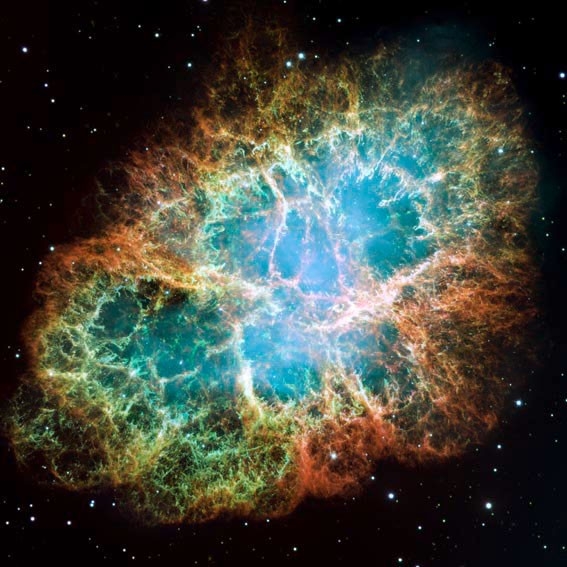
The largest stars of all are the supergiants. They are fairly rare. There are several types, including red supergiants, the most massive of all, and blue supergiants. Betelgeuse is an example of a red supergiant. Rigel (also in the constellation of Orion) is a blue supergiant.
At the end of its life, a red supergiant blasts apart in a mighty explosion called a supernova. It might end its days as a neutron star. This kind of star is tiny and extremely dense: a teaspoonful of its material would weigh an incredible one billion tonnes. More massive red supergiants end up as black holes.

Double stars
Many pairs of stars are seen close together in the sky. Some of these double stars are known as binary stars. They stay in pairs because of the force of each other’s gravity. This causes them to orbit around one another.
Other double stars are nowhere near each other, but appear to be close because they lie in a similar direction from the Earth. These are called “optical doubles”.
Variable stars
A variable star is one whose brightness, as seen from Earth, varies. For some variables, this is because something is partly blocking our view of their light. Other variables naturally swell up and shrink, or are simply unpredictable in the way they give off light. A well known variable star is Eta Carinae, one of the most massive and brightest stars in the Galaxy.

Consultant: Mike Goldsmith
Ready to find out more?
Here are some pages in other parts of Q-files you might like to explore:
pics
Without in any way limiting Q-files Ltd’s exclusive rights under copyright, any use of this publication to “train” generative artificial intelligence (AI) technologies to generate text is expressly prohibited. Q-files Ltd reserves all rights to license use of this work for generative AI training and development of machine learning language models.