
EASY READ Space

CITE
We have made every effort to follow citation style rules, but there may be some minor differences. If in doubt, please refer to the appropriate citation style manual.
EASY READ What is it like on the Moon?. (2026). In Q-files Encyclopedia, Space, EASY READ Space. Retrieved from
https://www.q-files.com/space/easy-read-space/easy-read-what-is-it-like-on-the-moon
"EASY READ What is it like on the Moon?." Space, EASY READ Space, Q-files Encyclopedia, 25 Mar. 2026.
https://www.q-files.com/space/easy-read-space/easy-read-what-is-it-like-on-the-moon.
Accessed 13 Sep. 2026.
EASY READ What is it like on the Moon? 2026. Space, EASY READ Space. Retrieved 13 September 2026, from
https://www.q-files.com/space/easy-read-space/easy-read-what-is-it-like-on-the-moon
Space, EASY READ Space, s.v. "EASY READ What is it like on the Moon?," accessed September 13, 2026.
https://www.q-files.com/space/easy-read-space/easy-read-what-is-it-like-on-the-moon


What is it like on the Moon?
The Moon is our nearest neighbour in space. It is the brightest object in the night sky, although the light it “shines” is actually sunlight reflected from it. The Moon is a ball of rock and metal that travels around the Earth, taking about 27 days to complete the circle. The same side of the Moon always faces the Earth.

How was the Moon formed?
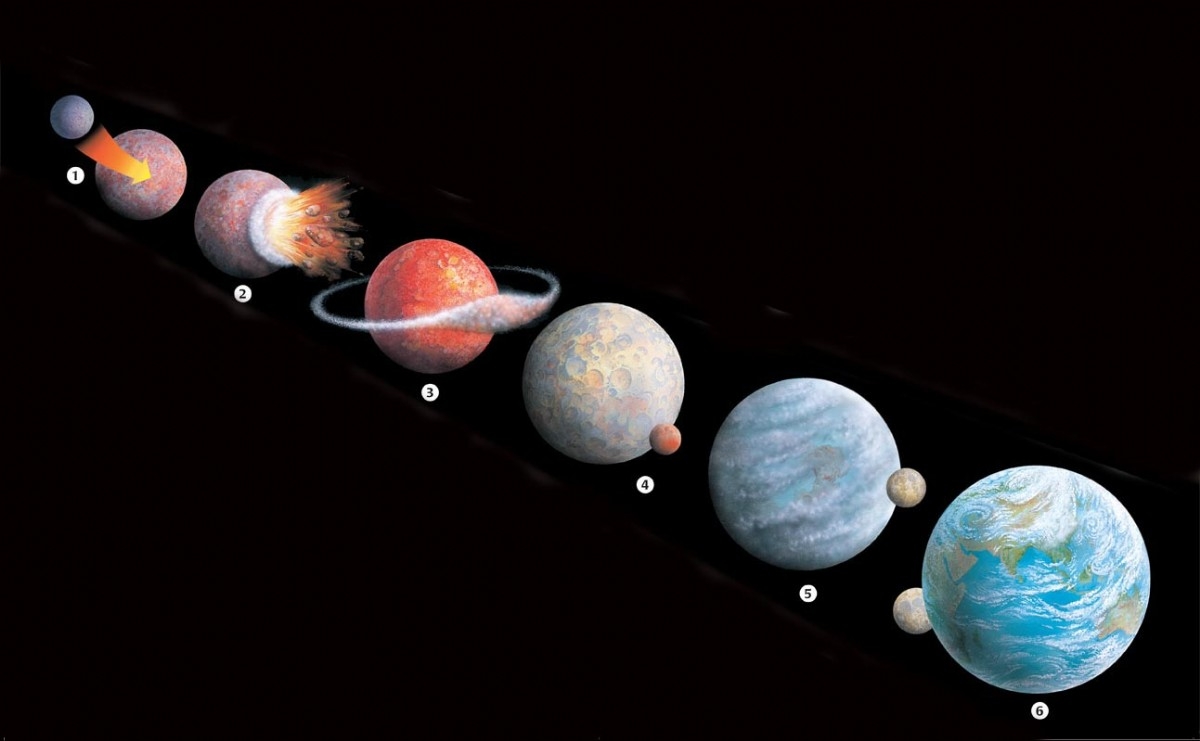
Soon after the Earth had formed, billions of years ago, another smaller planet (1) collided with it and exploded. Vast amounts of debris were "splashed" into space (2). Some of the fragments collected in orbit round the Earth, which was by now a ball of melted rock (3). The Earth’s surface later cooled and turned back to solid rock (4). The orbiting fragments squashed together to form the Moon (5, 6).
Craters
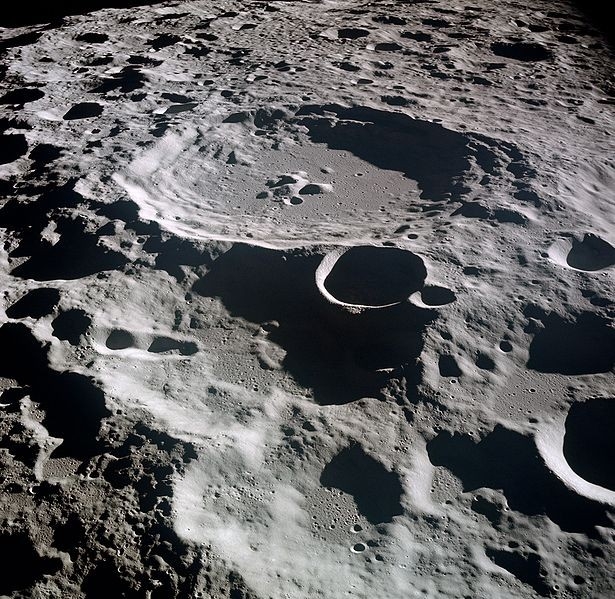
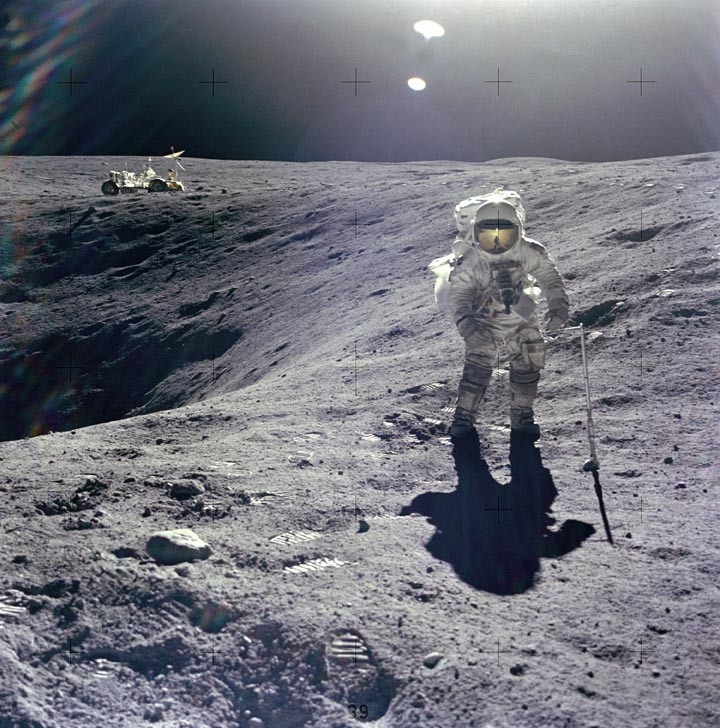
The Moon is a barren world. It has neither air nor liquid water, so no plants and animals can live there. There is no soil—only bare rock and dust. The Moon is covered by thousands of craters. Most were formed millions of years ago when meteorites and asteroids crashed into its surface. They blasted huge basins out of the rock, scattering debris in all directions. This left streaks in the lunar surface. With no wind to cover them over, these streaks are still there after millions of years.
Lava plains
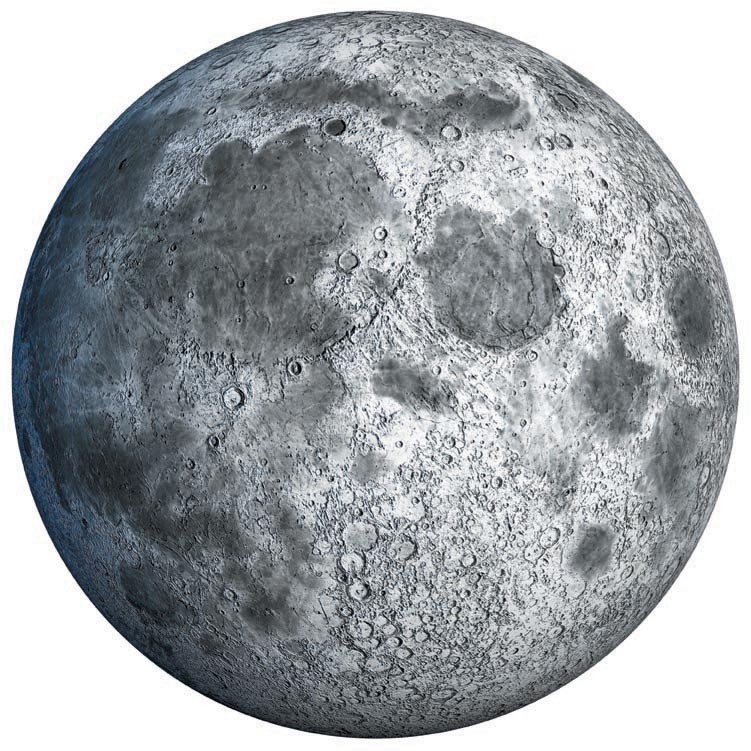
There are also dark lava plains on the Moon. These were formed when molten rock (lava) seeped out from under the ground millions of years ago. Astronomers once thought these dark areas might be seas. They are still called by the Latin word for sea, mare.

Phases
The Moon seems to change shape from one night to the next. It is really our view of the part of the Moon that is lit up by the Sun that changes. When the face pointed towards us is turned away from the Sun, we cannot see it at all. As the Moon orbits the Earth, more and more of it is lit, until it is fully turned towards the Sun. This is the Full Moon.
Solar eclipse
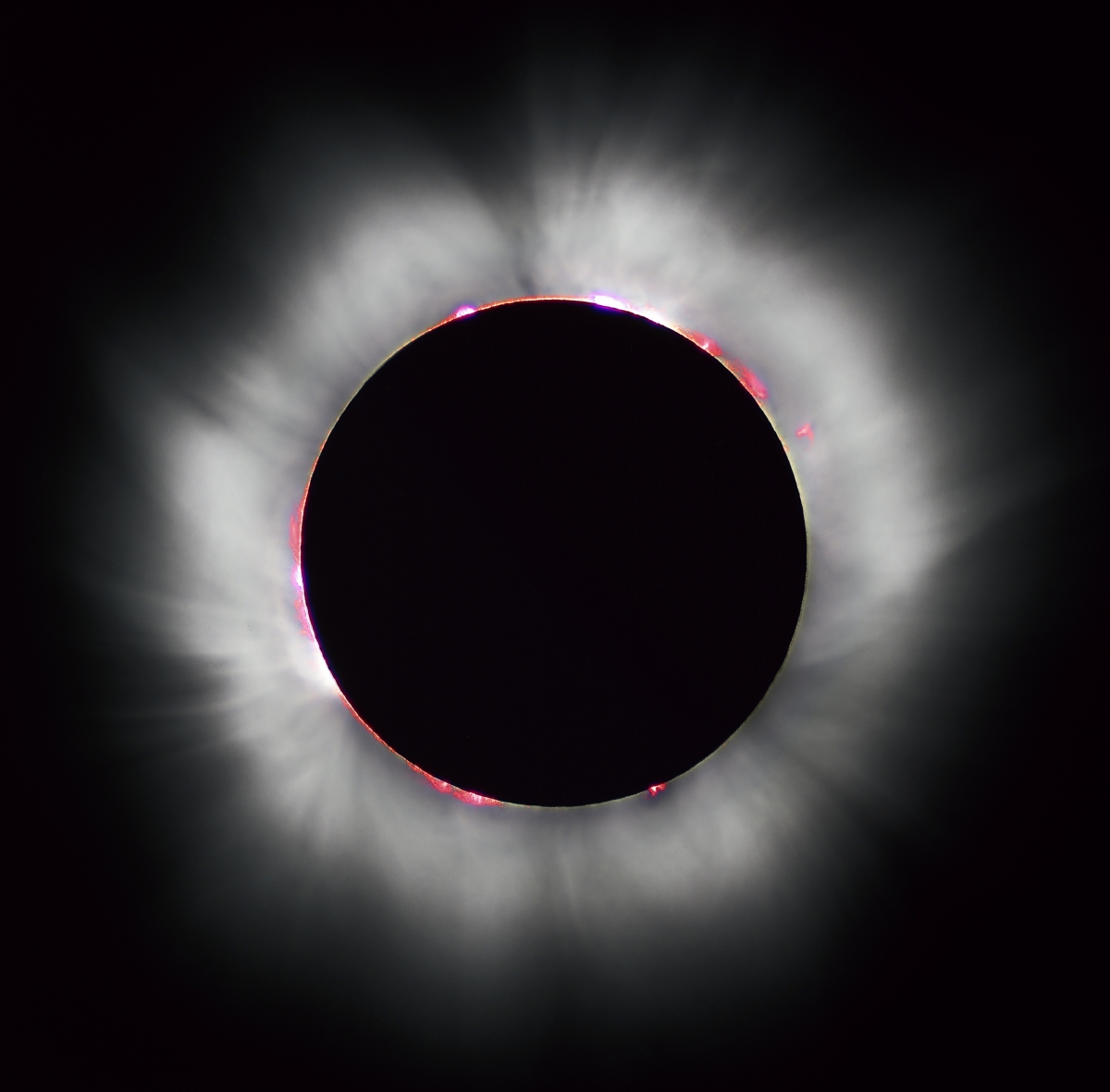
By coincidence, the Moon and Sun appear to be about the same size in the sky. So when the Moon passes in between the Earth and Sun, it sometimes blocks out our view of the Sun completely. This is a total eclipse. The outer part of the Sun’s atmosphere, called the corona, shines out from behind the Moon.

Lunar eclipse
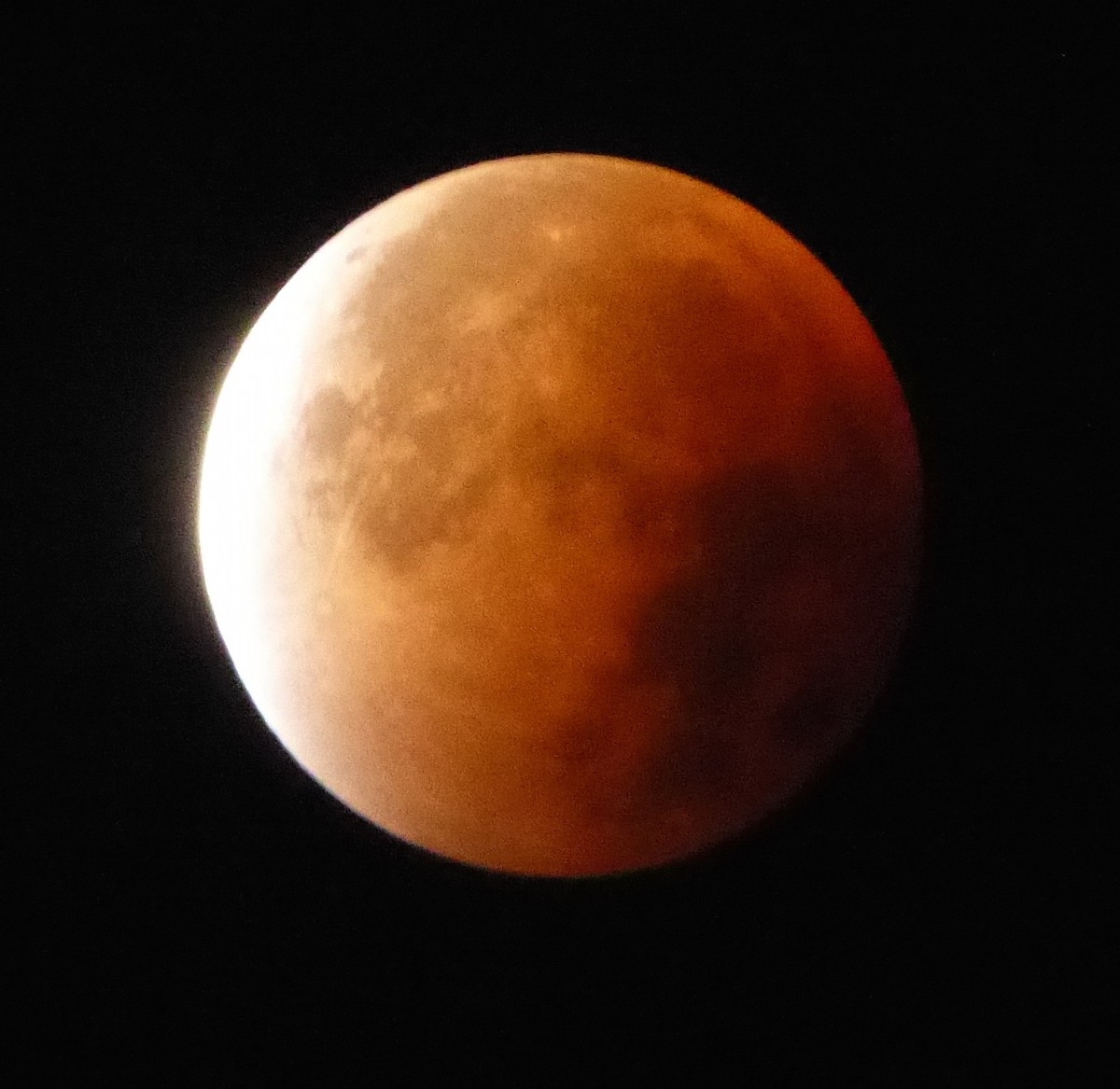
On some occasions, when the Earth lies directly between the Sun and the Moon, the Earth casts its shadow on the Moon. This is called a lunar eclipse. The Moon turns a rosy colour. Unlike a solar eclipse, which can only be a viewed from a small area, a lunar eclipse can be seen from large parts of the Earth at night. A solar eclipse lasts for a few minutes, while a lunar eclipse can last for hours.

Moon Datafile
Diameter 3476 km (2159 miles)
Day 27.3 Earth days
Average distance from Earth 384,600 km (239,000 miles)
Consultant: Mike Goldsmith
Ready to find out more?
Here are some pages in other parts of Q-files you might like to explore:
Moon
What is the Moon made of?
Why can we sometimes see the Moon in the day?
Moon A-Z
pics


Without in any way limiting Q-files Ltd’s exclusive rights under copyright, any use of this publication to “train” generative artificial intelligence (AI) technologies to generate text is expressly prohibited. Q-files Ltd reserves all rights to license use of this work for generative AI training and development of machine learning language models.