
EASY READ How things work

CITE
We have made every effort to follow citation style rules, but there may be some minor differences. If in doubt, please refer to the appropriate citation style manual.
EASY READ How does a plane fly?. (2026). In Q-files Encyclopedia, Technology, EASY READ How things work. Retrieved from
https://www.q-files.com/technology/easy-read-how-things-work/easy-read-how-does-a-plane-fly
"EASY READ How does a plane fly?." Technology, EASY READ How things work, Q-files Encyclopedia, 13 Mar. 2026.
https://www.q-files.com/technology/easy-read-how-things-work/easy-read-how-does-a-plane-fly.
Accessed 22 Sep. 2026.
EASY READ How does a plane fly? 2026. Technology, EASY READ How things work. Retrieved 22 September 2026, from
https://www.q-files.com/technology/easy-read-how-things-work/easy-read-how-does-a-plane-fly
Technology, EASY READ How things work, s.v. "EASY READ How does a plane fly?," accessed September 22, 2026.
https://www.q-files.com/technology/easy-read-how-things-work/easy-read-how-does-a-plane-fly


How does a plane fly?
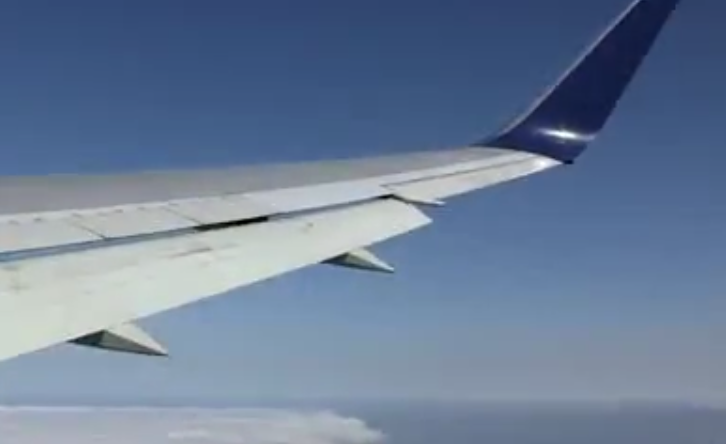
A heavy aeroplane is able to fly because of the shape of its wings. When the plane is powered forward by its engines at high speed, a force called lift causes it to take off. As long as it carries on moving at high speed, it will stay airborne.
Lift
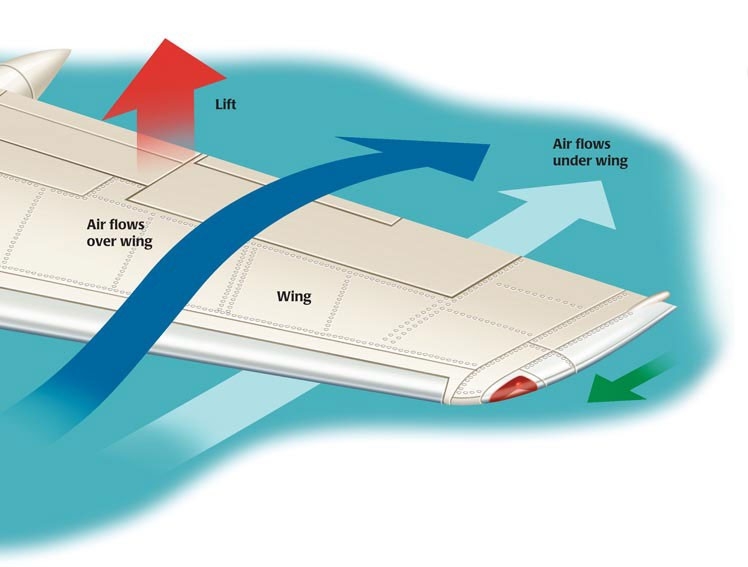
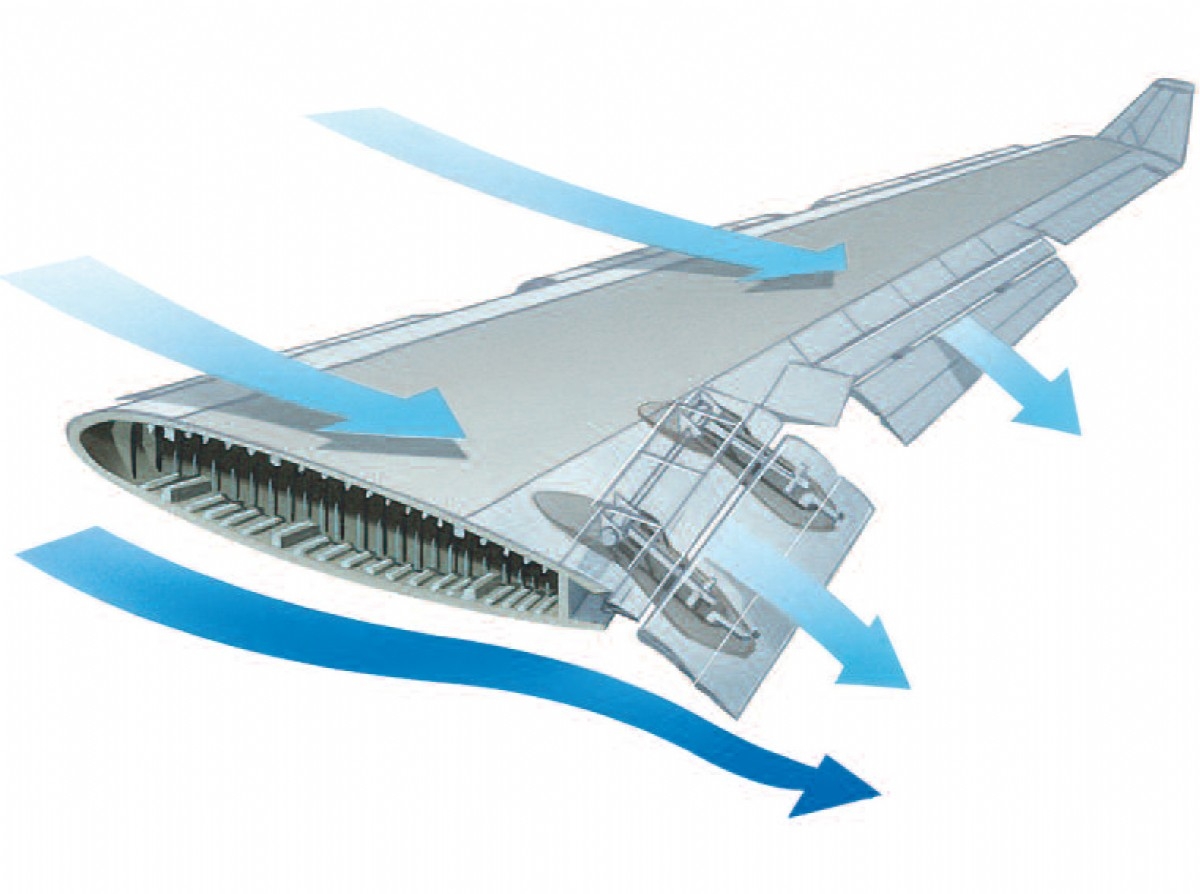
As the plane moves forwards, air flows over and under each wing. Because of the wing’s curved shape, air flowing over it moves faster than air flowing under it. This means that air flowing over the wing will have lower pressure than air flowing under it. An upward force, called lift, is the result.
Lift is also produced in another way. The wings cut into the air at an angle. This means that the air pushes against the undersides of the wings, forcing them upwards.
Take-off

At take-off, the pilot must accelerate the plane along a runway until it reaches the speed where its wings provide enough lift. The plane will climb into the air if this lift is greater than its weight.
A large, heavy plane like an airliner has flaps fitted to its wings. When it takes off, these flaps extend outwards at the rear edge of its wings. These make the plane's wing surface bigger, providing the extra lift the airliner needs to climb into the air.
Steering
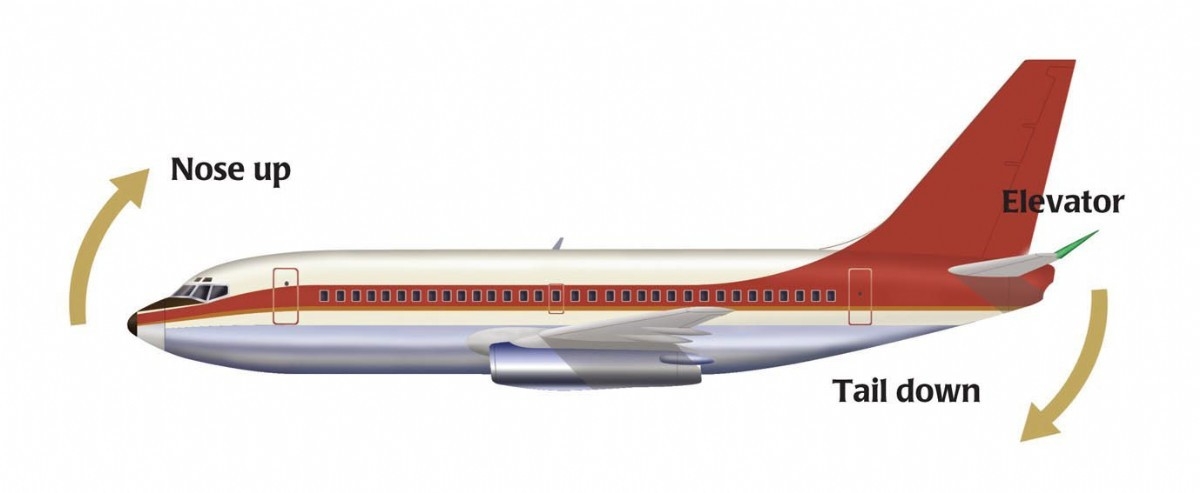
Steering a plane is not the same as steering a car, where a turn of the wheel sends it either to the left or right. A plane moves in three different ways. It can climb or dive (caused by a change in pitch), it can turn to the left or right (caused by yawing), and it can bank to one side or the other (caused by rolling).
To make the plane climb, the pilot pulls the control column back. This raises flaps on the tail, called elevators. This causes the plane's tail to drop and its nose to rise. To make the plane dive, the pilot pushes the control column forwards. This has the opposite effect on the airflow. The tail rises and the nose drops.
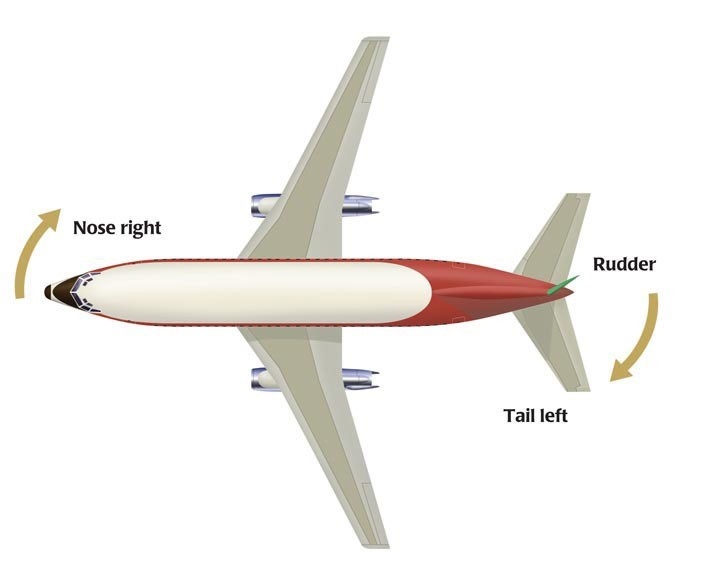
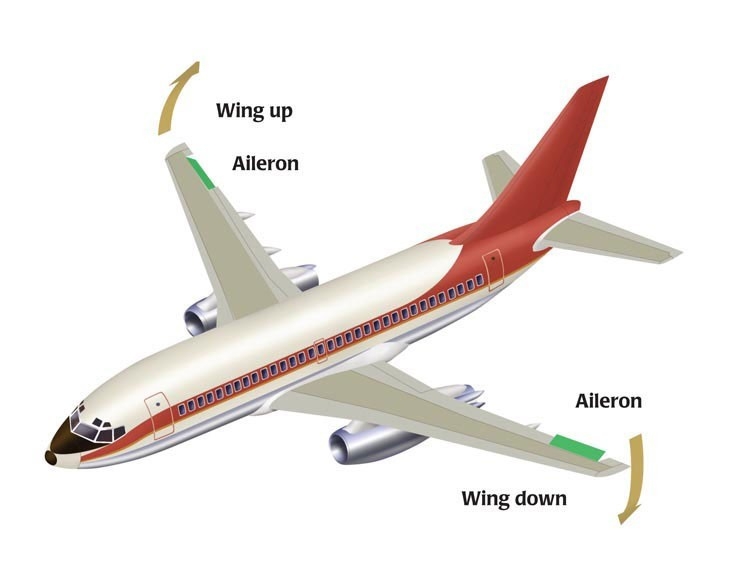
To turn the aeroplane to the right or left, the pilot makes it yaw. He or she uses pedals to swivel the rudder on the tail. This changes the airflow. To turn the aircraft smoothly, the pilot must roll the aircraft at the same time. Raising an aileron, a horizontal rudder, on one of the main wings causes it to dip, so the plane rolls to one side. The plane turns in the same way that a cyclist leans into a corner.
Consultant: Mike Goldsmith
Ready to find out more?
Here are some pages in other parts of Q-files you might like to explore:
Aircraft
How a plane flies
pics
Without in any way limiting Q-files Ltd’s exclusive rights under copyright, any use of this publication to “train” generative artificial intelligence (AI) technologies to generate text is expressly prohibited. Q-files Ltd reserves all rights to license use of this work for generative AI training and development of machine learning language models.