
Electronics

CITE
We have made every effort to follow citation style rules, but there may be some minor differences. If in doubt, please refer to the appropriate citation style manual.
Microchips. (2026). In Q-files Encyclopedia, Technology, Electronics. Retrieved from
https://www.q-files.com/technology/electronics/microchips
"Microchips." Technology, Electronics, Q-files Encyclopedia, 13 Mar. 2026.
https://www.q-files.com/technology/electronics/microchips.
Accessed 21 Sep. 2026.
Microchips 2026. Technology, Electronics. Retrieved 21 September 2026, from
https://www.q-files.com/technology/electronics/microchips
Technology, Electronics, s.v. "Microchips," accessed September 21, 2026.
https://www.q-files.com/technology/electronics/microchips


Microchips
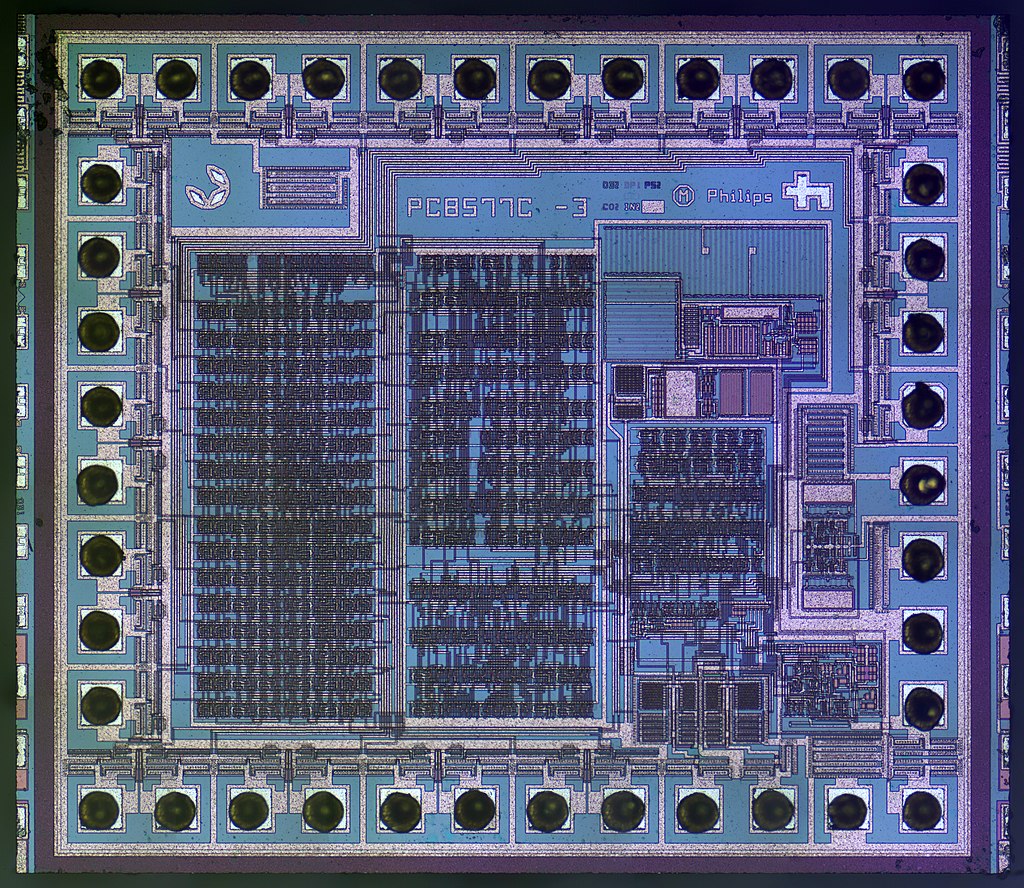
Until the 1970s, almost all electronic devices were built by soldering (connecting by molten metal) single electronic components on to a circuit board by their legs. Metal tracks on the board connected the components together. Circuits that required hundreds or thousands of components were enormous. Most modern circuits use microchips (integrated circuits) in which microscopically small components and the connections between them are built into a wafer (or "chip") of semiconductor material, which is normally silicon. The first integrated circuit was built in 1959 in the USA by Texas Instruments. Since then the number of components that can be fitted on to a chip has increased rapidly.
Different types
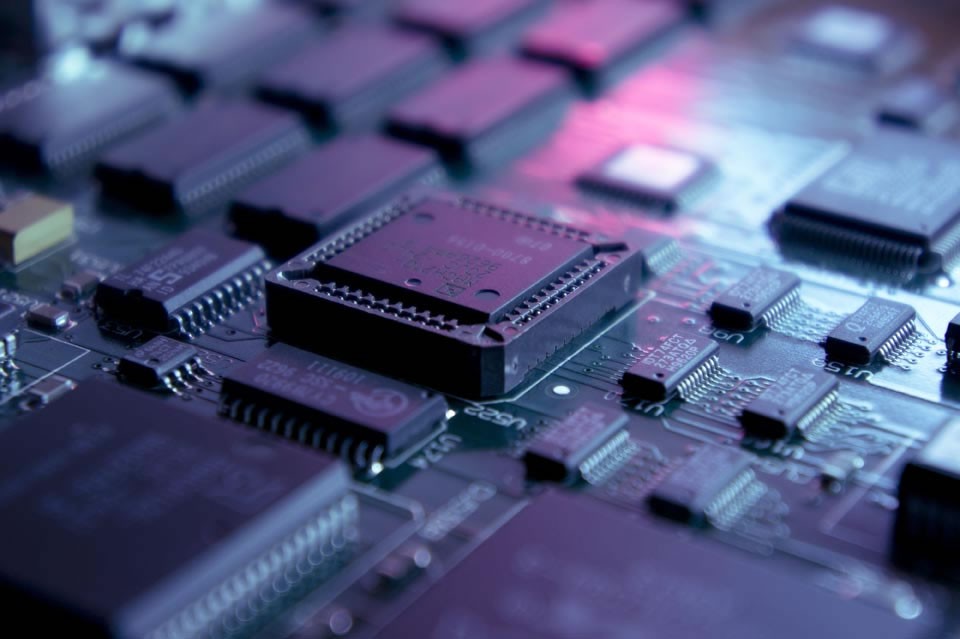
Microchips are needed to run just about any technology we use today, from fridges and toasters to smartphones and artificial intelligence. Some contain millions—or even billions—of components.
There are four main kinds of microchip: logic chips for processing data, such as visual displays; memory chips to store information; application-specific integrated chips (ASICs) to do simple jobs like barcode scanning; system-on-a-chip devices (SoCs), which are used to control complicated devices like smartphones.
Inside a chip
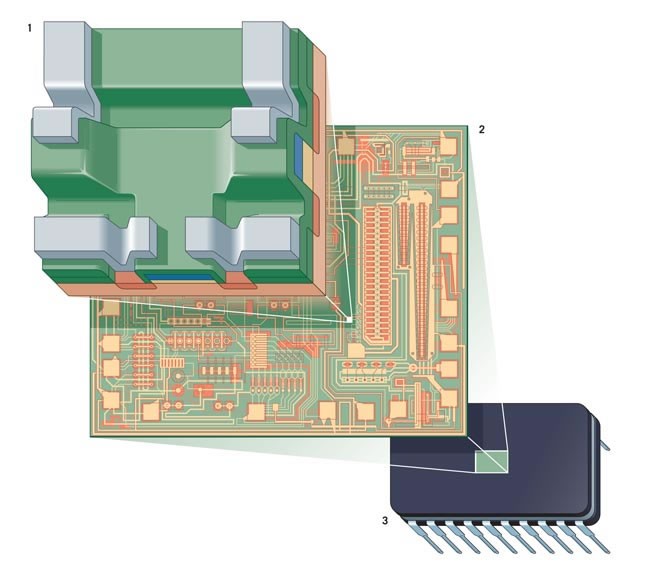
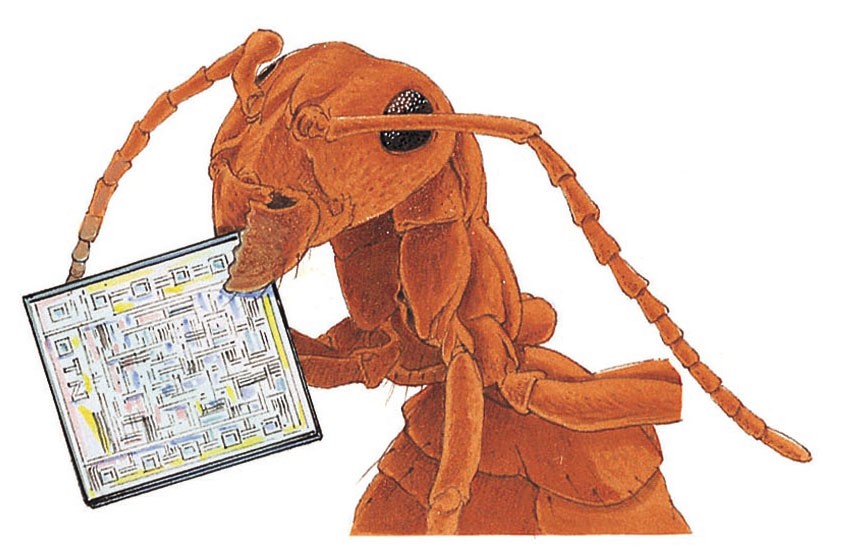
Transistors are on-off switches which hold the 1s and 0s of binary numbers in which code is written. An individual transistor (1) may measure just a few millionths of a millimetre across. It consists of aluminium connections overlying layers of silicon. The microchip itself (2), contains millions or billions of transistors and other components. It may be less than a millimetre wide. The microchip is treated with chemicals so that different parts of it act as transistors, resistors, capacitors or diodes.
The delicate microchip is encapsulated in a plastic case (3) to protect it. Connections are made via the legs (connecting pins). These are plugged into sockets or automatically soldered to a circuit board. The CPU of a PC has a single large integrated circuit, called a microprocessor (or processor).
Making a chip

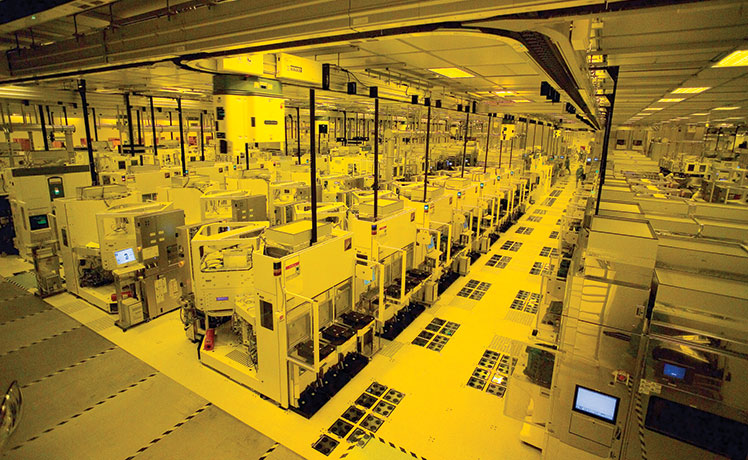
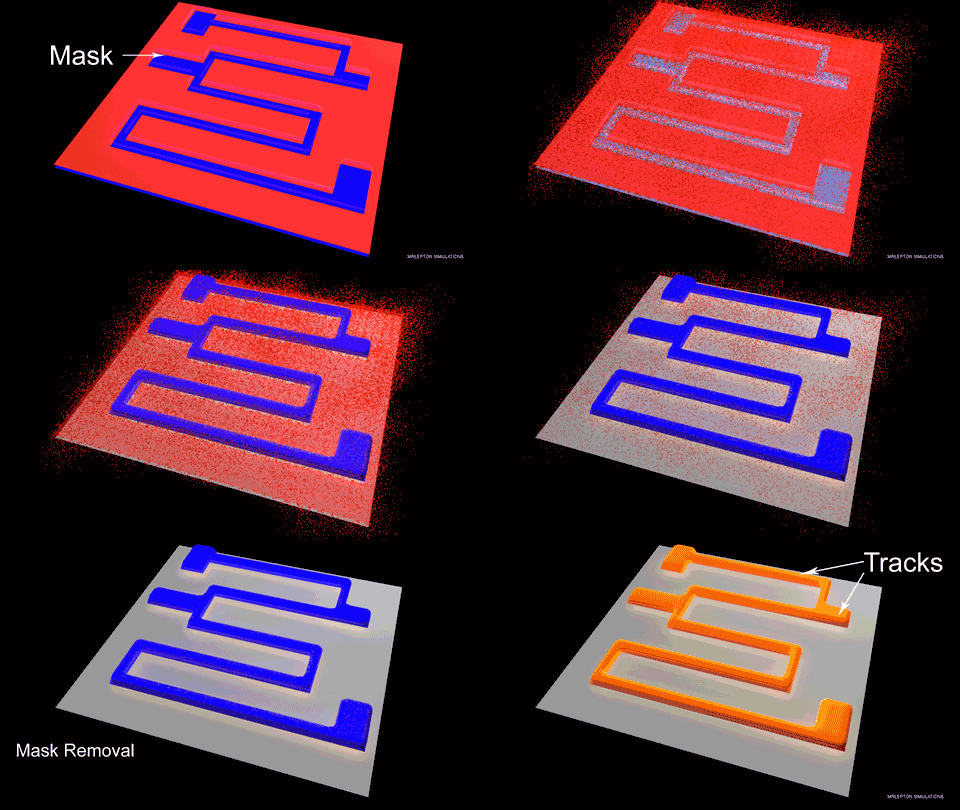
A microchip starts life as a thin wafer of semiconductor material. The components are built into it by adding and removing layers of semiconductor material, conductors and insulators, using complex chemical and photographic processes. Microchips are manufactured at chip fabrication plants, often known simply as fabs.
Chip manufacture is carried out inside "cleanrooms", spaces carefully engineered to have very low concentrations of airborne particles such as dust or micro-organisms. Production of advanced chips is completely automated.
Advanced chips
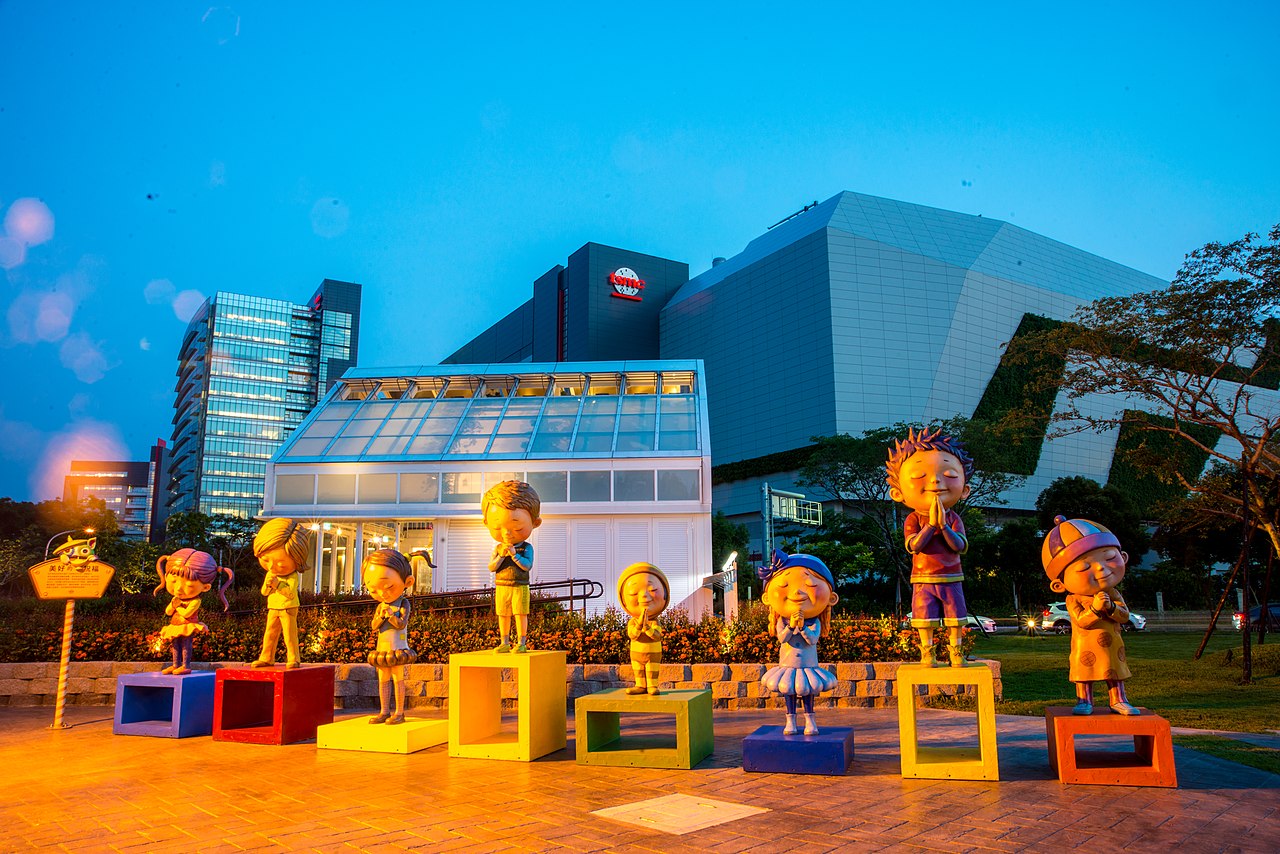
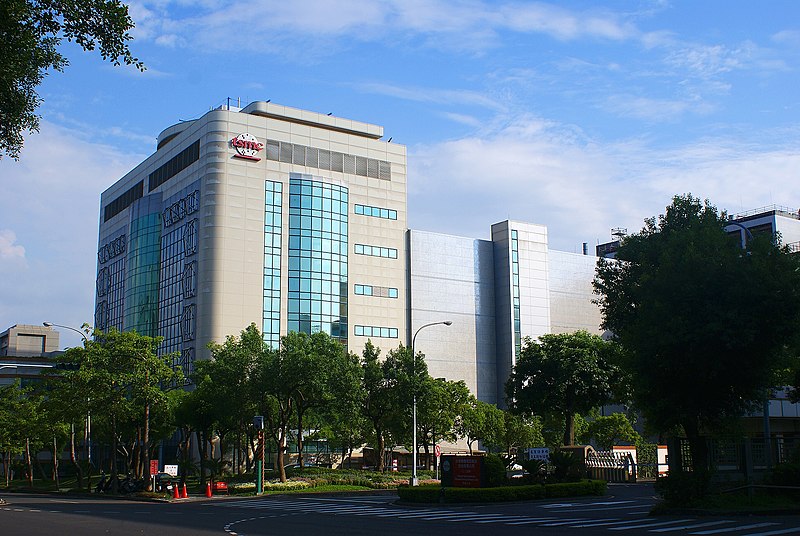
Advanced, or "leading edge", microchips contain billions of tiny circuits carved on a piece of silicon no larger than a fingernail. Fabs that produce them use highly sophisticated, multiple-step processes. They are run by only a small number of companies, including Intel (US), Samsung (South Korea) and the Taiwan Semiconductor Manufacturing Company (TSMC). Around 90% of the most advanced chips are made in Taiwan.
Consultant: Chris Oxlade
pics

Without in any way limiting Q-files Ltd’s exclusive rights under copyright, any use of this publication to “train” generative artificial intelligence (AI) technologies to generate text is expressly prohibited. Q-files Ltd reserves all rights to license use of this work for generative AI training and development of machine learning language models.