
Erosion
Grand Canyon
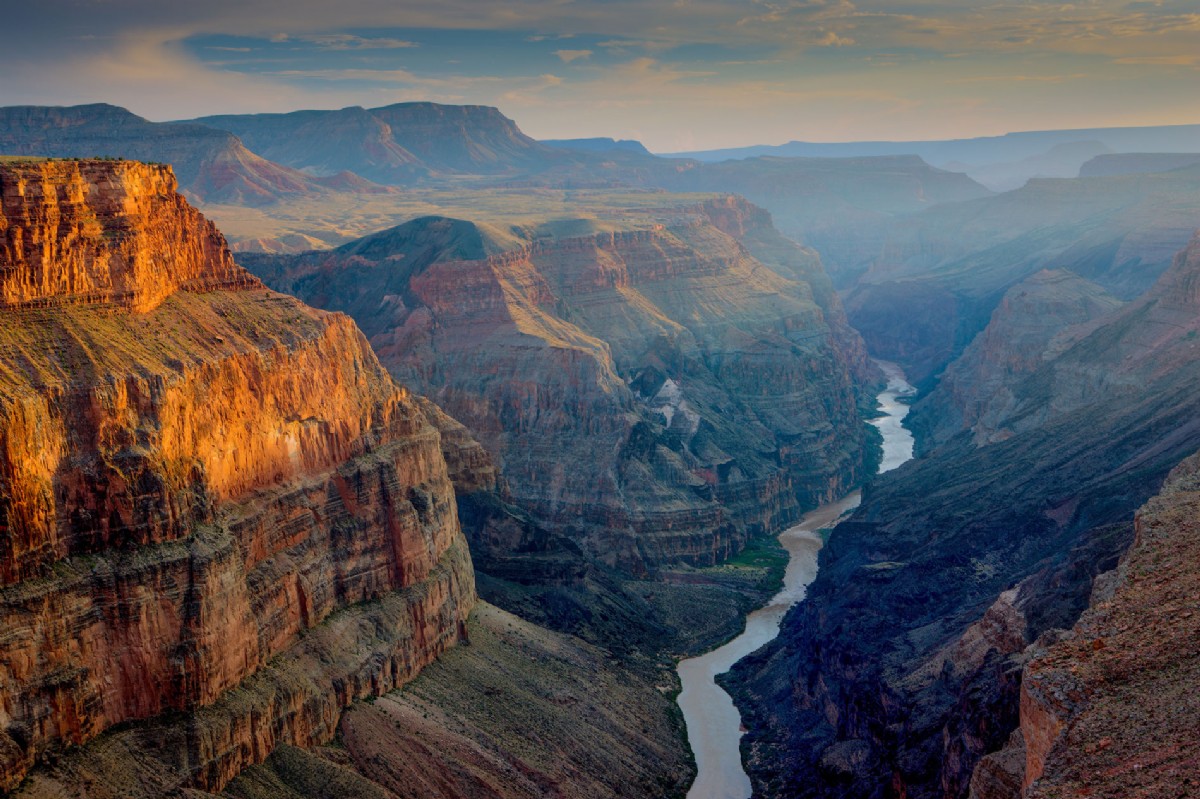
The Grand Canyon is a great gorge that twists across the dry, rocky region of Arizona, USA for nearly 450 kilometres (280 miles). It is one of the world’s most spectacular examples of river erosion. The Colorado River cut a deeper and deeper channel as the land over which it flowed slowly began to push upwards. The soft rock layers wore away more easily than the hard layers, which today stand out as near-vertical cliff faces.
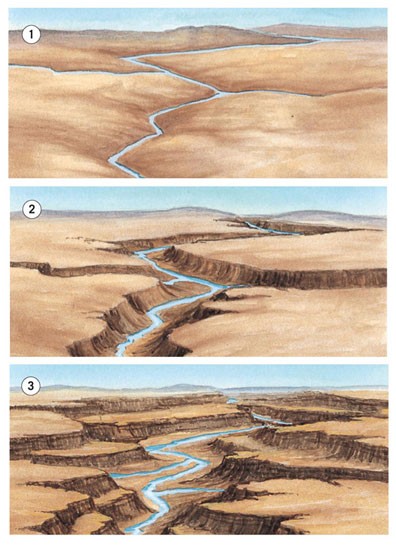
Stages of formation
The Colorado River once flowed gently across the desert (1). Then, between 10 and 12 million years ago, the land beneath it began to rise (2). It did so only by about a quarter of a millimetre per year, but the river kept pace with it, cutting a deeper channel to preserve its downward course to the sea. It carved through different layers of rock, some hard, some soft (3). The soft rock wore away more easily than the hard, which today stands out as vertical cliff faces.
Colorado River
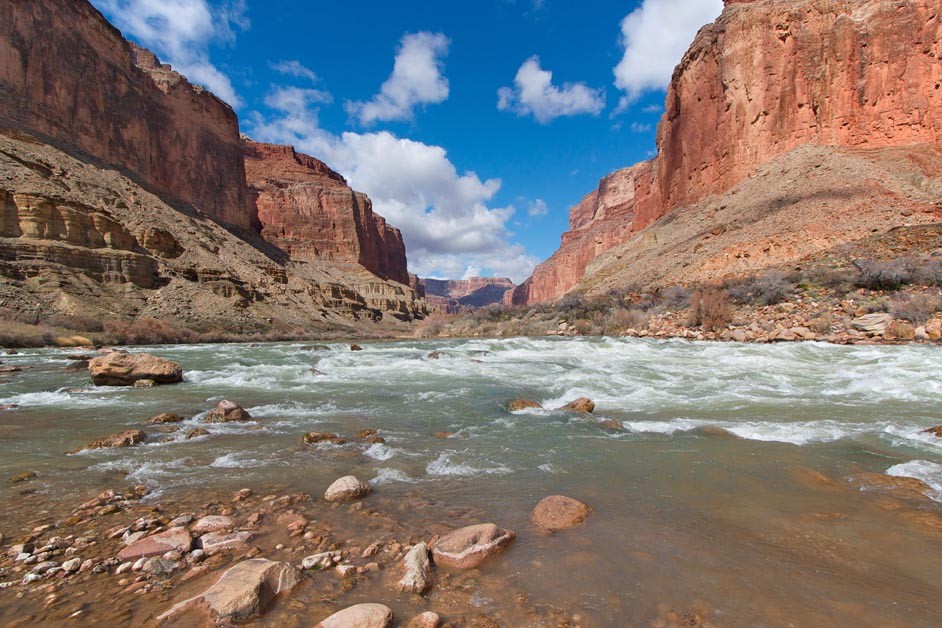
The Grand Canyon formed over the past six million years as earth movements pushed up the land by more than 1200 metres (4000 feet). The fast-flowing Colorado River has steadily cut into the land to maintain its downward flow to the sea. The result is a steep-sided canyon, on average 16 kilometres (10 miles) wide and 1600 metres (1 mile) deep in places. The region’s desert climate means the softer, upper rock layers have not been washed away.
The Colorado River is especially powerful in spring when melting snows in the distant Rockies send floodwaters hurtling down the canyon. They sweep along boulders that chip away at the river’s bed and banks, gradually widening the channel. On a normal day, the river carries off about half a million tonnes of sediment (mud and gravel pulled along by the current).
History in the rocks
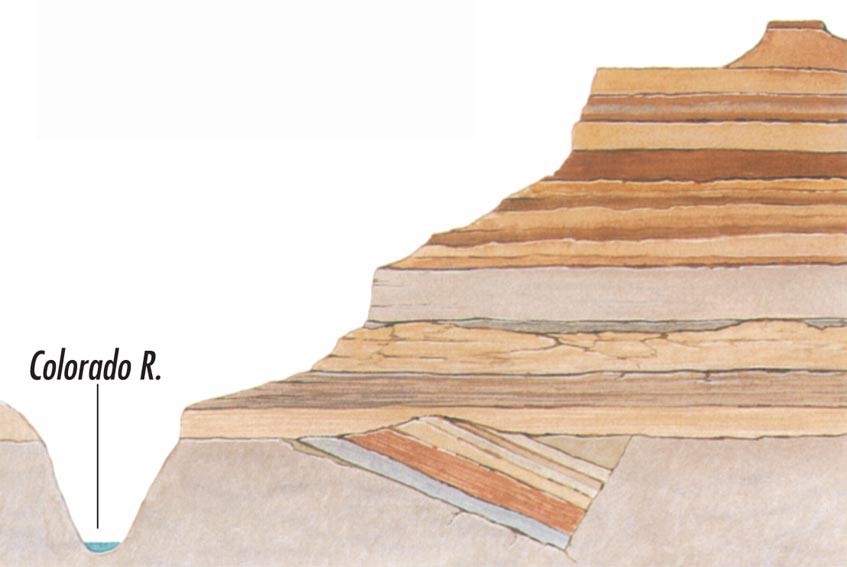
As the river cuts deeper, it reveals ancient layers of rock and the fossils they contain, almost like chapters in the Earth’s prehistory. The lowest layers of rocks are 1700 million years old. They were themselves once mountains towering thousands of metres above sea level.
As near a complete display of the Earth’s history as you are ever likely to see is revealed on the slopes of the Grand Canyon. As the land lay under the sea for hundreds of millions of years, coatings of sediment have been laid down, one on top of the other like blankets on a bed. Each layer turned to stone, the different types reflecting the climates and life-forms of their age.
Consultant: Ian Fairchild