
EASY READ World geography

CITE
We have made every effort to follow citation style rules, but there may be some minor differences. If in doubt, please refer to the appropriate citation style manual.
EASY READ A journey round the world: Africa. (2026). In Q-files Encyclopedia, Geography, EASY READ World geography. Retrieved from
https://www.q-files.com/geography/easy-read-world-geography/easy-read-a-journey-round-the-world-africa
"EASY READ A journey round the world: Africa." Geography, EASY READ World geography, Q-files Encyclopedia, 1 Apr. 2026.
https://www.q-files.com/geography/easy-read-world-geography/easy-read-a-journey-round-the-world-africa.
Accessed 30 Oct. 2026.
EASY READ A journey round the world: Africa 2026. Geography, EASY READ World geography. Retrieved 30 October 2026, from
https://www.q-files.com/geography/easy-read-world-geography/easy-read-a-journey-round-the-world-africa
Geography, EASY READ World geography, s.v. "EASY READ A journey round the world: Africa," accessed October 30, 2026.
https://www.q-files.com/geography/easy-read-world-geography/easy-read-a-journey-round-the-world-africa


A journey round the world: Africa
Africa is the second largest continent after Asia. The hot, barren Sahara Desert covers most of north Africa. Mediterranean coastal lands are cooler and wetter. South of the Sahara, there is a wide strip of dry grassland called the Sahel. The lands of central Africa are covered by tropical rainforest. Here the climate is hot and wet. Savanna, dry grassland dotted with trees, covers much of eastern Africa. A plateau rises in southern Africa. It is bordered by mountains in the southeast and desert in the southwest.


Developing nations
Africa is rich in natural resources, including metals, diamonds and oil. Crops such as coffee and cocoa are also widely grown in Africa. But there are few manufacturing industries. Many people still live in the countryside. They produce only enough crops, or raise enough cattle, to support their families. Most African countries are far less developed compared to the rest of the world.
Peoples of Africa
Thousands of different peoples live in Africa, each having their own language and culture. Many countries are made up of different peoples. Islam is the religion of the north, while traditional beliefs and Christianity are followed in the rest of Africa. In North Africa, major groups are the Arabs, Berbers and Egyptians. Bantu peoples form the majority in central and southern Africa. Arab settlers arrived in the 7th century, bringing both their language, Arabic, and religion, Islam, to North Africa.
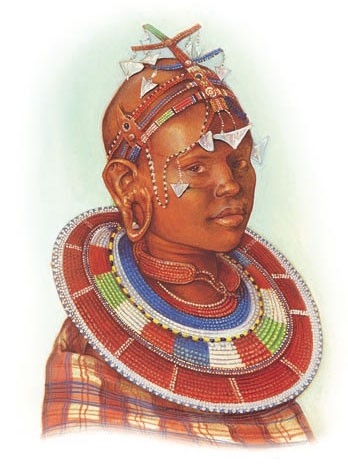
North Africa

The northern half of Africa stretches from the Mediterranean coast, through vast areas of desert and dry grassland, as far as the forests of west and central Africa. The Atlas Mountains are home to the Berber people, who dominated the region before the Arabs came. The mountains separate the lush farmlands of Morocco, Algeria and Tunisia to the north from the Sahara Desert to the south. Algeria and Libya have plentiful resources of oil and gas.

River Nile
The Nile is made up of two branches: the Blue Nile rises in the Ethiopian Highlands, the White Nile in the mountains of East Africa. The White Nile winds its way north from Lake Victoria across swampy grasslands before meeting the Blue Nile in Sudan. The Nile then lays a fertile strip through the Sahara Desert in Egypt. It flows into the Mediterranean Sea. At 6670 kilometres (4140 miles) long, it is the longest river in Africa—and the world.
One of the world's greatest civilizations, ancient Egypt, grew up on the banks of the River Nile. Today, most of modern Egypt's people are Arab, and the capital, Cairo, is the largest city in Africa. The Nile Valley is still intensely cultivated, with the main crops cotton, rice, sugar and dates.

Sahara Desert
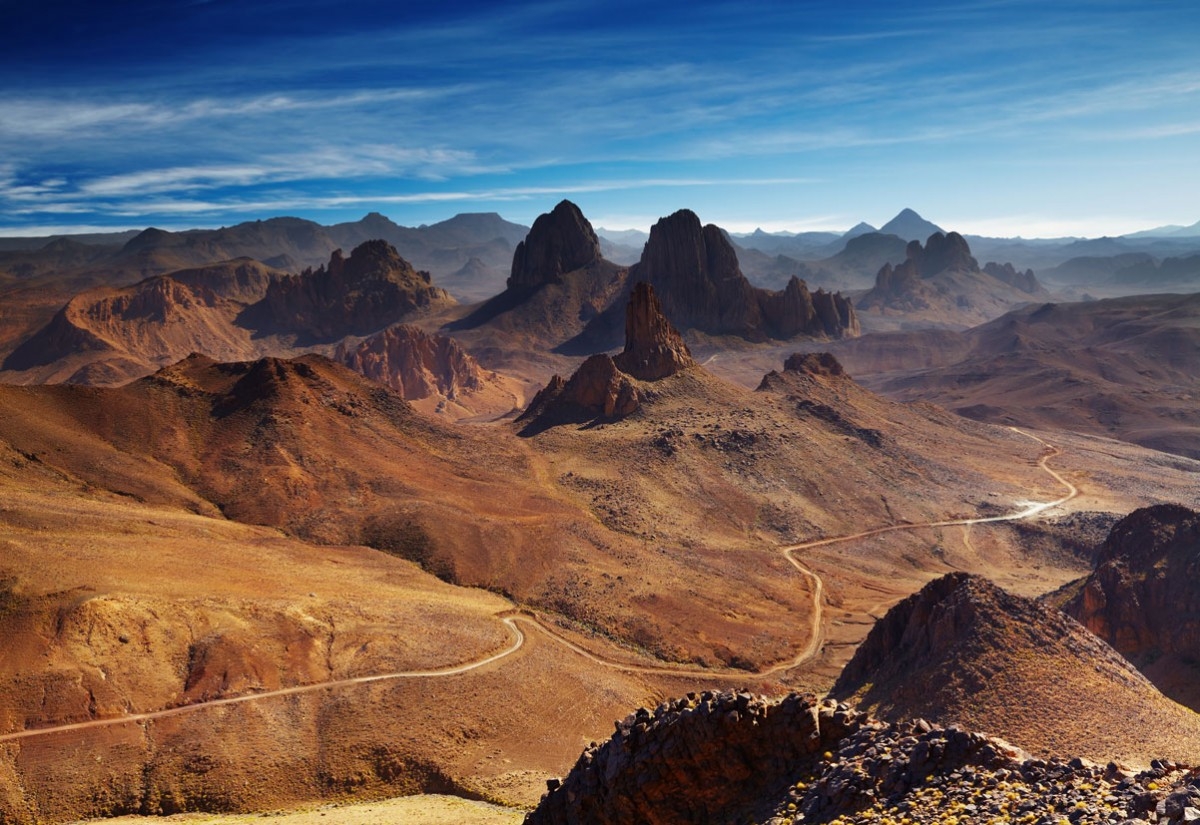

The Sahara is the world’s largest desert. It is almost the size as the whole of the USA. It is getting larger as the dry grassland on its southern edges turns to dust. There are areas of sand that often drift into large dunes, but most of the Sahara is made up of rock and gravel. Few people live in the desert. Some small towns have grown up around oases, places where water seeps up from beneath the ground. The Tuareg people travel across the desert to trade in markets.

West Africa
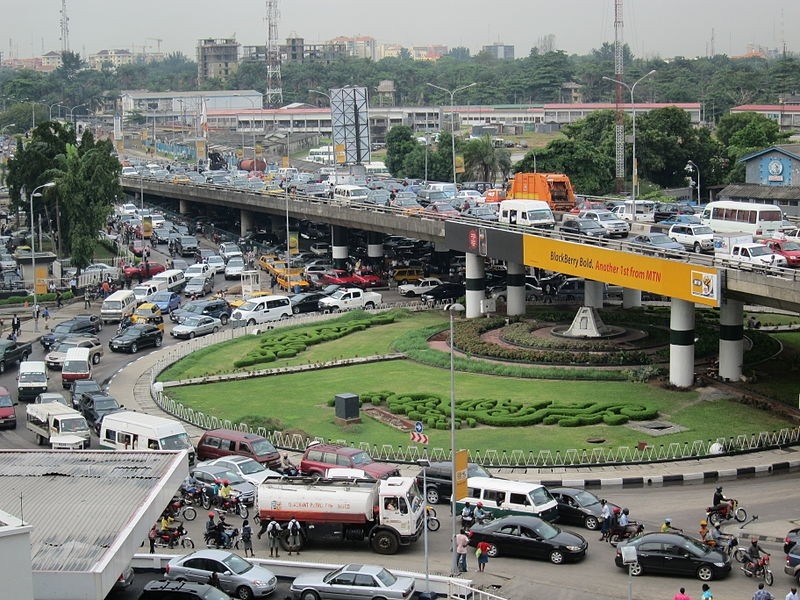
Inland from the coast of West Africa, much of the rainforest has been cut down to make room for plantations of cocoa, coffee, bananas and others. Oil-rich Nigeria has the highest population of any country in Africa.

Horn of Africa
The countries of Somalia, Djibouti, Ethiopia and Eritrea make up what is known as the Horn of Africa. It is so called because its shape is similar to a rhino's horn. Ethiopia, a mountainous land, is Africa's second most populous country. Its chief exports are coffee, oil seeds and gold.
Central and southern Africa

Much of Central Africa is taken up by the tropical rainforest of the Congo Basin, through which the River Congo winds. To the south and east is a high plateau—high ground, but quite flat, like a table. This dry region is covered mostly in grassland with bushes or trees, called savanna. It is home to grazing animals such as giraffes, zebras and elephants. To the southwest, the climate is drier and the savanna merges into the Kalahari Desert.
East Africa
In East Africa, there are high volcanic mountains and huge lakes. Large national parks have been set up to protect the wildlife, and tourism is an important industry. In the eastern highlands, crops of tea and coffee are grown for export.


Southern Africa
Southern Africa is rich in natural resources such as oil, metals—including copper, gold and uranium—and diamonds. Mining is an important industry, especially in Democratic Republic of Congo, Zambia, Botswana, Namibia and South Africa.
South Africa

At the southern tip of the continent lies South Africa. The western part of the country, known as the Karoo, merges into desert. The eastern half, the high Veld, is wetter and has rich farmland. Near the Cape of Good Hope, fruit and grapes are grown. South Africa, an exporter of gold, diamonds and manufactured goods, has the richest economy in Africa. The peoples of South Africa include black Africans (about 80%), Europeans and Asians. It is known as the Rainbow Nation.

Consultant: Nicholas Harris
Ready to find out more?
Here are some pages in other parts of Q-files you might like to explore:
Africa
African countries
African nations: flags and statistics
Geography of Africa A-Z
pics

Without in any way limiting Q-files Ltd’s exclusive rights under copyright, any use of this publication to “train” generative artificial intelligence (AI) technologies to generate text is expressly prohibited. Q-files Ltd reserves all rights to license use of this work for generative AI training and development of machine learning language models.