
EASY READ World geography

CITE
We have made every effort to follow citation style rules, but there may be some minor differences. If in doubt, please refer to the appropriate citation style manual.
EASY READ A journey round the world: South America. (2026). In Q-files Encyclopedia, Geography, EASY READ World geography. Retrieved from
https://www.q-files.com/geography/easy-read-world-geography/easy-read-a-journey-round-the-world-south-america
"EASY READ A journey round the world: South America." Geography, EASY READ World geography, Q-files Encyclopedia, 1 Apr. 2026.
https://www.q-files.com/geography/easy-read-world-geography/easy-read-a-journey-round-the-world-south-america.
Accessed 13 Sep. 2026.
EASY READ A journey round the world: South America 2026. Geography, EASY READ World geography. Retrieved 13 September 2026, from
https://www.q-files.com/geography/easy-read-world-geography/easy-read-a-journey-round-the-world-south-america
Geography, EASY READ World geography, s.v. "EASY READ A journey round the world: South America," accessed September 13, 2026.
https://www.q-files.com/geography/easy-read-world-geography/easy-read-a-journey-round-the-world-south-america


A journey round the world: South America
South America stretches from the tropical coast of the Caribbean to the icy Southern Ocean. The Andes, the Earth’s longest mountain range, runs down the western side of the continent. Between the Andes and the Pacific Ocean is the Atacama Desert, the driest place on Earth. The vast rainforest of the Amazon Basin dominates the northern part of the continent. Rising in the east are the Brazilian Highlands. Further south, in Argentina and Uruguay, there are large areas of grassland, known as pampas. In the far south, these give way to the dry, bleak scrublands of Patagonia.


People
The people of South America are descended from Native American peoples (Amerindians), Spanish and Portuguese settlers from the 16th century onwards, African slaves brought over by Europeans, and later immigrants from other parts of the world. The numbers of native peoples in South America fell rapidly after the arrival of the Europeans in the 16th century, mostly because of the diseases they brought with them.
Amerindians still make up a large proportion of the populations of Bolivia, Peru and Ecuador. Mestizos (mixed Spanish and Native American) are the largest group in Paraguay, Venezuela and Colombia. People of African ancestry form large parts of the populations of Brazil, Colombia, Venezuela and the Guianas. Most people in Argentina, Chile and Uruguay, and about half the population of Brazil, have European ancestors. In the Amazon rainforest there are still some native tribes who carry on their traditional lives.

Amazon rainforest


The River Amazon rises in the Andes Mountains. It then winds its way eastwards through Peru and Brazil before reaching the Atlantic Ocean. This vast river carries a fifth of all the world’s fresh water into the Atlantic. The Amazon Basin contains the largest area of rainforest in the world. Many kinds of plants and animals live there.
The Amazon and other rivers provide transport routes and source of food for the native peoples. Some of them still follow a traditional way of life, hunting, fishing and growing crops. Many also take advantage of modern technology, such as engines for their boats.
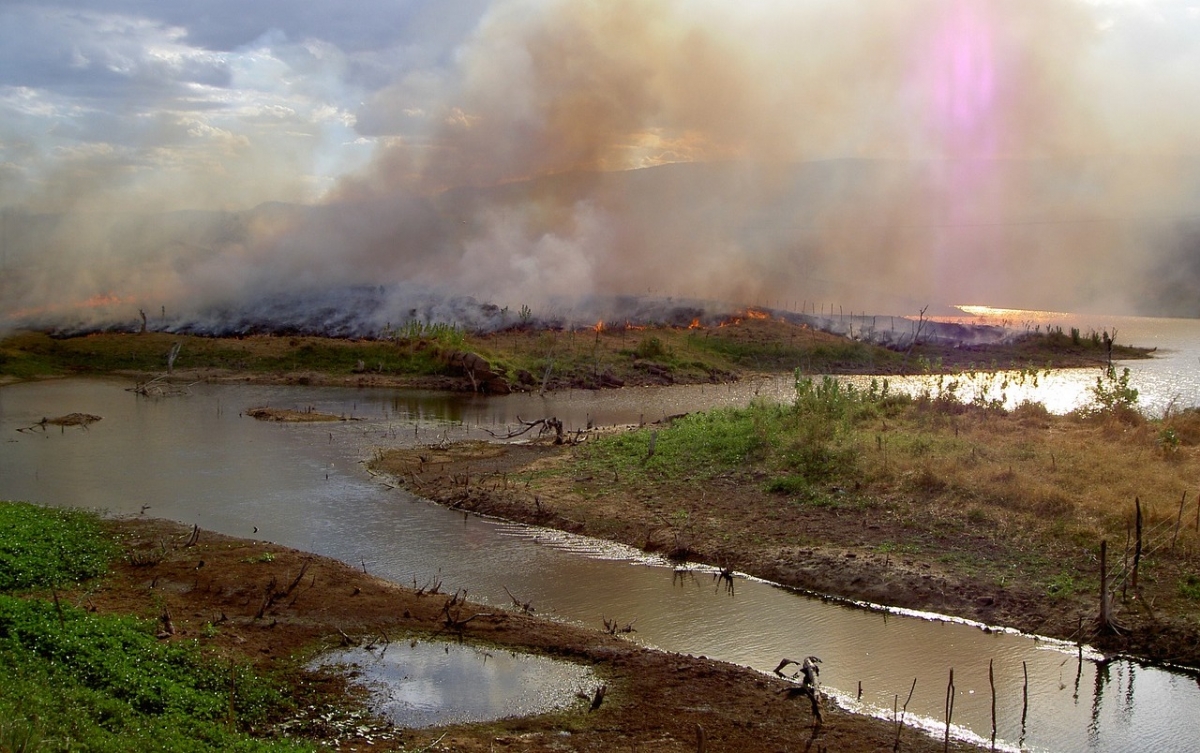
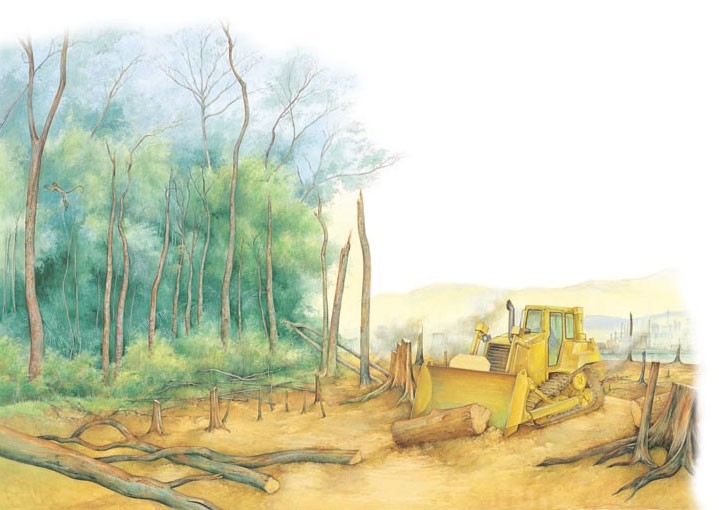
Today, large areas of the rainforest are being cut down. This is because of logging for the timber industry, roadbuilding, and clearing space for cattle farming or crop cultivation. The destruction of the rainforest mean many animals are losing their natural habitat. Some are dying out because of this. The loss of so many trees also contributes to global warming, because trees take in carbon dioxide, a greenhouse gas.
Andean countries
In the north, three branches of the Andes mountains, or cordilleras, meet in Colombia. Most of the country's population lives in the cooler climates of the high Andes valleys. Cotton, sugar cane and bananas are grown in the warm lowlands, while coffee, cereals and potatoes are cultivated in higher, cooler regions.


From Colombia, the Andes run down through Ecuador and Peru. To the east of the mountains lies the western reaches of the vast Amazon rainforest. To the west lies a dry coastal plain. Farther south this plain turns to desert, the Atacama, where it almost never rains.

In Peru and Bolivia, the Amerindians speak Quechua, the language of the Incas. Some still farm the steep hillsides of the Andes, cultivating terraced fields and grazing their llamas and alpacas on the high plains as they have done for hundreds of years.
South of Bolivia, the Andes form the boundary between Chile from Argentina. Chile is a narrow country 25 times longer than it is wide. Most of the population lives on the warm and fertile central plain south of the Atacama Desert. Here cereals, fruits and vines are grown.

Brazil
The north of Brazil is taken up by the Amazon rainforest and the Brazilian highlands. Most of Brazil’s farmland lies in the south and east of the country. Coffee, cocoa, soya beans, fruit and beef cattle are the country's main farm products. Brazil is also a fast-growing industrial country. Other exports include oil, gas, aircraft, electrical equipment, cars, ethanol, textiles and steel.


The Brazilians are a mixed population, descended from the first Portuguese settlers, black African slaves forced to work on the sugar plantations and later immigrants from Europe and Asia. Most Brazilians live in the cities of the southeast. Rio de Janeiro grew up around the shores of a natural harbour overlooked by Sugar Loaf mountain and became an important port. Many thousands of Rio's poor residents live in shabby slums on the edge of the city. Their shantytowns are known as favelas.
Argentina
In the north of Argentina there is a large area of scrubland known as the Gran Chaco, which extends into neighbouring Paraguay. Millions of cattle and sheep graze on vast ranches on Argentina's pampas grasslands further south. Soya beans, wheat and maize are also grown on the pampas. The fertile plains turn into the dry and dusty Patagonian desert in the south. The island of Tierra del Fuego (the “land of fire", named after the Indian camp fires sighted by the Portuguese explorer Magellan) lies at South America’s southern tip.


Most of Argentina's people are descended from Europeans—mainly from Spain, Italy and Germany—most of whom migrated there in the late 19th century and early 20th century. Around a third of its population lives in or around its huge capital, Buenos Aires. Argentina is today an industrial nation, although beef exports are important. Argentina is also the world's fifth-largest wine producer.
Consultant: Nicholas Harris
Ready to find out more?
Here are some pages in other parts of Q-files you might like to explore:
South America
South American countries
Amazon rainforest
South American nations: flags and statistics
Geography of South America A-Z
pics

Without in any way limiting Q-files Ltd’s exclusive rights under copyright, any use of this publication to “train” generative artificial intelligence (AI) technologies to generate text is expressly prohibited. Q-files Ltd reserves all rights to license use of this work for generative AI training and development of machine learning language models.