
Ancient Middle East

CITE
We have made every effort to follow citation style rules, but there may be some minor differences. If in doubt, please refer to the appropriate citation style manual.
Sumer. (2026). In Q-files Encyclopedia, History, Ancient Middle East. Retrieved from
https://www.q-files.com/history/ancient-middle-east/sumer
"Sumer." History, Ancient Middle East, Q-files Encyclopedia, 26 Mar. 2026.
https://www.q-files.com/history/ancient-middle-east/sumer.
Accessed 22 Sep. 2026.
Sumer 2026. History, Ancient Middle East. Retrieved 22 September 2026, from
https://www.q-files.com/history/ancient-middle-east/sumer
History, Ancient Middle East, s.v. "Sumer," accessed September 22, 2026.
https://www.q-files.com/history/ancient-middle-east/sumer


Sumer
Sumer was an ancient civilization founded in southern Mesopotamia, a region of the Fertile Crescent located between the Tigris and Euphrates rivers. Most of this area now falls in present-day Iraq. Beginning perhaps as long ago as 5500 BC, Sumer is one of the world's first civilizations. The Sumerians are famous for their invention of writing and for the cities they founded: Eridu, Uruk and Ur were just some of the most important urban centres of the period. The Sumerians' control of the region lasted until around 2000 BC with defeat by the Elamites. Hammurabi of Babylonia seized control in around 1800 BC.
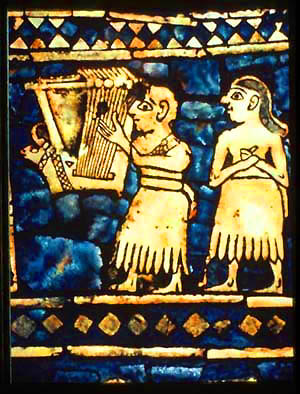

Ubaid period
Around 7500 years ago (5500 BC), a people known as the Ubaid—who may have spoken the Sumerian language—settled in Mesopotamia. They farmed the rich floodplain soil and used the plentiful water from the two rivers, Euphrates and Tigris, to irrigate their crops and create lush pasture for their livestock. By around 3500 BC, they had invented the plough, a heavy wooden spike pulled through the fields by oxen. This both churned up the soil— loosening it and preparing it for planting—and created furrows, channels in the soil which were then ready to plant with seeds.
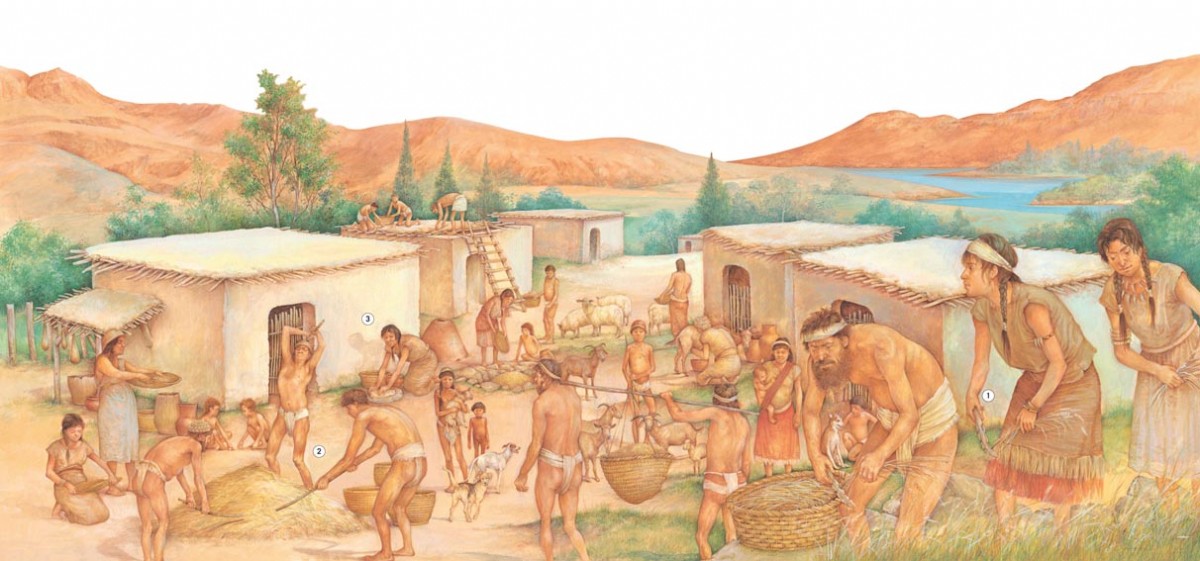
Farming communities sprang up, their mudbrick houses clustered together in villages. The inhabitants became so good at farming that they were able to produce extra produce, enabling them to support craftworkers, merchants, community leaders and priests. As a result, some villages grew into towns and eventually cities, built around palaces and temples.
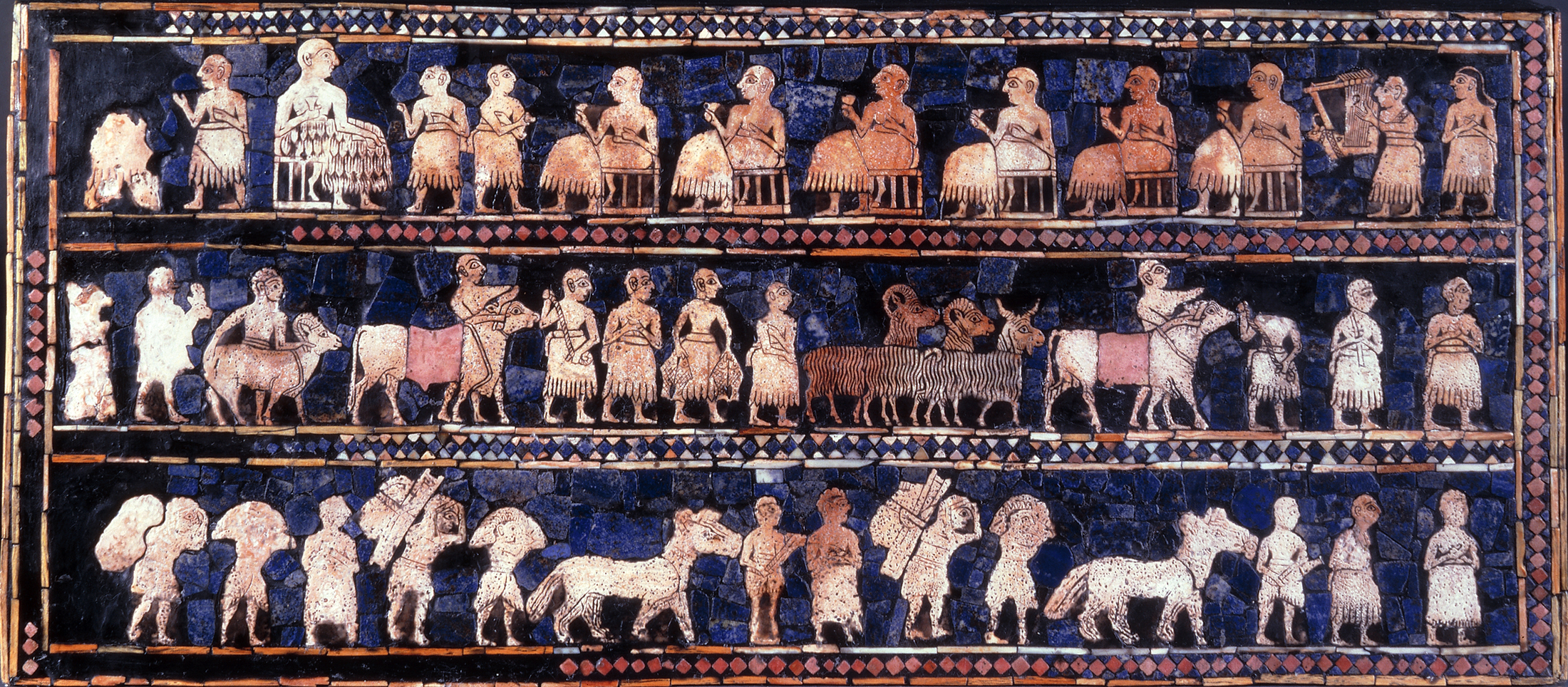
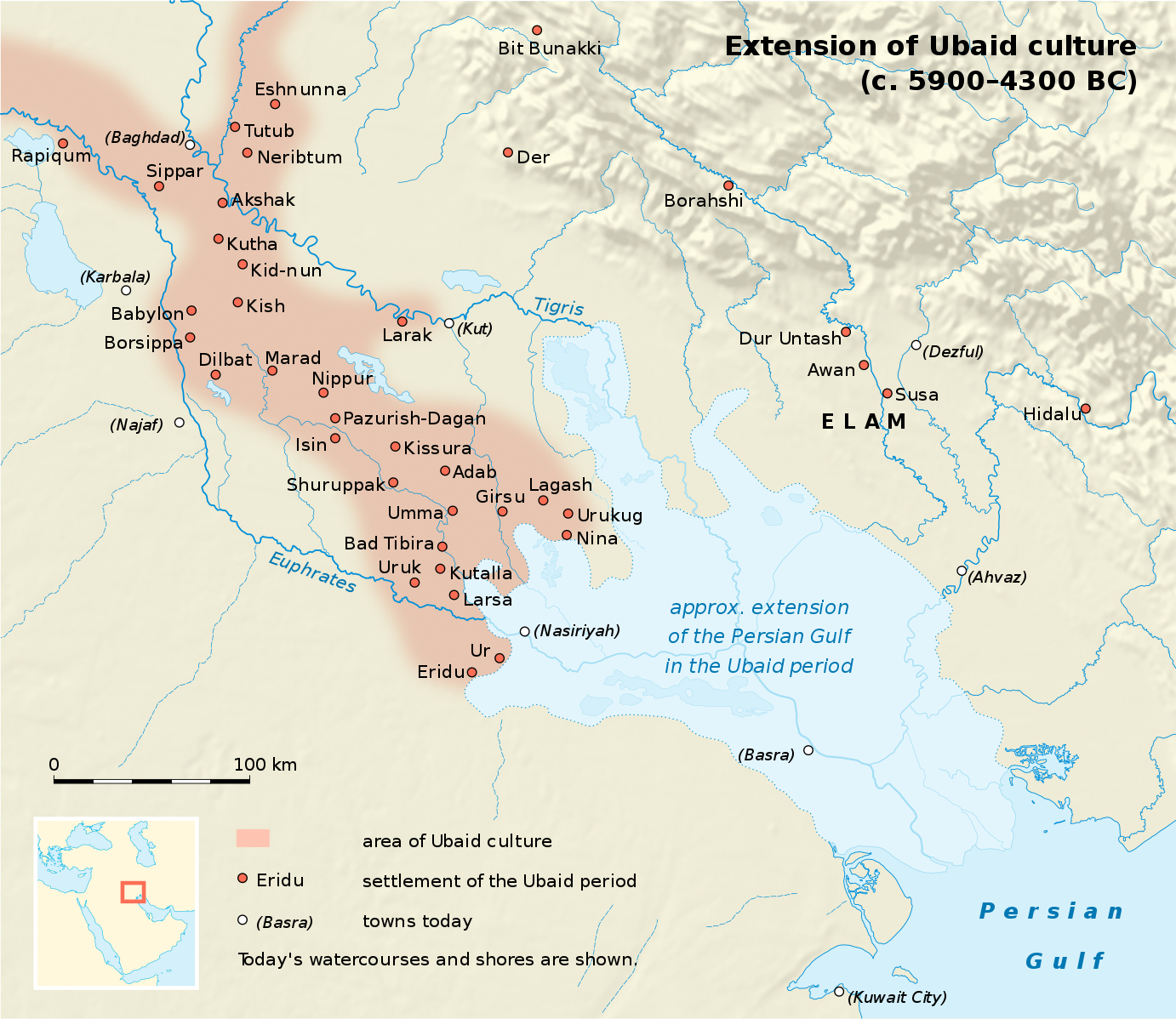
Sumerian cities
One of the oldest Sumerian cities was Eridu, which in those days lay on the coast of the Persian Gulf (because of the silting up of the shoreline, it now lies well inland), founded possibly in around 5400 BC. In its early days, the settlement was home to a mix of Ubaid peasant farmers, nomadic herders and fisher folk. By around 2900 BC, Eridu had grown into a substantial city of mudbrick and reed houses clustered around a bustling port.
Over the period 4000–3200 BC, the Sumerian civilization emerged, with dozens of cities growing up across the land. Each major city was capital of a city-state each with its own ruler. These included Eridu, Nippur, Lagash, Kish, Ur and Uruk. At its height in around 2800 BC, Uruk was probably the largest city in the world, with a resident population of as many as 80,000 people.
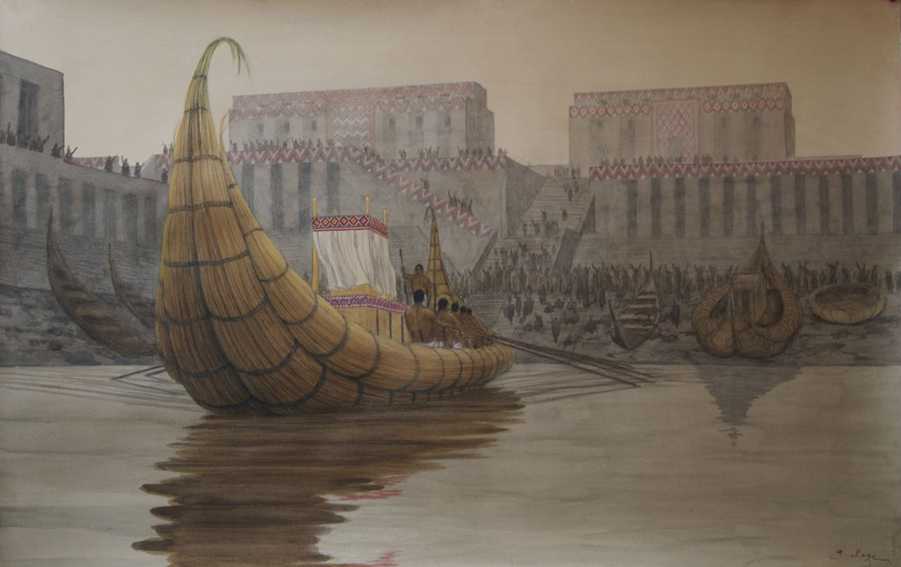
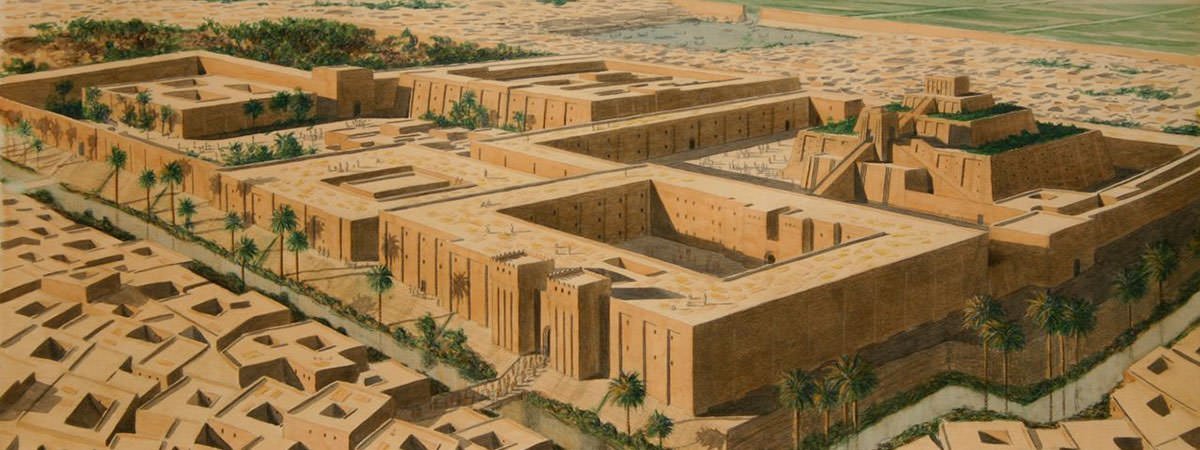
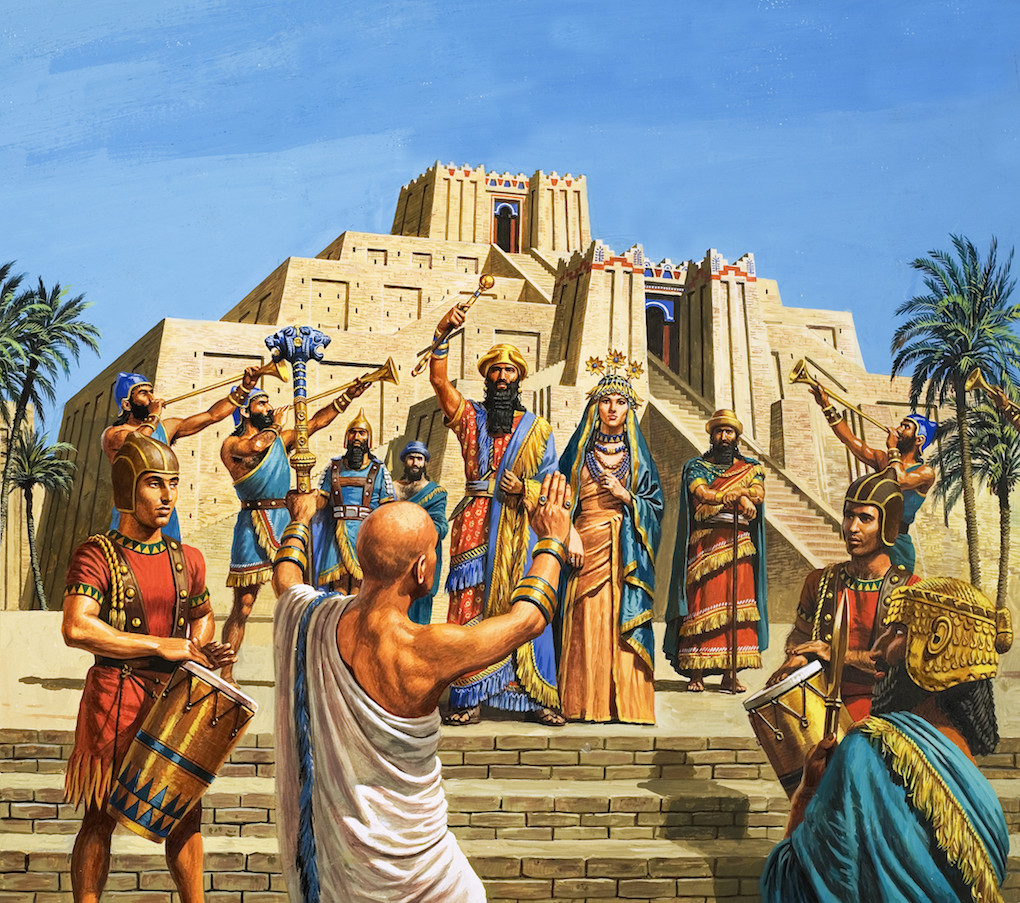
Every large Sumerian city was centred on a step-sided temple known as a ziggurat (see below) dedicated to a patron god or goddess of the city. Surrounding it were closely-packed mud brick or reed houses clustered around central courtyards. The city was ringed by high walls to protect it from attack by other city-states.
Invention of writing
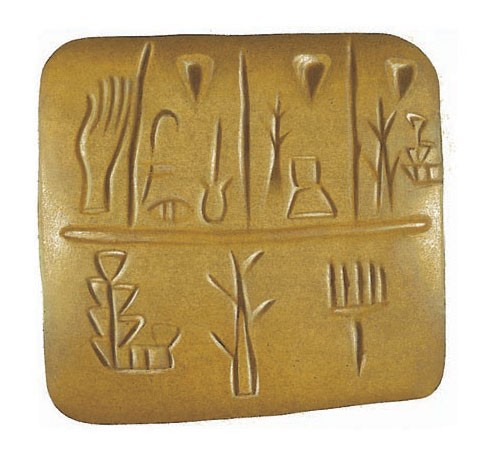
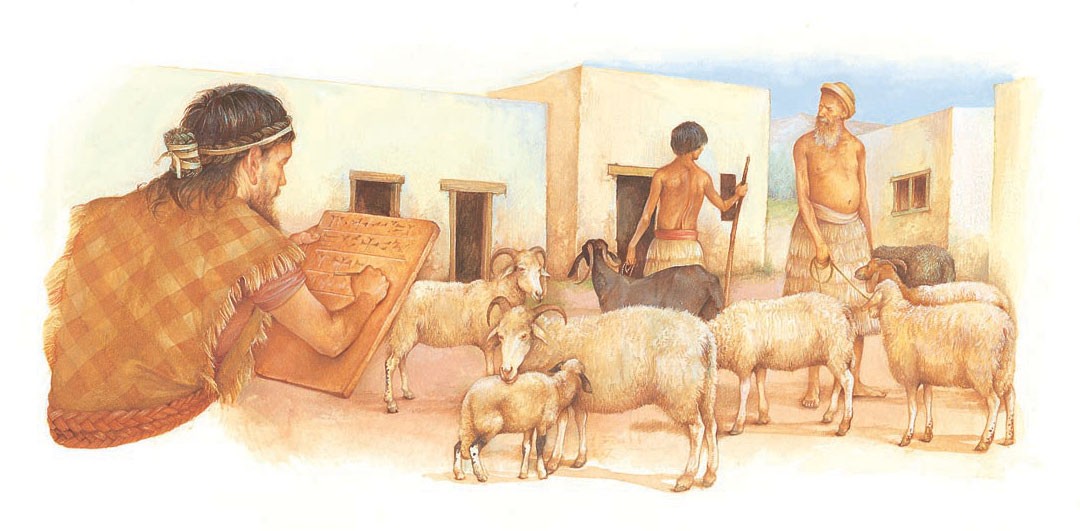
Writing was invented by the ancient Sumerians in Mesopotamia in about 3300 BC. The earliest writing was a series of marks scratched on to stone tablets, first discovered by archaeologists in the city of Uruk. Later, scribes began to write on clay tablets using a reed pen called a stylus. The earliest writing was in picture form. This was very slow, because there was a different picture for every word and scribes had to learn more than 2000 symbols, or pictograms.
The Sumerians gradually simplified their system of writing. The pictures became simpler and more abstract. Curves disappeared. The symbols were drawn with straight lines, which were easier to write. This was later called “cuneiform” writing, from the Greek word for “wedge-shaped”. This started to appear in about 2900 BC. The wedge-shaped tip of the reed stylus was used to make different symbols in soft clay. But even this system used about 600 symbols.
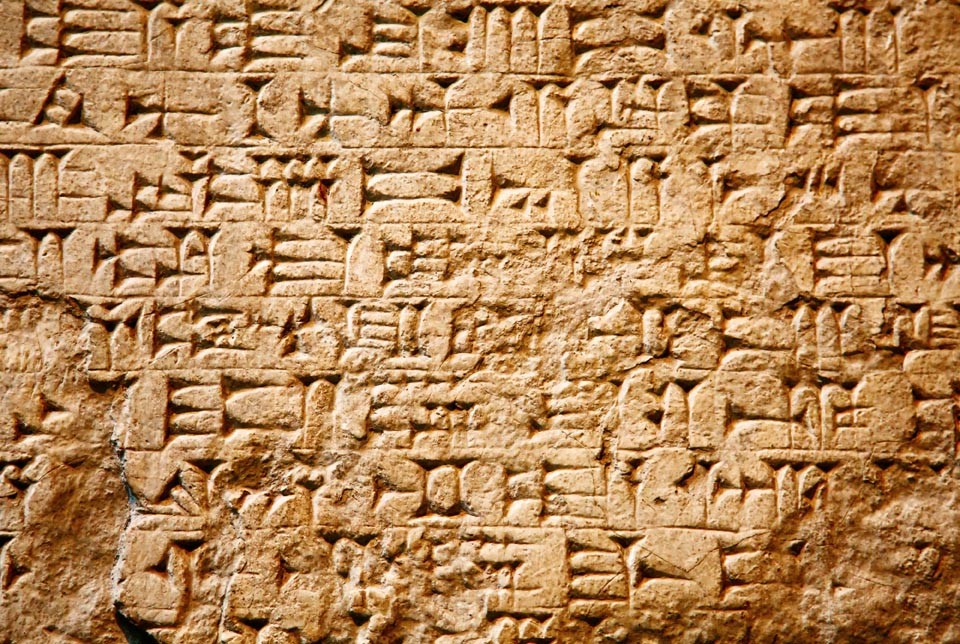
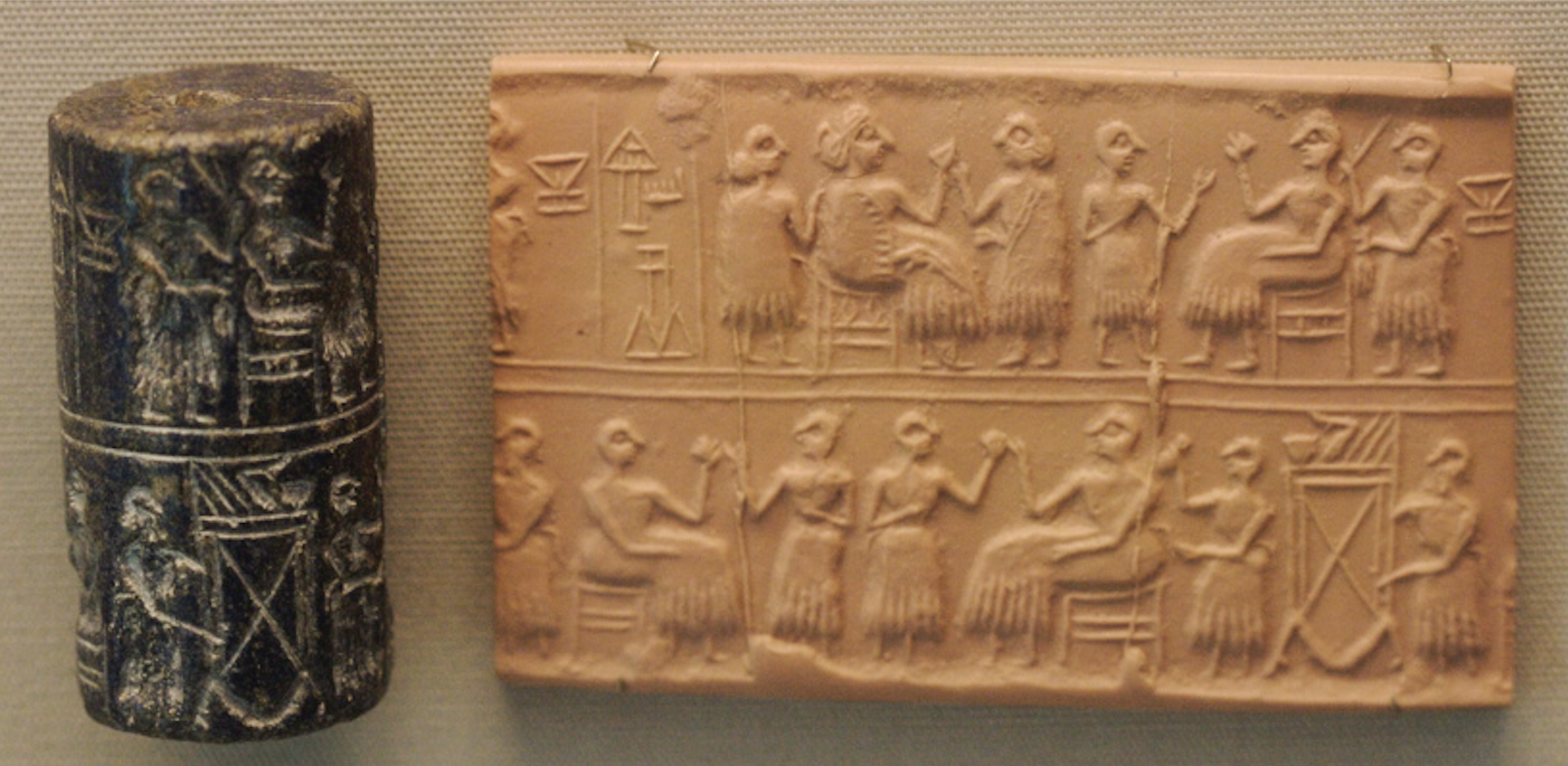
Cuneiform writing was complex and mastered by only a few trained scribes. It was mainly used for recording taxes and details of ownership and sales. Ordinary people had no way of recording numbers, so they counted on their fingers and thumbs. Cuneiform writing was later adopted by the Assyrians, the Babylonians and the Persians.
Sumerian literature
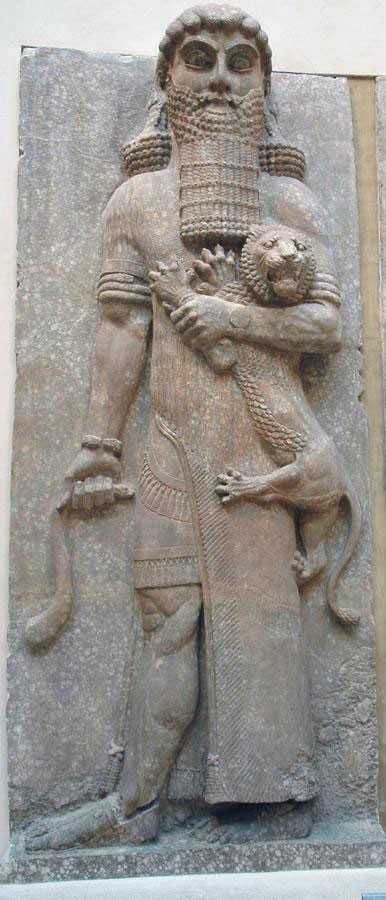
Sumerian inscriptions on clay tablets enabled farmers to keep records and traders to track the movement of grain and other goods. But writing also enabled scribes to record Sumerian history and led to more creative forms of writing, too, including possibly the first written work of literature, The Epic of Gilgamesh.
This poem, written between 2000 and 1500 BC tells of the adventures of Gilgamesh, the mythical King of Uruk, and his friend Enkidu, a strong and courageous man created by the gods and who lived with wild animals in the forest. Its theme was the king's quest for immortality through heroic deeds. These included slaying the monster Humbaba, guardian of the forest, and the Bull of Heaven, sent by the goddess Ishtar to kill him when he rejected her offer of marriage. One of the best known passages in the poem is the tale of a great flood, which may have inspired the Biblical story of Noah.
Ziggurats
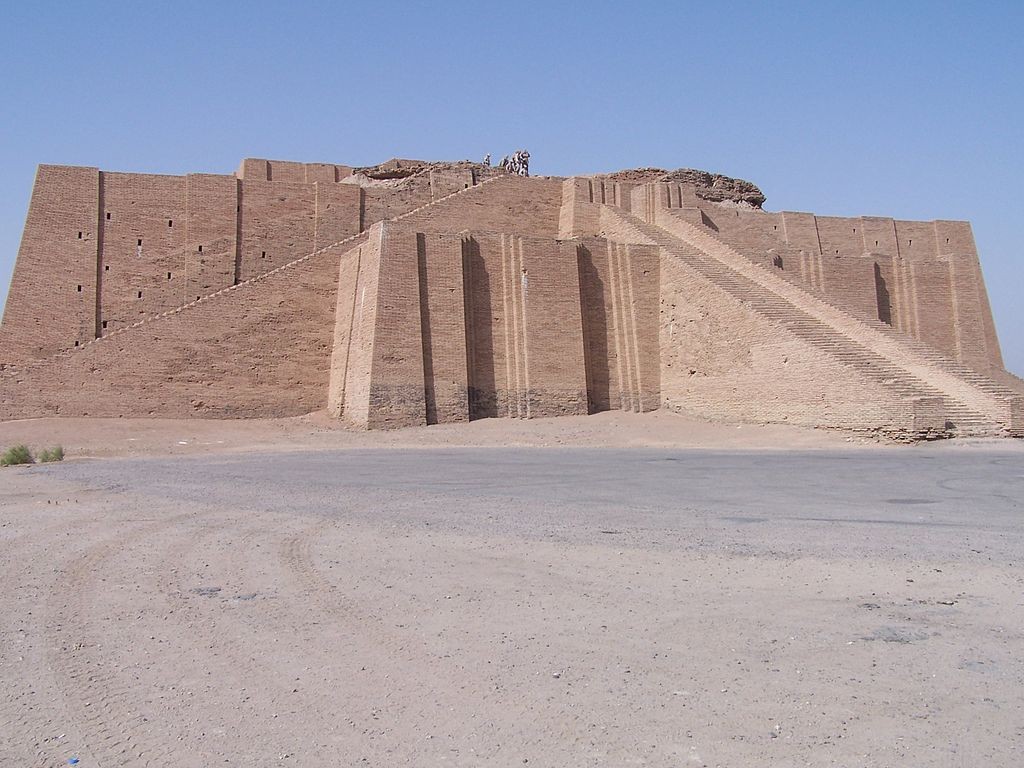
The earliest ziggurats were built in the 3rd millennium BC by the Sumerians as temples to worship the gods. Massive stepped-pyramid temples that stood tens of metres high, they were believed to be stairways linking heaven and earth. One of the most famous ziggurats was built at Ur in the 21st century BC. It is believed to have originally been over 30 metres (100 feet) high and was a shrine to the moon god Nanna, patron deity of the city of Ur.
Early rulers of Sumer
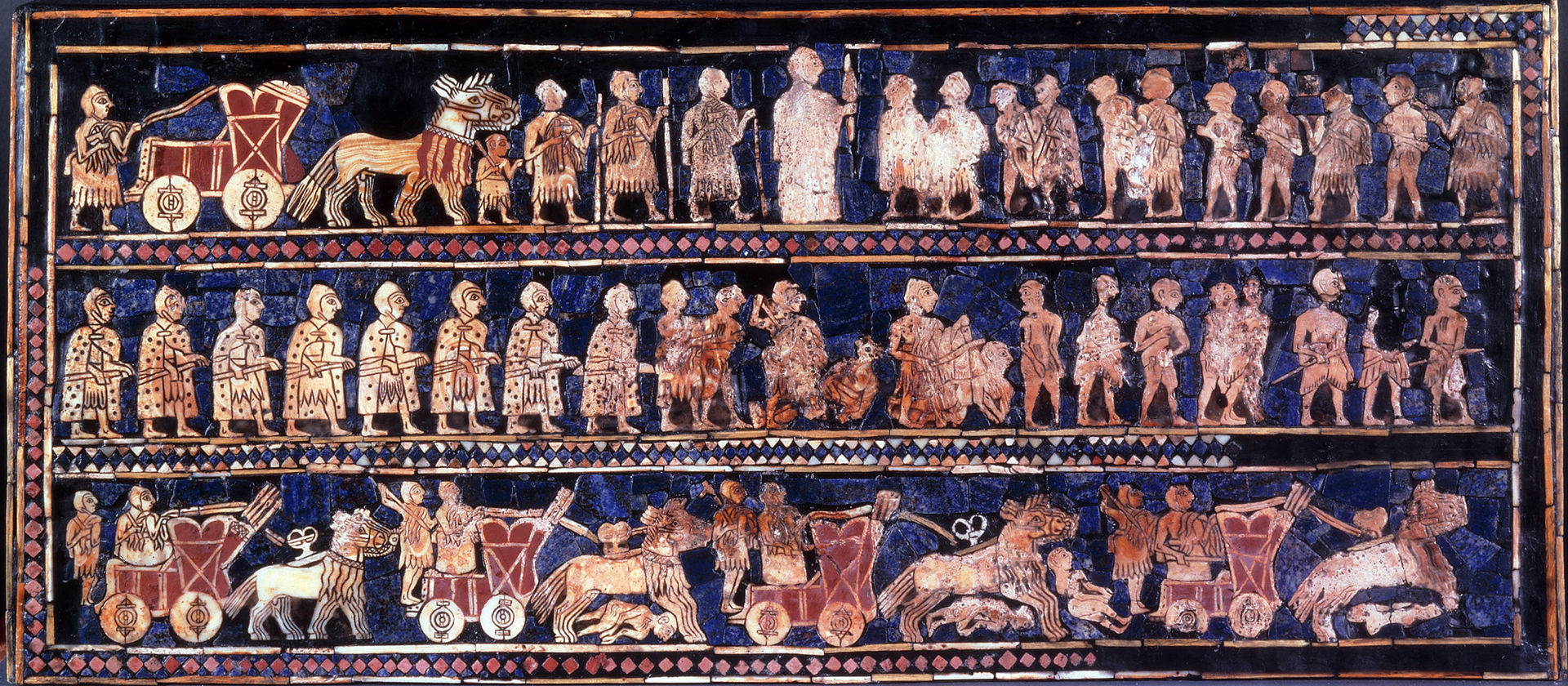
Much of what we know about the early history of the Sumer originally came from the Sumerian King List (abbreviated to SKL). One version of this was inscribed in cuneiform on a four-sided block of clay known as Weld-Blundell Prism, discovered in a 1922 expedition by British archaeologist Herbert Weld Blundell.

The earliest rulers of Sumerian cities were legendary figures such as Etana, a king of the First Dynasty of Kish. Gilgamesh, who may have become a real king of Uruk in around 2700 BC, is best remembered for his fictional adventures told in The Epic of Gilgamesh (see above).
From about 2600 BC, the rulers of Kish, Uruk and Ur battled it out for supremacy in Sumer for the next 400 years or so. Among these early monarchs was Kubaba, the only woman to rule Sumer, who took the throne of Kish in 2500 BC.
Sargon the Great
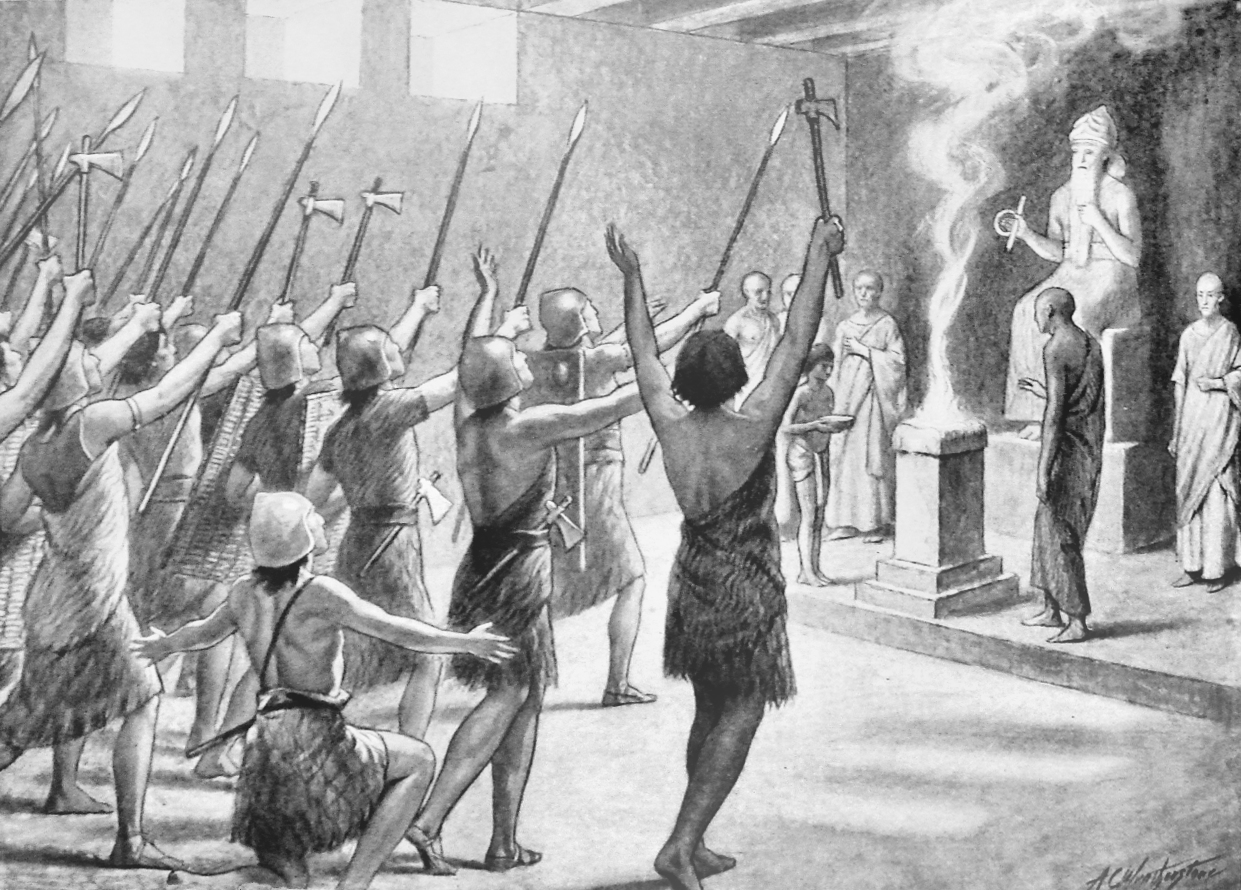
A powerful king took control in 2234 BC, conquering the cities of Uruk, Ur, Umma and Lagash. He was Sargon, who rose from humble beginnings to found an empire based on his home city of Akkad, to the north of the Sumerian heartland. His army was the first professional army in history and the earliest to use chariots in warfare. Sargon of Akkad, or Sargon the Great as he is sometimes called, became the first ruler of the Akkadian Empire, which included most of Mesopotamia as well as parts of the Levant, the lands of the eastern Mediterranean coast. He is thought to be the first person in recorded history to rule over an empire.
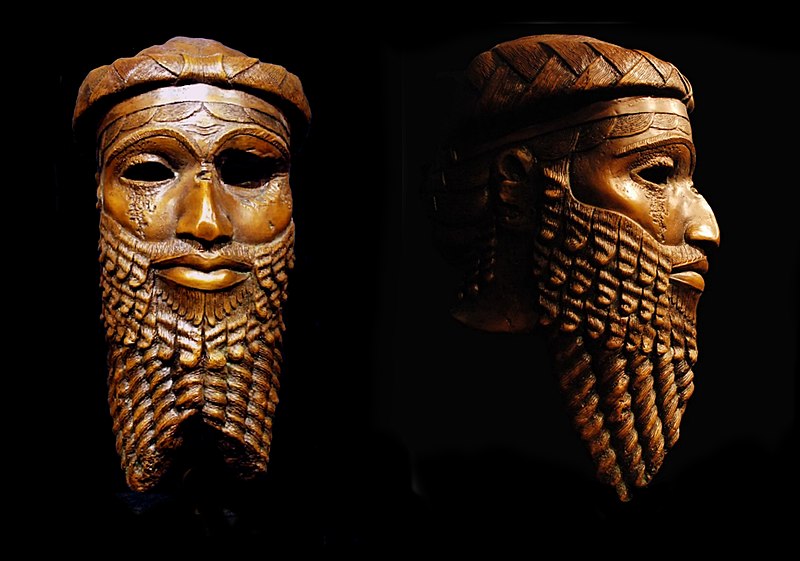
Sargon the Great ruled for 50 years. In 2193 BC his dynasty was toppled by the Gutians, a tribe from the neighbouring Zagros Mountains of Persia, who abandoned the once great city of Akkad to ruin. The Gutians proved to be poor rulers and were themselves expelled by a coalition of rulers of Uruk and Ur under Utuhegal in about 2050 BC.
Ur-Nammu
Utuhegal’s reign was brief. His successor, Ur-Nammu (ruled 2047–2030 BC) began a dynasty that would rule for about a century. Ur-Nammu took on massive construction projects in his capital, the city of Ur, effectively rebuilding it according to his own design. Wide streets divided the city into different neighbourhoods. Ur's walls were reconstructed as sloping ramparts 8 metres high and 25 metres wide (26 by 82 feet). Canals and other flood-prevention structures were also built.
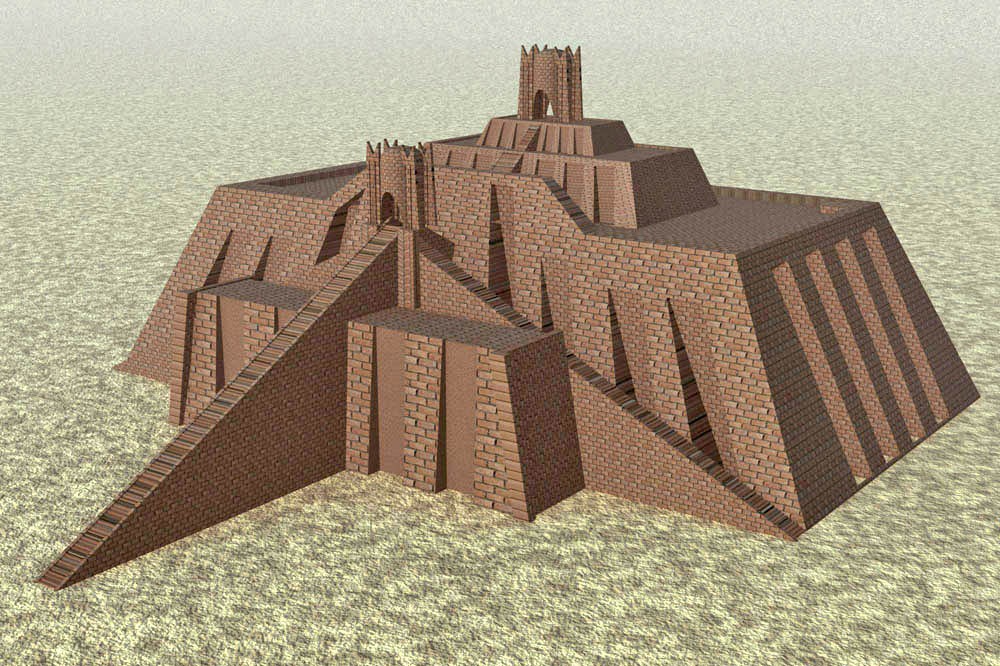
Ur-Nammu ordered the building of an immense new temple, which we know today as the Ziggurat of Ur. A major port dealing in goods imported from Afghanistan, India, Asia Minor and the Levant, Ur expanded into a city of 65,000 people.
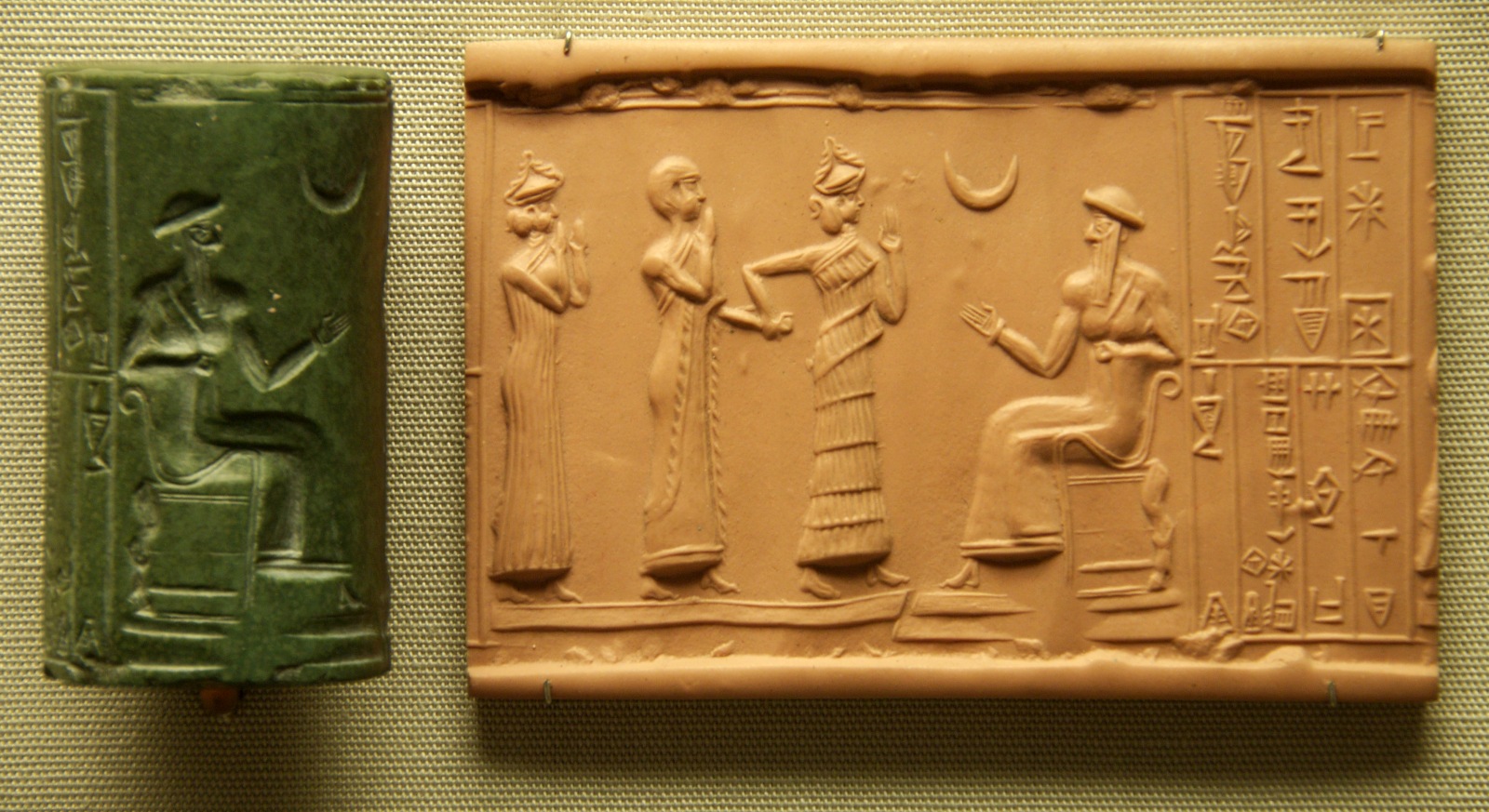
Ur-Nammu also established a legal code, the Code of Ur-Nammu—regarded as the world's first. This ensuring that every person throughout his kingdom would receive the same justice and punishments. Ur-Nammu also created the Edubba, an institution that trained and educated young scribes.
Ur-Nammu was succeeded by his son, Shulgi, a strong king who ruled for about 48 years. The Ur dynasty came to an end in 1940 BC, when the city of Ur was sacked by the Elamites, a neighbouring people from Persia. The king of Ur, Ibbi-Sin, was led into captivity, ending Ur dynasty. The kings of another city-state, Isin, managed to drive the Elamites out of Ur, but their rule ended with the rise of the Amorites of Babylonia under Hammurabi in around 1790 BC.
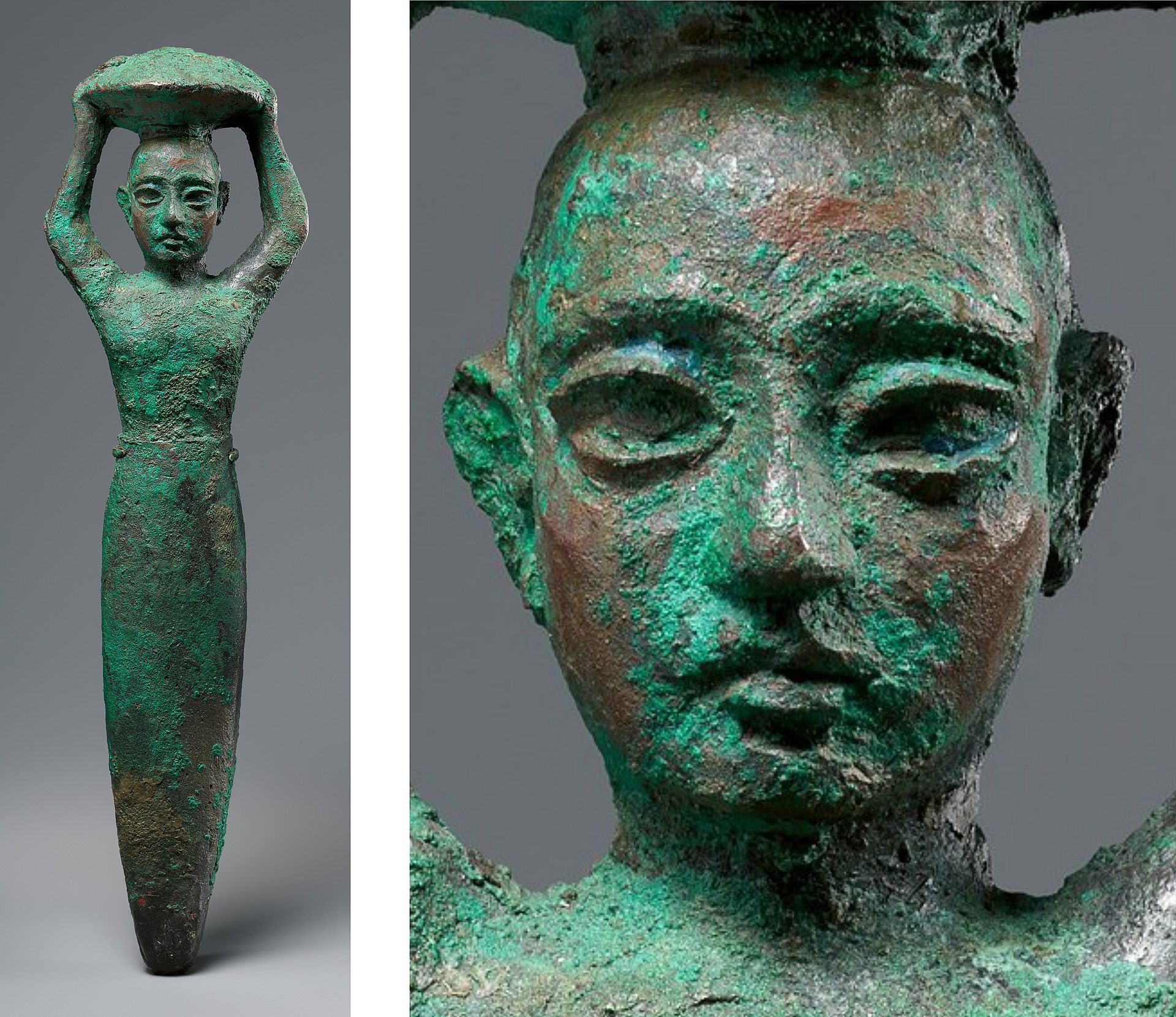
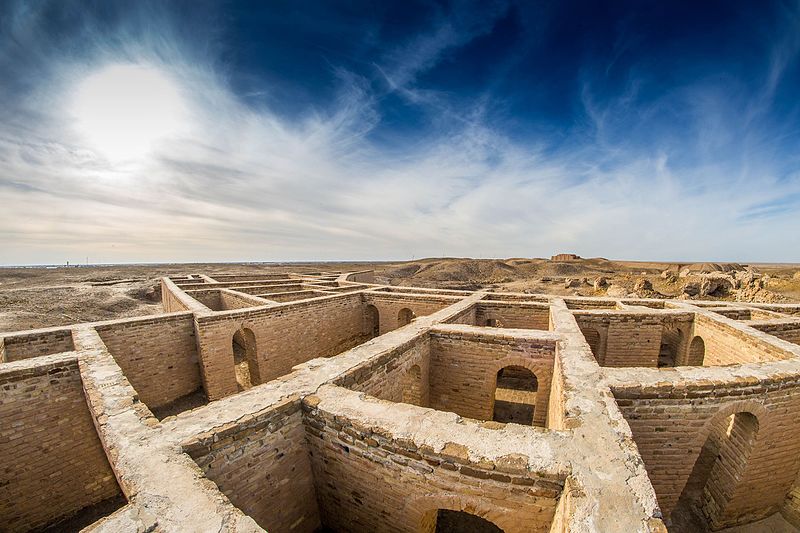
Consultant: Philip Parker
pics
Without in any way limiting Q-files Ltd’s exclusive rights under copyright, any use of this publication to “train” generative artificial intelligence (AI) technologies to generate text is expressly prohibited. Q-files Ltd reserves all rights to license use of this work for generative AI training and development of machine learning language models.