
Ancient Middle East

CITE
We have made every effort to follow citation style rules, but there may be some minor differences. If in doubt, please refer to the appropriate citation style manual.
First farmers. (2026). In Q-files Encyclopedia, History, Ancient Middle East. Retrieved from
https://www.q-files.com/history/ancient-middle-east/first-farmers
"First farmers." History, Ancient Middle East, Q-files Encyclopedia, 26 Mar. 2026.
https://www.q-files.com/history/ancient-middle-east/first-farmers.
Accessed 6 Aug. 2026.
First farmers 2026. History, Ancient Middle East. Retrieved 6 August 2026, from
https://www.q-files.com/history/ancient-middle-east/first-farmers
History, Ancient Middle East, s.v. "First farmers," accessed August 6, 2026.
https://www.q-files.com/history/ancient-middle-east/first-farmers


First farmers
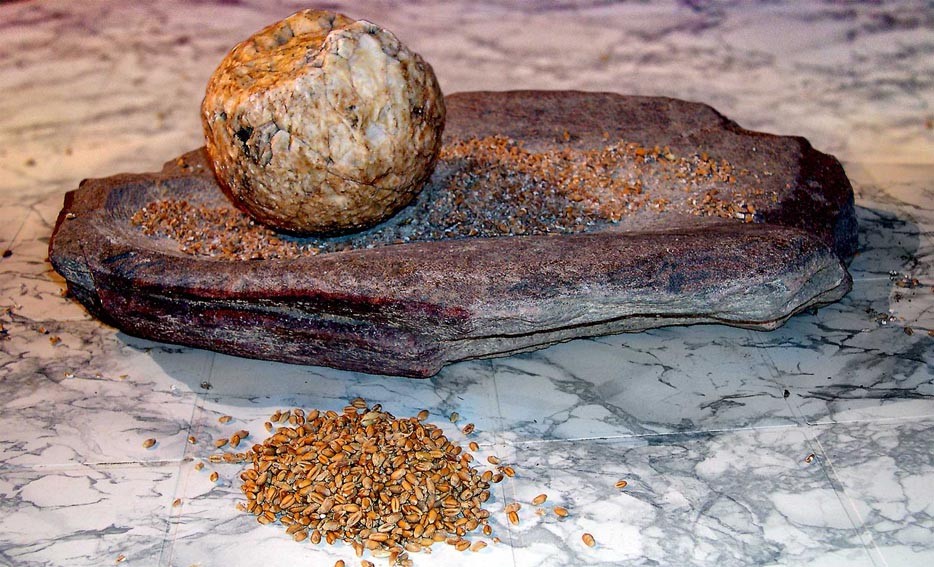
As the Ice Ages came to an end, around 11,500 years ago, the climate worldwide started to become warmer. Some people discovered that they could plant the seeds of certain wild plants in fields to produce more plants. Some grasses produced grain that could be ground into flour for making bread. These people, the first farmers, could now settle in villages close to their fields. One of the first regions of the world where this happened was in the Fertile Crescent, the arc of land that runs between the eastern coast of the Mediterranean Sea with Mesopotamia, the land in and around the Tigris and Euphrates rivers. There the Palaeolithic period ended and the Neolithic period began.

Farming communities

Once people had discovered how to farm, they no longer had to move from place to place as they did when hunting wild animals: they could settle in permanent groups and form communities. (In some areas, people started living in permanent settlements first—possibly in order to worship gods together. They then learned how to farm crops to give themselves a reliable food supply.)
The first farming communities began in about 9500 BC. These early communities were on the banks of rivers in the hot lands of the Middle East and North Africa. Some farmed the fertile soil on the banks of the Tigris and Euphrates Rivers in Mesopotamia (modern-day Iraq). Others settled in the valley of the River Nile in Egypt.
Groups of families built mud-brick houses clustered together to form villages. They learned to make the things they needed for farming: tools for working the land, baskets for gathering crops and pots for storing food. The first farmers used very simple tools such as sticks, which they jabbed into the ground to make holes and shallow trenches for planting seeds.
Domesticating animals
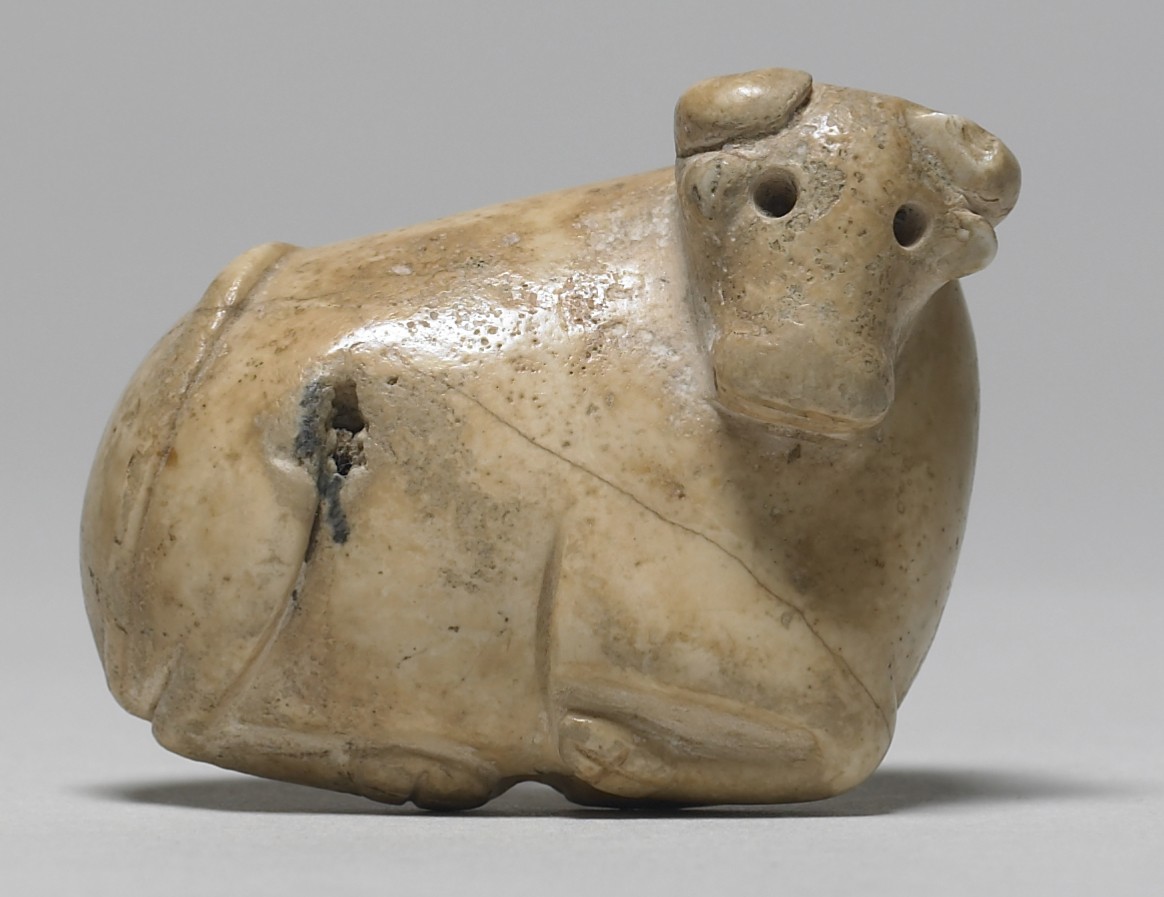
The hunters and gatherers of the Upper Palaeolithic period had already tamed, or domesticated, wild animals such as wolves, which became the first hunting dogs from around 13,000 BC. After the start of settled farming, humans started to tame other animals, like sheep, cattle and pigs, and to keep them for their milk and meat.
Ploughing the land
Farming was slow and laborious using only sticks as tools. Farmers could only grow enough food for themselves and their families, which meant that every able person in the community had to farm to survive.
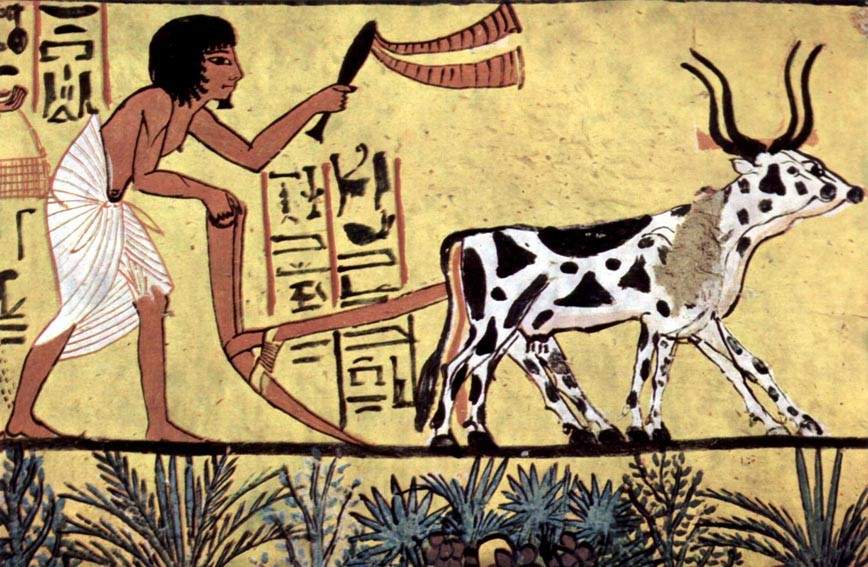
Some new tools were needed to enable food to be produced more efficiently. One was the invention of the plough. The first plough was probably a bough with forked branches that could be pulled along the ground to turn the soil. Most of our evidence about early ploughs comes from wall paintings and carvings. We know that a simple scratch plough, called an ard, was used in Mesopotamia from about 4500 BC and in ancient Egypt from about
2600 BC.
Consultant: Philip Parker
pics
Without in any way limiting Q-files Ltd’s exclusive rights under copyright, any use of this publication to “train” generative artificial intelligence (AI) technologies to generate text is expressly prohibited. Q-files Ltd reserves all rights to license use of this work for generative AI training and development of machine learning language models.