
Ancient Middle East

CITE
We have made every effort to follow citation style rules, but there may be some minor differences. If in doubt, please refer to the appropriate citation style manual.
First cities. (2026). In Q-files Encyclopedia, History, Ancient Middle East. Retrieved from
https://www.q-files.com/history/ancient-middle-east/first-cities
"First cities." History, Ancient Middle East, Q-files Encyclopedia, 26 Mar. 2026.
https://www.q-files.com/history/ancient-middle-east/first-cities.
Accessed 21 Sep. 2026.
First cities 2026. History, Ancient Middle East. Retrieved 21 September 2026, from
https://www.q-files.com/history/ancient-middle-east/first-cities
History, Ancient Middle East, s.v. "First cities," accessed September 21, 2026.
https://www.q-files.com/history/ancient-middle-east/first-cities


First cities
A society in which people live in towns, where many of them work as craftsmen, scribes, builders, merchants and other occupations, is described as a civilization. The first civilizations grew up in the Middle East, India, China and Egypt. The most ancient cities were founded in the Fertile Crescent, a band of lush farming land stretching from Egypt up the east coast of the Mediterranean Sea to southern Turkey and down to the Persian Gulf. Among the oldest of them all was a place called Jericho, in the modern-day West Bank.
From villagers to townspeople
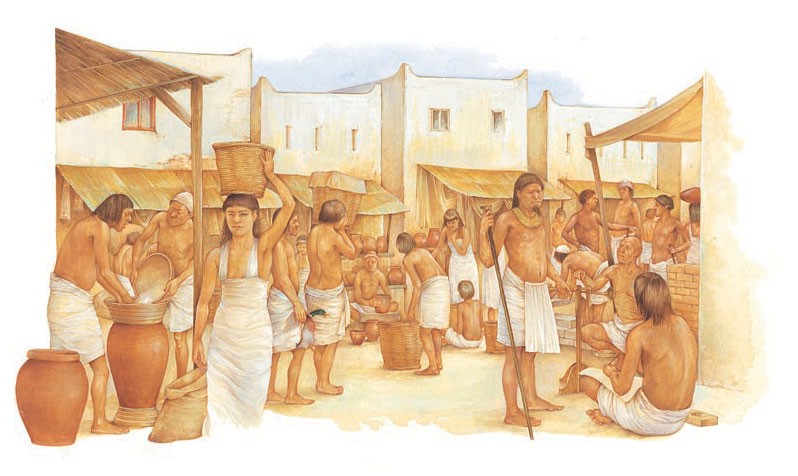
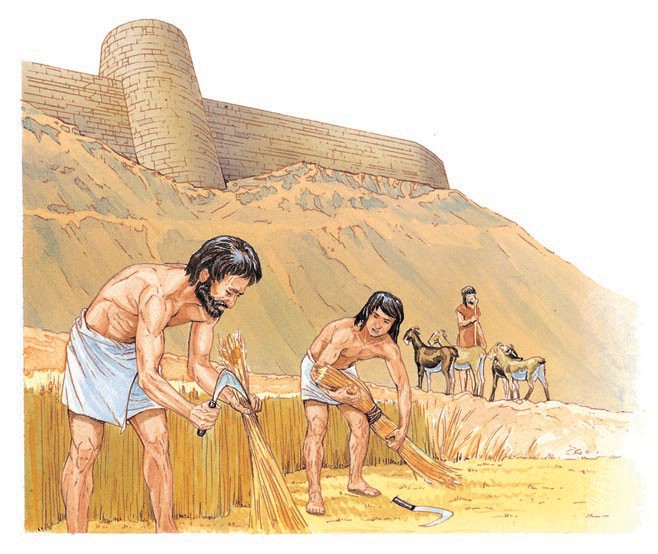
Once people settled down in farming villages, from about 9500 BC onwards, many things became possible. It was not necessary for everyone to spend their time getting food. Farmers provided the food while some people did other work. They became builders and craftsmen, merchants and soldiers, teachers and priests. Civilization had arrived. Town life first began in the Middle East, the countries around the eastern end of the Mediterranean Sea. Some grew larger, with walls, towers and homes made of mud-bricks. They were the first cities.
Jericho
At Jericho, west of the River Jordan in Palestine, there is a spring, which provides water for growing crops. That spring was there in 8000 BC. It may be the reason why people first settled at Jericho, the oldest-known city in the world.
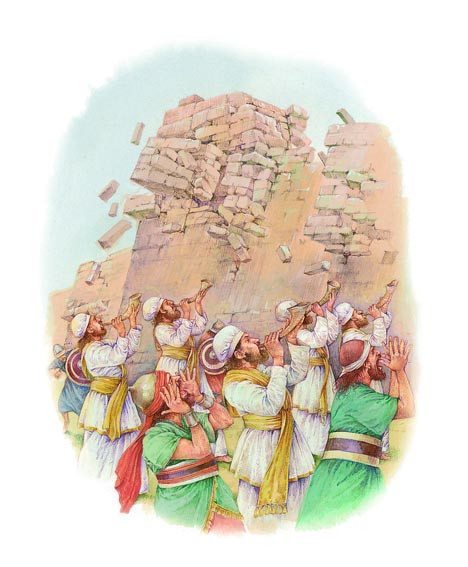
There were many cities of Jericho, each city rebuilt over the ruins of an earlier one. The walls that came tumbling down when Joshua blew his trumpet, as recorded in the Bible, were not the first—or the last.
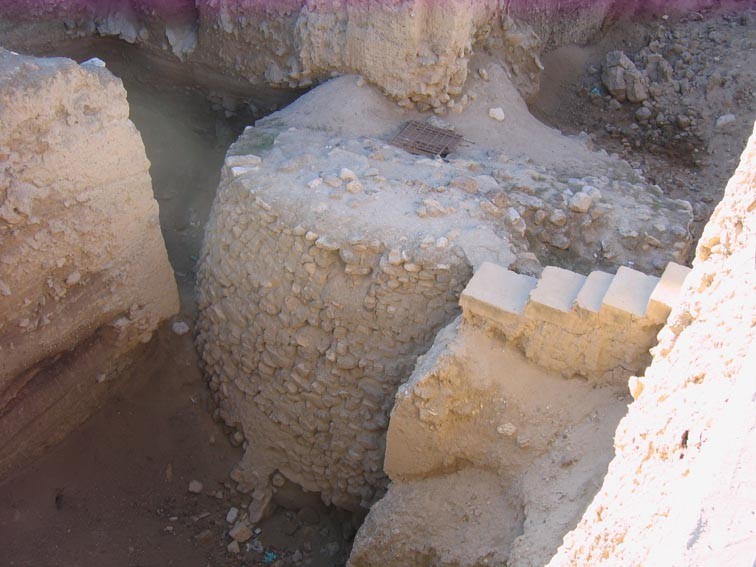
The people of the first Jericho learned how to cultivate wild wheat. They worked in the fields by day and stayed safe in their houses behind walls at night. The walls were probably also built so that the city's grain stores could be protected from thieves. A watchman probably kept guard from a round stone tower. The remains of such a tower against the city walls have been dated to 8000 BC.
Çatal Höyük
The ancient city of Çatal Höyük in Turkey dates from c.7000 BC. It is one of the largest early cities ever excavated. Early villages were built of mud-brick, which crumbled after a time. When the houses were no longer useable, new houses were built over the ruins. In time, a mound, called a tell in Arabic or höyük in Turkish, developed. This is why the city was given its modern Turkish name.
Çatal Höyük had no outer wall to protect it. The houses were linked together and there were no streets. A ladder ran up to the roof of each house, where there was a door to get in. People moved around by crossing the rooftops. When the ladders were taken away, it would be almost impossible to get in.
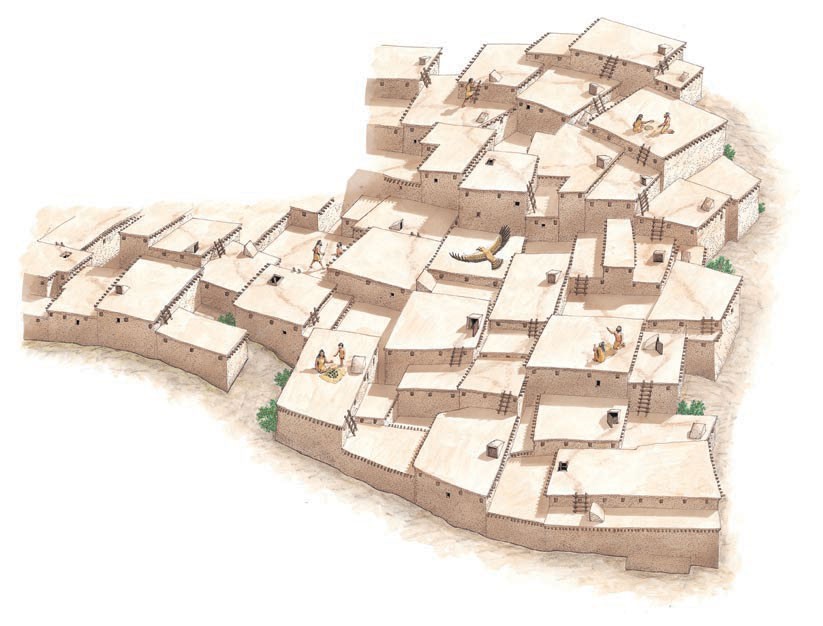

Life in Çatal Höyük
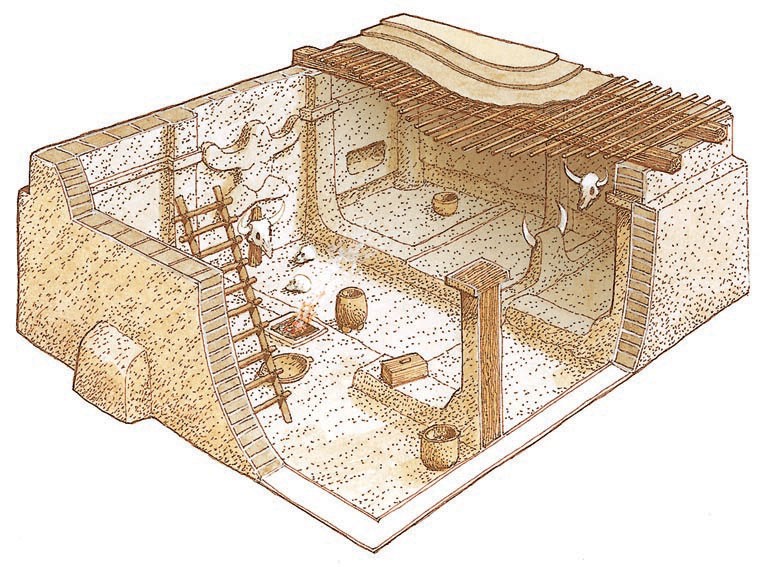
About 8000 people may have lived in Çatal Höyük. The houses each had a living room, a storeroom and a religious shrine. The shrines contained plaster figures of the gods and sometimes wall paintings of animals and scenes of hunting. The inhabitants buried their dead under platforms inside their houses. Before they did so, the dead bodies were left outside to dry in the baking heat.
Consultant: Philip Parker
pics
Without in any way limiting Q-files Ltd’s exclusive rights under copyright, any use of this publication to “train” generative artificial intelligence (AI) technologies to generate text is expressly prohibited. Q-files Ltd reserves all rights to license use of this work for generative AI training and development of machine learning language models.