
EASY READ Famous people
Who was Florence Nightingale?
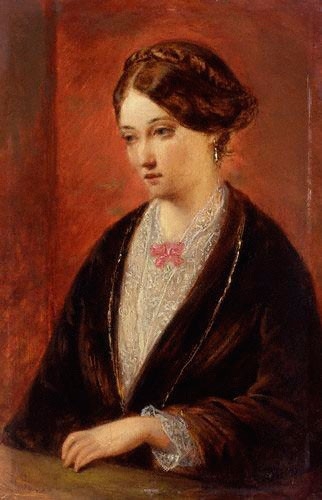
Florence Nightingale (1820–1910) was an English nurse. She greatly improved the quality of medical care for British soldiers during the Crimean War (1853–56). Her work led to major changes in the way that hospitals were run. We can see this in hospital wards today. Florence Nightingale grew up at a time when nursing was not thought to be a respectable job for a woman. She led the way for women from all backgrounds to follow her example.

Early life
Florence Nightingale was born on 12th May 1820. Florence and her older sister grew up in a wealthy family. Their father wanted his daughters to have a good education, which was unusual for girls at this time. While in her teens, Florence began to visit poor and sick people, carrying out simple nursing tasks. She soon realised it was something she wanted to spend her life doing.
Florence’s family were upset by the thought of her working as a nurse. This was because hospitals at the time were dirty, dangerous places. They tried to discourage her, but Florence's mind was made up. Eventually, she got a job as the head of a women’s hospital in Harley Street, London.

Crimean War
In 1853, war broke out between Russia and the Turkish Ottoman Empire. Britain and France joined forces with the Ottoman Turks against Russia. In September 1854, over 50,000 French and British troops landed on the Crimea Peninsula in Russia. Many long months of fighting followed. The war was bloody and there were thousands of casualties. Wounded British soldiers were sent to overcrowded, dirty hospitals. More soldiers died of their wounds in hospital than on the battlefield.

Arrival in Crimea
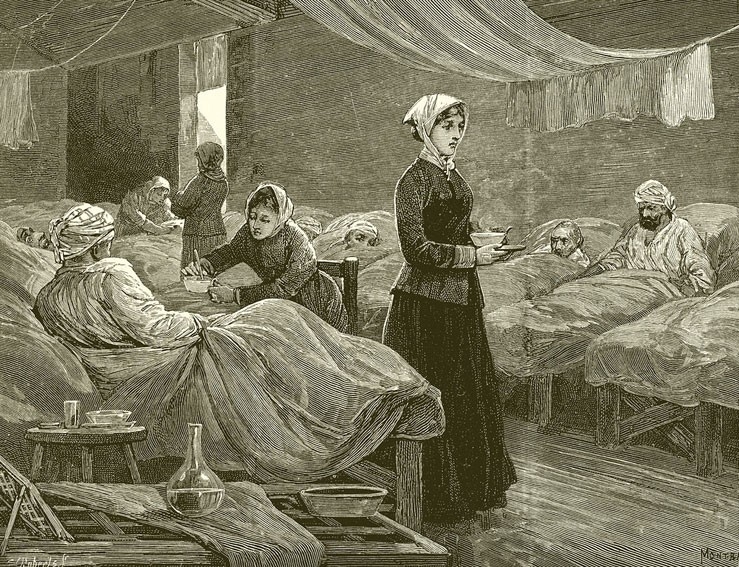

Florence Nightingale wrote to the British War Office on 15th October 1854, offering her services. A week later, Florence and her team of 38 nurses set out for the British hospital at Scutari in the Crimea. When they arrived, they found the hospital wards were in a terrible state. Florence set her nurses to work immediately, cleaning and dressing the soldiers’ wounds. By December, Florence had made many changes. More nurses arrived to help. Florence set up a kitchen which provided good food for patients. The wards and beds were now clean.
Despite all these improvements, the following January there was a sudden increase in the number of deaths from cholera. This disease was spread by the lack of clean water. Florence persuaded the War Office in Britain that work needed to be done to fix the drains at the hospital (which was built on top of a sewer). The improvements worked: the death rate fell rapidly after that.
The Lady With The Lamp
Florence worked some 20 hours a day. She spent as much time with her patients as she could, even helping some of them to write letters home. Although she would not allow her nurses to work at night, she carried on nursing herself. She made rounds of the wards by candlelight. Because of this, the patients called her "The Lady With The Lamp".

Ready to find out more?
Here is a page in another part of Q-files you might like to explore:
Consultant: Philip Parker