
EASY READ Famous people

CITE
We have made every effort to follow citation style rules, but there may be some minor differences. If in doubt, please refer to the appropriate citation style manual.
EASY READ Who was Boudicca?. (2025). In Q-files Encyclopedia, History, EASY READ Famous people. Retrieved from
https://www.q-files.com/history/easy-read-famous-people/easy-read-who-was-boudicca
"EASY READ Who was Boudicca?." History, EASY READ Famous people, Q-files Encyclopedia, 4 Dec. 2025.
https://www.q-files.com/history/easy-read-famous-people/easy-read-who-was-boudicca.
Accessed 1 Nov. 2026.
EASY READ Who was Boudicca? 2025. History, EASY READ Famous people. Retrieved 1 November 2026, from
https://www.q-files.com/history/easy-read-famous-people/easy-read-who-was-boudicca
History, EASY READ Famous people, s.v. "EASY READ Who was Boudicca?," accessed November 1, 2026.
https://www.q-files.com/history/easy-read-famous-people/easy-read-who-was-boudicca


Who was Boudicca?
Boudicca (her name is also spelled Boudica or Boadicea) was queen of the Celtic Iceni people. In around AD 60 she led a fierce and brutal rebellion against the Romans to claim back the Iceni share of their kingdom. Led by Boudicca, the Iceni and their allies destroyed the Roman capital of Colchester, as well as London and St Albans. Eventually, the Romans defeated them at the Battle of Watling Street.
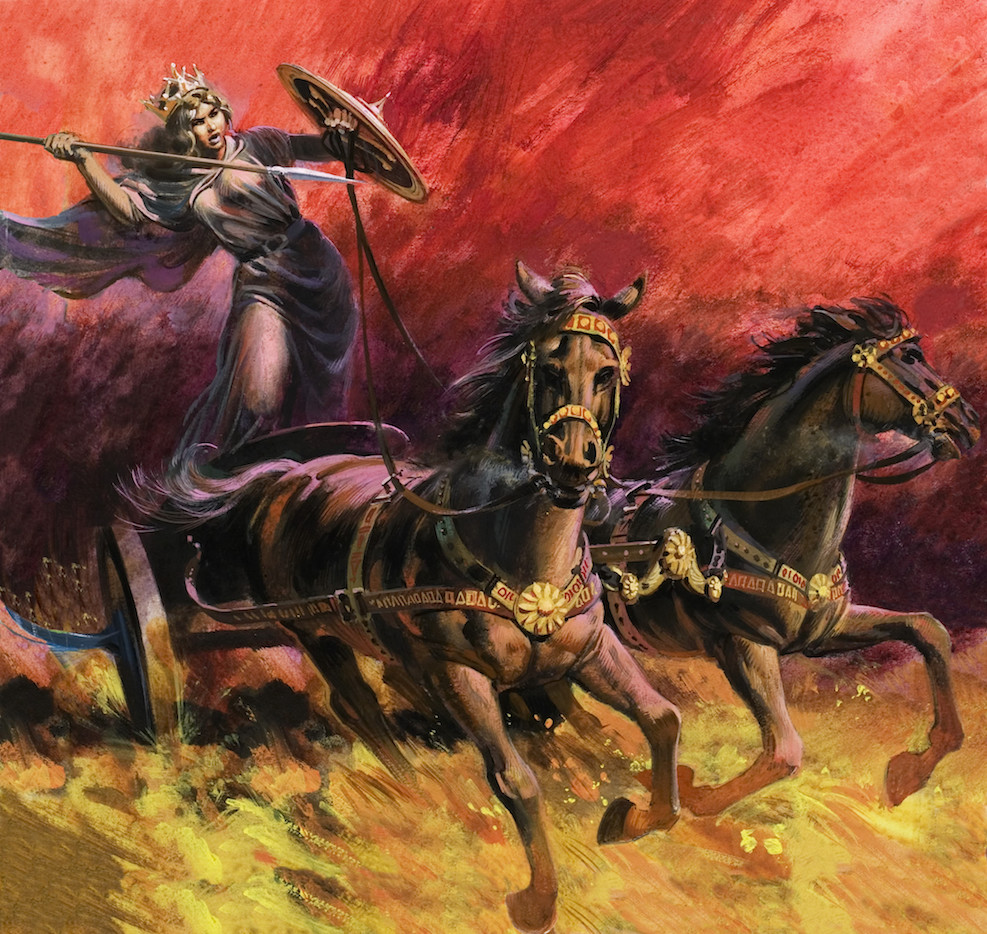

Prasutagus
In the first century AD, Britain was made up of a large number of tribes, each with their own king. When the Romans conquered southern England in AD 43, they forced nearly all these tribes to submit to Roman rule. But in the east (the area we now call East Anglia) they allowed King Prasutagus to rule his own people, the Iceni. This may have been because the Romans saw him as a leader who could keep the peace.
A young queen
It is likely that Boudicca was born into a noble family in Camulodunum (modern Colchester) in around AD 30. Like other Celtic girls, the young Boudicca trained as a warrior, learning how to use weapons and fight. When she was 18, she married Prasutagus and became queen of the Iceni people.
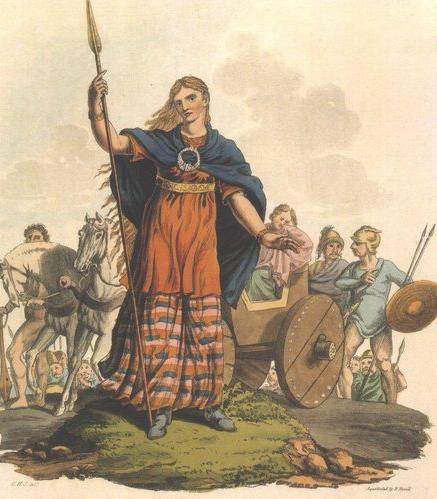
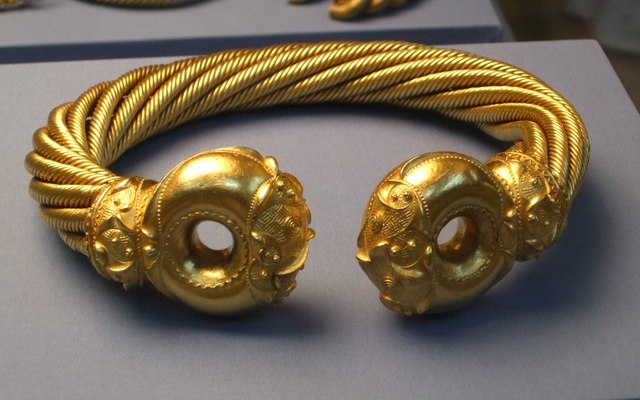
Cassius Dio describes Boudicca as tall and terrifying, with fierce eyes and long “tawny” (reddish-brown) hair. She wore a colourful tunic and a cape around her shoulders fastened by a brooch. In battle she grasped a spear and wore a golden collar called a torc around her neck. In Celtic Britain, the torc was a symbol of high status.
The rebellion begins
When Boudicca's husband, King Prasutagus, died in AD 60, he left instructions to split his kingdom between his daughters and the Roman emperor. He believed this was the best way to protect his family and the Iceni people. But the Romans were unhappy with their small share of the kingdom. They ignored the old king’s wishes and took over his kingdom entirely.

When Boudicca protested, they whipped her and her daughters in public. They also took Iceni people as slaves. In rage, Boudicca led the Iceni in revolt against the Romans. They were soon joined by another tribe, the Trinovantes. Together, these forces were known as the Britons.
Telling Boudicca's story
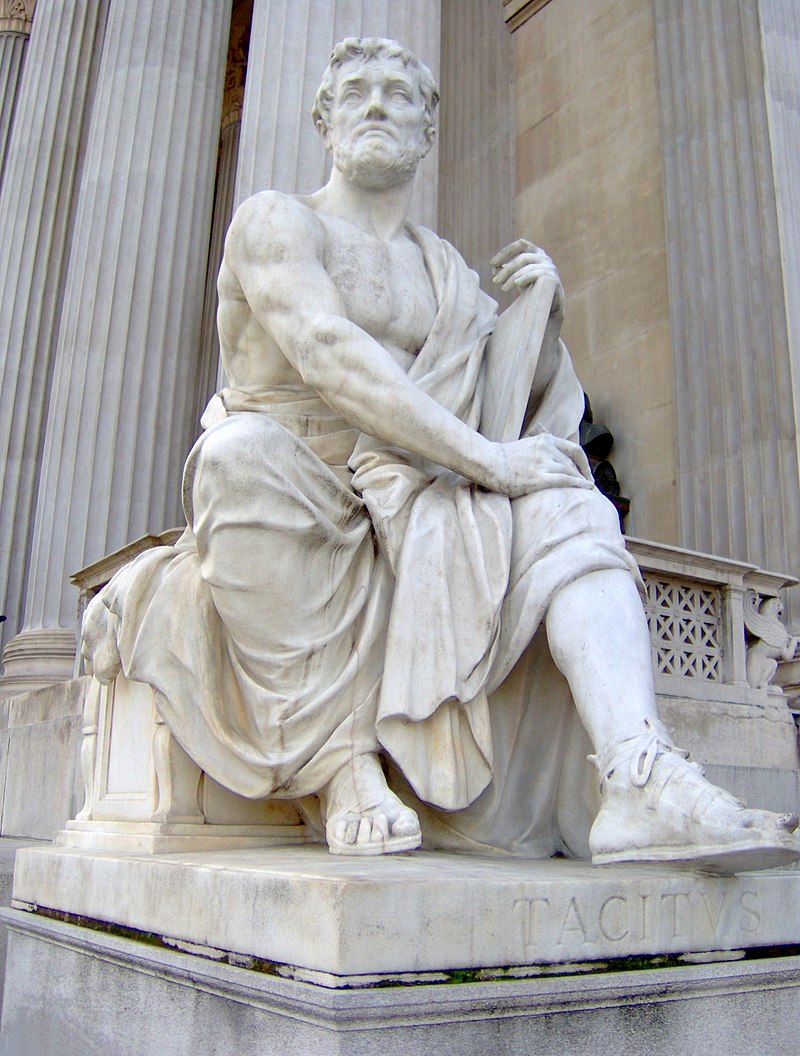
There are two different accounts of Boudicca's story, both by Roman historians. One version, told by Tacitus (AD 56–117), says that the Iceni rebelled because the Romans treated them badly after the death of their king. The other, told by Cassius Dio (AD 150–235), says that the Iceni fought the Romans because they disagreed over a loan. Today, people consider Tacitus’ version to be more accurate because he presented both sides of the story.
Boudicca's war

When the Roman governor Suetonius was away fighting in north Wales, Boudicca's army headed for the capital of Roman Britain. This was the city of Camulodunum (modern-day Colchester). The Roman citizens urgently begged for soldiers to defend them, but the empire sent a force of just 200 men. It was no match for Boudicca's much larger army.
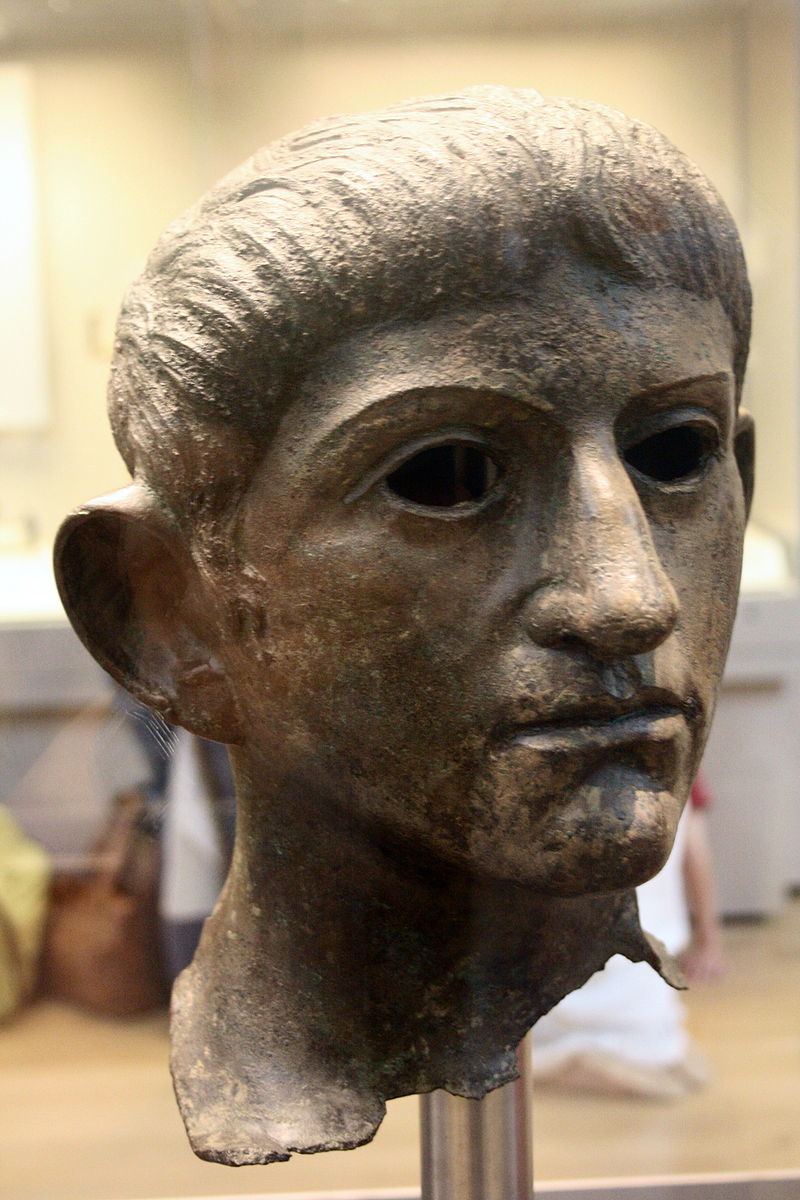
Boudicca's troops destroyed the entire city, and killed nearly all its people—mostly Romans. They burned down Camulodunum's huge stone temple, which was dedicated to Emperor Claudius. A bronze statue of Claudius stood in the city; they attacked it and sliced off its head.

The army then headed for Londinium (modern London). Here they viciously attacked its people and its buildings. They destroyed everything in their path. They marched on to Verulamium (modern St Albans). The people of this city had become friendly with the Romans, so the Britons saw them as enemies. Here, too, they attacked the citizens and burned buildings to the ground. Altogether, they killed between 70,000 and 80,000 people, both Romans and Britons.
Battle of Watling Street
While the Britons were destroying Verulamium, the Roman governor Suetonius made plans to meet them in battle. He chose a position in a narrow valley with a wood behind him, so that the enemy soldiers would have to fight in open country, with nowhere to hide. Here, his army of around 10,000 men waited for the Britons.
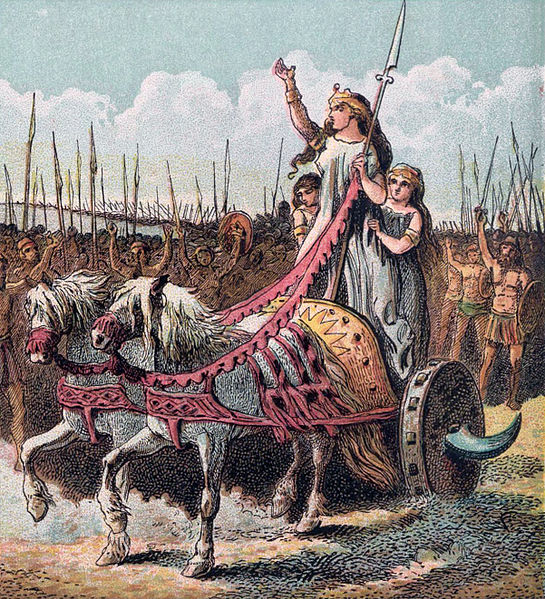
Boudicca's army were so confident of victory that men brought their wives with them to watch from supply wagons positioned around the edge of the battlefield. Before the battle, Boudicca rode around the battlefield in her chariot declaring to her troops: "On this spot we must either conquer, or die with glory.”


But once the battle begun, Boudicca's army struggled. In the narrow valley Suetonius had chosen, the Britons were pushed together, which made them easy targets for Roman spear-throwers. When Roman cavalry entered the battle, the Britons turned to flee. But the supply wagons they had positioned behind them cut off their escape route. This enabled the Roman soldiers to complete their massacre. Thousands of Britons were killed, while fewer than 400 Romans died.
Boudicca and her daughters escaped the massacre, but Tacitus wrote that the women poisoned themselves rather than be captured by the Romans. In Cassius Dio's story, Boudicca died from her wounds, and was given an elaborate burial.
After Boudicca
After the rebellion, the Romans punished the Iceni and Trinovantes by attacking their villages and people. They also brought in harsher laws. By AD 84, the Roman governor Gnaeus Julius Agricola had conquered much of the north of Britain. Although the Britons fought the Romans in other rebellions, none were successful, and the Romans continued to rule Britain until AD 410.
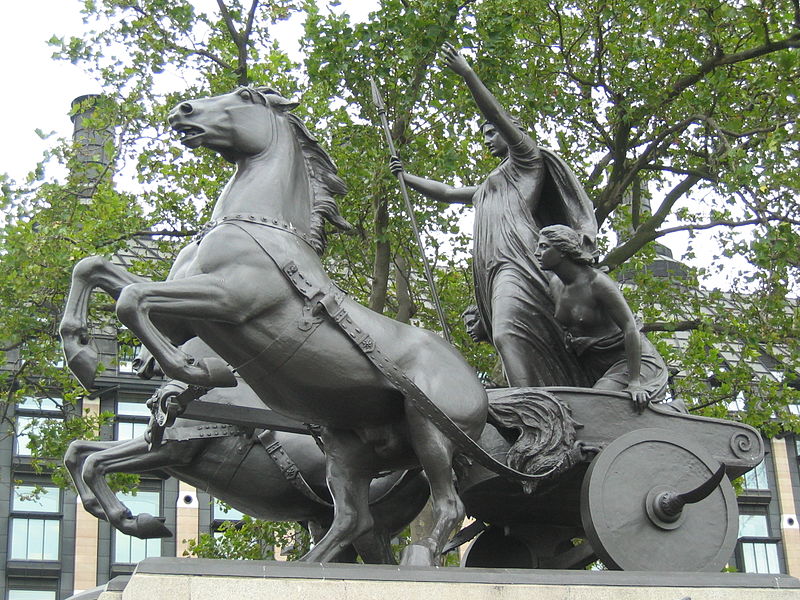
Though defeated, Queen Boudicca has been celebrated since the 19th century as a national heroine of Britain and as a symbol for freedom and justice.
Ready to find out more?
Here are some pages in other parts of Q-files you might like to explore:
Boudicca
Celtic Britain
Roman Britain
pics


Without in any way limiting Q-files Ltd’s exclusive rights under copyright, any use of this publication to “train” generative artificial intelligence (AI) technologies to generate text is expressly prohibited. Q-files Ltd reserves all rights to license use of this work for generative AI training and development of machine learning language models.