
EASY READ Famous people

CITE
We have made every effort to follow citation style rules, but there may be some minor differences. If in doubt, please refer to the appropriate citation style manual.
EASY READ Who was Joan of Arc?. (2025). In Q-files Encyclopedia, History, EASY READ Famous people. Retrieved from
https://www.q-files.com/history/easy-read-famous-people/easy-read-who-was-joan-of-arc
"EASY READ Who was Joan of Arc?." History, EASY READ Famous people, Q-files Encyclopedia, 5 Dec. 2025.
https://www.q-files.com/history/easy-read-famous-people/easy-read-who-was-joan-of-arc.
Accessed 13 Sep. 2026.
EASY READ Who was Joan of Arc? 2025. History, EASY READ Famous people. Retrieved 13 September 2026, from
https://www.q-files.com/history/easy-read-famous-people/easy-read-who-was-joan-of-arc
History, EASY READ Famous people, s.v. "EASY READ Who was Joan of Arc?," accessed September 13, 2026.
https://www.q-files.com/history/easy-read-famous-people/easy-read-who-was-joan-of-arc


Who was Joan of Arc?
Saint Joan of Arc (1412–31), the Maid of Orléans, is a national heroine in France. She was a peasant girl who inspired the French army to win a great victory against the English at Orléans, in 1429. She was later captured by the English and burned to death at the stake for heresy (breaking religious law). She was not yet 20 years old. In 1920, centuries after her death, Joan was made a saint by the Roman Catholic Church.

France in the 15th century

Joan (Jeanne in French) was born in 1412 in a small village called Domrémy in eastern France. France and England had been at war since around 1337, during what is now known as the Hundred Years' War.
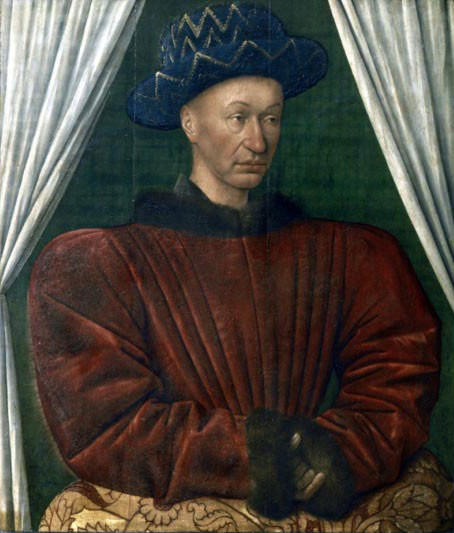
Also at this time the French king, Charles VI, was unable to rule because of his bouts of insanity. The king’s brother, the Duke of Orléans, and his cousin, the Duke of Burgundy, quarrelled over who should govern until the king’s young son, Charles, the dauphin (the French name for the heir to the throne), was old enough to be able to rule France himself.
English invasion
In 1415, the English king Henry V took advantage of the chaos in France. His army invaded and defeated the French army at Agincourt. The Duchy of Burgundy formed an alliance with the English, and together they conquered large parts of northern France. Henry V became the heir to the French throne instead of the dauphin. Both Charles VI and Henry V died in 1422. The dauphin claimed to be the rightful heir to the French throne. But he was unable to go to Reims, the traditional place for the crowning of the kings of France, because it now lay in enemy hands.

Visions


Domrémy remained loyal to Charles. In around 1424 Joan began to have visions. St Michael, St Catherine and St Margaret told her to go to the dauphin. Guided by their voices, she was determined to go to him. Eventually, she was allowed to make the dangerous journey across enemy territory, disguised in men's clothes, to the dauphin’s court in Chinon in 1429.
She told the dauphin that she wanted to go into battle against the English and see him crowned king at Reims.
Siege of Orléans
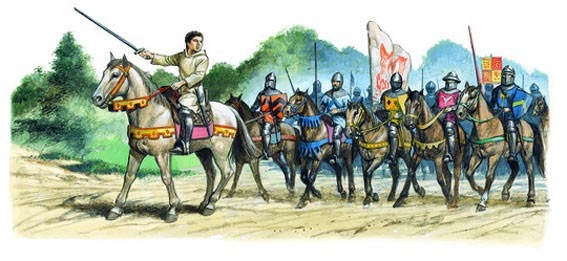
Charles agreed to allow Joan to lead a campaign to free Orléans, which was then under siege by English troops. Joan’s forces started to attack the English, who had almost completely surrounded Orléans. The English were forced to retreat. Joan herself was wounded by an arrow during the battle, but she returned to the fight to encourage her troops. Her determination paid off when the siege of Orléans was ended on 8th May 1429.
To Reims
Joan now urged Charles to march on to Reims. Along the way, the dauphin’s forces fought the English, defeating them at the Battle of Patay on 18th June. The royal army finally entered Reims on 16th July, and Charles was crowned king the following day. Charles VII still did not have control of all of his kingdom, much of which still lay in the hands of the English and the Duke of Burgundy.


Capture
In spring 1430, the armed forces of the Duke of Burgundy began to attack French towns once again. Joan took troops with her to one of these towns, Compiègne, to help the townspeople defend themselves. While she was there, she fell from her horse and was captured. She was taken to the English, who imprisoned her at Rouen Castle.
Joan tried several times to escape. Eventually she succeeded by jumping from a tall tower and landing in the moat below. But she was soon recaptured and sold to the English as a prisoner. They put her on trial as a heretic—someone whose beliefs did not fit in with the accepted beliefs of the day. This was because she claimed to speak directly to God during her visions.
Death of Joan
Joan’s trial took place in Rouen. She was held in terrible conditions and questioned over and over again. Finally, she was sentenced to death. On 30th May 1431, at the age of 19, she was burned at the stake as a heretic.
Years later, in 1456, a Church court decided that Joan had been wrongly convicted, and declared her innocent.


Ready to find out more?
Here are some pages in other parts of Q-files you might like to explore:
Joan of Arc
Europe 15th–18th centuries
Consultant: Philip Parker
pics

Without in any way limiting Q-files Ltd’s exclusive rights under copyright, any use of this publication to “train” generative artificial intelligence (AI) technologies to generate text is expressly prohibited. Q-files Ltd reserves all rights to license use of this work for generative AI training and development of machine learning language models.