
EASY READ Famous people
Who was Mahatma Gandhi?
Mohandas Karamchand Gandhi (1869–1948) was a leader of the protest movement against British rule in India. He stood for non-violent protest. Today he is considered the "father" of modern India. As a spiritual leader to Hindus, Gandhi was given the title Mahatma ("Great Soul"). His concern for the poor still carries a strong message for today’s world.


Early life
Gandhi was born on 2nd October 1869 in Porbandar, a coastal town in Gujarat, India. India in those days was ruled by the British government. Gandhi grew up in a household where ahimsa (non-violence to living things), vegetarianism and fasting were all important parts of everyday life.
Gandhi married Kasturba at the age of 13, in an arranged marriage. Kasturba was a devoted and supportive wife to Gandhi throughout her life (she died in 1944). She spent many spells in prison and joined with Gandhi when he fasted. The couple had four surviving children, all boys.
South Africa
At the age of 19 Gandhi left India to go to London, to study law. In 1893 he went to South Africa to work in Durban, Natal. Disgusted by the appalling treatment of Indian workers in that country, he started a campaign to defend their rights.
After an anti-Indian law was passed in 1906, thousands of Indians in South Africa were brutally treated. Gandhi himself went to prison a number times. In 1914, the South African government finally agreed to some of Gandhi’s demands.

Satyagraha

Gandhi returned to India in 1914. The British, worried by growing signs of unrest in India, introduced a new law in 1919. It permitted Indians suspected of sedition (rebelling against authority) to be imprisoned without trial. Gandhi called for a national day of fasting, meetings and strikes. This non-violent resistance was known as satyagraha ("insistence on truth"). One such meeting in Amritsar ended in the massacre of hundreds of people by British troops.

In the 1920s, people all over India stopped buying British goods. They refused to work for British employers. Sometimes they took part in acts of resistance such as lying down in front of trains to stop them running. Thousands of Indians were arrested, including, in 1922, Gandhi himself. He went to prison for two years, finally being released because of illness.
Salt March
In 1930, Gandhi launched a campaign against a tax the British government put on the sale of salt. This tax hit the poorest Indians badly. Together with 78 volunteers, Gandhi set out on a march to the coastal village of Dandi in Gujarat. Here, people had long been used to producing salt from seawater—until the British forced them to stop. Gandhi picked up salt grains from the beach, thus breaking the salt laws.

The event soon attracted thousands of followers. When British police attacked hundreds of non-violent protesters, it received worldwide news coverage. Gandhi's campaign was starting to make its mark.
Helping the poor
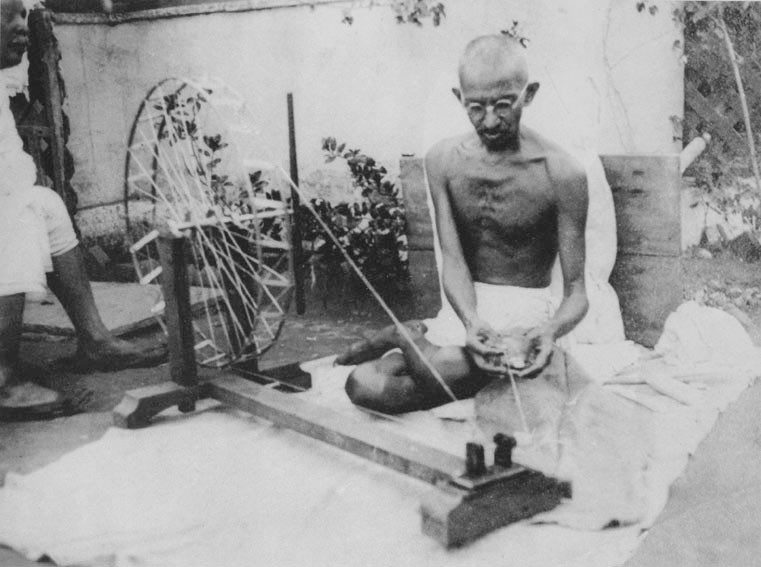
In 1934 Gandhi resigned from the Indian National Congress. He went to live in a village in central India, and devoted himself to helping the poor. He took up spinning and weaving by hand to encourage other people to earn money in this way.
Partition and independence
Indian independence from Britain came finally after the end of World War II, in 1947. All his life, Gandhi had worked hard to bring Hindus and Muslims in India together. But the British decided to partition (divide up) the Indian subcontinent between states that had either mostly Hindu or mostly Muslim populations. Much violence followed as around 12 million Hindu and Muslim (and Sikh) refugees who lived on the “wrong” side of the new borders moved between the newly created nations of India and Pakistan.
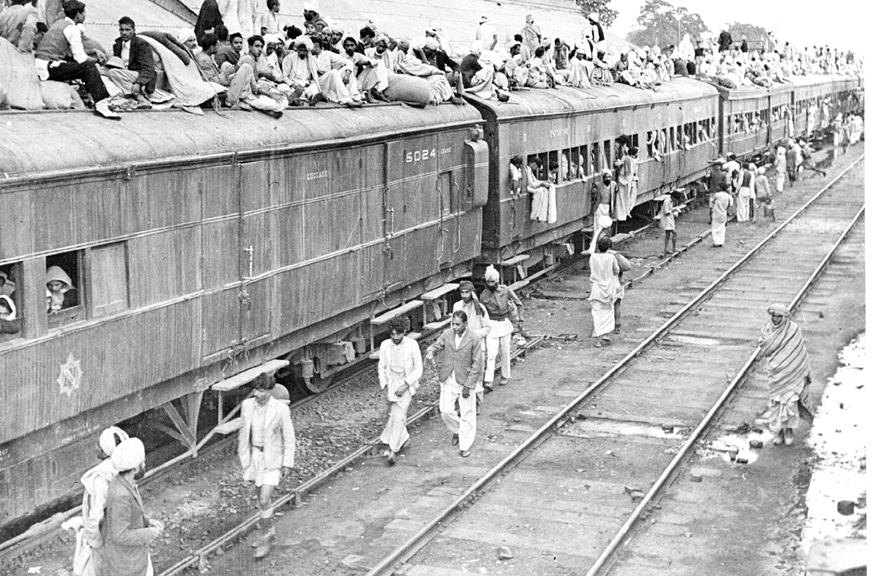

Gandhi campaigned to bring the violence to an end in Calcutta and Delhi. It was in Delhi, on his way to a prayer meeting, that he was shot dead by a Hindu fanatic on 30th January 1948.
Consultant: Philip Parker
Ready to find out more?
Here are some pages in another part of Q-files you might like to explore:
Mahatma Gandhi
British India