
EASY READ United States history

CITE
We have made every effort to follow citation style rules, but there may be some minor differences. If in doubt, please refer to the appropriate citation style manual.
EASY READ When did people first set foot on the Moon?. (2025). In Q-files Encyclopedia, History, EASY READ United States history. Retrieved from
https://www.q-files.com/history/easy-read-united-states-history/easy-read-when-did-people-first-set-foot-on-the-moon
"EASY READ When did people first set foot on the Moon?." History, EASY READ United States history, Q-files Encyclopedia, 5 Dec. 2025.
https://www.q-files.com/history/easy-read-united-states-history/easy-read-when-did-people-first-set-foot-on-the-moon.
Accessed 30 Oct. 2026.
EASY READ When did people first set foot on the Moon? 2025. History, EASY READ United States history. Retrieved 30 October 2026, from
https://www.q-files.com/history/easy-read-united-states-history/easy-read-when-did-people-first-set-foot-on-the-moon
History, EASY READ United States history, s.v. "EASY READ When did people first set foot on the Moon?," accessed October 30, 2026.
https://www.q-files.com/history/easy-read-united-states-history/easy-read-when-did-people-first-set-foot-on-the-moon


When did people first set foot on the Moon?
The first man to fly in a spacecraft and orbit the Earth was Yuri Gagarin. He was a cosmonaut from the Soviet Union (the name of the former union of Russia and its neighbouring states). In 1961, US president John F. Kennedy announced that the United States would land a man on the Moon before the end of the 1960s. The mission was carried out by the National Aeronautics and Space Administration (NASA). A new spacecraft specially designed for the mission, called Apollo, was built. After a series of test flights, Apollo 11 successfully landed two astronauts on the Moon in July 1969.

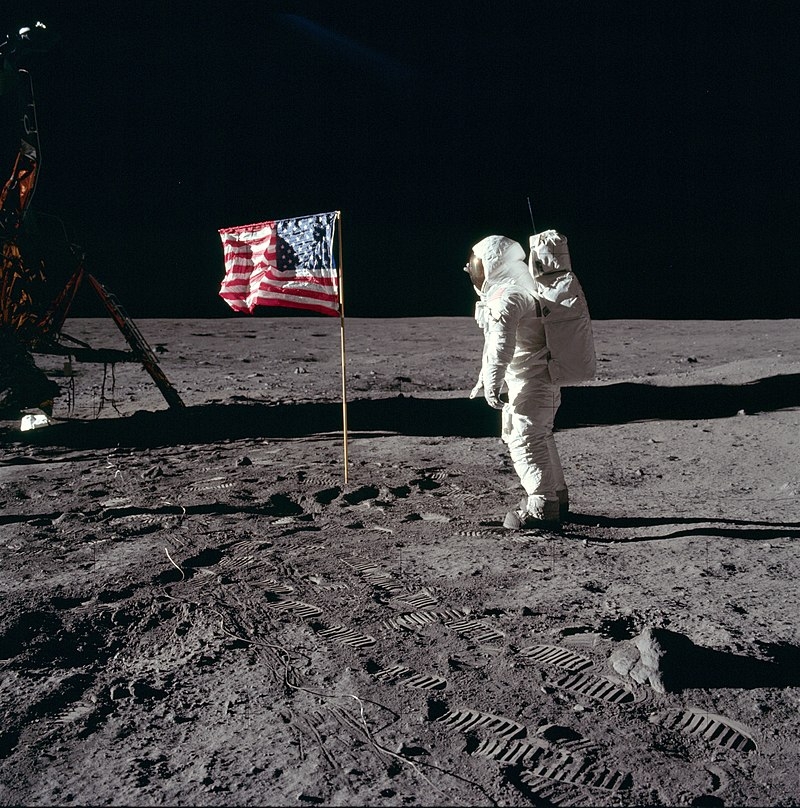

Apollo programme
A series of Apollo missions took place in the 1960s. Different Apollo spacecraft, numbered 1 to 10, carried out orbits of the Earth and the Moon. The first manned flight of Apollo (Apollo 7) took place in 1968. Apollo 8 was the first manned spacecraft to orbit the Moon. Astronauts were carefully trained for the Moon landing.
Saturn V
The enormous Saturn V rocket was built to launch the Apollo spacecraft. It consisted of three rocket stages. The engines of each stage fired until their fuel ran out. That stage was then jettisoned (cast off) and the engines of the next stage fired. The rocket became lighter each time a stage was lost, allowing it to accelerate more easily.
On top of the 111-metre (364-foot) rocket, as high as a 30-storey skyscraper, were the Lunar Module, Service Module and Command Module, the three parts of the Apollo spacecraft.

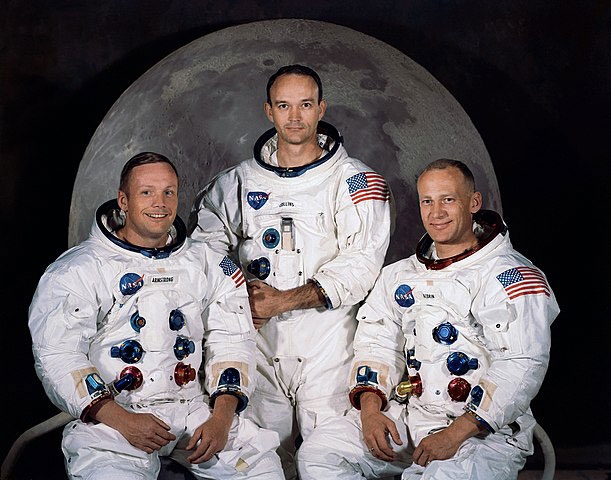
Journey to the Moon
Saturn V, carrying Apollo 11, lifted off from the Kennedy Space Center in Florida on 16th July 1969. On board were three US astronauts: Neil Armstrong, Edwin "Buzz" Aldrin and Michael Collins. As the rocket soared into the atmosphere and fuel was used up, its first and second stages were jettisoned, leaving the third stage to power Apollo into Earth orbit. Finally the third stage fell away and Apollo headed for the Moon.
Lunar landing
Apollo entered into orbit around the Moon. One astronaut, Collins, stayed in one part of the spacecraft, called Columbia, while Armstrong and Aldrin moved into the Lunar Module, called Eagle. This then separated from Columbia and descended to the Moon. Columbia continued in orbit around the Moon while Eagle landed on the Moon's surface.

On the Moon

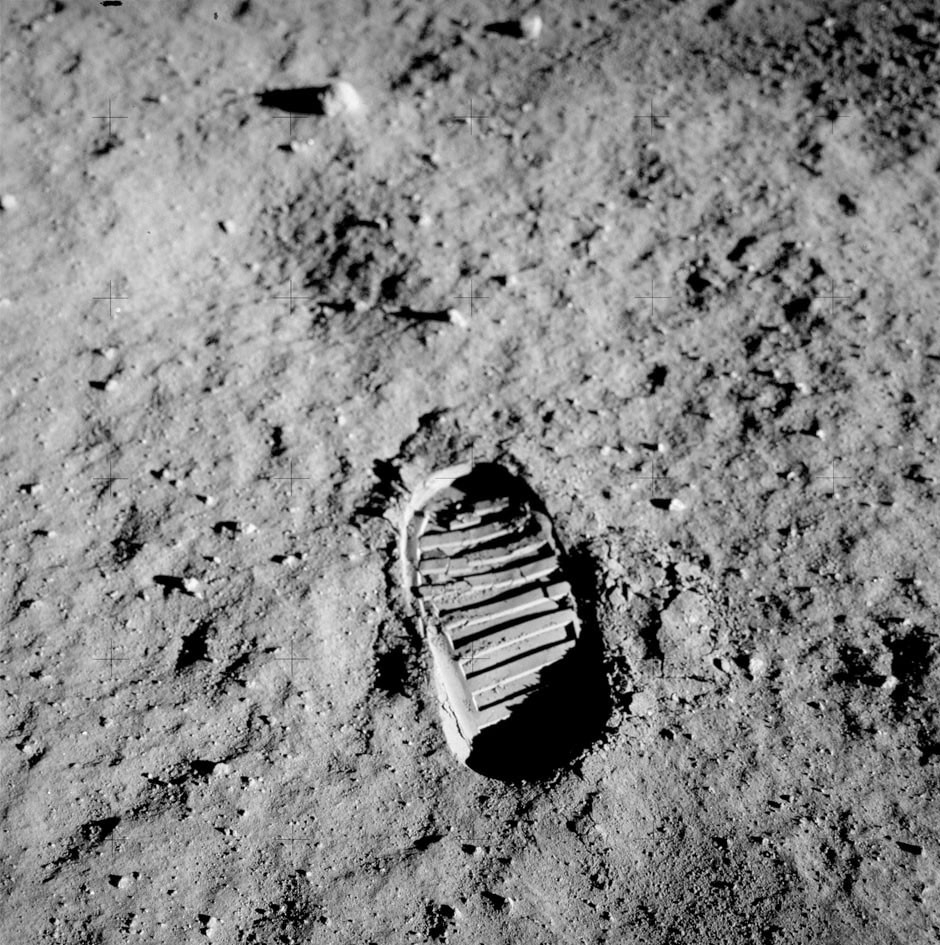
Apollo 11’s Lunar Module, Eagle, touched down on the surface of the Moon at 8.17 pm on 20th July 1969. A few hours later, Armstrong became the first person to stand on the lunar surface. As he stepped off Eagle's footpad, he spoke these words: "That's one small step for a man, one giant leap for mankind." He was soon followed by Aldrin. The two astronauts spent 150 minutes gathering rock and soil samples. They also set up scientific instruments.
The Apollo astronauts left behind a plaque, fixed to Eagle's ladder. On it are two drawings of Earth and an inscription which reads: "Here men from the planet Earth first set foot upon the Moon, July 1969 A.D. We came in peace for all mankind."


Return home
Armstrong and Aldrin returned to the Lunar Module. A few hours later, the upper part of Eagle, the ascent stage, lifted off from the Moon's surface. It then docked with Columbia, which was still in orbit around the Moon. Armstrong and Aldrin crawled through to rejoin Collins. The Lunar Module was then jettisoned, and Columbia set off for Earth.
In preparation for the descent to Earth, Columbia's Command Module separated from the rest of the spacecraft. Parachutes slowed its drop into the Pacific Ocean. Here the astronauts were picked up by US Navy helicopters.

The three men then spent the next 21 days inside a Mobile Quarantine Facility as a precaution, in case they had picked up any unknown micro-organisms during the mission. They emerged as heroes.
Consultant: Philip Parker
Ready to find out more?
Here are some pages in other parts of Q-files you might like to explore:
Apollo mission
Moon
Story of space transport
Astronauts
pics

Without in any way limiting Q-files Ltd’s exclusive rights under copyright, any use of this publication to “train” generative artificial intelligence (AI) technologies to generate text is expressly prohibited. Q-files Ltd reserves all rights to license use of this work for generative AI training and development of machine learning language models.