
Exploration

CITE
We have made every effort to follow citation style rules, but there may be some minor differences. If in doubt, please refer to the appropriate citation style manual.
African exploration. (2022). In Q-files Encyclopedia, History, Exploration. Retrieved from
https://www.q-files.com/history/exploration/african-exploration
"African exploration." History, Exploration, Q-files Encyclopedia, 13 Sep. 2022.
https://www.q-files.com/history/exploration/african-exploration.
Accessed 6 Aug. 2026.
African exploration 2022. History, Exploration. Retrieved 6 August 2026, from
https://www.q-files.com/history/exploration/african-exploration
History, Exploration, s.v. "African exploration," accessed August 6, 2026.
https://www.q-files.com/history/exploration/african-exploration


African exploration
During the 18th and 19th centuries European explorers ventured into parts of Africa never before visited by white people. They wanted to learn about the geography and people of Africa—as well as what raw materials could be obtained. They also wanted to find new markets for European goods. One goal that particularly fascinated European geographers and explorers was finding the source of the River Nile, which came to be known as the "Great Prize".

Exploring the
River Niger
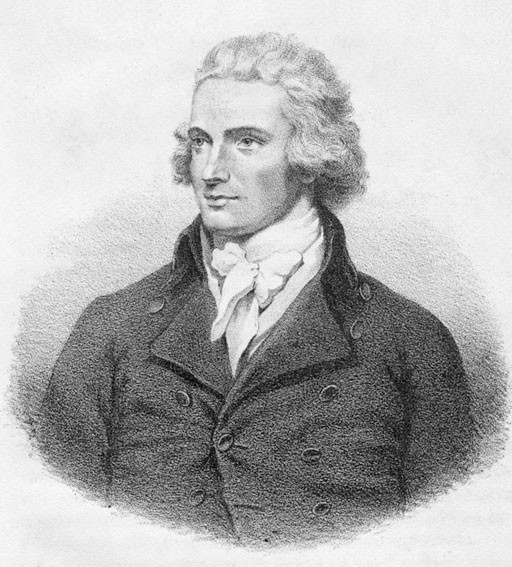
By the 18th century, European travellers had mapped Africa’s entire coastline in detail. However, the interior of the continent remained largely unexplored. Many Europeans believed that the River Niger led to rich trading opportunities further inland. In 1788, Englishman Sir Joseph Banks founded the African Association to encourage exploration of the so-called “Dark Continent”. Scotsman Mungo Park (1771–1806) was chosen to lead the African Association’s first expedition to West Africa. In 1795, he travelled along the River Gambia. Despite being attacked and robbed by tribesmen, he reached the River Niger in 1796.
Park discovered that the Niger flowed eastwards, not westwards as most people believed. He revisited Africa in 1805 and followed the course of the Niger more than 1600 kilometres (1000 miles) inland. However, he was killed when his canoe was ambushed by natives.
In 1830, English brothers Richard and John Lander set out from Bussa in West Africa to explore the River Niger. They were kidnapped by local people en route to the coast, but they escaped and became the first Europeans to reach the mouth of the river. In 1831, they returned safely to Britain, where John remained. Richard returned to Africa the following year, where he died after being attacked by African tribesmen in 1834.


René Caillié
In the 1820s, the Geographical Society of Paris offered a prize to the first European to survive a trip to the fabled city of Timbuktu (in modern-day Mali). In 1827 Frenchman René Caillié (1799–1838) took up the challenge. He started his journey in West Africa and travelled around 2400 kilometres (1700 miles), mostly on foot, to the mysterious city, which lies on the edge of the Sahara Desert.
The local Muslims were hostile to Christians, so Caillié dressed as an Arab. He was disappointed to find that the city’s inhabitants lived in simple mud huts, not golden palaces as he had expected. On his return home, Caillié was awarded the prize of 10,000 francs by the Society.
Burton and Speke

Finding the true source of the River Nile fascinated European explorers. In 1856, the British Royal Geographical Society sent Richard Burton (1821–1890) and John Hanning Speke (1827–1864) to East Africa. First, they travelled from Zanzibar to Lake Tanganyika. They had to contend with wild animals, difficult terrain, hostile locals and serious illness. African porters had been hired to carry their equipment, but many of them abandoned the expedition. Burton fell seriously ill, so Speke continued alone.
Speke found the great lake known as Ukerewe, which he renamed Lake Victoria. He rightly declared this to be the source of the Nile (although modern geographers argue that Lake Victoria has several rivers flowing into it and that the Nile's sources lie at their beginnings). Burton and Speke returned home separately and disagreed very publicly over whether Speke had actually proved the source of the Nile.


Consultant: Philip Parker
Timeline
1768–73
Scottish traveller James Bruce searches for the source of the River Nile.
1788
The African Association is founded by Sir Joseph Banks.
1795–1806
Mungo Park explores the River Niger.
1827–28
René Caillié visits Timbuktu disguised as an Arab.
1830
The Lander brothers discover the mouth of the River Niger.
1844–55
German Heinrich Barth explores West Africa and the Sahara Desert. He disguises himself as an Arab by staining his skin and wearing Arab clothes.
1853–56
David Livingstone becomes the first European to cross Africa from east to west.
1857–58
Burton and Speke search for the source of the River Nile.
1862
Speke discovers the source of the Nile at the Ripon Falls on Lake Victoria.
1874–77
Henry Stanley sails down the River Congo.
1893–95
Englishwoman Mary Kingsley makes two journeys to West Africa. She collects specimens for the British Museum and spends time with Fang cannibals.
pics
Without in any way limiting Q-files Ltd’s exclusive rights under copyright, any use of this publication to “train” generative artificial intelligence (AI) technologies to generate text is expressly prohibited. Q-files Ltd reserves all rights to license use of this work for generative AI training and development of machine learning language models.