
Japan

CITE
We have made every effort to follow citation style rules, but there may be some minor differences. If in doubt, please refer to the appropriate citation style manual.
Edo and Meiji Japan. (2026). In Q-files Encyclopedia, History, Japan. Retrieved from
https://www.q-files.com/history/japan/edo-and-meiji-japan
"Edo and Meiji Japan." History, Japan, Q-files Encyclopedia, 31 Mar. 2026.
https://www.q-files.com/history/japan/edo-and-meiji-japan.
Accessed 21 Sep. 2026.
Edo and Meiji Japan 2026. History, Japan. Retrieved 21 September 2026, from
https://www.q-files.com/history/japan/edo-and-meiji-japan
History, Japan, s.v. "Edo and Meiji Japan," accessed September 21, 2026.
https://www.q-files.com/history/japan/edo-and-meiji-japan


Edo and Meiji Japan
From the 1630s, the ruling Tokugawa shoguns shut Japan down for more than 200 years. Few foreign visitors were allowed in and no Japanese were allowed out. Nearly all trade and contact between Japan and foreign nations was closed down. Although Japan was cut off from the rest of the world, there was peace. Warlike nobles were kept in their own castles. The emperors lived quietly in their palace in Kyoto. From the mid-19th century, Japan started to come out of its isolation. By the first decades of the 20th century, it had laid the foundations of a modern, industrialized nation state.

Edo period
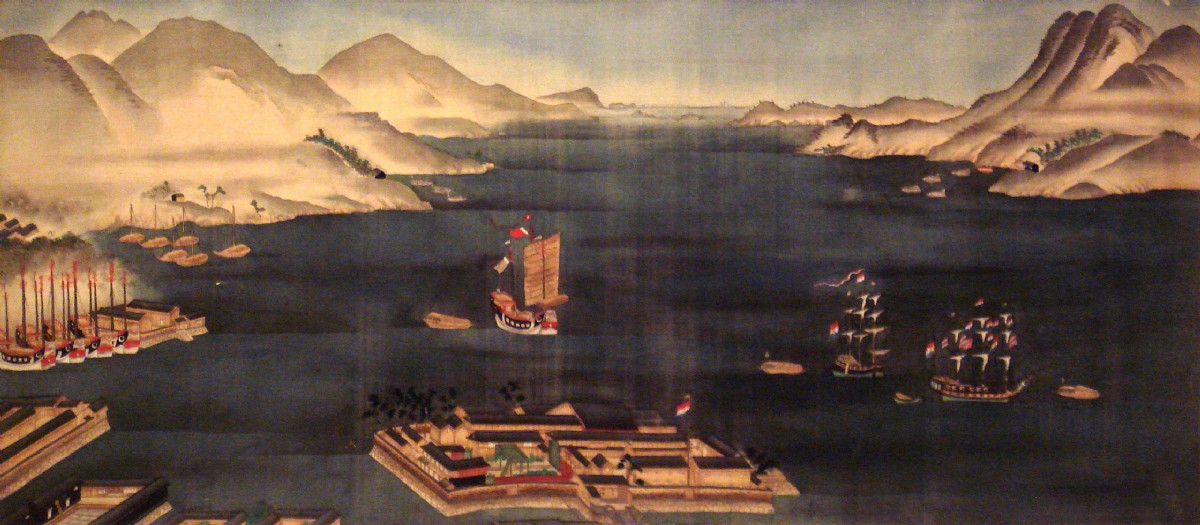
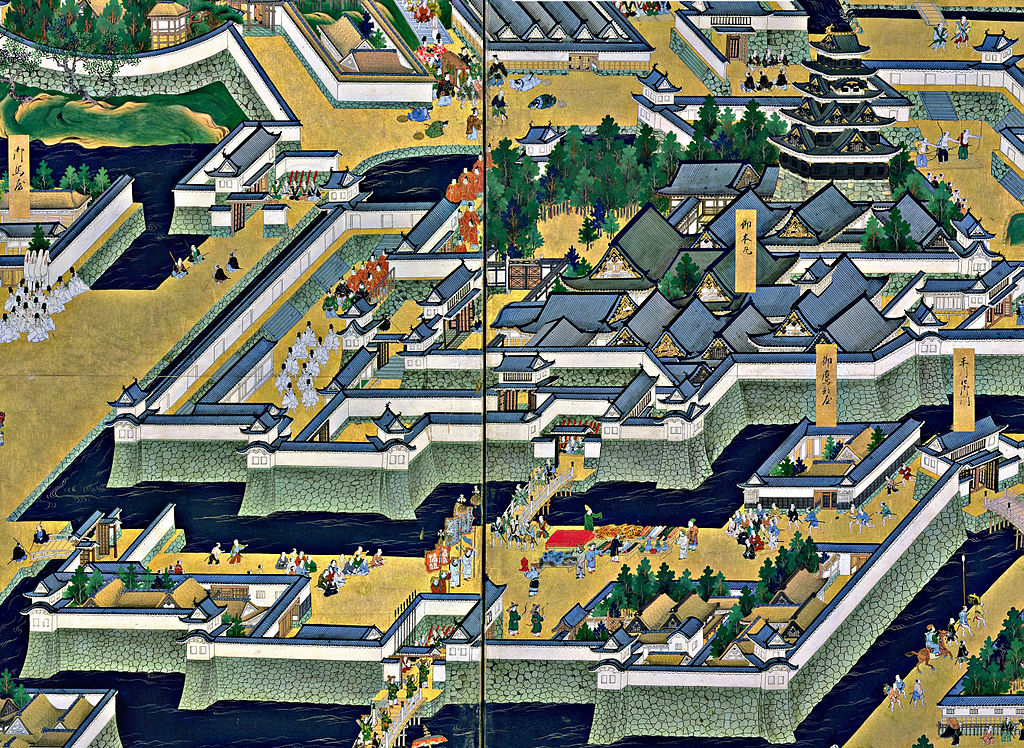
From 1603 to 1868, Japan's shoguns belonged to the Tokugawa clan. They ruled from Edo castle (in present-day Tokyo), so these years became known as the Edo period. To begin with, trade with European countries grew and Christianity began to become popular. But the shoguns soon saw Christianity as a threat to stability. After the Christian-led Shimabara Rebellion of 1638, the religion was completely outlawed in Japan.
The shoguns also wanted to take total control over foreign trade. In the 1630s, Tokugawa Iemitsu enacted a series of laws, called sakoku, which forebade foreigners from entering Japan and Japanese citizens from leaving. Trade was permitted only with the Netherlands, China and Korea—and firmly under the shogun's control.
The Tokugawa shoguns imposed their authority over the Japanese people by introducing harsh penalties for even the most minor offences. But they also oversaw a long period of economic growth, the result of a policies aimed at increasing levels of literacy and numeracy. During the first century of Tokugawa rule, Japan's population doubled to 30 million.

Hasekura's mission
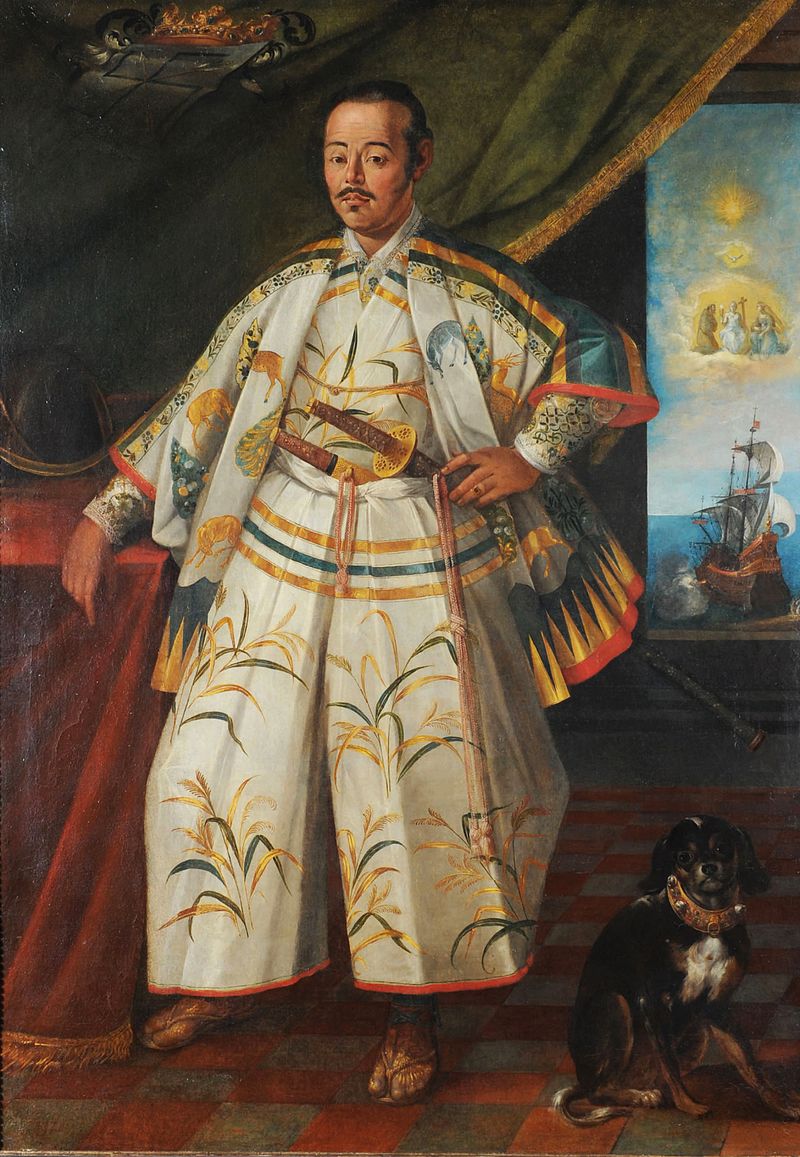
In the early 17th century, efforts were made by Japanese rulers to establish links with Europe. In 1613, Hasekura Tsunenaga, a samurai of imperial descent, headed a diplomatic mission to Europe. He set sail across the Pacific Ocean, travelled overland through Mexico—then New Spain, part of the Spanish Empire—before crossing the Atlantic to Europe. In Spain he met King Philip III and was baptized into the Catholic church. Hasekura went on to Rome where, in 1615, he met Pope Paul V. He presented the pope with a request for a trade treaty between Japan and Mexico, and an invitation for Christian missionaries to visit Japan. By this time, however, Tokugawa Ieyasu had begun the persecution of Christians in Japan. For this reason Philip III refused the trade agreements Hasekura had been seeking. His mission a failure, Hasekura returned to Japan by the same route he had come, arriving in 1620. He died a year or two later.

The end of Tokugawa rule


In 1854, the visit of an American expedition led by Commodore Matthew C. Perry began to change things. The shogunate had no defence against Perry's warships and had to agree to his demands that American goods be allowed to be sold into Japan. As a result of what were known as the Unequal Treaties, Japan was forced to start trading with the United States and other Western countries. At the same time, ordinary people protested over their poor working conditions. The Tokugawa shoguns' grip on power was loosening.
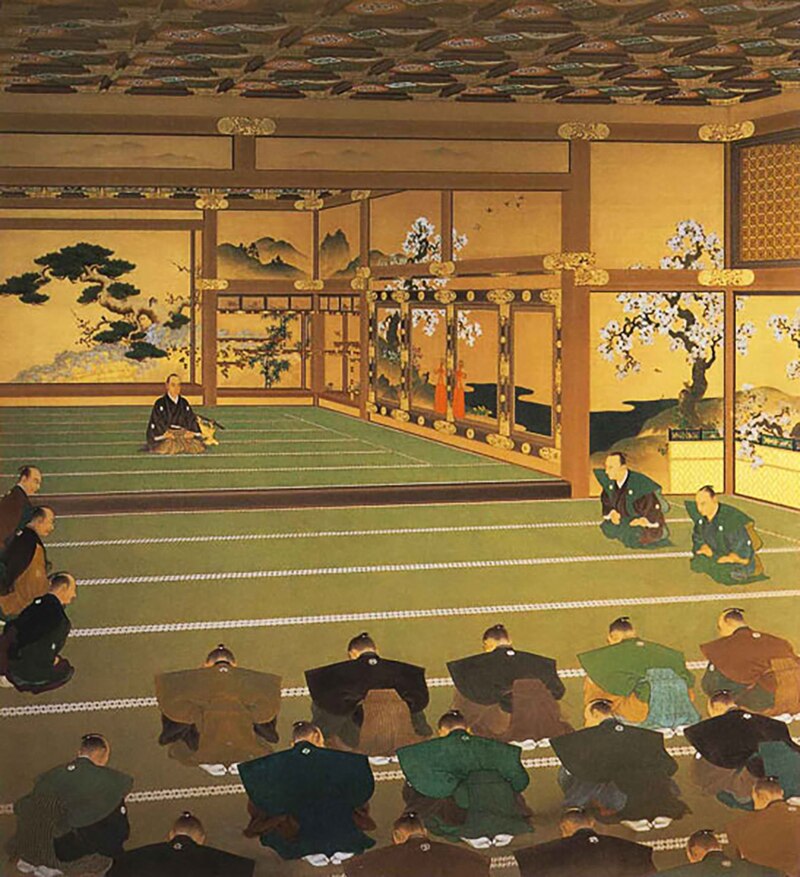
The shogunate's failure to oppose the Western powers angered many Japanese, particularly those of the southern domains of Choshu and Satsuma. The two formed an alliance to restore the rule of the emperor and overthrow the Tokugawas. The last shogun, Tokugawa Yoshinobu, was forced to resign in 1867. Following a Proclamation made in January 1868, the new young emperor, Meiji, took over the government of Japan.
Boshin War
Choshu and Satsuma encouraged Meiji to abolish the House of Tokugawa by decree. This led Yoshinobu to launch a military campaign to seize the emperor's court in Kyoto, beginning the Boshin War. But after a series of defeats in battle, Yoshinobu was forced to surrender. Those loyal to him retreated to northern Honshu and then to Hokkaido, where they founded the Republic of Ezo. Their final defeat at the Battle of Hakodate (also called the Battle of Goryokaku), fought between December 1868 and June 1869, left the emperor as the supreme ruler throughout the whole of Japan, completing the Meiji Restoration.
Meiji era
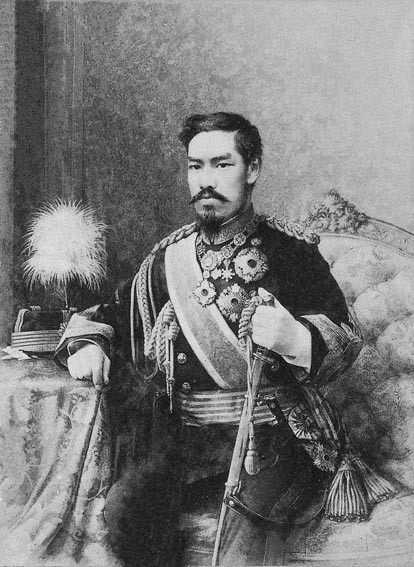
In 1869, the emperor, still only 16, and his family moved into the shoguns' old palace at Edo, which was renamed Tokyo ("eastern capital"). But Meiji was to rule in name only: the most powerful men in his government were the former samurai from Choshu and Satsuma who had defeated the Tokugawa. Insistent on Japan becoming a modern nation state that could stand equal to the Western powers, these men, known as the Meiji oligarchs, would oversee the dramatic changes Japan would experience during the Meiji era.
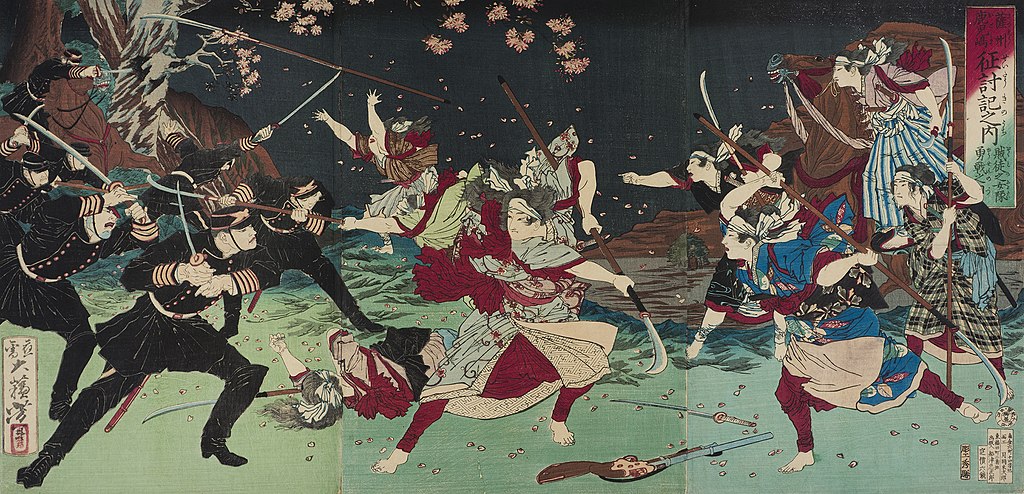
The Meiji government abolished the old Edo class structure and brought in sweeping tax reforms. Railways and telegraph lines were constructed, a modern education system introduced and the study of medical science encouraged. Japan now underwent rapid industrialization, adopting Western technology and building factories for manufacturing a wide range of goods. The rapid industrial growth drew many people from the countryside to live and work in Japan's cities. Most people lived longer and healthier lives. The Japanese population rose from 34 million in 1872 to 52 million by 1915.

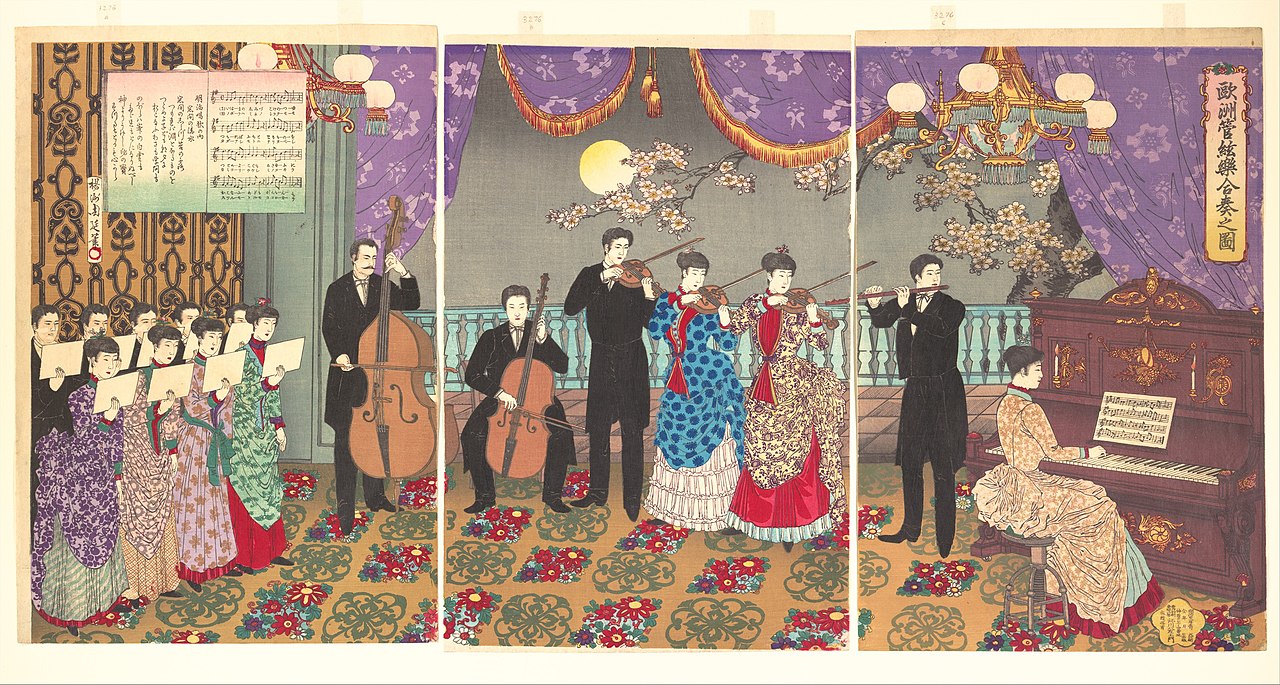
While Japan was open to Western influence and culture (many people in the cities adopted Western clothing and hairstyles), the ancient Japanese religion of Shinto became the state religion. Patriotism and loyalty to the emperor was taught in schools. The Japanese people were encouraged to see themselves as a great nation led by their god-emperor. The government believed that Japan had to acquire its own colonies to compete with Western colonial powers such as Britain, France and the US. To that end, it developed a modern powerful army and navy.
War with China
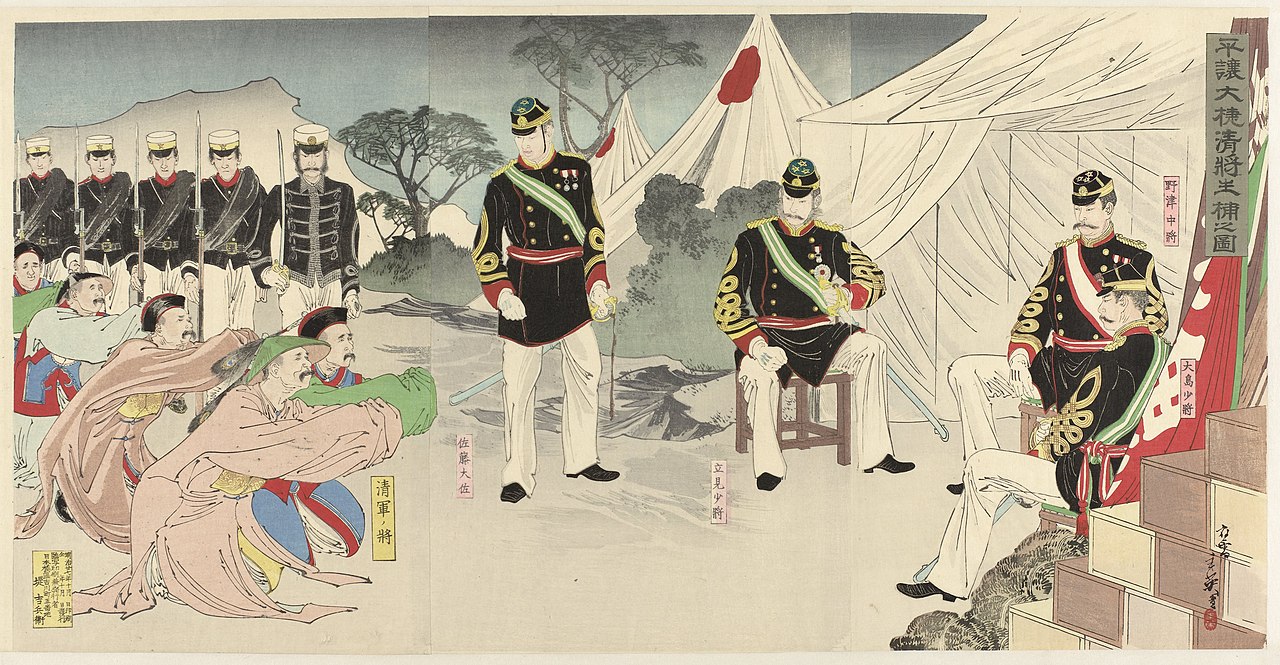
In the late 19th century, Japan viewed Korea, then a tributary state of Qing dynasty China, as a prime target for expanding its empire. War broke out in 1894 between Japan and China over their competing interests in Korea. Japan's forces were victorious in 1895 and, in the peace treaty that followed, China was forced to cede Taiwan and the Penghu Islands, as well as its dominance over Korea, to Japan.
Russo-Japanese War
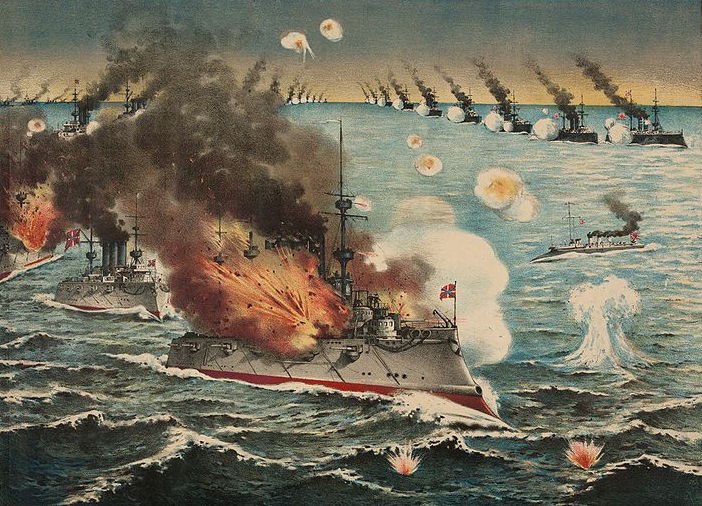
Japan next clashed with Russia. The Russo-Japanese War, which broke out in 1904, was fought over rival ambitions of the two empires in Manchuria and Korea. After negotiations broke down, Japan launched a surprise attack on the Russian Pacific Fleet at Port Arthur, Manchuria, in February 1904. Its army then overpowered Russian troops at the Battle of the Yalu River on the border between Korea and China in May. Early the following year, 1905, Japanese troops took Port Arthur after a long siege, then captured Mukden, the Manchurian capital, in March. Finally, its navy destroyed the Russian Baltic Fleet at the Battle of Tsushima in May, securing Japanese victory in the war.
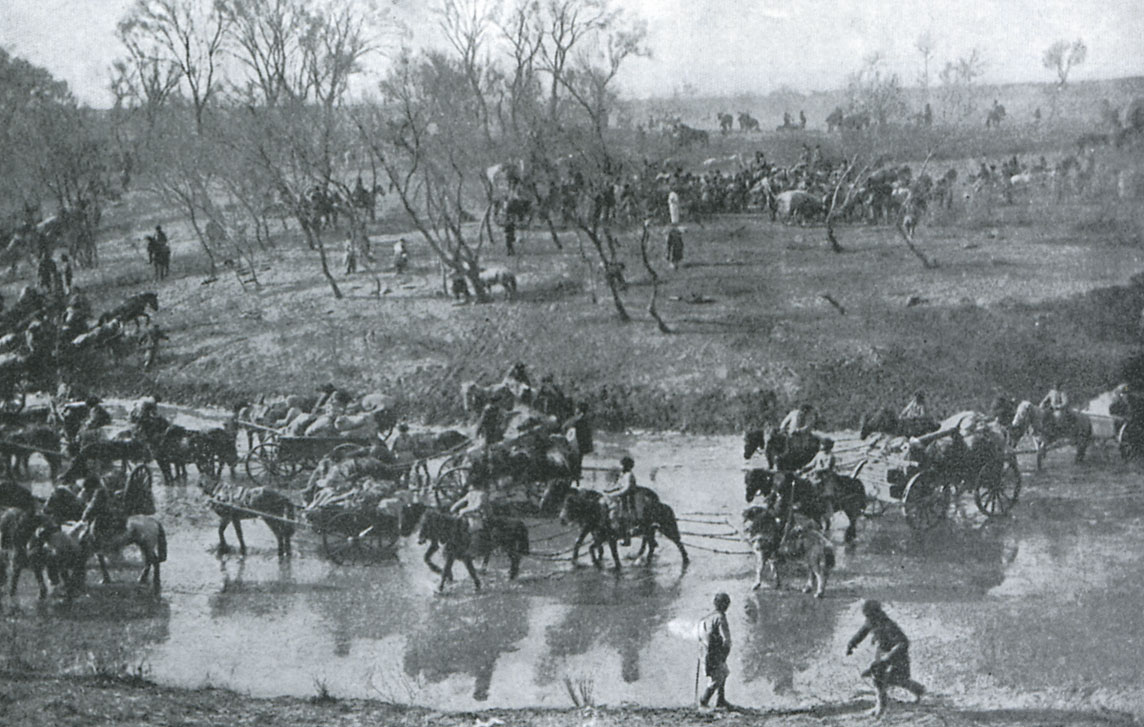
By the peace treaty, Korea became a protectorate of Japan (it was fully annexed in 1910). Control of the South Manchuria Railway, the southern half of the island of Sakhalin and Russia's leases on the Liaodong Peninsula were all handed over to Japan. The defeat of Russia established Japan as the main power in Asia.
Taisho era
During the short reign of Emperor Taisho (1912–26), democratic reforms were introduced: all male subjects over the age of 25 were given the right to vote. However, Japan's military leaders gained more and more power and would begin to overrule government decisions in the 1920s and 30s. Japan took part in World War I on the side of the Allies, and, after the Allied victory in 1918, it gained control of various islands in the South Pacific.
The Great Kanto earthquake in September 1923 left over 100,000 dead. Immediately afterwards, the Kanto Massacre began, in which at least 6000 Korean residents of the Kanto region were murdered by Japanese mobs—including the police and military. This happened after rumours emerged, without evidence, that Koreans had been poisoning wells. The rumours were later described as false by many Japanese sources.


Consultant: Philip Parker
pics
Without in any way limiting Q-files Ltd’s exclusive rights under copyright, any use of this publication to “train” generative artificial intelligence (AI) technologies to generate text is expressly prohibited. Q-files Ltd reserves all rights to license use of this work for generative AI training and development of machine learning language models.