
United States history
American Civil War
The American Civil War was fought between 1861 and 1865. In November 1860, Abraham Lincoln was elected as president. He was known for his opposition to slavery. Almost immediately, seven Southern states whose economies depended on slavery declared their secession (withdrawal) from the United States, followed shortly by four others. They formed the Confederate States of America, or the Confederacy. The other 24 states, known as the Union, supported the US government. After four years of war, the Confederacy surrendered. On 6th December 1865, the Thirteenth Amendment to the US constitution was adopted: it abolished slavery throughout the nation.
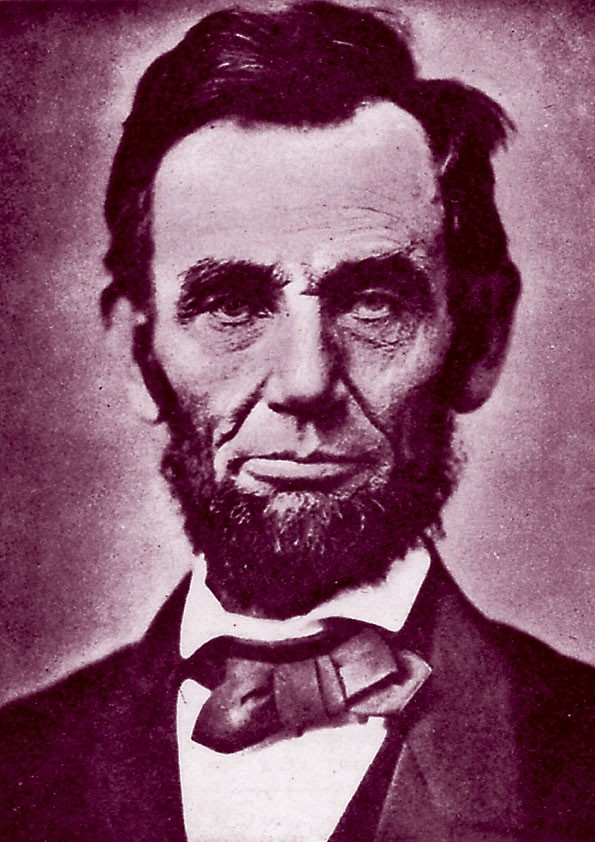
War breaks out

The war began on 12th April 1861, when Confederate forces attacked Fort Sumter in South Carolina. The Union responded by seizing control of the northernmost Confederate states and setting up a naval blockade, preventing any goods entering or leaving the Confederacy. The Confederacy repelled Union efforts to capture its capital, Richmond, Virginia.
Victory for the Union
After gaining a number of victories in the east early in the war, the Confederates were forced to withdraw at the Battle of Antietam in September 1862. Confederate General Robert E. Lee's advance was halted at the Battle of Gettysburg the following year. Following his success against Confederate forces in the west, Ulysses S. Grant was given command of the entire Union army in 1864. He launched several attacks on the Confederacy, taking Richmond, Atlanta and Petersburg. Lee surrendered to Grant at the Battle of Appomattox Court House on 9th April 1865.
After the Civil War
Within days of the end of the Civil War, President Abraham Lincoln was shot while attending a performance at Ford’s Theatre in Washington, D.C. He died the following morning, 15th April 1865. His assassin was John Wilkes Booth, a famous actor, a Confederate sympathizer and supporter of slavery. The new president, Andrew Johnson, was faced with the challenge of rebuilding the Union while pro-slavery feeling ran high in the South, despite the adoption of the Thirteenth Amendment which abolished slavery throughout the US. Just after the war, Southern state governments passed a series of laws called the black codes, which denied African Americans many basic rights.

Reconstruction
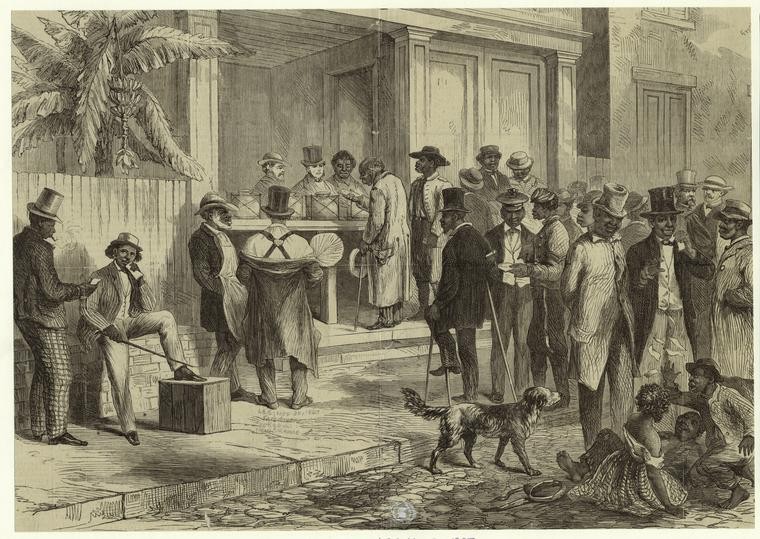
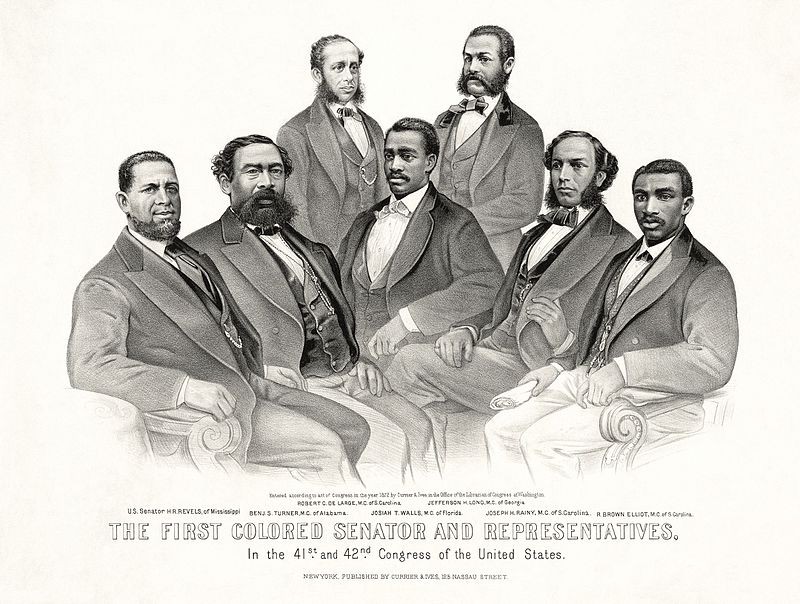
During what became known as the Reconstruction Era, 1865–1877, US federal laws were passed to provide civil rights protections in the South for freedmen, the four million African Americans who had formerly been slaves, together with free black people. Congress also approved the Fourteenth Amendment, which granted birthright citizenship to former slaves, and the Fifteenth Amendment, which guaranteed that a citizen’s right to vote would not be denied “on account of race, colour or previous condition of servitude.” Some African Americans won election to southern state governments and even to the US Senate and Congress.
Jim Crow laws
Many southern white people were fiercely opposed to the laws that were passed during the Reconstruction Era. White supremacists in Tennessee formed the Ku Klux Klan, a secret organization that set out to terrorize southern African Americans. From the 1880s, southern states' governments started passing what were known as “Jim Crow” laws: state laws which undercut federal legislation (laws passed by Congress) in order to deny black people equal rights, enforce racial segregation (the practice of forcing members of different races to use separate public facilities), and restrict the ability of black people to vote.
Great Migration
The great majority of America's black population suffered severe poverty at this time. Most former slaves in the South became sharecroppers: they leased plots of land from their former masters in exchange for a share of the crops they grew. This often left sharecroppers in debt to the landowners, putting them in a position which resembled slavery. From about 1915 onwards, many black people turned their backs on racial oppression in the South and headed north in what came to be called the Great Migration. Each year, thousands left to work in the rapidly growing industrial cities of the North, chiefly Philadelphia, Detroit, Chicago, Cleveland and New York.

Consultant: Steve Gallo
American Civil War timeline
6th November 1860
Republican Party candidate Abraham Lincoln elected 16th President of the United States.
20th December 1860
South Carolina, one of the richest states in the country, is the first state to secede (separate) from the Union, citing Northern hostility to slavery as its reason for doing so.
January 1861
Mississippi, Florida, Alabama, Georgia and Louisiana all secede from the Union. Texas secedes on 1st February 1861.
8th February 1861
The seceded states meet in Montgomery, Alabama, and adopt a provisional constitution, officially establishing the Confederate States of America.
18th February 1861
Jefferson Davis is inaugurated as president of the Confederate States of America.
4th March 1861
In his first inaugural address, President Lincoln calls for peace with the seceding states, declaring, “I have no purpose directly or indirectly to interfere with the institution of slavery in the States where it exists”.
12th April 1861
Fort Sumter, off the coast of South Carolina, comes under fire from Confederate troops under General Pierre Beauregard.
15th April 1861
President Lincoln issues a Proclamation calling on the Northern states to supply 75,000 militiamen to stop the rebellion.
17th April 1861 to 21st May 1861
Virginia, Arkansas, Tennessee and North Carolina side with the Confederacy and secede from the Union.
19th April 1861
President Lincoln orders a blockade of Southern ports.
21st July 1861
First Battle of Bull Run. Union army under General Irwin McDowell attacks Confederate troops near Manassas, Virginia. Confederate General Thomas J. Jackson earns the nickname "Stonewall," as his brigade resists Union attacks. The arrival of Confederate reinforcements ensures their victory. The Union army retreats to Washington, D.C.
6th February 1862
Union General Ulysses S. Grant is victorious in Tennessee, capturing Fort Henry, and ten days later Fort Donelson. He earns the nickname "Unconditional Surrender" Grant.
9th March 1862
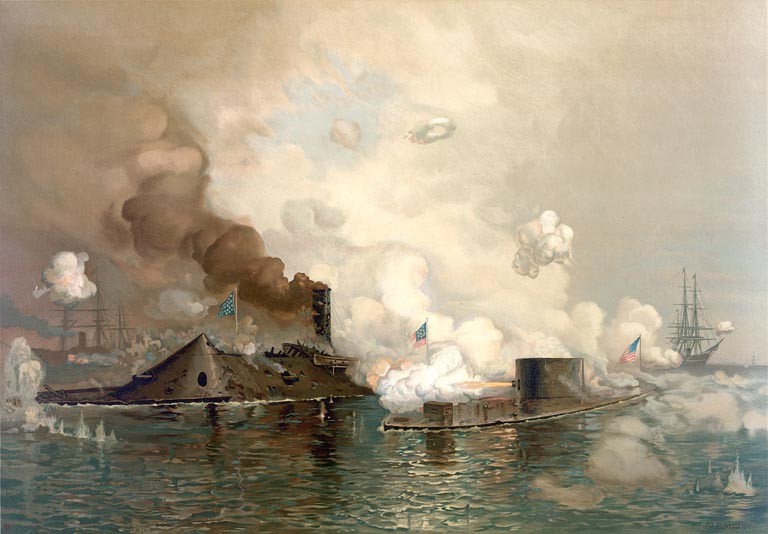
The naval battle between the USS Monitor and the CSS Virginia (previously USS Merrimac), the first "ironclad" ships, is fought in Hampton Roads, Virginia.
7th April 1862
A Confederate surprise attack on Grant's troops at Shiloh on the Tennessee River results in 13,000 Union and 10,000 Confederate soldiers killed or wounded.
17th July 1862
Congress approves the enrolment of black troops in the Union army.
30th August 1862
Second Battle of Bull Run. Union army defeated by the Confederate army, under generals Thomas J. “Stonewall” Jackson and Robert E. Lee, a second time.
17th September 1862
Battle of Antietam, Maryland, the bloodiest single day of the Civil War, halts General Lee’s first bid to invade the North.
1st January 1863
Lincoln issues the Emancipation Proclamation, stating that slaves in territories held by Confederates are free. The proclamation means that the war has changed from a fight to maintain the Union to a struggle to end slavery.
19th May 1863
Siege of Vicksburg, Mississippi begins, with Union forces under General Ulysses S. Grant attacking Confederate defences outside the city. The siege lasts for six weeks.
9th June 1863
Battle of Brandy Station, Virginia. Union cavalry forces cross the Rapidan River to attack the Confederate cavalry. It is the largest cavalry battle of the Civil War.
1st July 1863 to 3rd July 1863
Battle of Gettysburg. Confederate troops under General Robert E. Lee invade Pennsylvania but are routed by the Union army. Confederate forces will not invade Union territory for the rest of the war.
4th July 1863
The Siege of Vicksburg ends in victory for the Union army under General Ulysses S. Grant. The capture of Vicksburg gives the Union control of the Mississippi River, a vital supply line for the Confederate states in the west.
13th July 1863 to 16th July 1863
July Draft Riots in New York. Working-class and mostly Irish men in New York refuse to be drafted to fight, angered by a system that favours the rich. Mobs attack both draft offices and African Americans, leading to an estimated 120 deaths. Troops from Gettysburg are sent to restore order.
21st August 1863
Confederate supporter William C. Quantrill and 450 pro-slavery men raid the town of Lawrence, Kansas, and butcher 182 boys and men.
19th November 1863
The Gettysburg Address. Lincoln speaks at the dedication ceremony of the Soldiers’ National Cemetery for the Gettysburg war dead. He emphasises the unity of the nation.
25th November 1863
The Siege of Chattanooga, Tennessee. Union troops break the Confederate siege of the city. The decisive Union victory forces the Confederate Army to retreat south into Georgia.
8th December 1863
Lincoln Issues his Proclamation of Amnesty and Reconstruction, in which a pardon is promised to those who participated in the “existing rebellion" if they take an oath of loyalty to the Union.
17th February 1864
The CSS H.L. Hunley, a seven-man submarine, torpedoes and sinks the USS Housatonic in the sea off Charleston, South Carolina. The Hunley and its crew are also lost.
1st September 1864
Under General William T. Sherman’s command, the Union army captures the Confederate stronghold of Atlanta.
8th November 1864
Lincoln is re-elected as president.
15th November 1864
General Sherman, with 62,000 men, begins the March to the Sea through Georgia.
January–February 1865
Union forces capture Confederate Fort Fisher in North Carolina, tightening the Union blockade of southern ports.
9th April 1865
General Lee surrenders at the Appomattox Courthouse, Virginia, marking the effective end of the Civil War.
14th April 1865
Lincoln is shot at the Ford Theatre in Washington, D.C. by John Wilkes Booth and dies early the next morning. Andrew Johnson becomes President.
2nd June 1865
The last Confederate army surrenders. The Civil War officially ends.
18th December 1865
The Thirteenth Amendment abolishing slavery is ratified.