
Vikings

CITE
We have made every effort to follow citation style rules, but there may be some minor differences. If in doubt, please refer to the appropriate citation style manual.
Everyday life in Viking times. (2022). In Q-files Encyclopedia, History, Vikings. Retrieved from
https://www.q-files.com/history/vikings/everyday-life-in-viking-times
"Everyday life in Viking times." History, Vikings, Q-files Encyclopedia, 10 Feb. 2022.
https://www.q-files.com/history/vikings/everyday-life-in-viking-times.
Accessed 23 Oct. 2026.
Everyday life in Viking times 2022. History, Vikings. Retrieved 23 October 2026, from
https://www.q-files.com/history/vikings/everyday-life-in-viking-times
History, Vikings, s.v. "Everyday life in Viking times," accessed October 23, 2026.
https://www.q-files.com/history/vikings/everyday-life-in-viking-times


Everyday life in Viking times
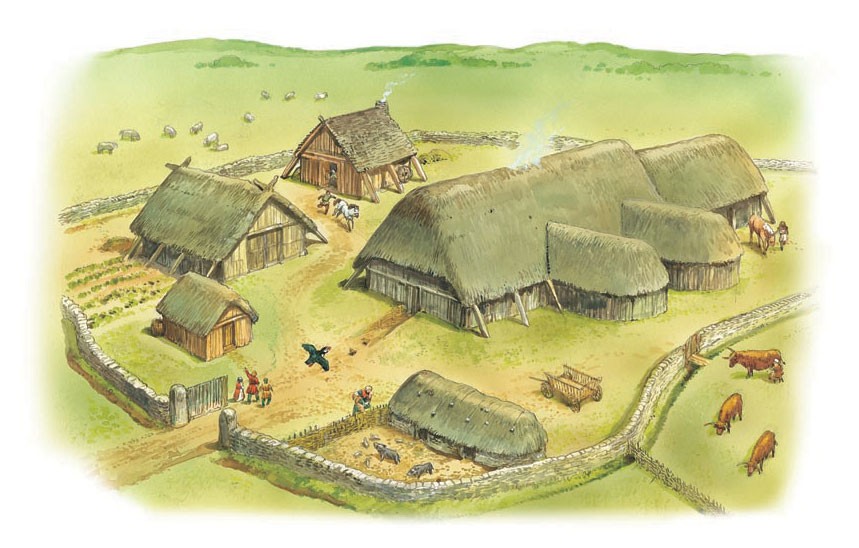
Most Vikings were farmers. They grew crops such as barley, oats and rye and kept cattle, goats, sheep, pigs, chickens and horses. In most parts of Scandinavia, people lived in timber houses, but in places where wood was scarce they built with turf or stone instead. Some Vikings worked as fishermen, catching freshwater and sea fish as well as hunting for whales. Salt was a vital commodity, usually bought from travelling merchants. It was used to preserve fish and meat to eat during the long winters, when fresh food was scarce.

Houses

Nearly all houses and workshops were made of timber. They were long and rectangular. The roofs were made of reeds or straw thatch. Other than at a blacksmith’s forge, there were no chimneys, only openings to allow smoke from the hearth to escape. Some poorer dwellings may have had just a single room with a hearth in the centre. With no windows, interiors were gloomy, lit by simple oil lamps or candles. People busied themselves with work such as cooking, drying, salting, smoking and pickling food, tanning leather, blacksmithing, or scouring and dyeing cloth.

Clothes
The clothes of the Vikings were simple and practical, made from woollen or linen cloth, with animal skins to keep warm in the winter. Men wore trousers and a long-sleeved shirt or tunic, while women wore loose-fitting dresses, usually with an apron over the front. In cold weather, both men and women wore cloaks, fastened by a brooch. Shoes were made from leather.
Towns

Most Vikings were farmers, so towns were not very common. Just a handful of towns were scattered across Scandinavia in the Viking age. The harbour was often the most important place in a Viking town. Here, boats were loaded and unloaded with goods and animals. Markets were held on the quay. Nearby, boat-builders, potters, leatherworkers, carpenters and other craftspeople were busy in their workshops.
Writing
The Vikings had a system of writing called runes (in Old Norse, "rune" meant "secret knowledge and wisdom"). Runes carved into stone, which lasts longer than wood or bone, were intended to mark boundaries or glorify an ancestor’s bravery in battle. Viking history was generally not written but passed down the generations by word of mouth in verse stories called sagas.

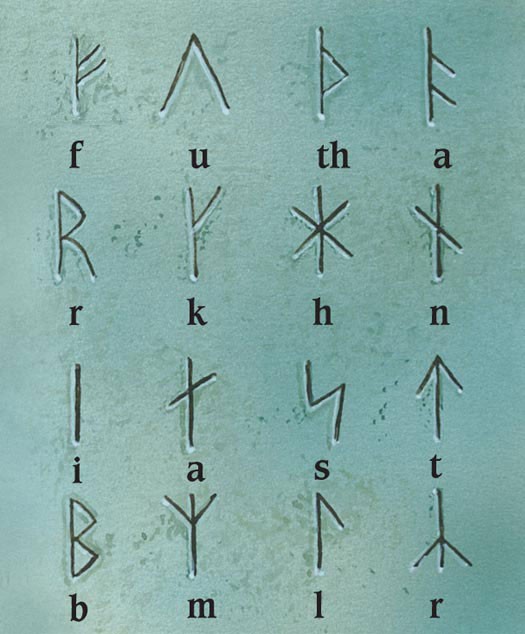
The 16-letter Scandinavian runic alphabet is known today as the futhark, after its first six letters. There were no letters for the vowels E or O, nor any for D, G or P, even though those sounds were used in the Norse language when it was spoken.
Consultant: Philip Parker
pics
Without in any way limiting Q-files Ltd’s exclusive rights under copyright, any use of this publication to “train” generative artificial intelligence (AI) technologies to generate text is expressly prohibited. Q-files Ltd reserves all rights to license use of this work for generative AI training and development of machine learning language models.