
EASY READ The human body

CITE
We have made every effort to follow citation style rules, but there may be some minor differences. If in doubt, please refer to the appropriate citation style manual.
EASY READ What is the skeleton for?. (2026). In Q-files Encyclopedia, Life, EASY READ The human body. Retrieved from
https://www.q-files.com/life/easy-read-the-human-body/easy-read-what-is-the-skeleton-for
"EASY READ What is the skeleton for?." Life, EASY READ The human body, Q-files Encyclopedia, 24 Mar. 2026.
https://www.q-files.com/life/easy-read-the-human-body/easy-read-what-is-the-skeleton-for.
Accessed 13 Sep. 2026.
EASY READ What is the skeleton for? 2026. Life, EASY READ The human body. Retrieved 13 September 2026, from
https://www.q-files.com/life/easy-read-the-human-body/easy-read-what-is-the-skeleton-for
Life, EASY READ The human body, s.v. "EASY READ What is the skeleton for?," accessed September 13, 2026.
https://www.q-files.com/life/easy-read-the-human-body/easy-read-what-is-the-skeleton-for


What is the skeleton for?
Inside your body there is a strong framework of bones. This is your skeleton. It gives your body its shape and allows it to move. It also protects the soft organs inside against injury. Without a skeleton, you would be little more than a pile of jelly! There are about 206 bones in the adult human body, but a child has more. When a baby is born, it has many tiny bones. Some of them—for example, those in its skull—join together as it grows up. Different parts of the skeleton have different jobs. The skull, for example, protects your brain and shapes your face. The rib cage protects your vital organs, such as the lungs, heart, liver and stomach, from getting squashed. The long bones of the limbs work like levers to move your arms and legs.

Inside a bone


Bones are strong, but they are also light. This helps the body to be as agile as possible. A bone has a hard outer layer called compact bone. Inside is a layer of softer, lighter, spongy bone. In the middle of that are blood vessels. They are surrounded by a soft, jelly-like substance called marrow. In some bones, the marrow produces new red and white blood cells.
Spine
Your spine, also called the backbone, is made up of a column of short bones, called vertebrae. This arrangement allows us to bend our backs. Together, the vertebrae provide a strong, flexible support for the body. The vertebrae also surround and protect the spinal cord, a thick bundle of nerves. The spinal cord runs down the back through a "tunnel" in the vertebrae.
Fractures
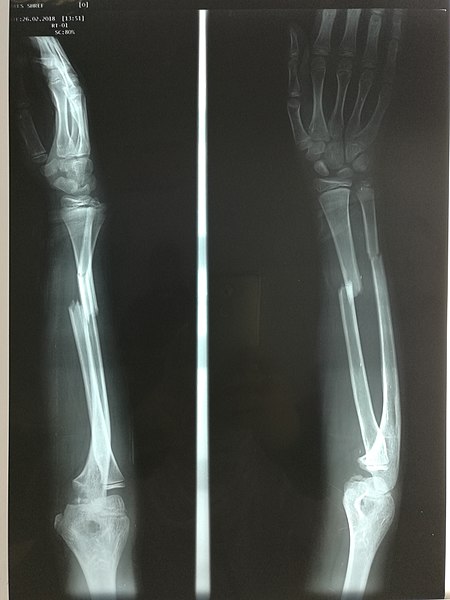
Although bones are strong, they can break if too much strain is put upon them. A bone may crack or snap. This is known as a fracture. X-rays can be used to find out what sort of fracture it is. With the help of splints or a plaster cast, broken bones can be fixed back together again. The bone cells then get to work, joining the separate pieces into one solid bone as before.
Consultant: Kristina Routh
Ready to find out more?
Here is a page in another part of Q-files you might like to explore:
pics

Without in any way limiting Q-files Ltd’s exclusive rights under copyright, any use of this publication to “train” generative artificial intelligence (AI) technologies to generate text is expressly prohibited. Q-files Ltd reserves all rights to license use of this work for generative AI training and development of machine learning language models.